



Selecting a Closed Suction Catheter for Safe and Reliable ICU Suctioning


The routine but sensitive procedure of airway suctioning is performed in intensive care. Although secretion removal is critical to maintain airway patency, interruption of mechanical ventilation may lead to increased risk for critically ill patients.
The Closed Suction Catheter is used to remove airway secretions without the need for regular removal of the ventilator circuit. This helps minimize the unnecessary interruption of the circuit and facilitates more controlled suctioning.
But not all closed suction systems are alike. Size of the catheter, the device to control suction, the design of the protective sleeve, and compatibility of the connectors all are factors in its suitability.
This is important for hospital procurement teams and medical distributors to know prior to making a product choice for routine use in the ICU setting.
Closed Suction Catheter: What Is it?
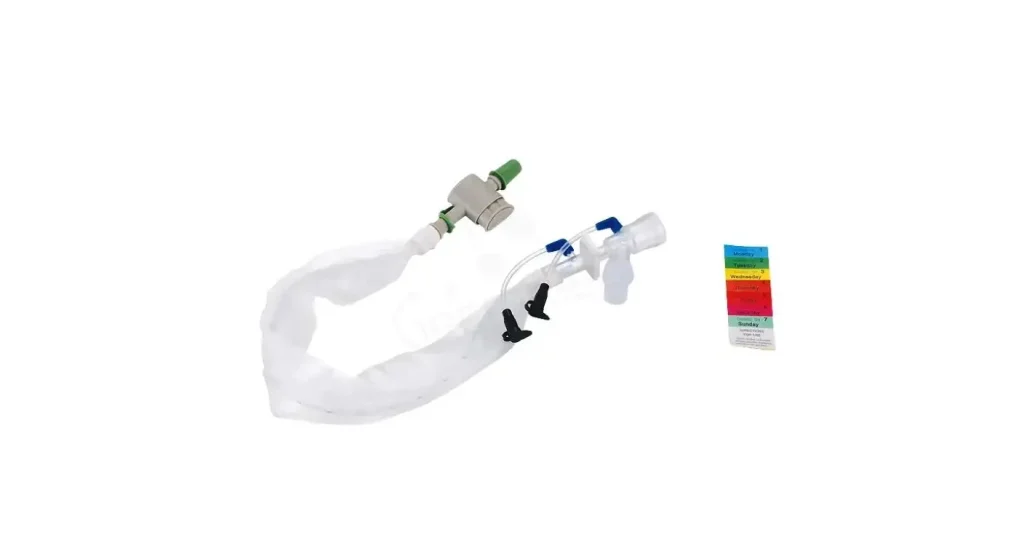
Closed Suction Catheter is a medical device used to remove respiratory secretions from patients being mechanically ventilated via an endotracheal or tracheostomy tube.
It is performed through a closed pathway and allows the tube to be advanced while ventilation is still taking place, unlike open suctioning which normally involves disconnecting the ventilator circuit.
Usually the assembly consists of a flexible suction catheter, protective sleeve, suction control valve and airway connectors.
Greetmed's Closed Suction Catheter features a soft tip, has depth markings, and an enclosed protective sleeve for removing secretions from mechanically ventilated patients.
It helps clear the airway, but its real benefit is not just for the convenient suctioning, but to promote airway clearance while reducing unnecessary disruption of ventilation.
Why Closed Suction is important in a critical care setting
Patients who need mechanical ventilation may require regular positive end-expiratory pressure (PEEP) for lung recruitment.
When the circuit for the ventilator is disconnected, it may lead to a loss of pressure especially in patients who need a higher amount of oxygen or PEEP.
Closed suctioning can minimize this disturbance as the circuit is not open during the removal of secretions.
The enclosed design could also further minimize direct exposure to respiratory secretions, promoting infection prevention efforts.
Closed suctioning, however, is not effective at preventing hypoxemia, airway trauma, or VAP. Clinical monitoring and the right suctioning technique are still important.
The diameter of the catheter and the size of the airway match.
One of the more critical factors to keep in mind when purchasing a catheter is the size.
Suctioning with an oversized suction catheter can block too much of the artificial airway, which can result in increased negative pressure effects from suctioning. If a child's catheter is too small, it may not work as well to drain the thick secretions.
The internal diameter of the endotracheal or tracheostomy tube, the needs of the patient and applicable clinical protocols must be taken into account.
Greetmed's Medical Tube & Catheters portfolio consists of airway related products for various clinical applications.
One size does not fit all patients so the buyer should confirm the French size available, effective length of the catheter and compatible airway connectors.
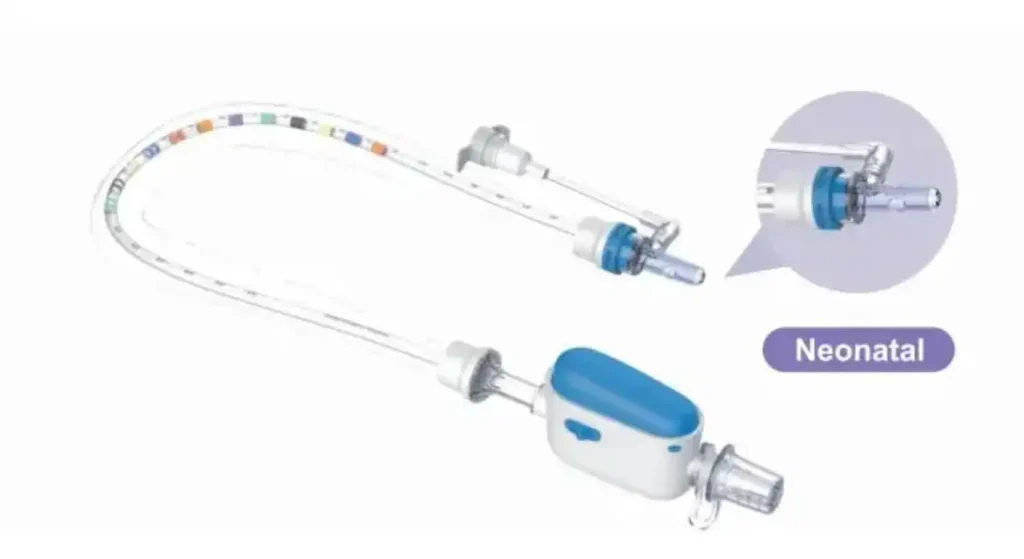
There might be different configurations for adult, pediatric and neonatal uses.
Sleeve and Suction Valve Protection Design
Using a closed suction system is more than just the catheter.
Transparent protective sleeve makes it easier to avoid touching the catheter during repeated use of the suction unit. It must allow easy forward and backward movement without tearing or excessive friction or restriction.
The suction control valve should reliably activate and break suction as needed.
A locking mechanism that is easily identifiable by the clinician can help reduce accidental activation and an ergonomic press switch can make operating the device easier when the clinician is wearing gloves.
The Closed Suction System guide by Greetmed talks about the role that isolation valves play in controlled airway suction and system handling.
The purchaser should consider the ability to completely withdraw the catheter into the protective chamber and the integrity of the valve and sleeve over the planned usage time.
Design and handling of connectors.
A closed suction system's ability to work with existing ventilation equipment is dependent on connector compatibility.
If connectors are not matched, leakage and/or difficult installation or circuit manipulation may result.
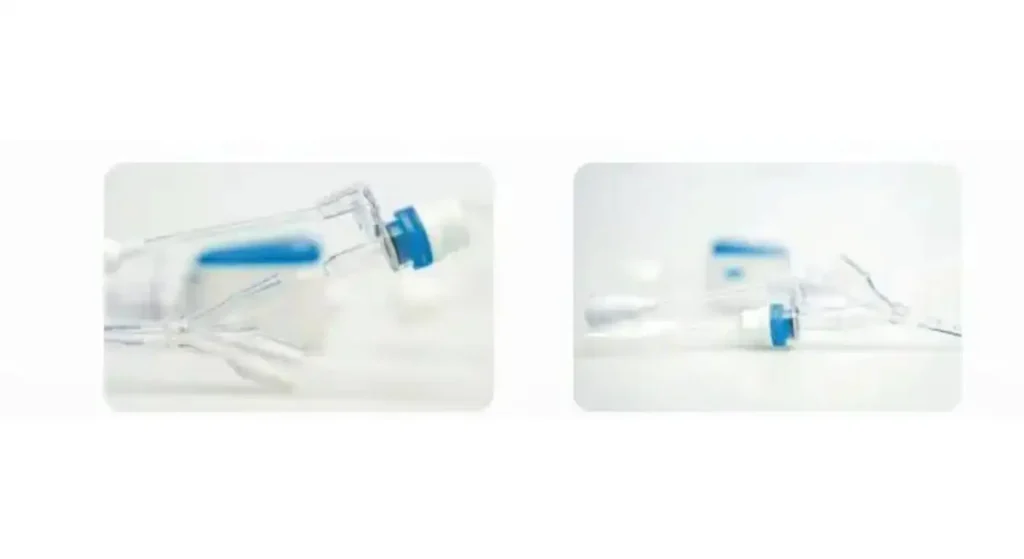
Swivel connectors can enhance flexibility if the patient needs to be repositioned, and secure connectors can help to keep the circuit intact.
Endotracheal tubes, tracheostomy tubes and other accessory equipment for respiration intended to be used in connection should also be considered in connection design.
Clinicians ought to assess whether the assembly adds to the weight of the product or tension around the artificial airway when evaluating a product.
The entire setup should be checked with the ventilator circuit and the manufacturer's guidelines.
Suction Performance and Clinical Handling,
Suctioning involves effective secretion removal that is not too great to interfere with ventilation.
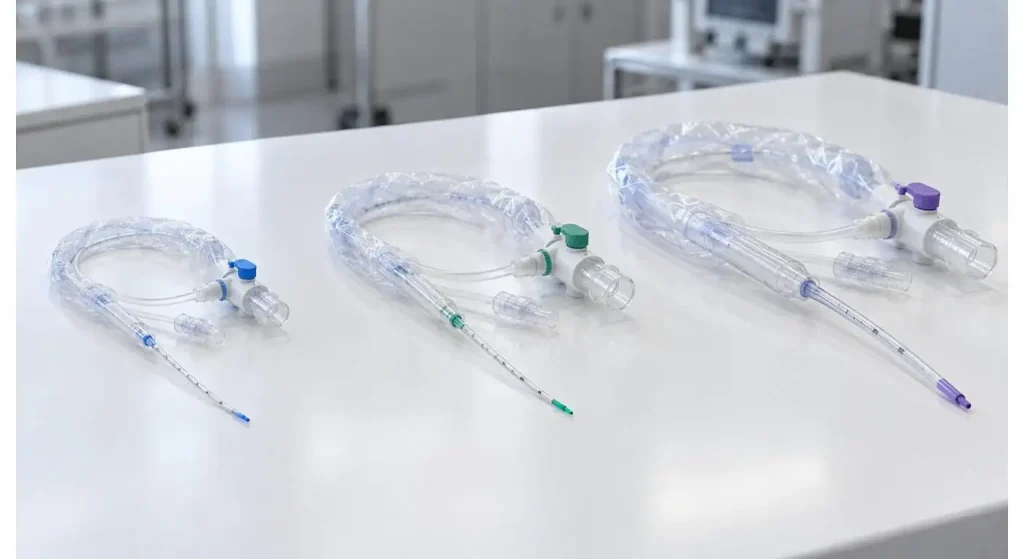
Secretion clearance and suction behavior are influenced by the design of the tip of the catheter, side openings and internal lumen. A soft rounded tip can make it easier to avoid mucosal irritation, but still, proper technique should be used.
For added visual guidance of catheter position, depth markings are provided.
The suction pressure, the time of insertion and the time of suction should not be assumed to be the same for all patients, but should be based on an approved clinical protocol and the instructions of the product.
The practical product evaluation should include smooth advancement of the catheter, response of the suction valve, withdrawal and any resistance to the same, as well as any resistance during operation.
| Evaluation Item | What to Check | Acceptance Focus |
| Catheter advancement | Movement through protective sleeve | Smooth and controlled |
| Suction valve | Activation and release | Predictable response |
| Tip and side holes | Secretion removal pathway | Unobstructed flow |
| Depth markings | Visibility during handling | Clear identification |
| Connector integrity | Joints under movement | Secure without leakage |
| Catheter withdrawal | Retraction into sleeve | Complete and smooth |
Infection Prevention and Replacement Practices
Although the protective sleeve reduces direct contact with the catheter, a closed suction system is not infection prevention measures.
Hand hygiene, aseptic handling, disposal and regular checks are critical.
Check the exact model for the period of use as validated by the manufacturer. Products that have different replacement periods are not interchangeable.
If a sleeve is damaged or the connector or the suction valve fails to operate, it must be addressed as per the product instructions and institutional policy.
When purchasing a device for use in the ICU, one of the most important questions is: Does the device lend itself to consistent handling throughout its use?
Some things Hospital Buyers should check.
Closed Suction Catheter selection involves technical assessment and supplier qualification.
Buyers must request the following product information: product specifications, instructions for use, information on sterilisation, information on packaging, regulatory documentation etc.
The verification process must also address the material of the catheter, identification of the size, traceability, shelf life and available configurations.
The supplier should give clear information as to accessories and variations between models of products.
For more information on the components of a suction system and integration into a respiratory circuit, refer to Greetmed's Ventilator Accessories guide.
Labeling requirements, OEM packaging and constant product specifications are also important aspects for distributors in regard to the reliable supply.
Carry out Clinical Usability Evaluation
A limited evaluation batch might show handling problems which are not apparent from a catalog.

The clinical user is responsible for evaluating package opening, assembly, catheter movement, valve activation, connector security and disposal under an approved evaluation protocol.
The actual airway equipment should be used or a suitable validated simulation arrangement.
| Trial Stage | Responsible Team | Review Focus |
| Specification review | Procurement | Size and configuration |
| Setup verification | Clinical engineering | Equipment compatibility |
| Handling assessment | ICU nursing | Valve and sleeve usability |
| Functional evaluation | Respiratory therapy | Suction and movement |
| Documentation approval | Quality team | Sterility and traceability |
Problems can be identified prior to bulk procurement through feedback from respiratory therapists, ICU nurses and clinical engineers.
Record the results and address substantial discrepancies between supplier's specifications and actual product performance.
Conclusion
Selection of Closed Suction Catheter is not simply ensuring that the catheter can be suctioned without disconnecting the ventilator.
Practical product suitability is achieved with catheter sizing, controlled suction, integrity of protection sleeve and compatibility of connectors.
Technical documentation and structured product evaluation should go hand in hand in hospitals and medical distributors' decision to approve a supplier.
This helps to maintain stable respiratory care, controlled clinical processes and purchases.
FAQs
Q1. The principal function of a Closed Suction Catheter is?
Clears airway secretions without disconnection of the ventilator circuit. This reduces the risk of unnecessary stops to the ventilation while being suctioned.
Q2. Is closed suctioning able to fully prevent oxygen desaturations?
Closed suctioning may be helpful to decrease pressure loss, but oxygen desaturations may happen.
Q3. Which size of catheter should be used?
The size should correspond to the size of the artificial airway and the clinical needs. Buyers should verify the French size, airway tube diameter and manufacturer's recommendations.
Q4. Is a protective sleeve 100% infection risk free?
No. It decreases direct exposure to the catheter, and can't replace handling and infection prevention protocols.
Q5. When should a Closed Suction Catheter be changed?
Replacement will be based on the product's validated use period and its instructions and hospital policy. Damage or failure of systems means that the systems need to be replaced at the right time, even if it is not the scheduled time.
Submit Your Request
Recent Posts


Tags
- Adult Diapers
- Are custom medical devices safe
- Baby Diapers
- Can respiratory anesthesia be used
- Digital Healthcare
- Do you offer customized consumables
- European Market
- How do you take care of a skin wound
- Industry Trends
- Lady Sanitary Napkins
- Medical Devices
- OEM Medical Devices
- Product Introductions
- Protective Equipment
- Under Pads
- What are custom-made medical devices
- What are diagnostic products
- What are hospital dressing products
- What are medical tube catheters
- What are some common protective equipment
- What are the appropriate applications for hospital dressing products
- What are the appropriate uses for protective equipment
- What is a gynecological examination
- What is a medical consumable
- What is an anesthesia kit
- What is an OEM in medical devices
- what is an wound skin care
- what is can disposable ultrasonic diagnostic
- What is good manufacturing medical devices
- What is hospital-grade protective equipment
- what is medical equipments hospital furniture
- What is medical sterilization wrapping
- What is rehabilitation equipment device
- What medical consumables do you supply
- Where can I find laboratory consumables wholesale
- where can I find medical protection device
- where to buy hypodermic accessories
- where to buy medical apparel
- where to buy medical consumable accessories
- where to find OEM medical device supplier
- where to find rehabilitation equipment supplier
