



Choosing a Sterile Syringe Wholesale Supplier for Reliable Bulk Orders


It is not that difficult to find a Sterile Syringe Wholesale Supplier. Confirming that every commercial shipment meets the required specifications, sterility assurance and import requirements is more challenging.
A competitive quotation is nothing to a medical distributor or a hospital purchasing department if the supplier is not able to supply consistent and reproducible products, traceable batches and reliable documentation.
Sterile syringes are high volume medical consumables, but this shouldn't cause buyers to ignore the quality risks.
Suppliers are evaluated through a structured supplier evaluation to avoid shipment delays and avoidable quality problems, and to prevent specification mismatches.
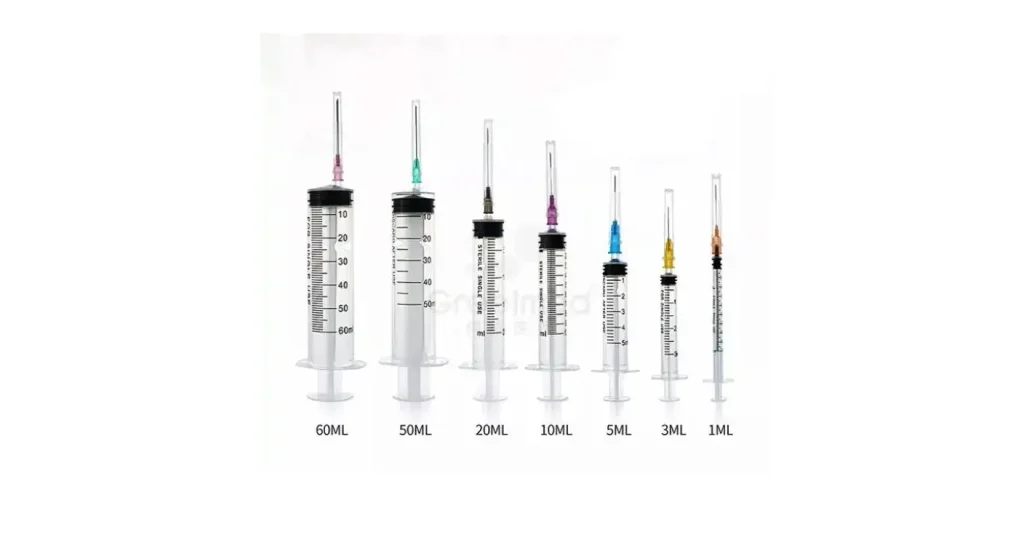
What Do a Sterile Syringe Wholesale supplier supply?
A sterile syringe wholesale supplier should offer more than just disposable syringes, at a competitive price.
A clear identification of products, packaging, quality controls, regulatory documentation and reliable commercial supply is required by the buyers.
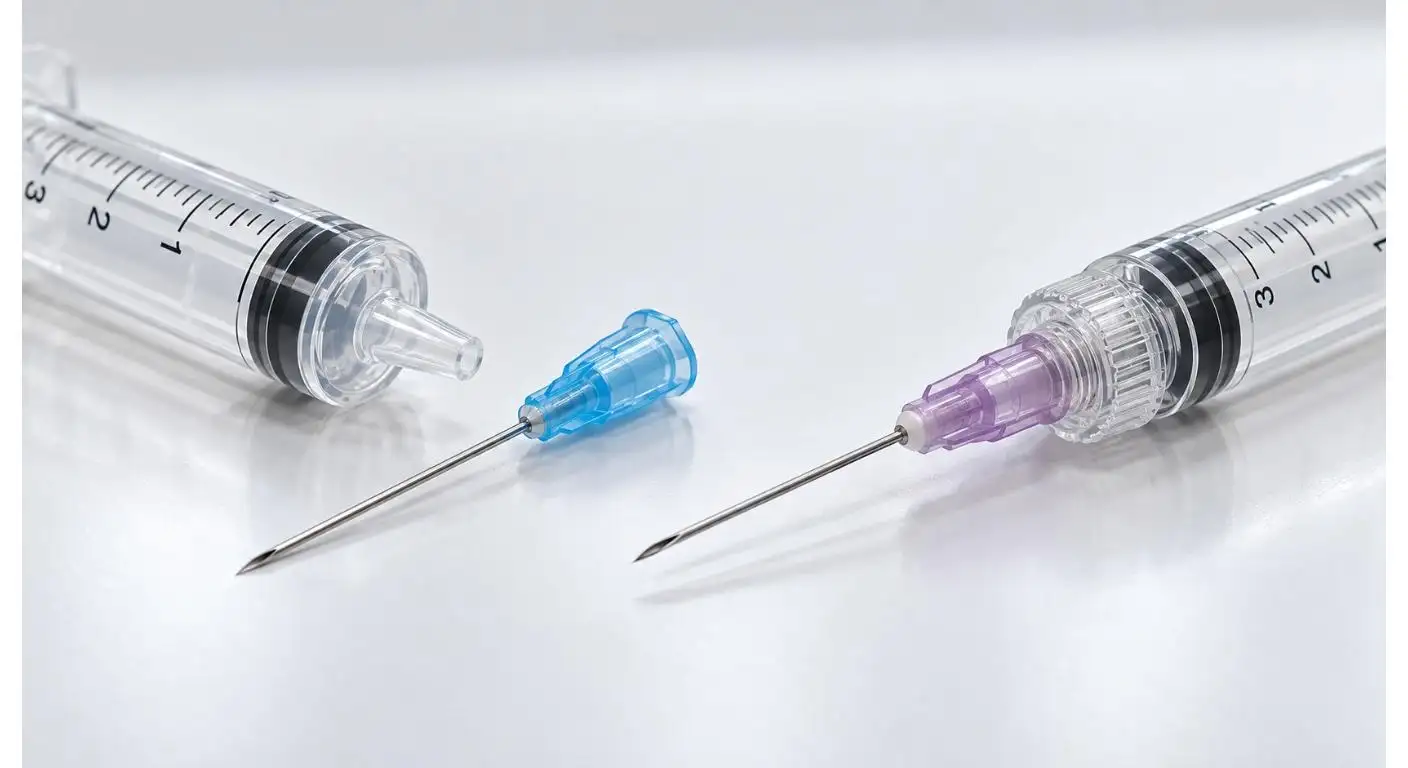
Typical product variations are two or three part syringes, varying barrel capacities, Luer Slip or Luer Lock or with or without needles.
Greetmed's Disposable Syringe Line features sterile, single use syringes in various capacities and offers a choice of connectors for clinical use.
It's important however for buyers to ask the exact specification that each quotation relates to. Syringes that look alike can be made of different materials, have different connectors, packaging configurations and/or uses.
Before comparing prices, determine what you are looking for in the product.
When purchasing a product wholesale, it is important to start with a detailed product specification rather than a vague product description, such as “medical syringes.”
The specification should specify the needed volume, barrel shape and type of connectors, needle configuration, packaging format.
A hospital that buys 5 mL, three part Luer Lock syringes has different requirements than a distributor that buys 1 mL Luer Slip syringes.
The needed amount of packaging, language of the labels and the destination market should also be determined.
The Hypodermic & Accessories category of products from Greetmed consists of various syringe and injection accessory products and model-level identification is important.
A full specification minimizes the chances of getting products that meet a general description but not necessarily the purchasing requirement.
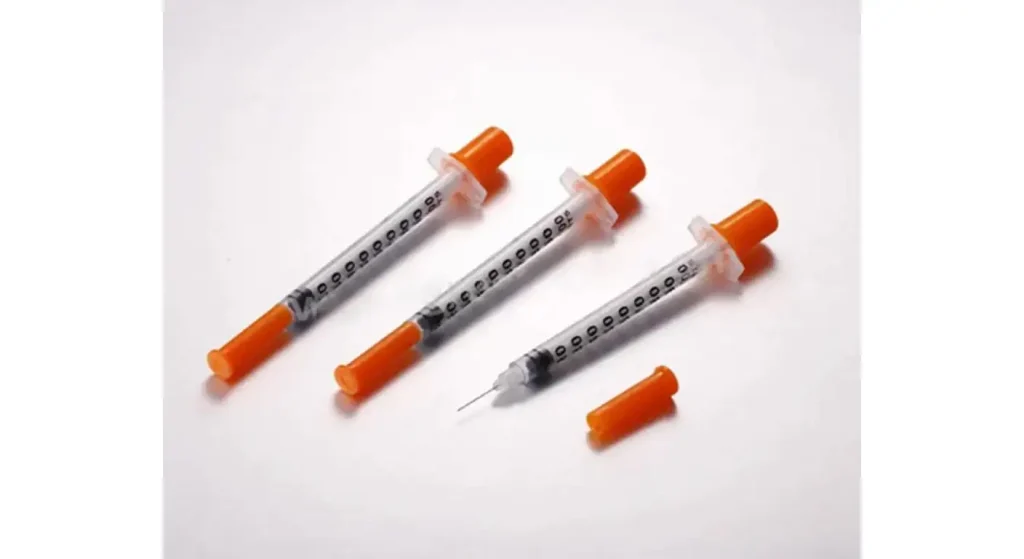
You can check Sterilization and Sterile Barrier Integrity.
One of the key factors is sterility when it comes to buying sterile medical syringes.
If a product is stated to be “sterile” it is required to have an appropriate validated sterilization process with the proper quality documentation from the manufacturer.
Depending upon the type of sterilization process, validation summaries, routine process controls, batch release records may be relevant evidence.
The sterile barrier system should also maintain the sterility of the syringe for the claimed shelf life at specified storage conditions.
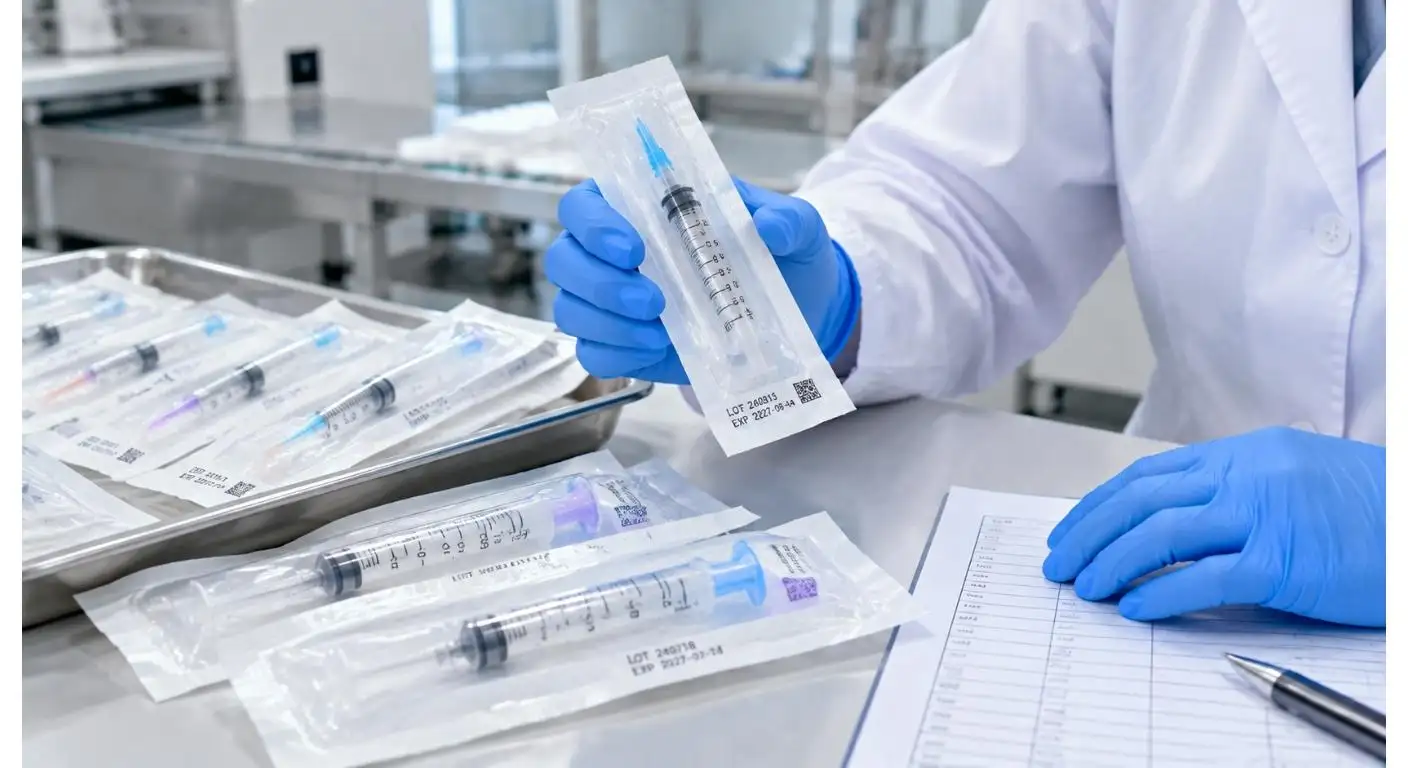
Purchasing should include inspection of seal integrity of the packages, suitability of packaging materials, and evidence of the package performance after transportation and aging.
A clean looking blister pack does not indicate successful sterilization.
Inquire the supplier about the verification of the sterility release and packaging integrity for commercial production.
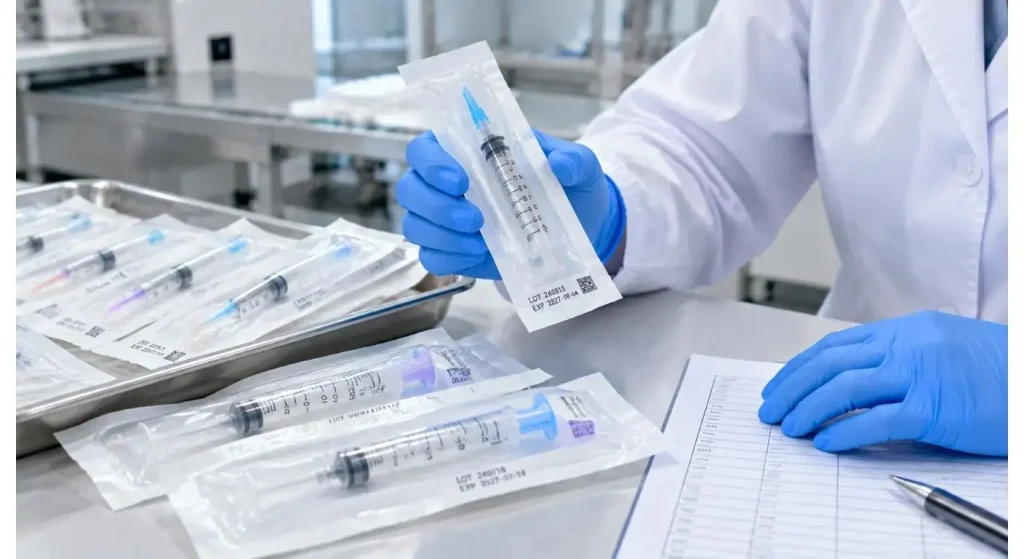
Inspect Batch traceability and quality documentation
Compliance of a product shipment may not be determined by a certificate or product description that covers an entire product family.
Appropriate lot information and manufacturing records should be used to identify each commercial batch.
Suppliers must ensure the traceability from production, to sterilisation, to packaging and to release of the finished goods.
The buyer has the right to ask the seller for a certificate of conformity and/or inspection and sterilization release documents relevant to the product and agreement and issued for the batch.
Model, size, package type and batch should be consistent for the corresponding documents.
Review the medical device registration and the conformity documentation and labelling requirements for regulated markets.
While quality-system certification (e.g., ISO 13485) provides a valuable indicator of management controls, it does not necessarily result in market authorization for all syringe models.
| Verification Item | Information to Confirm | Evidence to Request |
| Product identity | Exact model and configuration | Specification sheet |
| Quality management | Applicable quality system | Valid certification |
| Sterilization | Validated method and release controls | Validation summary and release evidence |
| Batch traceability | Production and sterilization lot linkage | Traceability records |
| Sterile packaging | Seal integrity and shelf life | Packaging validation evidence |
| Market compliance | Destination-market requirements | Product-specific regulatory documents |
This report reviews the manufacturing and product performance controls.
A reliable supplier will be able to tell you how important syringe parameters are controlled in the manufacturing process.
Some of the properties include graduation accuracy, plunger movement, barrel leakage, connection performance and material suitability.
Needles included with syringes might need to be checked further, including needle size, attachment and tip quality.
According to the particular product design and market requirements, applicable standards (such as relevant parts of ISO 7886 and ISO 80369) should be considered.
The Disposable Needle range from Greetmed highlights the critical need for identifying suitable needle combinations when purchasing injection accessories with syringes.
When buying a product, buyers should ask for any particular product test evidence, and do not accept general statements like “medical grade” if they don't have any supporting evidence.
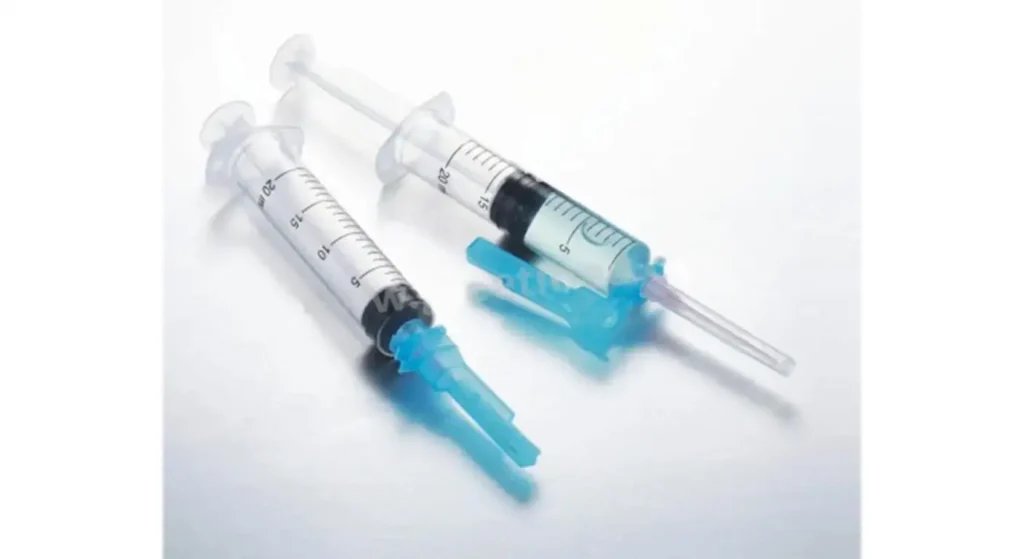
Assess packaging for international distribution.
Whole sale packaging needs to be sterile and have to do with business.
Sterile pouches or blister packs should be clearly labelled and appropriate for the product to be used.
Inner boxes and export cartons need to be designed to facilitate efficient handling while maintaining the sterile barrier.
When sending items overseas, check carton size, number of items packed, gross weight, carton labelling, and storage requirements.
Products to be traceable if master cartons are split for distribution.
Private label orders should be checked for artwork, manufacturer ID, regulatory symbols and labeling for destination markets prior to mass production.
Even if a syringe is compliant with the specifications, poorly coordinated packaging can lead to delays in customs clearance or rejection.
Compare MOQ, Lead Time and Supply Continuity
Just getting the lowest unit price is not enough to purchase large-volume syringes.
The actual cost to purchase may be influenced by the minimum order quantity, production schedule, the inventory available for purchase, and the delivery schedule.
The product page of Greatmed's GT037-100 quotes a minimum quantity of 5000 pieces and OEM, the buyer should check the latest quotation of the specification required.
A supplier should make clear if the goods to which it quotes are in stock or has to be reordered.
When estimating delivery consider the production and sterilisation schedule.
Buyers should verify with the supplier on the repeat orders, how they guarantee the changes on the components, production capacity and continuity of approved specification.
Pilot orders help to identify supply risk.
Commercial sample is good for initial screening but a controlled pilot order will give a better view into delivery performance.

The test shipment should be identical to the approved model, packaging and labelling.
Verify carton condition and batch identification, product quantities and documentation when they are received.
Appropriate incoming inspection program can be used to assess representative units.
| Evaluation Stage | What to Verify | Acceptance Focus |
| Order confirmation | Model, quantity and packaging | Matches purchase order |
| Pre-shipment review | Lot and release documents | Complete and consistent |
| Transport inspection | Carton and pouch condition | No unacceptable damage |
| Incoming inspection | Representative product samples | Meets agreed specifications |
| Traceability review | Lot identification across records | Traceable shipment |
| Final supplier review | Deviations and corrective actions | Qualified for repeat orders |
Compare shipment against approved samples/purchasing specifications.
If there is any difference that does not have an explanation, it should be solved before increasing the volume of order.
Determine the actual price of wholesale supply.
Quoted prices may not reflect delivered prices.
Freight and customs, inspection fees and documents can significantly impact purchasing economics.
It is important that the buyers compare offers on the same Incoterms, packing and delivery.
Additionally, it is important to agree on the payment terms and who will be liable for any damage during shipment.
A higher unit price can offer better value in terms of a stable delivery performance, reduced shipment discrepancies and reliable documentation.
Conclusion
When selecting a sterile syringe wholesale supplier, it's not enough to simply compare the pictures of the items and the catalog price.
Reliable supplier will link product specifications, validated sterility, batch traceability, quality documentation and consistent commercial delivery.
From a supplier perspective, detailed supplier qualification and a controlled pilot order offers a better foundation for repeat order.
One of the right wholesale partners is one that can provide consistency in the product configuration they are giving, and with verifiable evidence of their quality.
FAQs
Q1. What are the things that buyers need to look into when choosing a sterile syringe wholesale provider?
Confirm product specifications, product sterilization records, batch traceability, regulatory compliance and delivery.
Q2. Does a certificate for compliance to ISO 13485 guarantee that each syringe is suitable for marketing?
No. ISO 13485 is related to quality management systems. Specific regulatory requirements for products should be checked individually.
Q3. What is the minimum quantity of sterile syringes that a wholesaler can use?
MOQ is dependent on the products and suppliers. Greetmed offers 5,000 models as GT037-100 (Price and configuration may change).
Q4. Is it possible to provide sterile syringes in custom packaging?
There are a number of suppliers that provide OEM packaging. Buyers are responsible for verifying the labelling requirements as well as the approved artwork and minimum order quantities.
Q5. Why isn't it a good idea for distributors to get a pilot order prior to bulk purchasing?
Used to ensure consistency of shipments, packaging and documentation and quality of product delivered before major commercial commitments.
Submit Your Request
Recent Posts

Tags
- Adult Diapers
- Are custom medical devices safe
- Baby Diapers
- Can respiratory anesthesia be used
- Digital Healthcare
- Do you offer customized consumables
- European Market
- How do you take care of a skin wound
- Industry Trends
- Lady Sanitary Napkins
- Medical Devices
- OEM Medical Devices
- Product Introductions
- Protective Equipment
- Under Pads
- What are custom-made medical devices
- What are diagnostic products
- What are hospital dressing products
- What are medical tube catheters
- What are some common protective equipment
- What are the appropriate applications for hospital dressing products
- What are the appropriate uses for protective equipment
- What is a gynecological examination
- What is a medical consumable
- What is an anesthesia kit
- What is an OEM in medical devices
- what is an wound skin care
- what is can disposable ultrasonic diagnostic
- What is good manufacturing medical devices
- What is hospital-grade protective equipment
- what is medical equipments hospital furniture
- What is medical sterilization wrapping
- What is rehabilitation equipment device
- What medical consumables do you supply
- Where can I find laboratory consumables wholesale
- where can I find medical protection device
- where to buy hypodermic accessories
- where to buy medical apparel
- where to buy medical consumable accessories
- where to find OEM medical device supplier
- where to find rehabilitation equipment supplier
