



Selecting a Condensation Reduction Breathing Circuit for Reliable Ventilation


It is not only a nuisance but condensation in a breathing circuit can be a problem. Excessive water in respiratory tubing may lead to increased handling, affect the flow of gases and pose extra problems during mechanical ventilation.
A Condensation Reduction Breathing Circuit is a solution to this issue as it reduces the loss of temperature and moisture. But it is not just the heating that makes reduced condensation possible. Other factors affecting performance include the type of tubing, room conditions, humidification settings and positioning of the circuit.
The objective for the hospital buyer and respiratory equipment distributor is to choose a circuit that will control moisture and provide the right amount of gas and equipment compatibility.
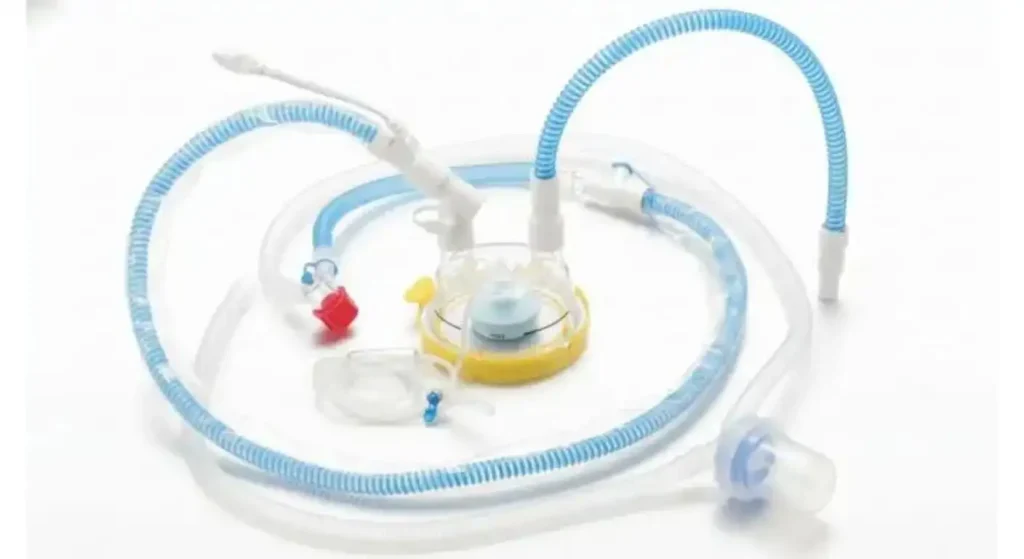
A condensation reduction breathing circuit is a type of circuit that minimizes condensation in the breathing circuit.
A Condensation Reduction Breathing Circuit is a respiratory tubing system that is engineered to reduce condensation of humidified gas as it flows from a patient to the ventilator and vice versa.
When the warm humidified gas flows through the cooler tubing, the gas cools off naturally. When it is colder than the dew point, water vapor deposits on the inside of the tube.
Heated breathing circuits can reduce this drop in temperature and appropriate water traps can be used to offer a controlled location for the condensate that does occur.
The Ventilator Heated Breathing Circuit from Greetmed is an example of how integrated heating, flexible tubing and compatible connectors work to manage moisture in the respiratory circuit.
The importance of Condensation Control in the ventilation process
Moisture can impact the clinical workflow and performance of the breathing circuit.
Water pooling at low points can change tubing positioning, lead to higher airflow resistance and/or require more circuit handling. Another problem is condensation when not controlled, causing contamination.
The problems are especially pertinent if continuous humidification is required during long-term mechanical ventilation.
The goals of condensation reduction should thus be threefold: proper gas temperature, an unobstructed breathing path, and safe handling of the condensate.
While there is benefit in reducing visible water, total removal is unattainable and inappropriate if good respiratory humidification is needed.
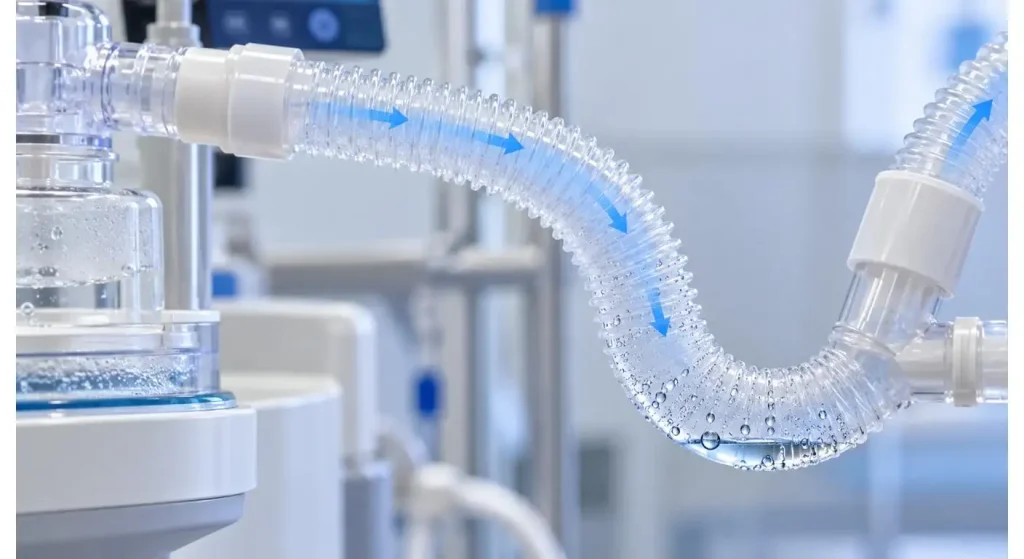
The relationship between how a building is designed to heat and how much condensation can be reduced.
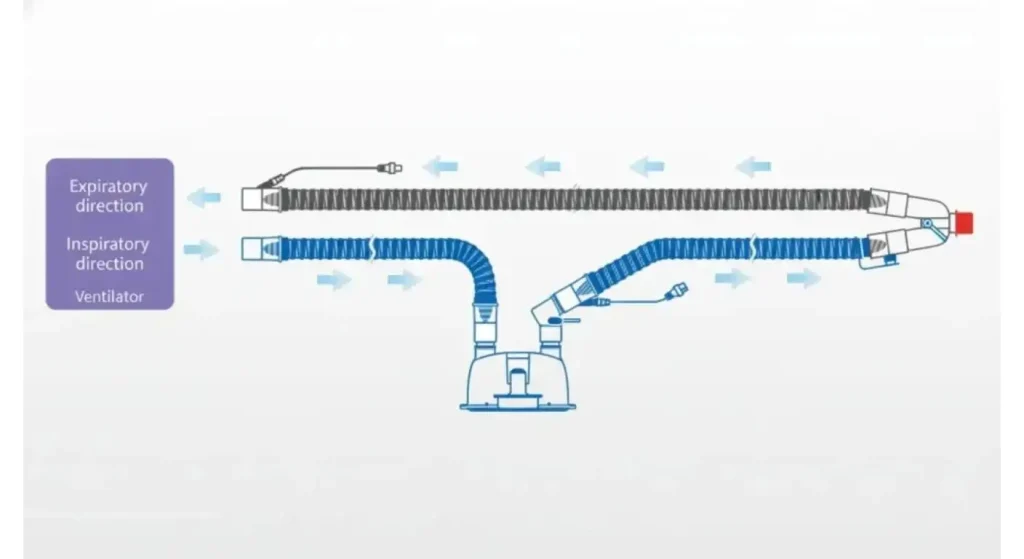
One of the big factor that significantly affects circuit performance is heating-wire configuration.
Embedded-heating wires are built into the tubing structure and external-wrapping designs wrap the heating element around the tube. Both can be used to help maintain temperature depending on construction and control system.
But, simply having a heating wire is not enough—consistency in heating is important.
As the heat is not distributed evenly, cooler areas can form where moisture will condense. The buyer should check the heating coverage, temperature stability and compatibility with the planned humidifier.
The Airway Management Equipment guide discusses the factors that affect condensation control, such as heating-wire layout and tube construction and environmental conditions.
A properly designed heated circuit should have a minimum amount of bulk with no unnecessary twists or kinks in the gas line.
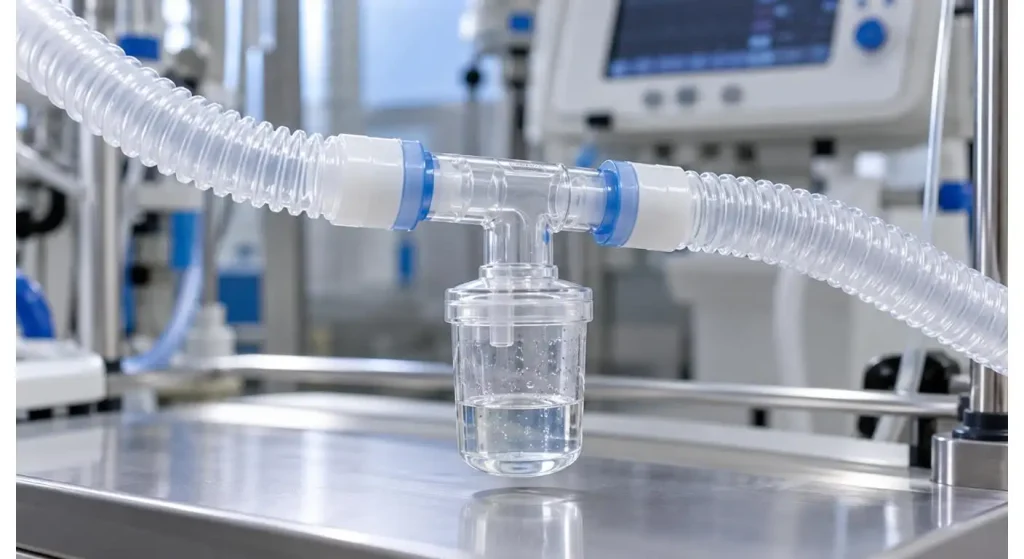
Geometry of Tubing and Water Traps
Even a good heated circuit can condense under certain circumstances.
Condensate is caught at specific points within the tubing with water traps to prevent uncontrolled condensation within the tubing. They only work if they are handled properly and routed correctly and traps are placed.
The geometry of the tubing is of equal importance. Low points for the water to collect can be caused by sharp curves, a compressed section and unsupported loops.
The internal diameter and tube wall structure also affect the resistance of airflow and the transfer of heat.
A buying consideration for a breathing circuit is whether the tubing will flex, collapse, or block the flow of gas when it is in position.
Greetmed's Anesthesia Breathing Circuit is just one of the products which illustrates the significance of tubing construction and connection design, but the specific product configuration must be verified prior to use with a particular humidification system.
Ensure that the Circuit corresponds to the Patient Group to be treated.
Breathing circuits must be chosen to meet patient needs and are not a single specification.
For adult ventilation, longer tube and different connector setup might be needed than in neonatal ventilation. Also, for smaller diameter circuits, it is important to consider resistance, compliance and humidification performance.
Single-heated mode is where heat is applied in one designated limb, and dual-heated mode adds heat to both designated limbs.
Both setups shouldn't be taken to be superior, by default. Depending on the ventilator and humidifier, the selection is based on the group of patients and approved operating conditions.
Before buying, check the manufacturer's listed connectors, temperature-control compatibility, tubing size and accessories.
Before making bulk purchases, check the performance of the item.
Low condensation product descriptions do not define how the circuit will act during actual operation.

The buyer should ask for any relevant technical documentation and test the performance with the ventilator and humidifier they wish to use.
Condensation accumulation, temperature stability, resistance to airflow, leakage, flexibility of the tubes and security of the connectors should be taken into consideration for a practical evaluation.
Realistic room conditions and positioning of a circuit should also be tested. What works well in a laboratory setting, might not work in a clinically air-conditioned environment.
Documented testing gives medical distributors and OEM buyers a more solid foundation for purchasing a product than simply product pictures or marketing statements.
| Verification Item | What to Check | Evidence to Request |
| Condensation control | Water accumulation during operation | Comparative test record |
| Thermal stability | Temperature along the heated limb | Temperature test data |
| Airflow resistance | Resistance under specified flow | Performance report |
| Leakage | Connection and circuit integrity | Leakage test results |
| Kink resistance | Tube stability during bending | Mechanical test record |
| Compatibility | Ventilator and humidifier connection | Approved compatibility information |
Check Quality Documents and Suppliers Readiness
Product qualification should include documentation review as well as physical testing.
Request instructions for use, product specifications, compatibility and quality and regulatory compliance information, as applicable.
The packaging integrity, shelf life, traceability and single-use labelling should also be reviewed in the context of the target market.
If to be re-ordered, check if the supplier can provide uniformity of circuit dimension, accessory specification and packaging specification.
Greetmed's Respiratory Equipment Supplier guide delves deeper into connector accuracy, tubing construction and respiratory product manufacturing.
The supplier should also be able to communicate changes in the products or components that may impact an approved configuration.
Prior to Scaling Orders, a Practical Trial is conducted.
Small evaluation batch enables buyers to evaluate a circuit prior to ordering a larger batch.
Utilize the trial to validate setup compatibility, connector fit, tubing handling and condensate management under an approved evaluation protocol.
Note if there are any frequent low point water accumulations, unusual resistance or connection issues. Check against the supplier's technical information.
Consult respiratory therapists, clinical engineers and infection-prevention staff when necessary to evaluate products.
| Trial Stage | Evaluation Focus | Expected Outcome |
| Initial inspection | Packaging and components | Complete, intact set |
| Equipment setup | Connector and heater compatibility | Approved configuration |
| Functional testing | Heating, airflow and leakage | Meets test criteria |
| Moisture observation | Condensate location and handling | Manageable accumulation |
| Final review | Documents and trial findings | Qualified for purchasing |
Once evaluated, return to the supplier a detailed request listing the patient group, circuits, equipment models, documentation, packaging requirements and estimated order volume.
Conclusion
The Condensation Reduction Breathing Circuit is a combination of appropriate temperature control, functional tubing design and efficient moisture capture.
Heating wire features aren't the only factors to consider when making a purchasing decision. It relies on proven performance, compatibility with equipment, and good documentation and regular availability.
Structured assessment to aid hospitals and medical distributors to choose breathing circuits that ensure effective ventilation with minimal unnecessary handling due to condensate.
FAQs
Q1. Will condensation be 100% prevented if the breathing circuit is heated?
No, although heated circuits can decrease the condensation rate, room temperature, humidity, air flow and circuit location still influence moisture formation.
Q2. Why is there water build up in breathing tubes?
When humidified gas cools down below its dew point condensation forms. Water will usually pool in the cooler or lower parts of the tubing.
Q3. Do all breathing circuits need a water trap?
Not necessarily. The water-trap requirements vary based on the circuit configuration, humidification system and manufacturer's instructions.
Q4. What does single-heated and Dual heated circuits mean?
One-heated circuits heat one limb and two-heated circuits heat 2 limbs. Depending on the type of approved equipment and use.
Q5. What information should buyers confirm prior to ordering?
Check compatibility of equipment, patient group, dimensions of circuits, heating configuration, performance documentations and relevant quality requirements.
Submit Your Request
Recent Posts



Tags
- Adult Diapers
- Are custom medical devices safe
- Baby Diapers
- Can respiratory anesthesia be used
- Digital Healthcare
- Do you offer customized consumables
- European Market
- How do you take care of a skin wound
- Industry Trends
- Lady Sanitary Napkins
- Medical Devices
- OEM Medical Devices
- Product Introductions
- Protective Equipment
- Under Pads
- What are custom-made medical devices
- What are diagnostic products
- What are hospital dressing products
- What are medical tube catheters
- What are some common protective equipment
- What are the appropriate applications for hospital dressing products
- What are the appropriate uses for protective equipment
- What is a gynecological examination
- What is a medical consumable
- What is an anesthesia kit
- What is an OEM in medical devices
- what is an wound skin care
- what is can disposable ultrasonic diagnostic
- What is good manufacturing medical devices
- What is hospital-grade protective equipment
- what is medical equipments hospital furniture
- What is medical sterilization wrapping
- What is rehabilitation equipment device
- What medical consumables do you supply
- Where can I find laboratory consumables wholesale
- where can I find medical protection device
- where to buy hypodermic accessories
- where to buy medical apparel
- where to buy medical consumable accessories
- where to find OEM medical device supplier
- where to find rehabilitation equipment supplier
