



Selecting Latex Free Nitrile Gloves for Reliable Healthcare Protection


Latex Free Nitrile Gloves are utilized in many health-related and laboratory settings, especially when there is a risk for contact with natural rubber latex proteins.
But, when it comes to nitrile gloves, there is more than just deciding if they contain latex. Depending on the task, the thickness, fit, barrier integrity and material formulation of gloves may be a factor.
A snug-fitting glove that is worn for a brief examination could not work properly if worn for longer duration or in contact with cleaning chemicals.
When it comes to purchasing, for hospitals and medical distributors, it must start with knowing which gloves to use in their specific work environment.
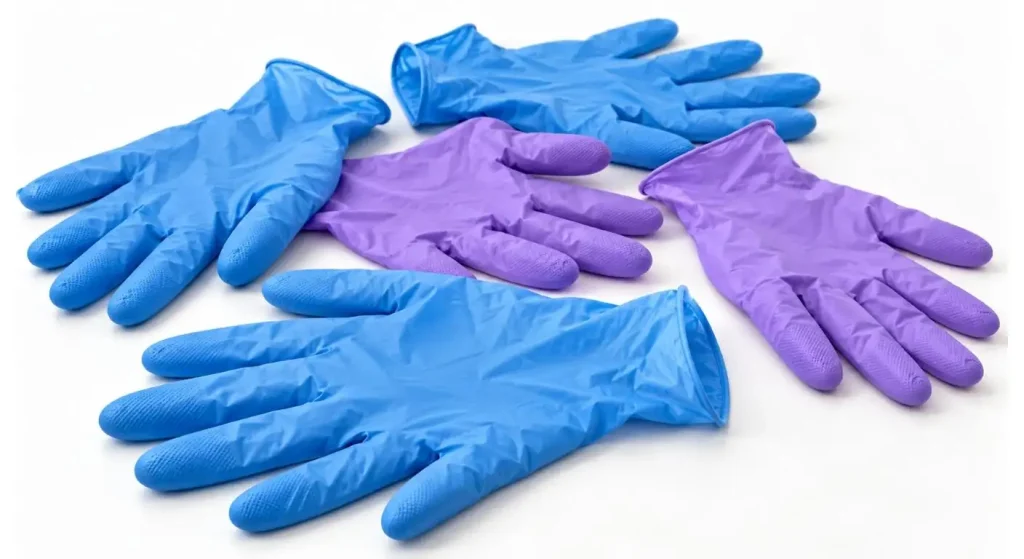
So, what are Latex Free Nitrile Gloves?
Latex Free Nitrile Gloves are disposable protective gloves which are constructed from synthetic nitrile butadiene rubber and not natural rubber latex.
They are made with synthetic material that helps to prevent contact with the natural rubber latex proteins that can cause Type I latex allergy.
Nitrile gloves are commonly available in powder-free, ambidextrous examination designs with different sizes, colors and surface textures.
They are suitable for medical examinations, laboratories, dentistry and other uses where the proper hand protection is required.
Nitrile, latex and vinyl are all medical consumables different categories of disposable gloves identified in Greetmed's Medical consumables overview.
The buyer must ascertain the user to which a product is designed to be used for a medical examination, laboratory or any other determined use.
Latex Free does not equal Allergy Free.
A major factor in why healthcare facilities choose to use nitrile gloves is to minimise exposure to natural rubber latex protein.
But, when a product is described as latex free, it doesn't necessarily mean the gloves won't react with the skin.
Chemical accelerators are sometimes used in the manufacture of some nitriles. Some accelerators have been known to lead to allergic contact dermatitis on any susceptible user.
Other skin reactions can be caused by irritation, frequent handwashing or long periods of wearing gloves.
Specially formulated accelerator-free gloves made of nitrile may be used by workers who are wearing gloves and are known to be sensitive to rubber accelerators.
So, it is important for purchasers to make a distinction between avoiding natural latex proteins and reducing other potential skin irritants.

The comparison between Nitrile, Latex and Polyethylene Gloves is discussed below.
Gloves are made of various materials with varying protection and handling properties.
Natural rubber latex (NRL) gloves are appreciated for their elasticity and tactile sensitivity, but contain natural latex proteins.
Nitrile gloves have the advantage of not containing those proteins and provide puncture and chemical resistance for a variety of uses, depending on the formulation.
The size and fit of the polyethylene gloves tend to be less snug and better suited to a few short duration, low-risk activities.
Greetmed's Latex Examination Gloves and PE Gloves are examples of these other types of gloves.
Price and general descriptions cannot be the only attributes used to decide on a material. Suitability must be based on the intended use of the equipment and the evidence of its performance.
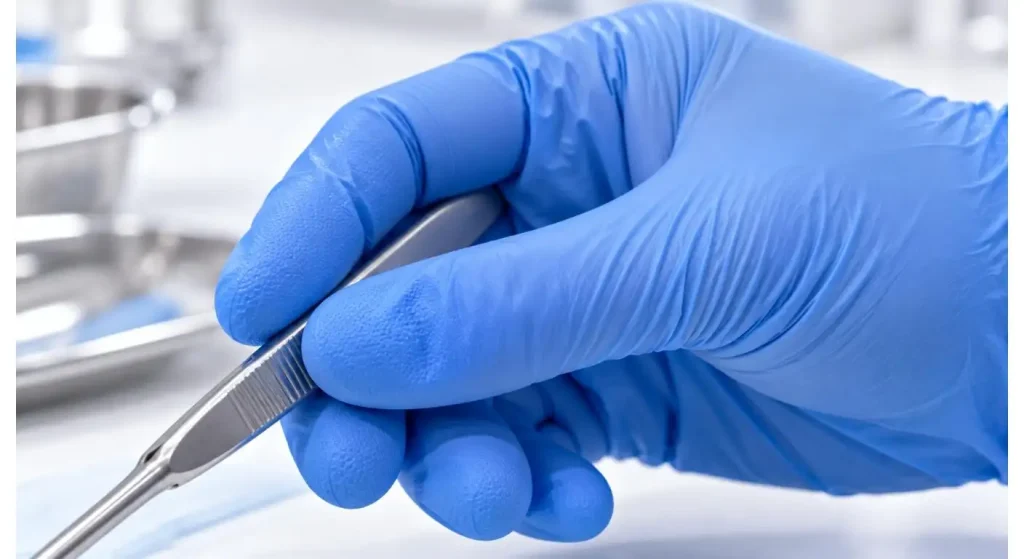
Barrier Integrity is more important than Appearance.
A defect in a nitrile glove may not be visible but could have a significant impact on the barrier function of the glove.
Protection may be lost due to Pinholes, weak areas and inconsistent manufacturing.
Medical examination gloves are thus tested in accordance with the criteria of hole freedom and mechanical performance.
The commonly used method of evaluating the quality of gloves is called the Acceptable Quality Level (AQL). It is a statistical acceptance criterion for sampling inspection, and does not mean every glove is defect free.
Buyers are advised to ask for the method of testing and acceptance criteria, and the result of the inspection of the product being offered.
Performance of a glove should NOT be assumed based on the thickness or colour of the glove, but should be determined by appropriate testing.
Consider Glove Thickness, Fit and Dexterity
In some cases, thicker gloves can offer extra mechanical protection, at the expense of reduced tactile sensitivity.
Thinner gloves can enhance fine dexterity, but must be carefully considered with regards to their intended protection level.
There can also be variations in single products between finger, palm and cuff thickness.
Fit is very important too. Tight gloves can become fatiguing and/or loose gloves can compromise dexterity when using small tools.
Textured fingertips can enhance grip when performing specific tasks, especially when instruments or surfaces are wet.
The user(s) should test the appropriate size range and handling characteristics before using a clinical product.
The resistance to chemicals will vary by chemical.
Nitrile has been chosen for lab use because it is resistant to a variety of chemicals.
But not all chemicals can be disposed of in a disposable nitrile glove.
The chemical, its concentration, the type of gloves and the thickness and exposure time are all factors that affect performance.
When gloves are worn with hazardous substances, “breakthrough time” and “degradation data” should be taken into consideration.
Greetmed's Protective Equipment Guide focuses on the choice of protective equipment based on the true hazards in the workplace.
When ordering chemicals for use in the laboratory, ask for chemical compatibility data for the type of glove being ordered as opposed to a general “chemical resistant” statement.

Check Glove Performance prior to Bulk Orders
A good glove specification should include the following: Purpose of use, Glove material, Glove size, Glove surface texture and/or powder, Performance requirements.
In the medical examination gloves market, the buyers can find standards like ASTM D6319 or relevant sections of EN 455.
Different testing evidence (including relevant EN ISO 374 testing) may be required for chemical protective gloves.
These requirements provide for various purposes and are not mutually interchangeable certifications.
| Verification Item | Information to Confirm | Evidence to Request |
| Material | Nitrile formulation and latex-free status | Material declaration |
| Barrier integrity | Hole inspection acceptance criteria | Relevant test report |
| Tensile performance | Strength and elongation | Mechanical test results |
| Dimensions | Width, length and thickness | Dimensional test report |
| Chemical resistance | Tested chemicals and exposure limits | Compatibility data |
| Regulatory compliance | Applicable intended-use requirements | Model-specific documentation |
Purchasers should ask for test reports of the specific model of glove and target market.
Check Packaging and Shelf-Life Requirements
Packaging has an impact on the identification of gloves, storage and distribution efficiency.
Most nitrile examination gloves are provided in dispensing boxes (non-sterile); sterile gloves must be packaged in a validated manner.
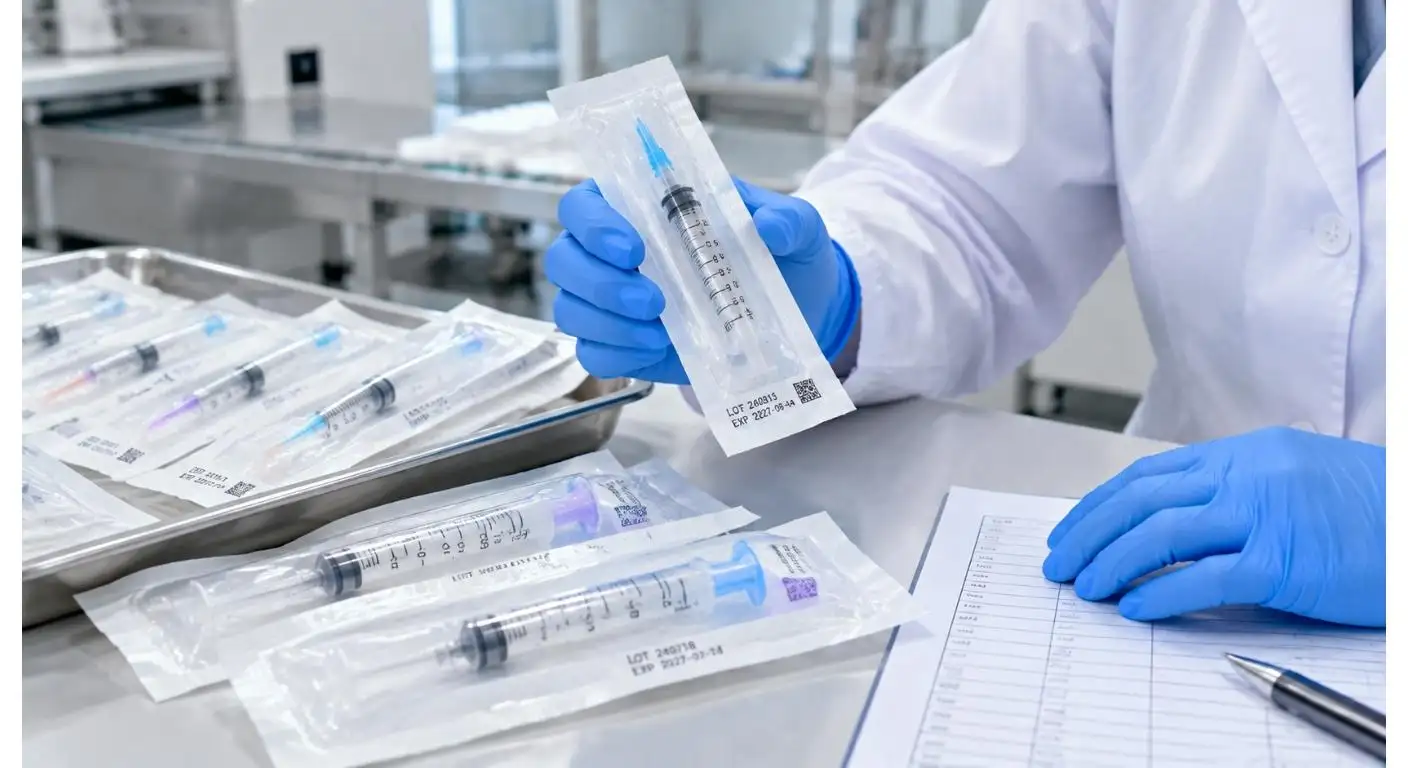
It is important for buyers to verify size designation, quantity per box, lot number, expiration date and storage instructions.
Bulk cartons need to have the ability to protect the products during transportation and warehousing.
Artwork, regulatory labeling and carton specifications should be confirmed prior to production for private label supply.
It will be desirable to have the supplier keep track of the batch number of the cartons shipped and the cartons delivered.
Assess Supply Chain reliability and actual cost of use
Low unit pricing isn't always the lowest operating cost.
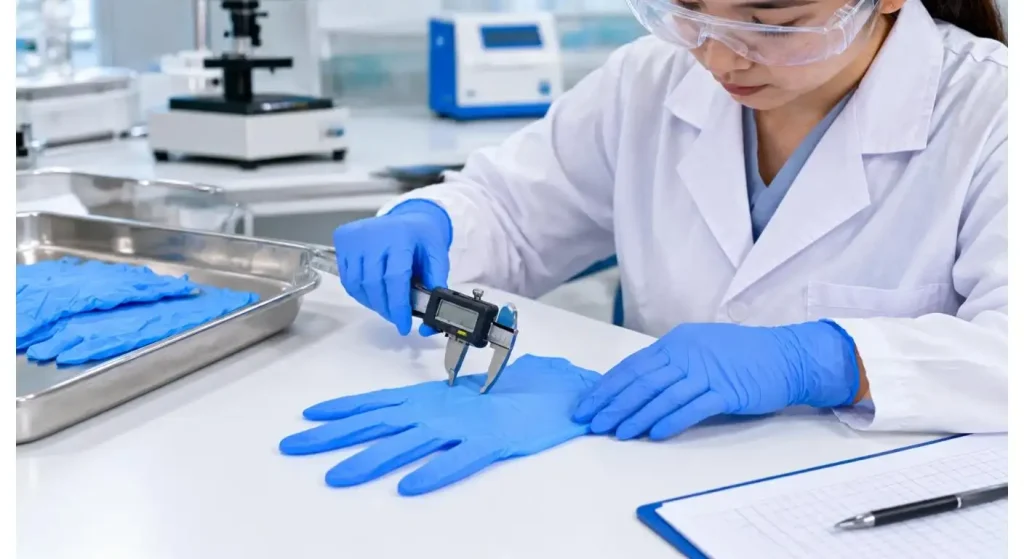
Glove tearing, sizing issues or ease of donning can lead to increased usage and interruption of workflow in clinical procedures.
A practical sample trial should include users using the sample sizes of the gloves to undertake representative tasks.
Write down comfort, grip, obvious flaws and how often it is replaced.
| Assessment Stage | What to Observe | Purchasing Implication |
| Size trial | Fit across users | Size assortment |
| Donning test | Ease of putting on gloves | Workflow efficiency |
| Handling trial | Grip and dexterity | Task suitability |
| Durability review | Tearing during representative tasks | Replacement frequency |
| Packaging review | Dispensing and carton condition | Distribution reliability |
| Batch comparison | Consistency between samples | Supplier qualification |
Another important item for the hospital to consider is the supplier's manufacturing volume, batch records and change control.
Stable packaging specifications and repeat orders is a key factor to customer satisfaction for distributors.
Conclusion
When choosing Latex Free Nitrile Gloves, it's more than just latex-free.
Their practical value is affected by barrier integrity, material formulation, fit, chemical compatibility and consistently of manufacturing.
Prior to placing large orders, healthcare buyers need to obtain and compare verified performance information and representative samples.
By having a well-defined purchasing specification, the users can be protected and more reliable supply of the gloves can be achieved.
FAQs
Q1. Will latex free nitrile gloves work for someone who is allergic to latex?
They are latex free, and do not contain any latex protein from natural rubber. Some people may be allergic to other ingredients in the gloves, however.
Q2. Are all nitrile gloves powder free?
Nonspecific, product formulations and specifications vary; powder free nitrile examination gloves are common.
Q3. Does the smaller the AQL equate to better quality gloves?
A lower AQL in a particular test method and inspection category is a more stringent sampling acceptance criterion. It does not mean that all the gloves will be defect free.
Q4. Are all chemicals covered by nitrile gloves?
No. Chemical protection is dependent on chemical, conditions of use and glove formulation tested.
Q5. What should buyers ask for prior to ordering?
Ask for specifications, pertinent test papers, size details, material information, labeling documents and sample.
Submit Your Request
Recent Posts

Tags
- Adult Diapers
- Are custom medical devices safe
- Baby Diapers
- Can respiratory anesthesia be used
- Digital Healthcare
- Do you offer customized consumables
- European Market
- How do you take care of a skin wound
- Industry Trends
- Lady Sanitary Napkins
- Medical Devices
- OEM Medical Devices
- Product Introductions
- Protective Equipment
- Under Pads
- What are custom-made medical devices
- What are diagnostic products
- What are hospital dressing products
- What are medical tube catheters
- What are some common protective equipment
- What are the appropriate applications for hospital dressing products
- What are the appropriate uses for protective equipment
- What is a gynecological examination
- What is a medical consumable
- What is an anesthesia kit
- What is an OEM in medical devices
- what is an wound skin care
- what is can disposable ultrasonic diagnostic
- What is good manufacturing medical devices
- What is hospital-grade protective equipment
- what is medical equipments hospital furniture
- What is medical sterilization wrapping
- What is rehabilitation equipment device
- What medical consumables do you supply
- Where can I find laboratory consumables wholesale
- where can I find medical protection device
- where to buy hypodermic accessories
- where to buy medical apparel
- where to buy medical consumable accessories
- where to find OEM medical device supplier
- where to find rehabilitation equipment supplier
