



Endotracheal Intubation for Anesthesia: Choosing Equipment for Safe Airway Management


The most popular method of securing the airway in general anesthesia is endotracheal intubation. It is used to facilitate ventilation and administration of anesthetic gases when the patient is unable to keep his or her own airway or ventilate.
But more than just putting a tube into the wind pipe is needed for successful airway management. Throughout the surgery, tube selection, cuff integrity, positioning and secure connections all impact performance.
This is important for anaesthetists and hospital procurement departments to understand so that the choice of airway equipment can be matched to the clinical need.
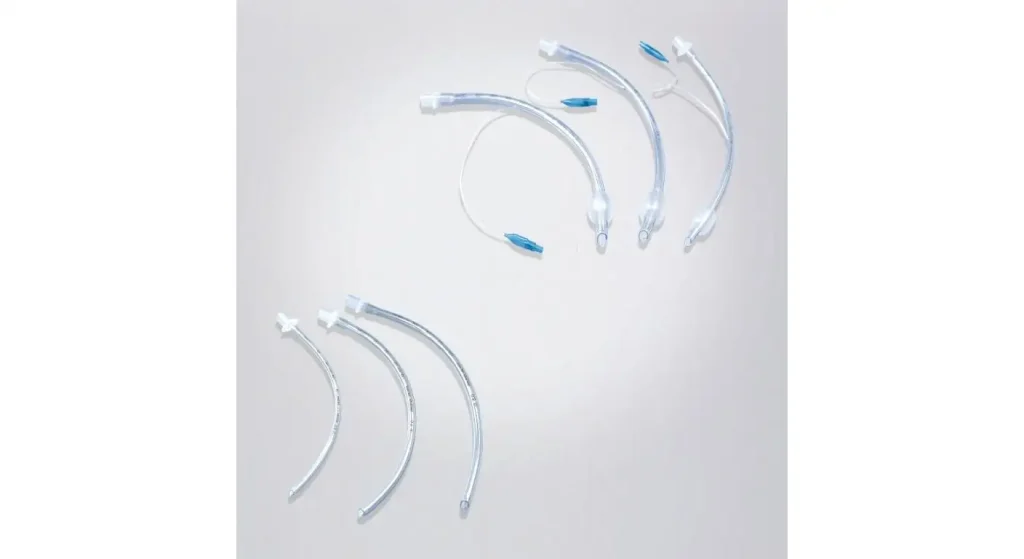
Endotracheal Intubation for Anesthesia: What is it?
The endotracheal intubation is the process by which an artificial airway is created by inserting a flexible tube through the mouth or nose into the windpipe (trachea).
A tube is connected to a breathing circuit and anaesthetic machine in general anaesthetic for controlled or assisted breathing.
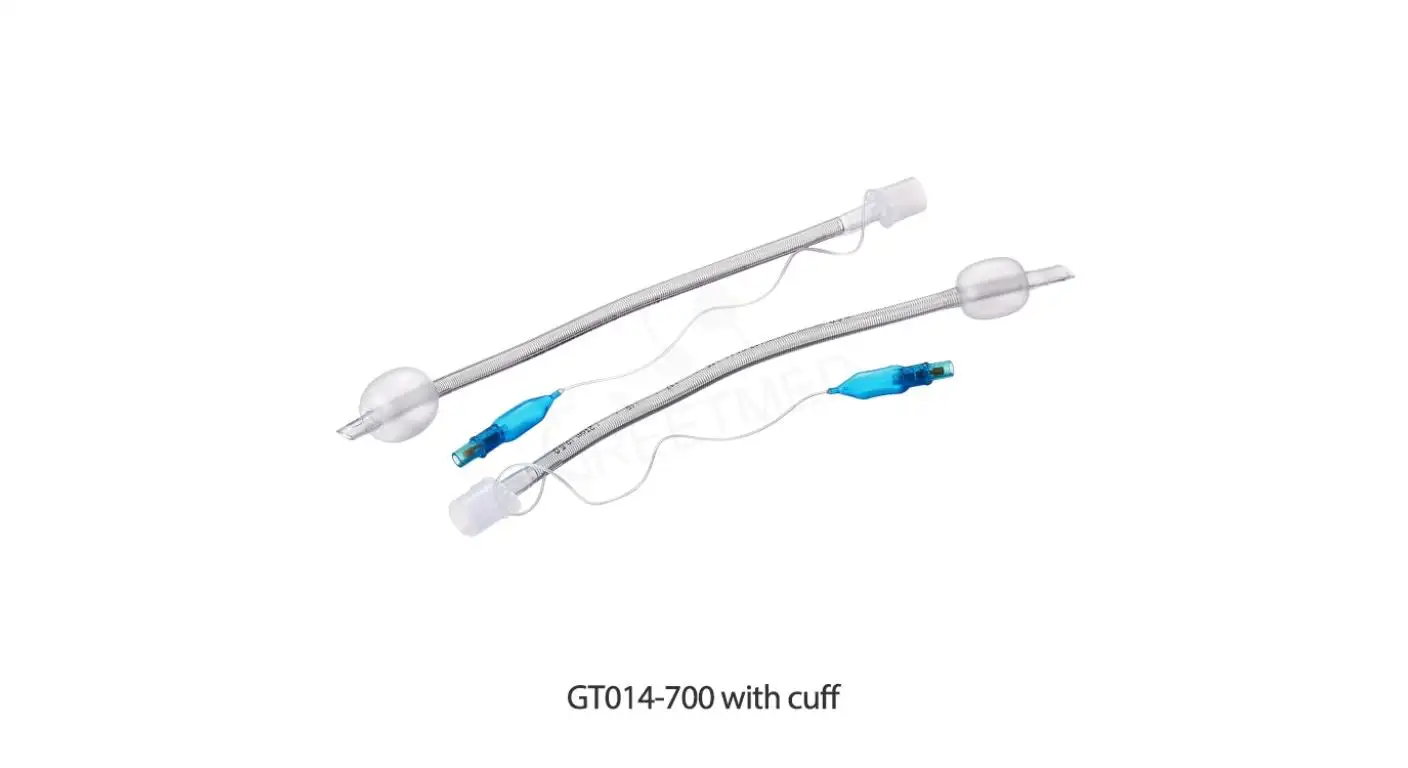
The standard endotracheal tube can have a bevelled end, depth markings, an inflated cuff, inflation line, a pilot balloon and a standard connector.
Greetmed's Tracheal Tubes come in cuffed or uncuffed options to meet various airway management needs.
Appropriate endotracheal intubation also decreases aspiration risk, but does not eliminate the risk of aspiration.
When is it necessary to have an endotracheal tube during anesthesia?
Endotracheal intubation is indicated based on the surgery, the condition of the patient and the type of anesthetic planned.
It can be used for controlled ventilation, muscle relaxation and increased airway security.
Any procedure that requires doing prone or has limited access to the airway or high risk for aspiration may also factor into the decision.
But not all general anaesthetic requires endotracheal intubation. Supraglottic airway devices can be used for certain procedures and patients.
Pre-induction assessment of potential airway issues, the risk of aspiration, ventilation requirements and rescue equipment available.

Select the proper type of endotracheal tube (ET)
There are different types of endotracheal tubes, each with different shapes, reinforcements and uses.
Many normal anesthesia procedures are performed with standard oronasal tubes. Selected oral and maxillofacial surgeries may benefit from preformed tubes designed to place the breathing circuit out of the way of the surgical area.
Reinforced tubes have a spiral reinforcement that minimises kinking when the tube is bent.
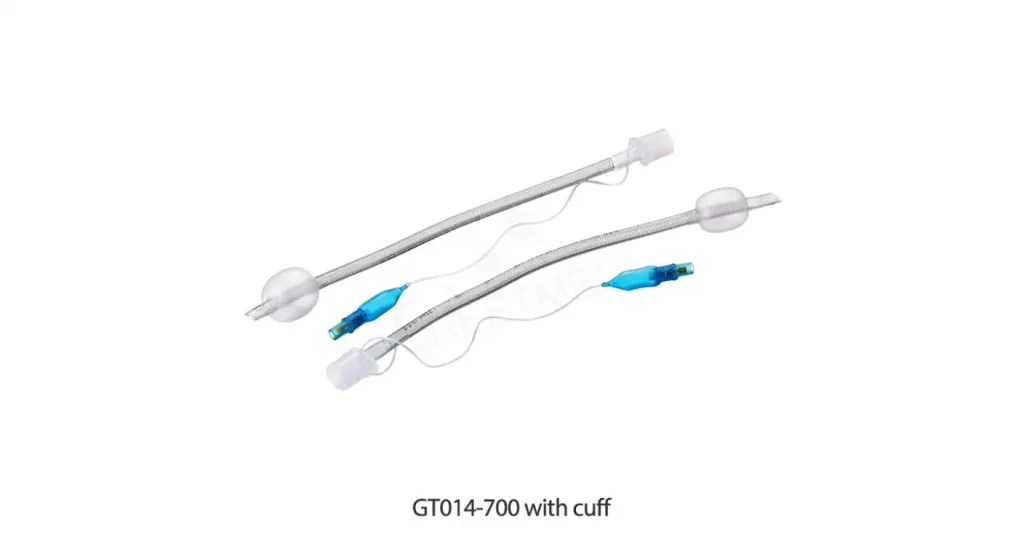
When procedures such as surgical positioning or access may cause compression of the Reinforced Endotracheal Tube, Greetmed's Reinforced Endotracheal Tubes are available.
But even a tube with reinforced construction cannot be guaranteed to be free of obstruction or damage caued by outside forces.
The design chosen should conform to the surgical approach, the intended patient position and the use the manufacturer intended for the design.
Airway Management is affected by tube Diameter and Length
The size of endotracheal tube impacts flow resistance/suction access and positioning.
Smaller internal diameters will result in greater gas flow resistance; and unnecessarily larger tubes will be prone to airway injury.
Tube size chosen based on patient anatomy, clinical needs and protocols.
The depth marking is useful for positioning, but cannot be used alone to verify correct placement of the trachea.
In addition, the tube should be long enough to be used without excessive tension at the breathing circuit connection.
Greetmed's Endotracheal Tube Oral/Nasal is one of the many different types of Endotracheal Tubes available in the market, which vary depending on clinical needs.
Hospitals should check the internal diameters, cuff and connector specifications of each product model.
Cuff Design & Pressure Management
The cuff assists with preventing air leak around the ET tube.
An adequate seal is necessary for positive pressure ventilation and to reduce gas leakage and excessive seal pressures can damage tracheal tissues.
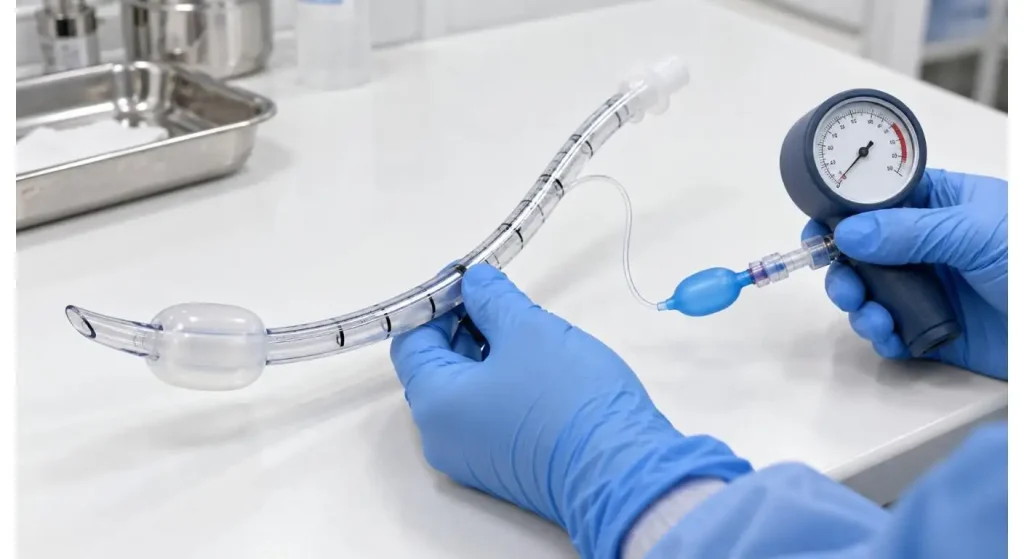
Low cuff pressure can lead to leakage or microaspiration and overinflation can lead to mucosal trauma.
Therefore, it is important to assess and control cuff pressure following the manufacturer's guidelines and clinical protocols.
The purchaser should consider the cuff inflation characteristics, integrity of the pilot balloon and function and leakage performance of the valves.
High volume, low pressure cuff design does NOT remove the need for monitoring.
Ensure that the tubes are in place correctly and that the lungs can be ventilated.
Tube placement should be confirmed post intubation and be rechecked if the situation changes.
Continuous waveform capnography is one important technique used to confirm and monitor tracheal placement, in conjunction with clinical assessment.
Chest movement, breath sounds and oxygen saturation are additional pieces of information, but should not be used in place of good carbon dioxide monitoring.
Once confirmed, the tube has to be securely fixed to minimize accidental movements.
Changing the position of patients, surgical activity and manipulation of the breathing circuit can change the tube position or tension on it.
Thus, the anesthesia staff should continue to monitor ventilation, airway pressure and the airway tube security during the procedure.
Be Prepared For Difficult Airway Management
A standard intubation technique may not be suitable for all airways.
Alternative equipment and individual airway plan may be necessary due to limited airway visualization, limited mouth opening or anatomical variability.
Depending on the clinical situation, video laryngoscopes, flexible intubation devices and the appropriate introducers may be considered.
Greetmed's Endotracheal Tube Introducer is an accessory designed to assist in the placement of endotracheal tubes in specific challenging circumstances.
Tube introducer is NOT a substitute for an airway rescue strategy or reliable confirmation of tracheal placement.
Staff and the availability of appropriate equipment should be trained for all expected and unexpected difficult airways.
Check the performance of Endotracheal Tubes before buying them.
When purchasing hospital tubes, buyers need to evaluate if the tube they are choosing is appropriate for the clinical and equipment needs they have in mind.
These features are important: internal diameter accuracy, flexibility of tube, resistance to kinking, integrity of cuff, and security and visibility of the connectors and depth marking.
Also, the suitability of the material, biocompatibility and applicable product standards should be looked into as well.
Suppliers should offer some sort of evidence showing that it has been tested for something rather than just saying “soft,” “atraumatic” or “high quality.”
| valuation Item | Technical Requirement | Verification Method |
| Tube dimensions | Accurate internal diameter | Dimensional inspection |
| Cuff integrity | Controlled inflation and sealing | Cuff leakage test |
| Tube flexibility | Suitable bending behavior | Mechanical evaluation |
| Kink resistance | Airway patency under bending | Kink resistance test |
| Connector security | Stable circuit connection | Connection test |
| Depth markings | Clear, durable identification | Visual inspection |
The structured review separates out the ‘must have' device performance from ‘nice to have' design elements.
Check Sterility, Packaging and supplier documentation.
The endotracheal tubes provided for single use should have a complete sterile barrier and be properly labeled.
It is important to check the sterilization method specified, the shelf life and the packaging requirements and traceability information with the purchasers.
Clearly label products with size of the tubes, type of cuff, and warnings.
The supplier should also give the appropriate instructions for use, technical specifications and regulatory documentation for the target market.
If repeat purchasing, it is important for hospitals and distributors to verify that the approved component designs and packaging configurations are in line with each other.
Do an Anesthesia Equipment Usability Trial.
Controlled evaluation enables clinical teams to evaluate the handling and compatibility of the tube prior to buying in bulk.
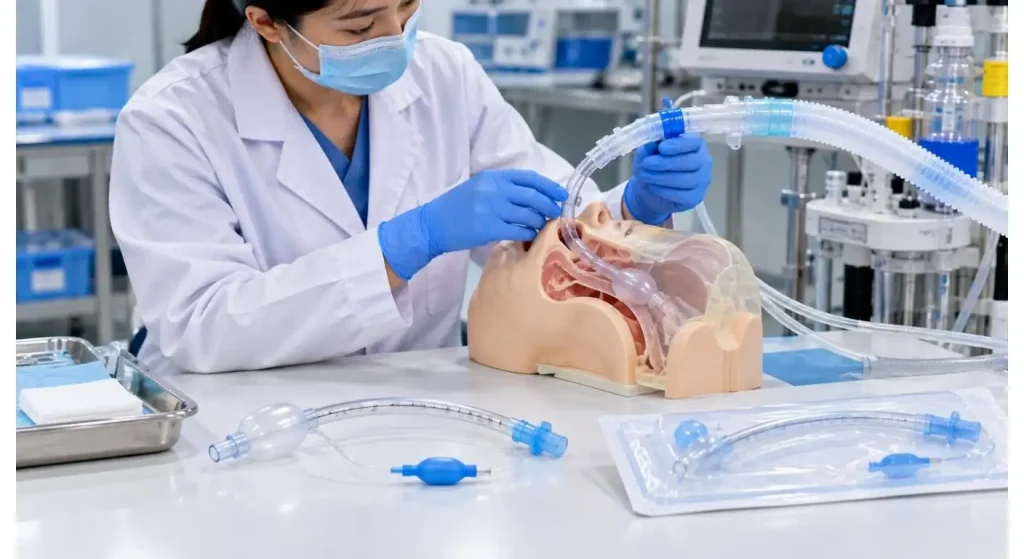
Using suitable simulation equipment, anesthesia professionals can check the fit of connectors, the visibility and fixation of the depth marking, and the flexibility of the tubes, and the cuff can be inflated.
Clinical engineers and quality team to review performance evidence and technical documentation.
| Review Stage | Responsible Team | Evaluation Focus |
| Clinical requirements | Anesthesia department | Tube type and size range |
| Sample assessment | Anesthesia team | Handling and cuff function |
| Equipment compatibility | Clinical engineering | Circuit and connector fit |
| Quality verification | Quality assurance | Sterility and test reports |
| Purchasing approval | Procurement | Supply and specifications |
The results of the evaluation should be written down, and compared with the precise quoted product configuration.
The final decision should be based on clinical appropriateness, quality and reliability of the product and not based on purchase price alone.
Conclusion
Successful Endotracheal Intubation for Anesthesia requires diligence in airway planning, proper equipment selection and assurance of successful ventilation.
Factors that affect device suitability include tube size, cuff features, and reinforced construction and connector integrity.
When choosing between a medical distributor and a hospital, ensuring that clinical needs are met along with product performance being documented enables safer and more consistent anesthesia airway management.
FAQs
Q1. Why endotracheal intubation is done in general anesthesia?
Creates an artificial airway for assisted or controlled ventilation. Indicated for clinical and procedural indications that warrant tracheal intubation.
Q2. What are the difference between cuffed and uncuffed endotracheal tube?
Cuffed tubes are tubes that have an inflatable cuff to aid in setting up an air seal. Selected circumstances call for the use of uncuffed tubes which do not have this component.
Q3. What is an indication for using reinforced endotracheal tubes?
They can be helpful in surgeries where positioning of the patient may make the tube bend. The selection is based on the clinical condition and specification of the product.
Q4. What is the way to verify proper placement of the endotracheal tube?
Continuous waveform capnography is an important method of confirmation in conjunction with clinical assessment. Tube position also should be checked throughout anesthetic.
Q5. Which things should the hospitals check before buying the endotracheal tubes?
Check for size, cuff type, material, connector compatibility, sterile packaging, performance and regulatory requirements.
Submit Your Request
Recent Posts


Tags
- Adult Diapers
- Are custom medical devices safe
- Baby Diapers
- Can respiratory anesthesia be used
- Digital Healthcare
- Do you offer customized consumables
- European Market
- How do you take care of a skin wound
- Industry Trends
- Lady Sanitary Napkins
- Medical Devices
- OEM Medical Devices
- Product Introductions
- Protective Equipment
- Under Pads
- What are custom-made medical devices
- What are diagnostic products
- What are hospital dressing products
- What are medical tube catheters
- What are some common protective equipment
- What are the appropriate applications for hospital dressing products
- What are the appropriate uses for protective equipment
- What is a gynecological examination
- What is a medical consumable
- What is an anesthesia kit
- What is an OEM in medical devices
- what is an wound skin care
- what is can disposable ultrasonic diagnostic
- What is good manufacturing medical devices
- What is hospital-grade protective equipment
- what is medical equipments hospital furniture
- What is medical sterilization wrapping
- What is rehabilitation equipment device
- What medical consumables do you supply
- Where can I find laboratory consumables wholesale
- where can I find medical protection device
- where to buy hypodermic accessories
- where to buy medical apparel
- where to buy medical consumable accessories
- where to find OEM medical device supplier
- where to find rehabilitation equipment supplier
