



What Is an Isolation Valve? Closed Suction System Tech


Closed Suction System technology plays an important role in modern airway management because it helps remove secretions while supporting ventilator stability and infection control.
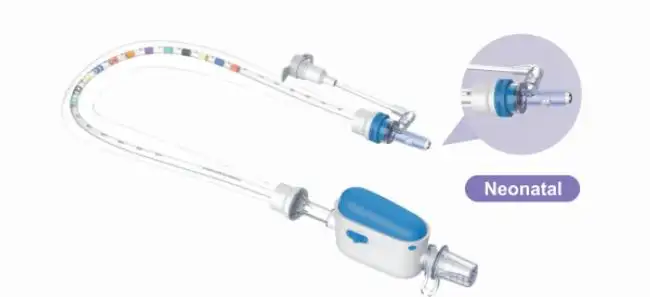
For many clinicians and buyers, the term isolation valve appears simple at first glance. In practice, however, it is one of the design details that can make a closed suction product more practical in intensive care settings. At Greetmed, we view the Closed Suction System not only as a catheter assembly, but as a clinical support tool that helps protect ventilation continuity, reduce unnecessary circuit disturbance, and improve workflow at the bedside.
This article explains what an isolation valve is, why it matters, and how Closed Suction System design choices affect real use.
Why Closed Suction System Design Matters
Patients on mechanical ventilation often need repeated suctioning to remove sputum or vomit, prevent respiratory tract obstruction, and maintain effective ventilation. In these situations, the suction method matters.
A Closed Suction System allows sputum suction to be performed without disconnecting the ventilator. That design supports a more stable airway care process and helps reduce interruptions during respiratory management. According to the American Association for Respiratory Care, both open and closed suction systems can be used safely and effectively for secretion removal in patients with artificial airways, while in-line closed systems allow suctioning without removal of ventilator support.
For hospitals and procurement teams, this means product evaluation should go beyond basic catheter access. A more useful review asks whether the system can help:
•Support continuous ventilation during suctioning
•Reduce unnecessary circuit handling
•Improve staff convenience during repeated care
•Lower waste compared with repeated single-use disconnections
•Contribute to cleaner bedside workflow
These are practical concerns, not just technical features.
What Is an Isolation Valve in a Closed Suction System
In a Closed Suction System, an isolation valve is a component that helps separate parts of the airway circuit during suction-related handling. In Greetmed's design, this feature is available on the 72-hour type, where it supports controlled use within the closed setup.
Its value becomes clearer when one considers the clinical objective of closed suctioning. The system is intended to allow repeated suction while helping maintain positive end-expiratory pressure (PEEP) and arterial oxygen saturation, and to help reduce the risk of hypoxemia during care. These are meaningful benefits because ventilated patients may not tolerate repeated circuit breaks well. Some clinical guidance also notes that in-line suctioning may decrease complications linked to suction-related disconnection and may help prevent alveolar derecruitment during the procedure.
From a buyer's perspective, the isolation valve is valuable because it supports a more controlled suction pathway. That allows users to approach repeated suction procedures with greater assurance, particularly in settings where airway control and personnel protection are equally important.
How Greetmed Turns Product Features Into Clinical Value
At Greetmed, we believe a Closed Suction System should be judged by what it helps the user achieve at the bedside. Several product features are especially relevant here.
- Isolation Valve And Repeated Suction Efficiency
The ability to suction sputum repeatedly can reduce medical waste and cost compared with more disruptive approaches. This is important in busy care environments where suctioning may occur many times across the day. A repeated-use configuration can help streamline routine practice while supporting consistency in care.
- 120° Protective Sleeve And Soft Catheter Tip
Greetmed uses a highly transparent TPU protective sleeve, which makes observation easier and helps reduce direct staff contact with sputum. This is a practical infection-control benefit because contamination risk remains a major concern in ventilated care environments. CDC surveillance materials continue to show that ventilated patients are at meaningful risk for respiratory complications, including ventilator-associated pneumonia.
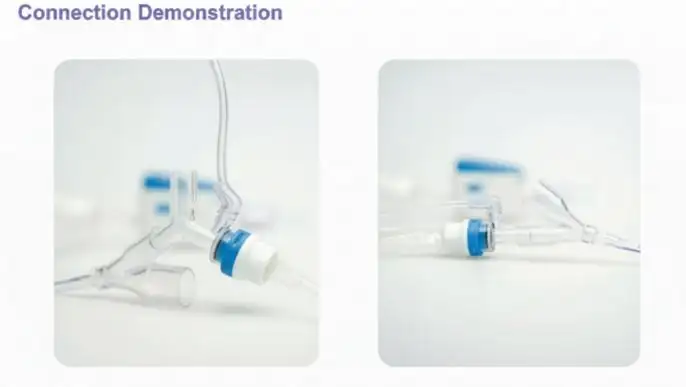
The suction catheter also includes a softened distal end to reduce the risk of tracheal mucosa injury. For clinicians, that means the design is not only about access, but also about gentler handling.
- Ergonomic Valve, Scale Line, And Circuit Mobility
The ergonomic valve uses a large press switch for more comfortable operation and includes an easily recognizable locking device to help prevent accidental opening. This matters because bedside devices should reduce handling error, not add to it.
The catheter's scale line helps users observe insertion depth more clearly. In routine care, better depth visibility can support more controlled suction technique.
The double swivel elbow helps facilitate circuit rotation and reduce the risk of kinking or damage. The product information also highlights a 120° angle to reduce airflow resistance, along with 120 mm and 50 mm structural dimensions that support circuit arrangement. These are not abstract numbers. They are part of how the system improves bedside handling.
What Buyers Should Look for Beyond the Basic Specification
A Closed Suction System should not be selected on feature count alone. The more useful question is whether the design helps the care team work more safely and efficiently.
When comparing options, buyers should consider:
•Whether suction can be performed without ventilator disconnection
•Whether the design helps maintain PEEP and oxygenation stability
•Whether the catheter tip is built to reduce mucosal trauma risk
•Whether the sleeve allows clear observation during use
•Whether the elbow and valve design improve handling and reduce circuit strain
•Whether the locking mechanism helps prevent accidental activation
It is also important to stay realistic. Evidence reviews have found that open and closed suction systems often show similar overall outcomes in major endpoints, and closed systems should not be marketed as a universal solution to every airway care problem. However, their operational advantages, including in-line suctioning and reduced circuit interruption, remain highly relevant in many ventilated care settings.
That is why product design still matters.
Where Closed Suction System Technology Fits in Modern Care
Closed suction products are especially relevant in ICUs and other settings where mechanical ventilation support must remain as stable as possible. By supporting patient and staff protection and lowering the risk of nosocomial infection exposure during sputum management, the system fits well with today's focus on safer airway procedures and improved bedside practice.
For distributors, hospital sourcing teams, and clinicians, the practical conclusion is clear: an isolation valve is not just a secondary design element. It is part of the wider Closed Suction System logic that supports repeated suctioning, better circuit continuity, and more practical infection-control handling.
At Greetmed, we design our Closed Suction System around these real-use priorities so that each feature translates into a direct operational benefit for the customer.
Looking for a Closed Suction System that supports repeated suction, clearer handling, and better circuit stability? Contact Greetmed to discuss your application needs and explore a more practical airway management solution.
For further reference, readers may also review the AARC artificial airway suctioning guidance and CDC resources on ventilator-associated complications through the citations above.
Submit Your Request
Recent Posts

Tags
- Adult Diapers
- Are custom medical devices safe
- Baby Diapers
- Can respiratory anesthesia be used
- Digital Healthcare
- Do you offer customized consumables
- European Market
- How do you take care of a skin wound
- Industry Trends
- Lady Sanitary Napkins
- Medical Devices
- OEM Medical Devices
- Product Introductions
- Protective Equipment
- Under Pads
- What are custom-made medical devices
- What are diagnostic products
- What are hospital dressing products
- What are medical tube catheters
- What are some common protective equipment
- What are the appropriate applications for hospital dressing products
- What are the appropriate uses for protective equipment
- What is a gynecological examination
- What is a medical consumable
- What is an anesthesia kit
- What is an OEM in medical devices
- what is an wound skin care
- what is can disposable ultrasonic diagnostic
- What is good manufacturing medical devices
- What is hospital-grade protective equipment
- what is medical equipments hospital furniture
- What is medical sterilization wrapping
- What is rehabilitation equipment device
- What medical consumables do you supply
- Where can I find laboratory consumables wholesale
- where can I find medical protection device
- where to buy hypodermic accessories
- where to buy medical apparel
- where to buy medical consumable accessories
- where to find OEM medical device supplier
- where to find rehabilitation equipment supplier
