



Pressure Ulcer Care Products: Foam, Silicone and Hydrofiber Selection Guide


The Importance of Material for Pressure Ulcer Care Products
Pressure ulcers are considered chronic and result from repeated stress upon an area of the skin. They often form in areas subjected to repetitive mechanical stress, i.e., the sacral area, heel, hip, and other bony prominences.
Healthcare professionals should not base their choice of Pressure Ulcer Care Products on the least absorbent dressing. The structural integrity of the dressing is essential in helping to manage the wound by:
•Restricting exudate
•Maintaining an optimum moisture environment
•Preserving trauma free skin barrier
•Lessening the trauma to the patient during prolonged treatment
Modern day Wound Care incorporates three main materials, i.e., silicone, foam and hydrofiber. The specific materials rely on the wound pathology, the exudate type and the skin of the patient to determine the optimum materials for the job.
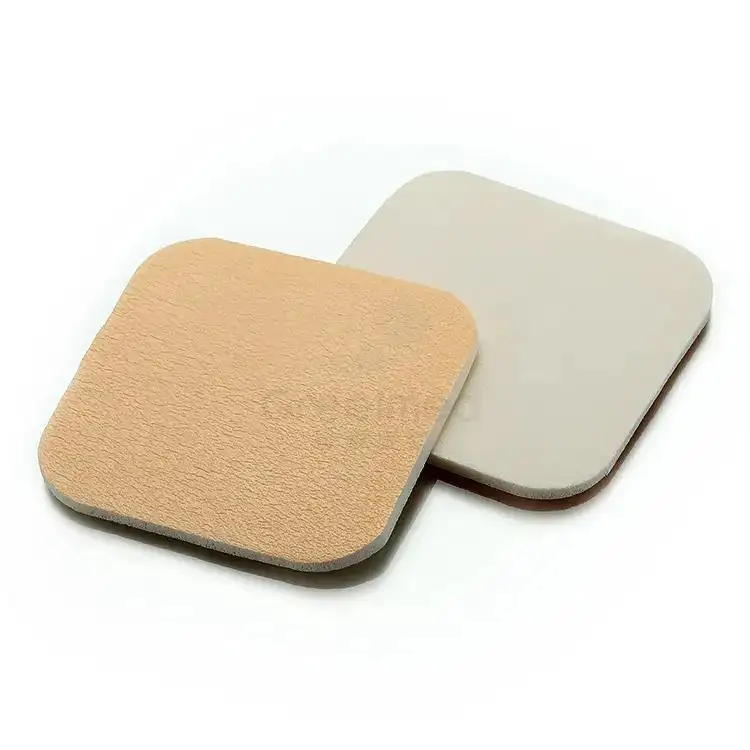
Why Materials Define the Effectiveness of Pressure Ulcer Care Products
A pressure ulcer wound exudate has specific components such as water, proteins, electrolytes, and inflammatory molecules. The presence of excess fluids around the open wound site has negative consequences such as:
•Infection risk
•Maintaining periwound integrity
•Slow healing
•More intervention
Too rapid removal of fluids negatively impacts healing as well. Hence, the advanced Pressure Ulcer Care Products should be able to balance the levels of fluids present instead of just desiccating the surface.
A high-performance dressing uses a unique combination of:
•Absorption capacity
•Fluid retention under pressure
•Moisture vapor transmission
•Mechanical protection
•Skin-friendly adhesion
Research into foam dressings has indicated that all of these elements impact the dressing's ability to control leakage. Absorption is not the only factor that influences how long a dressing will remain in place.
Foam-Based Pressure Ulcer Care Products: Absorption and Cushioning Protection
How Polyurethane Foam Adjusts to Wound Exudate
Foams are an excellent choice for protection in Pressure Ulcer Care Products due to their capability of absorbing quickly while providing cushioning to vulnerable areas of the wound.
Foam has structures designed to:
•Absorb fluids from an open wound surface utilizing capillary action
•Provide internal volume to store fluids
•Cushion and absorb impact from external forces
Foam dressings are unlike other absorbent materials. Unlike simple absorbent materials, medical foam dressings are manufactured as multi-layer systems designed with different functions.
| Foam Layer | Function in Pressure Ulcer Care Products |
| Contact layer | Removal of dressing causes least trauma to patient |
| Absorbent foam core | Captures and distributes wound fluid |
| Retention layer | Reduces fluid leakage under compression |
| Protective film | Controls moisture vapor exchange |
| Technical Parameter | Greetmed Foam Dressing Specification Clinical Value |
| Material Structure | Medical polyurethane foam Supported cushioning and flexibility |
| Thickness Range | 2–6 mm Balanced cushioning and flexibility |
| Foam Density | Approx. 735 g/m² (5 mm thickness) Provided stable foam structure |
| Absorbent Performance | 6.49 g/10 cm²/24h at 37°C Manages continuous wound exudate |
| Total Absorbent Capacity | 8.78 g/10 cm²/24h at 37°C Ideal for moderate to heavy exudate wounds |
Greetmed's Pressure Ulcer Care Products are based on medical polyurethane foam structures designed to control exudate. This type of foam dressing technology is designed to manage exudate with a combination of controlled thickness, density, and absorbent performance.
These specific components provide foam dressings with the ability to control fluids and simultaneously provide a cushioning protective layer, which is needed for sensitive pressure areas in the anatomy.
A Review of the Use of Silicone Technology in Pressure Ulcer Treatment Products: Protection of Fragile Skin During Long Term Treatment
Pressure ulcer patients repeatedly need their dressing changed. Aggressive adhesive-based dressings cause stripping of the skin in the elderly and fragile-skin patients.
The use of silicone technology in dressing adhesives results in non-adhesive contact and minimizes the amount of dressing adhesives in contact with the skin.
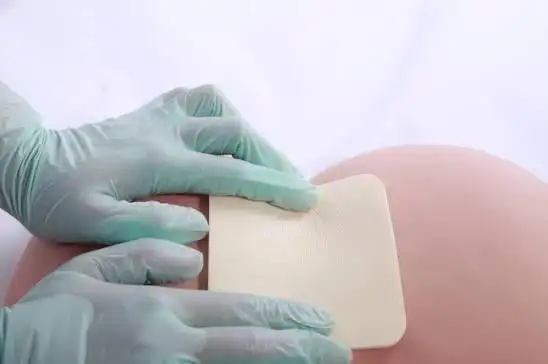
Use of Silicone Technology in Pressure Ulcer Treatment Products
Key Benefits of Silicone-Based Structures
Silicone components in Pressure Ulcer Care Products are designed to provide:
•Lower-trauma removal
•Reduced skin irritation risk
•Better patient comfort
•Improved dressing repositioning ability
Silicone is not primarily an absorption material. Instead, it improves the interaction between the dressing and the patient's skin, making it especially suitable for long-term wound management where skin preservation is critical.
Hydrofiber Pressure Ulcer Care Products: A Different Approach to Heavy Exudate Control
Hydrofiber materials manage wound fluid through a different mechanism compared with foam.
Exposure to exudate gives hydrophilic fibers the capacity to absorb liquids and form a soft gel framework. This process helps:
•Lock Fluid Inside the Dressing
•Reduce Horizontal Spreading
•Create Close Contact with the Wound Surface
•Maintain Moisture Balance
For wounds that exude excessive quantities of liquid, gel formation from hydrophilic fibers prevents uncontrolled loss of excess liquid.
Hydrofiber, unlike foam, offers very little cushioning. Thus, if the challenge is primarily control of excessive liquid, hydrofiber should be selected over foam.
However, if the challenge is primarily control of liquid and mechanisms for cushioning, then foam should be selected over hydrofiber.
The selection of best Pressure Ulcer Care Products is predominantly based on the characteristics of the wound, regardless of what is most highly valued from the perspective of materials.
Technical Comparison of Pressure Ulcer Care Products Materials
Foam Dressing vs Hydrofiber Dressing
| Material Property | Foam Dressing | Hydrofiber Dressing |
| Liquid management | Absorbs and retains liquid in foam structure | Absorbs and transforms liquid into gel |
| Cushioning | Excellent | Limited |
| Pressure protection | Stronger | Moderate |
| Best fits | High-exudate wounds requiring fluid locking | Protection of pressure related wounds |
Standard Adhesive vs Silicone Adhesive
| Material Property | Standard Adhesive | Silicone Adhesive |
| Fixation strength | Initial strong adhesion | Gradual low adhesion |
| Skin protection | Prevails over | Suitable for damaged skin |
| Adhesive removal | Injury risk | Low stress |
Important Criteria for Assessing Pressure Ulcer Care Devices
Total performance evaluation is necessary as against assessing individual elements.
Absorption Capacity
The amount of fluid a dressing can accommodate.
Fluid Retention
The ability of a dressing to retain absorbed fluid when pressure is applied from the exterior.
Moisture Vapor Transmission Rate (MVTR)
The ability a dressing contains to control the evaporation of moisture through its outermost layer. An ideal MVTR prevents the dressing from retaining excessive moisture while maintaining proper levels of moisture to prevent wound dehydration.
Thickness and Density
The ability of a dressing to absorb moisture, achieve the required level of thickness, and maintain a balance between comfort and flexibility for the patient.
Greetmed's foam dressing utilizes foam structure and moisture management design to allow the dressing the ability to achieve a tested moisture permeability of 1.84 g/10 cm²/24h at 37°C to allow control of moisture during the healing process of wound dressings.
Manufacturing of Quality Pressure Ulcer Care Products
Materials selection is only a part of quality product manufacture, consistency of quality of manufacture dictates the performance of a product.
The consistency of performance of quality Pressure Ulcer Care Products should include the following:
•Medical grade raw materials
•Foam processing
•Uniformity of adhesive coating
•Thickness of dressing
•Testing for performance of dressing
Combining its wound dressings manufacturing experience with the processing of raw materials and quality control, Greetmed manufactures custom sized and packaged foam dressings for OEM partnerships with healthcare product supply chains.
By focusing on the stability of material performance and absorbency combined with user experience, Greetmed manufactures quality Pressure Ulcer Care Products suited for hospitals, long-term care facilities, and medical markets internationally.
How to Choose the Best Pressure Ulcer Care Products Manufacturer
Healthcare companies should review the following when considering purchasing:
•Relevant advanced wound care manufacturing experience
•Testing capabilities for materials and overall performance
•Documentation services
•Level of OEM customization
•Reliability of the ongoing supply
Managing pressure ulcers is a balance of material science, product design, engineering, and consistent manufacturing. Greetmed combines foam dressing development and medical dressing manufacturing to assist their healthcare partners in developing reliable Pressure Ulcer Care Products that help to solve challenges associated with wound care and manage varying market demands.
FAQs
Q1. What Pressure Ulcer Care Products does Greetmed offer?
Greetmed produces advanced wound care products with pressure ulcer management foam dressings designed for exudate control and skin protection. The company provides multiple solutions for wound care with custom medical dressings.
Q2. What are the components of Greetmed Pressure Ulcer Care Products?
Greetmed utilizes medical grade components such as polyurethane foam and advanced adhesive technology. Selection of materials is based on the balance of absorption, moisture and patient comfort.
Q3. Are Greetmed foam dressings designed for managing moderate to high levels of exudate?
Yes, Greetmed foam dressings have a controlled exudate management design with an absorbent foam structure that can help manage the wound exudate at a variety of flow rates and help keep the appropriate level of moisture.
Q4. What components of foam dressings define the performance of Greetmed's foam dressings?
Greetmed evaluates foam dressing performance with the absorption capacity of foam, how well moisture vapor can pass through the dressing, how consistently the foam structure is, how easily the foam can be compressed to change the thickness of the dressing, and how well the dressing can control fluid.
Q5. Does Greetmed offer OEM services for Pressure Ulcer Care Products?
Yes, Greetmed offers OEM services and can customize medical dressings under the required specifications and packaging for the healthcare industry.
Submit Your Request
Recent Posts

Tags
- Adult Diapers
- Are custom medical devices safe
- Baby Diapers
- Can respiratory anesthesia be used
- Digital Healthcare
- Do you offer customized consumables
- European Market
- How do you take care of a skin wound
- Industry Trends
- Lady Sanitary Napkins
- Medical Devices
- OEM Medical Devices
- Product Introductions
- Protective Equipment
- Under Pads
- What are custom-made medical devices
- What are diagnostic products
- What are hospital dressing products
- What are medical tube catheters
- What are some common protective equipment
- What are the appropriate applications for hospital dressing products
- What are the appropriate uses for protective equipment
- What is a gynecological examination
- What is a medical consumable
- What is an anesthesia kit
- What is an OEM in medical devices
- what is an wound skin care
- what is can disposable ultrasonic diagnostic
- What is good manufacturing medical devices
- What is hospital-grade protective equipment
- what is medical equipments hospital furniture
- What is medical sterilization wrapping
- What is rehabilitation equipment device
- What medical consumables do you supply
- Where can I find laboratory consumables wholesale
- where can I find medical protection device
- where to buy hypodermic accessories
- where to buy medical apparel
- where to buy medical consumable accessories
- where to find OEM medical device supplier
- where to find rehabilitation equipment supplier
