



Ventilator Heated Breathing Circuit: How Better Heating Helps


Ventilator Heated Breathing Circuit design has a direct effect on moisture control, breathing stability, and day-to-day ventilator care. At Greetmed, we view this product not only as a disposable component, but as a practical part of airway management. When gas moves from a ventilator to a mask or an endotracheal tube, it can cool inside the tubing. That temperature drop often leads to condensation. Once water begins to collect in the circuit, it can interfere with flow, increase handling needs, and create extra concerns for clinicians.
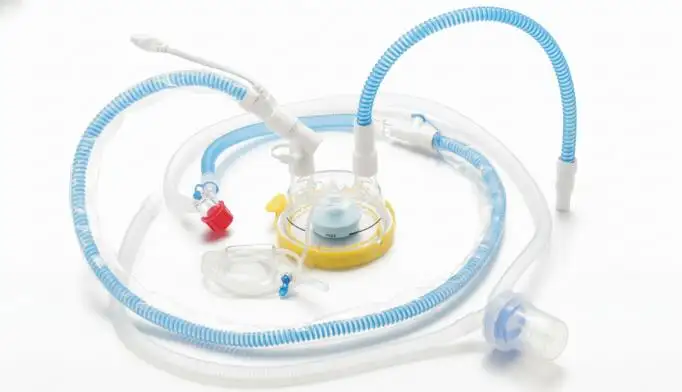
This is why better heating matters. A well-designed Ventilator Heated Breathing Circuit helps keep gas warm across the tubing path, reduces visible rainout, and supports a cleaner and more stable breathing environment.
Why Heating Matters in a Ventilator Circuit
Under normal breathing conditions, the upper airway warms and humidifies inspired gas. Once ventilation support bypasses or reduces that natural conditioning process, the system must help replace it. Professional guidance has long emphasized that delivered gas should be warmed and humidified appropriately, with one widely cited target being up to 37°C and 44 mg H2O/L at full saturation in invasive ventilation.
In practical use, poor heat retention can create several avoidable problems:
• Condensation can collect inside the tube and water trap
• Additional circuit handling may be needed to manage pooled water
• Airflow conditions may become less stable during use
• Moist environments may increase hygiene concerns during longer support periods
For buyers, the message is simple. Better heating is not only a comfort feature. It is part of maintaining circuit performance in real clinical settings.
How a Ventilator Heated Breathing Circuit Reduces Condensation
A strong Ventilator Heated Breathing Circuit should keep temperature distribution as even as possible from one end of the system to the other. Greetmed uses an embedded external wrapping heating wire design so the tube can be heated more uniformly. This helps minimize condensation inside the breathing tube.
That technical point becomes meaningful when translated into user benefit. More even heating can support:
• Less visible rainout inside the inspiratory path
• Reduced interruption caused by accumulated water
• A lower chance of moisture staying in the tube for extended periods
• More consistent gas delivery conditions from ventilator to patient interface
Published reviews also support the basic engineering logic behind this approach. Heated-wire circuits are used to keep gas temperature more stable through the circuit and to decrease condensation when compared with less controlled alternatives.
At the bedside, that means a circuit can do more than connect devices. It can actively help maintain a more usable ventilation pathway.
Practical Product Advantages for Hospitals and Device Buyers
At Greetmed, we focus on turning product features into practical value for the customer. The Ventilator Heated Breathing Circuit is intended for connecting the airway between a ventilator and a mask or endotracheal tube, while heating the gas inside the breathing tube to help prevent condensation.
Several design details are important here.
First, the product is designed for even tube heating with minimal condensation. This is useful because less condensate generally means less circuit disruption and easier management during respiratory support.
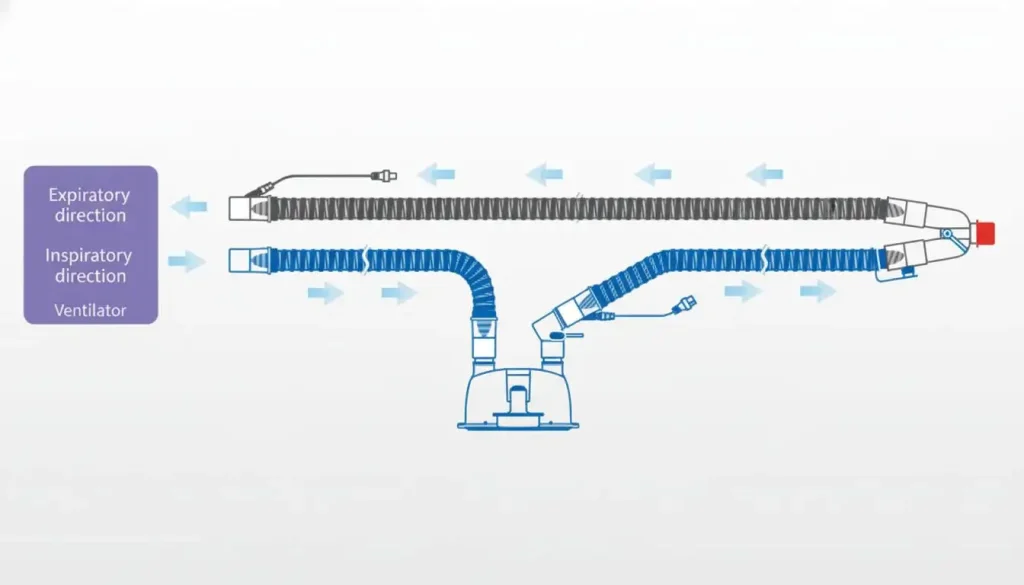
Second, compared with an ordinary heated circuit, the product is designed with lower air resistance. For the user, this supports smoother gas passage through the system. In purchasing terms, that is not a small feature. Lower resistance can contribute to a more efficient circuit pathway and a better overall handling profile.
Third, the tube structure is built to reinforce resistance to twisting. This makes the product more flexible, resilient, and easier to store. From a workflow perspective, this can help clinicians and supply teams in three ways:
• Better resistance to kinking during setup and positioning
• Easier storage and transport in routine inventory handling
• Improved flexibility without giving up structural reliability
These are not abstract selling points. They are daily-use benefits that matter in ICU, anesthesia, and respiratory care settings.
Product Configurations for Adult and Neonatal Use
One reason a Ventilator Heated Breathing Circuit must be selected carefully is that patient groups and ventilation needs are not the same. Greetmed offers both adult and neonatal configurations, including single-heated and dual-heated options.
For example, adult configurations include models such as:
• GT210-5H21006 with a 1.6 m adult heated inspiratory tube, 1.6 m adult corrugated breathing circuit, 0.5 m adult limb, connectors, water trap, 120° elbow, 3-way connector, heating wire cable, and blank cap
• GT210-SH20006 with a 1.6 m adult heated inspiratory tube and a 1.8 m adult corrugated breathing circuit, plus water trap and optional adult humidification chamber
Neonatal options include models such as:
• GT210-SH00006 with 1.6 m neonatal heated inspiratory tube, 1.6 m neonatal corrugated breathing circuit, and 0.5 m neonatal limb
• GT210-SH01106 with a neonatal extension tube added to the heated inspiratory tube
• GT210-DH01006 and GT210-DH01206 with both heated inspiratory and heated expiratory neonatal tubes
This range gives buyers more than product variety. It allows a closer match between circuit design and clinical application. Optional accessories such as hooks, clips, elbows, humidification chambers, and pressure measuring tubes also help facilities choose a setup that better fits their workflow.
What Buyers Should Evaluate Before Ordering
When selecting a Ventilator Heated Breathing Circuit, buyers should avoid focusing on tube length alone. A more useful evaluation focuses on system compatibility, moisture management, and practical usability.
Here is a useful list of things to do:
• Patient group: adult or neonatal
• Circuit structure: single heated limb or dual heated limbs
• Tube length: such as 1.6 m or 1.8 m according to setup needs
• Water management components: including the water trap
• Connector layout and accessory compatibility
• Storage, flexibility, and resistance to twisting
It's also a good idea to read up on the standards and guidelines for compatibility for breathing tubes and ventilator accessories. ISO keeps putting out requirements for breathing tubes and other respiratory equipment. This reinforces the need to select products that support safety and reliable use in clinical practice.
For procurement teams, the most suitable product is rarely the one with the longest specification list. It is the one that reduces avoidable handling issues and supports stable use in the intended care environment.
Why Greetmed Positions Better Heating as Practical Value
At Greetmed, we believe the value of a Ventilator Heated Breathing Circuit should be explained in the order that clients actually think: function first, risk reduction second, workflow efficiency third. Better heating helps because it supports a drier circuit, smoother gas flow, and more manageable daily operation. Those results are easier to understand than just technical language.
This makes it easier for hospitals, distributors, and OEM buyers to buy:
• More reliable condensation control
• Better usability across adult and neonatal applications
• Flexible configurations with practical accessory options
• Product features that support real respiratory care workflows
If your team is looking at ventilator circuit options for use in the ICU, neonatal unit, or for respiratory support, get in touch with Greetmed to talk about the best Ventilator Heated Breathing Circuit setup for your project. A circuit with the right fit can help control condensation, support easier operation, and strengthen the overall stability of the airway connection.
Submit Your Request
Recent Posts

Tags
- Adult Diapers
- Are custom medical devices safe
- Baby Diapers
- Can respiratory anesthesia be used
- Digital Healthcare
- Do you offer customized consumables
- European Market
- How do you take care of a skin wound
- Industry Trends
- Lady Sanitary Napkins
- Medical Devices
- OEM Medical Devices
- Product Introductions
- Protective Equipment
- Under Pads
- What are custom-made medical devices
- What are diagnostic products
- What are hospital dressing products
- What are medical tube catheters
- What are some common protective equipment
- What are the appropriate applications for hospital dressing products
- What are the appropriate uses for protective equipment
- What is a gynecological examination
- What is a medical consumable
- What is an anesthesia kit
- What is an OEM in medical devices
- what is an wound skin care
- what is can disposable ultrasonic diagnostic
- What is good manufacturing medical devices
- What is hospital-grade protective equipment
- what is medical equipments hospital furniture
- What is medical sterilization wrapping
- What is rehabilitation equipment device
- What medical consumables do you supply
- Where can I find laboratory consumables wholesale
- where can I find medical protection device
- where to buy hypodermic accessories
- where to buy medical apparel
- where to buy medical consumable accessories
- where to find OEM medical device supplier
- where to find rehabilitation equipment supplier
