



Airway Management Equipment for Reducing Condensation in Breathing Circuits


Airway Management Equipment incorporating a heated breathing circuit can help reduce condensation by maintaining a more stable gas temperature throughout the tubing. Heating-wire layout, tube insulation, internal diameter, airflow resistance, circuit length, humidification settings, and ambient temperature all affect condensation control.
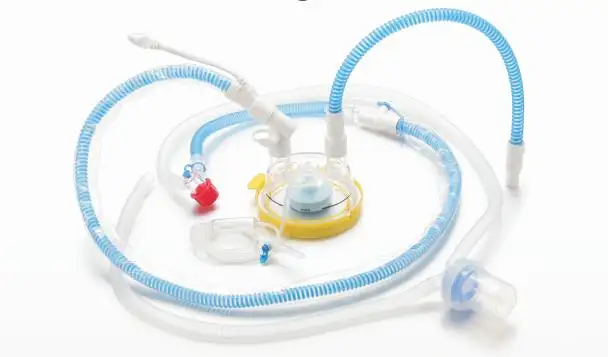
When warm, humidified respiratory gas enters a cooler ventilator breathing circuit, heat is gradually lost through the tube wall. If the gas temperature falls below its dew point, water vapor may condense inside the tubing. Effective moisture management, therefore, depends on the complete design of the Airway Management Equipment, not only on the presence of a heating wire.
Why Condensation Forms in Breathing Circuits?
Temperature Loss and Dew Point
When the temperature of gas that has been humidified drops, the gas can no longer hold the moisture, and the moisture is deposited as liquid on the walls of the breathing circuit.
Some of the conditions that promote condensation are:
•Low ambient temperature
•Long breathing circuits
•High degrees of humidification
•Poor insulation of breathing circuit tubes
•Heating the circuit in an uneven manner
•Low gas flow
•Long duration of use
As a general rule, the more the temperature decreases, the more likely that a breathing circuit will become humid.
Factors Affecting Condensation
| Variable | Possible Effect |
| Temperature of the gas | Warmer gas in a cooler room creates a greater temperature differential |
| Humidity | Higher humidity content creates a greater potential for condensation |
| Length of the circuit | More surface area creates greater potential for heat loss |
| Material of the tube | Depending on wall thickness and thermal properties, (effect varies) |
| Temperature of the gas | Gas flow effects heat and moisture movement |
| Routing of the circuit | Low points will collect moisture |
| State of the room | Air conditioning creates drafts and cools exposed tubing |
Due to the nature of the variables, a heated breathing circuit will reduce, but not entirely eliminate, condensation in all operating conditions.
How Does Airway Management Equipment Reduce Condensation?
Maintaining Tube Temperature
To minimize temperature loss airway management equipment is heated. This Equipment warms the gas prior to tube connection to the gas humidifier.
Keeping a more consistent tube temperature may:
•Decrease the gas tube wall temperature differential
•Minimize the development of cold spots
•Reduce the collection of moisture along the circuit
•Help provide a more consistent level of humidity
•Lower the need for more frequent draining of the circuit
Actual performance is dictated by proper equipment selection, temperature settings, circuit design, room conditions, and user instructions.
Enhancing Heat Distribution
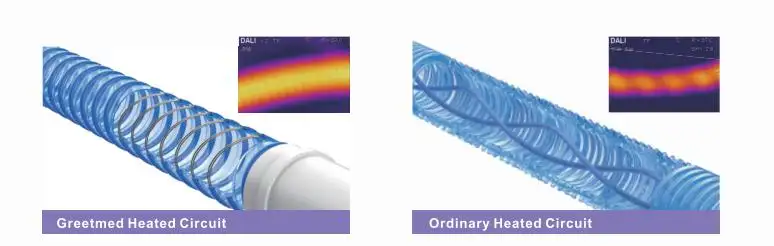
Uniform heat distribution is vital to prevent creating condensation. The position, spacing, length, and method of attachment of heating wires determine heat distribution.
A well-designed heated wire breathing circuit should provide thermal support without:
•Restricting the internal gas pathway
•Reducing tube flexibility
•Increasing external bulk
•Increasing the risk of twisting or kinking
Heating-Wire Designs in Airway Management Equipment
Embedded Heating Wire
An embedded heating wire is integrated into the breathing tube structure. This approach helps maintain spatially stable wire position and helps keep consistent spacing of the heating element and gas pathway.
Some benefits of the design include:
•Less movement of heating wire
•Ability to build integrated circuits
•Improved consistency of heat transfer
•Easier handling of circuits
External-Wrapping Heating Wire
This design places the heating wire around the outside of the respiratory tubing to allow the heating wire to make contact with the tubing to maintain heating, while still allowing the internal channel of the tubing to carry air.
This design may help with:
•More uniform heating of the tubing
•Less cold spots of tubing
•More freedom in positioning the heating wire
•Less interference with the internal airflow of the tubing
Evaluation Area Design Focus Relavance to Contensatiion Control
| Factor | Design Consideration | Purpose/Benefit |
| Heating uniformity | Wire layout and spacing | Helps avoid cold spots |
| Thermal stability | Heating output and control | Helps reduce the risk of heated gas cooling |
| Tube wall design | Material and thickness | Affects heat loss |
| Internal pathway | Diameter and surface profile | Affects airflow resistance |
| Flexibility | Tube and wire integration | Aids in positioning of the circuit |
| Kink resistance | Reinforcement structure | Helps to maintain an open pathway |
Importance of Tube Design
Internal Diameter and Airflow Resistance
The internal pathway of Airway Management Equipment must be designed with a sufficient internal diameter to allow gas to pass. A heating pathway must be designed to avoid an obstruction to the breathing circuit.
Airflow resistance can be caused by tubing that is:
•Compressed
•Sharply bent
•Twisted
•Partially collapsed
•Improperly connected
For a breathing tube, the design of a low-resistance tube is important for controlling the gas pathway. Therefore, both thermal and airflow performance must be evaluated by the buyer when respiratory circuit equipment is purchased.
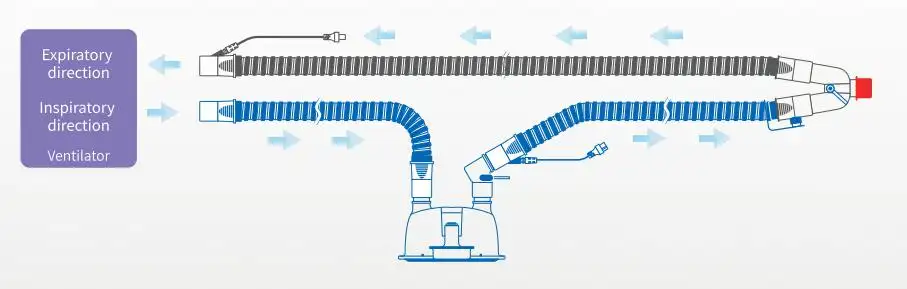
Flexibility and Kink Resistance
A breathing tube must possess both flexibility and the ability to resist kinking. Tubing that is too soft may kink, and tubing that is too rigid may be difficult to position in the user area.
When assessing Reinforced Airway Management Equipment the following characteristics should be considered:
• Flexibility and resilience.
• Resistance to twisting.
• Ability to recover shape after being bent.
• Stability of connectors.
• Storage and transport convenience.
• Compatibility with the planned clinical layout.
Why is the Management of Moisture Imperative?
Moisture is more than the water we can see. Moisture that builds without control can:
•Heavily burden the circuit
•Shift the layout of the tubing
•Collect in the lower elevation zones
•Cause impediments to air flow
•Disrupt various control elements
•Necessitate more frequent inspections and increased drainage
•Deter the purpose of contamination control.
There is a clear relationship between circuit management and moisture. However, the management of contamination will be influenced by how the products are transported, used and disposed of, as well as the actions of the people involved, environmental conditions, and the operation of the facilities.
Heated vs Non-Heated Breathing Circuits
| Comparison | Heated Circuit | Non-Heated Circuit |
| Temperature management | Provides active thermal support | Primarily affected by room temperature |
| Condensation control | Helps reduce moisture accumulation | More dependent on environmental conditions |
| Product structure | Includes heating wire and connections | Generally simpler |
| Setup requirements | Requires compatible heating equipment | Usually needs fewer electrical connections |
| Procurement review | Heating, resistance, connectors, and compatibility | Dimensions, materials, interfaces, and resistance |
| Selection basis | Humidification method and respiratory system | Applications not requiring active tube heating |
Neither design is suitable for every application. The correct Airway Management Equipment should be selected according to the ventilator or humidifier, intended population, circuit specification, clinical procedure, and applicable regulatory documentation.
Quality Considerations for Airway Management Equipment
A medical breathing circuit supplier should maintain controls covering:
•Raw-material verification
•Tube and connector dimensions
•Circuit leakage and airtightness
•Heating-wire continuity
•Heating uniformity
•Airflow resistance
•Kink and tensile performance
•Packaging integrity
•Label accuracy
•Batch traceability
Quality-system certification should be reviewed together with the documentation and regulatory status of the specific product model.
Final Words
Condensation in a breathing circuit is influenced by temperature, humidity, airflow, circuit length, tube construction, and room conditions. Heating wire is an important component of Airway Management Equipment, but reliable condensation control also requires uniform heating, low airflow resistance, kink-resistant tubing, secure connections, and equipment compatibility.
Greetmed supplies disposable heated breathing circuits and related medical consumables for global healthcare partners. Our team offers support for specification review, connector compatibility, quality documentation, packaging requirements, and coordination of international supplies. Buyers can submit their ventilator or humidifier model, circuit design, connector measurements, intended user group, target market, and estimated order quantity in order to receive a concentrated product evaluation.
FAQs
Q1. What Airway Management Equipment does Greetmed supply?
For respiratory and ventilation needs Greetmed supplies disposable heated breathing circuits, closed suction catheters, and other airway management consumables.
Q2. How does Greetmed's heated breathing circuit reduce condensation?
Greetmed's heated breathing circuits utilize a heating-wire structure to create a more uniform temperature throughout the circuit, which helps to minimize cold spots and reduce the accumulation of moisture within the tubing.
Q3. What is the intended use of Greetmed's heated breathing circuit?
Greetmed's heated breathing circuit is intended to connect a ventilator to either a mask or an endotracheal tube, and it is intended to help control condensation by heating the gas within the circuit.
Q4. Does Greetmed offer embedded or external-wrapping heating-wire designs?
Greetmed's heated breathing circuits are available in both embedded and external-wrapping designs, depending on the product specification.
Q5. How does the tube design help control airflow resistance?
The circuit design incorporates an open pathway and a reinforced tube to minimize the resistance, twisting and kinking of airflow.
Submit Your Request
Recent Posts

Tags
- Adult Diapers
- Are custom medical devices safe
- Baby Diapers
- Can respiratory anesthesia be used
- Digital Healthcare
- Do you offer customized consumables
- European Market
- How do you take care of a skin wound
- Industry Trends
- Lady Sanitary Napkins
- Medical Devices
- OEM Medical Devices
- Product Introductions
- Protective Equipment
- Under Pads
- What are custom-made medical devices
- What are diagnostic products
- What are hospital dressing products
- What are medical tube catheters
- What are some common protective equipment
- What are the appropriate applications for hospital dressing products
- What are the appropriate uses for protective equipment
- What is a gynecological examination
- What is a medical consumable
- What is an anesthesia kit
- What is an OEM in medical devices
- what is an wound skin care
- what is can disposable ultrasonic diagnostic
- What is good manufacturing medical devices
- What is hospital-grade protective equipment
- what is medical equipments hospital furniture
- What is medical sterilization wrapping
- What is rehabilitation equipment device
- What medical consumables do you supply
- Where can I find laboratory consumables wholesale
- where can I find medical protection device
- where to buy hypodermic accessories
- where to buy medical apparel
- where to buy medical consumable accessories
- where to find OEM medical device supplier
- where to find rehabilitation equipment supplier
