



Emergency CPR Mask One-Way Valve and Filter: How Do They Work?


An Emergency CPR mask includes a one-way valve and a filter. The valve permits the rescuer's exhaled breath to enter the patient while minimizing backflow to the rescuer. The filter provides a barrier to droplets, secretions and particulates. The transparent body and seal with a cushion assist in the rescuer breathing in a more controlled and hygienic manner.
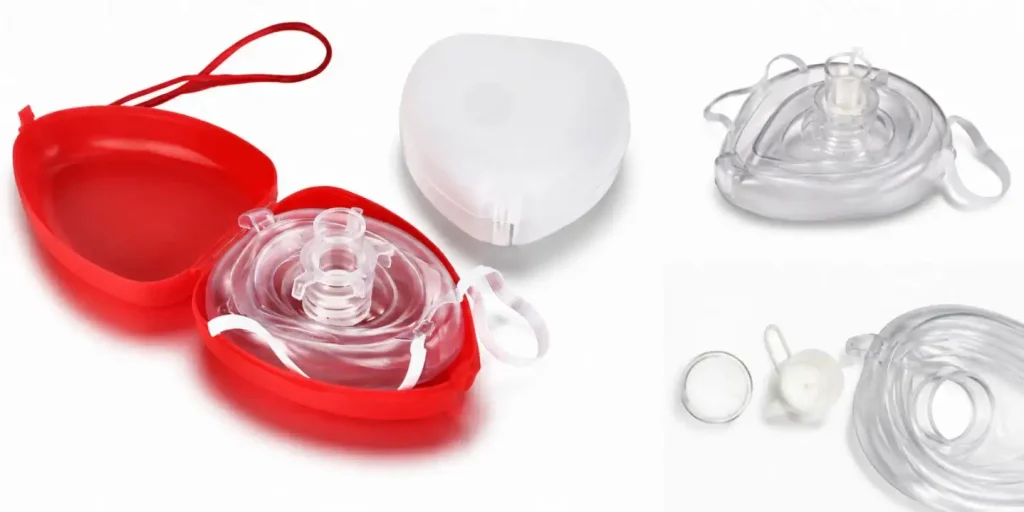
While performing CPR, a rescuer may directly encounter exhaled air, saliva, secretions, and even vomit. The Emergency CPR Mask provides separation and allows rescue breathing in a controlled manner in first aid, workplace, clinical, and public response situations.
The Emergency CPR Mask does not eliminate the risk of infections, and no barrier device can replace CPR training. It is critical to call Emergency Services and use the AED when it becomes available. The American Heart Association promotes CPR with breath aids and continuous compressions as the preferred course of action when it is appropriate and when the rescuer is trained to do so.
What is An Emergency CPR Mask?
The Emergency CPR Mask is a barrier device that is placed over the mouth and nose of the patient to assist in rescue breathing while it limits the contact between the rescuer and the patient.
It includes the following:
•Transparent body of the mask
•Cushion (which is foldable)
•One-way valve
•Filter (disposable)
•Oxygen port
•Elastic head strap
•Carrying case
The body being transparent helps the rescuer to see the position of the patient and the cushion (which is also foldable) helps in achieving a better seal on the patient's face.
How Does the One-Way Valve Work?
When the rescuer breathes into the valve, the internal membrane is opened due to the pressure in the valve. The air then moves to the patient through the filter and the mask chamber.
Airflow route: Rescuer → One-Way Valve → Filter → Mask Chamber → Patient
The exhaled air as well as fluids that are exhaled are prevented from being returned to the rescuer and therefore reduce the exposure of the rescuer. This is done by the valve that closes or redirects the flow going back when the rescuer stops blowing. The American Red Cross describes one-way-valve CPR barriers as helping reduce disease transmission, while pocket masks may combine a valve with a disposable filter to form a barrier against liquids.
A reversed, loose, blocked, or damaged emergency CPR mask one-way valve may restrict airflow.
What Does the Disposable Filter Do?
The CPR mask disposable filter provides another layer between patient and rescuer. It may:
•Help intercept droplets and secretions
•Reduce contact with exhaled material
•Protect the valve assembly
•Improve rescue-breathing hygiene
A disposable filter should not be described as blocking every virus or microorganism. Wet, damaged, contaminated, or used filters should be replaced according to the instructions.
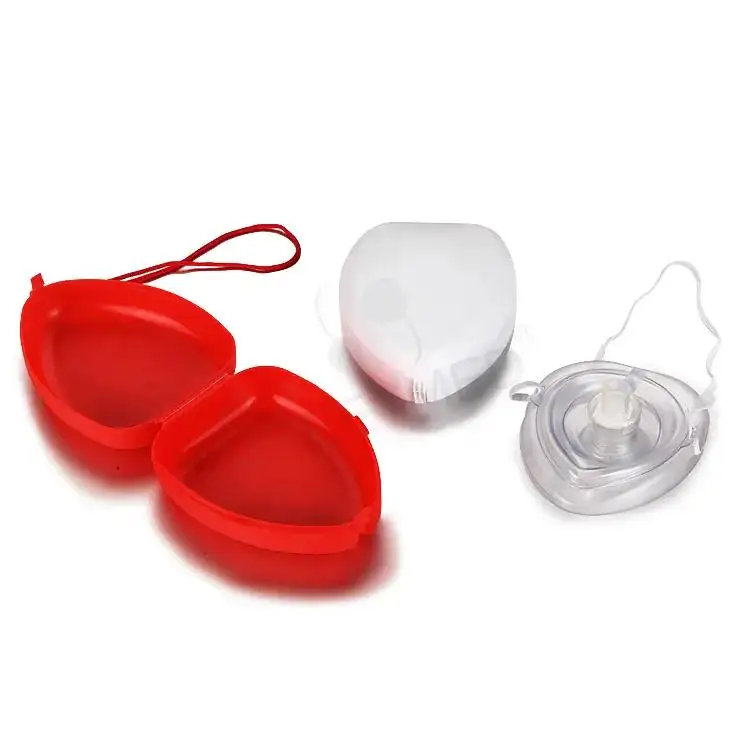
One-Way Valve vs. Disposable Filter
| Component | Main Function | How It Works | Handling |
| One-way valve | Controls airflow direction | Opens for rescue breaths and limits reverse flow | Inspect before use |
| Disposable filter | Adds a physical barrier | Helps intercept droplets, particles, and fluids | Replace after use |
| Cushion mask | Creates a facial seal | Covers the mouth and nose | Check for damage |
| Oxygen port | Connects oxygen | Accepts a compatible oxygen source | Use as instructed |
Why Is the Mask Seal Important?
Even if all aspects of the Emergency CPR Mask work perfectly, the design component that cushions to create an airtight seal against the face is still essential. Without that seal, air may pass out of the mask and ventilation to the patient will be inadequate.
Seal effectiveness is diminished when there are cushion defects, as well as size and placement issues. It is also diminished by facial hair, injury, hand positioning, and the failure to maintain an open airway. It is upon the trained rescuer to ensure seal effectiveness and to watch for the rise of the chest.
How Is an Emergency CPR Mask Used?
- The first step is to remove the mask from the case and inspect it.
- Valves and filters should also be in the correct position to ensure effectiveness.
- Position the narrow end over the patient's nose.
- Seal the mask against the mouth and nose.
- Open the airway as trained in CPR.
- Give breaths and look to see if the chest rises.
- Follow the product instructions to deal with the used components.
- Preparing the mask should not delay emergency calls, chest compressions, or AED use.
A CPR mask with oxygen port connects to a compatible supplemental oxygen source and is generally intended for trained responders or clinical personnel.
Greetmed First Aid Emergency CPR Mask
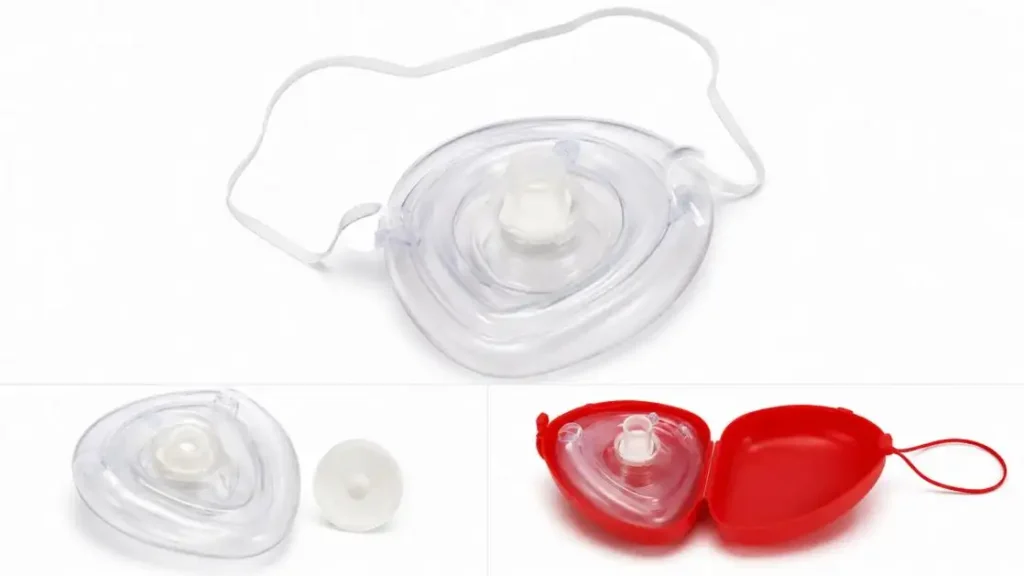
Greetmed's GT117-300 is a latex-free Emergency CPR Mask designed for manual resuscitation involving adults, children, and infants, subject to correct training and product instructions. It includes:
•Foldable cushion mask
•One-way valve and disposable filter
•Oxygen port
•Elastic head strap
•Protective storage case
The design minimizes exposure to natural rubber latex proteins. The transparent body aids in the observation of the user, while the foldable cushion aids in storage.
Greetmed recommends storing the emergency CPR mask in its case. It can be safely stored from -45°C to 71°C with less than 80% relative humidity. Buyers need to check the approved label for the storage, shelf-life, cleaning, and disposal instructions.
Greetmed Manufacturing and Supply Support
Greetmed supplies disposable and general medical products. The GT117-300 supports OEM packaging, labeling, and branding. Product information lists CE, ISO 13485, and FDA-related compliance references; documentation and market-access status should be verified for each destination market.
The minimum order quantity is 5,000 pieces. Payment methods are T/T and L/C, with shipments from Shanghai or Ningbo.
Conclusion
An Emergency CPR Mask's one-way valve allows air to flow in one direction, and a droplet barrier is created by the disposable filter. Factors that affect the effectiveness of the mask include ventilation, the fit of the mask, the cushion condition, and airway positioning. Furthermore, the mask should be used by a person with training.
Greetmed's GT117-300 combines a latex-free foldable cushion, one-way valve, disposable filter, oxygen port, head strap, and storage case. Medical distributors, first aid kit suppliers, and institutional buyers can share the target market, packaging requirements, quantity, and compliance needs with Greetmed to evaluate an appropriate OEM or bulk supply solution.
FAQs
Q1. What is the function of the Greetmed Emergency CPR Mask?
The Greetmed Emergency CPR Mask aids in assisted rescue breathing while eliminating direct contact between the rescuer and the victim.
Q2. Does the Greetmed CPR Mask contain a one-way valve?
The GT117-300 model does contain a one-way valve which directs the rescue breath into the victim and minimizes the airflow back to the rescuer.
Q3. What is the function of the disposable filter?
The disposable filter is designed to minimize the droplets, secretions and particles barrier during rescue breathing. It should be changed after each use or if it becomes contaminated.
Q4. Is the Greetmed Emergency CPR Mask latex free?
The mask is manufactured with latex free materials to lessen the exposure to natural rubber latex proteins.
Q5. Is the Greetmed Emergency CPR Mask suitable for children?
The product is suitable for Adults, Children and Infants. The actual use should comply with the CPR training, instructions of the product and proper placement as per the size of the victim.
Submit Your Request
Recent Posts
Tags
- Adult Diapers
- Are custom medical devices safe
- Baby Diapers
- Can respiratory anesthesia be used
- Digital Healthcare
- Do you offer customized consumables
- European Market
- How do you take care of a skin wound
- Industry Trends
- Lady Sanitary Napkins
- Medical Devices
- OEM Medical Devices
- Product Introductions
- Protective Equipment
- Under Pads
- What are custom-made medical devices
- What are diagnostic products
- What are hospital dressing products
- What are medical tube catheters
- What are some common protective equipment
- What are the appropriate applications for hospital dressing products
- What are the appropriate uses for protective equipment
- What is a gynecological examination
- What is a medical consumable
- What is an anesthesia kit
- What is an OEM in medical devices
- what is an wound skin care
- what is can disposable ultrasonic diagnostic
- What is good manufacturing medical devices
- What is hospital-grade protective equipment
- what is medical equipments hospital furniture
- What is medical sterilization wrapping
- What is rehabilitation equipment device
- What medical consumables do you supply
- Where can I find laboratory consumables wholesale
- where can I find medical protection device
- where to buy hypodermic accessories
- where to buy medical apparel
- where to buy medical consumable accessories
- where to find OEM medical device supplier
- where to find rehabilitation equipment supplier
