



Sharps Container Selection: Follow the Waste From Point of Use to Handover


A sharps container can be purchased according to a description, but not perform well in its application. The capacity might not be sufficient for the devices to be discarded, the fill level may be hard to observe, or stock to replace the devices may not be available when the container is ready to be closed.
For hospital buyers, infection prevention teams, and medical distributors, the selection process should go through disposal. Begin at the point of the sharp's use and end at the point where the closed container goes into the permitted waste disposal system. Linking the selection of products to staff access, replacement and the needs of the receiving waste service.
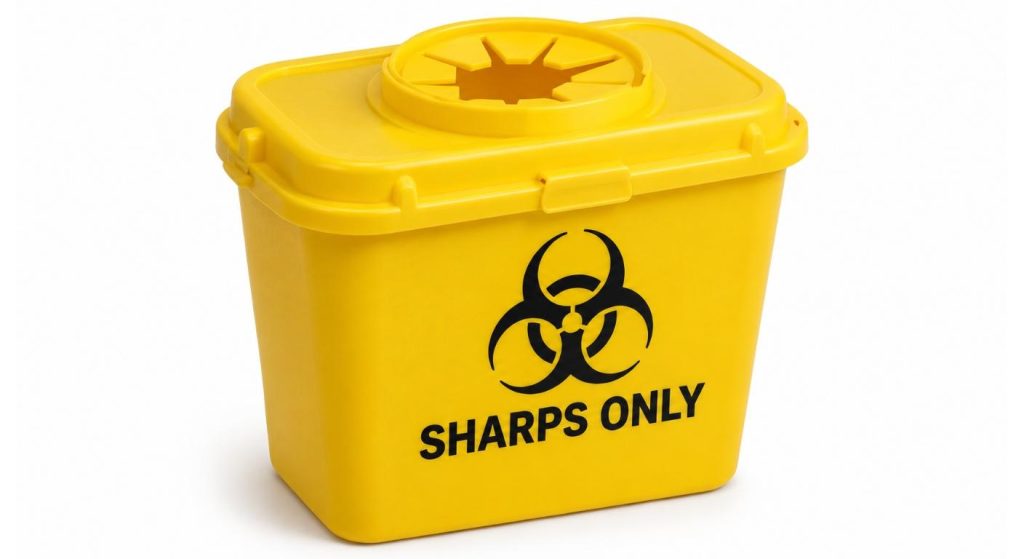
Start With the Devices Entering the Container
There is no need to buy one container for each work area, but identify which are the sharps produced in each work area. Needles, lancets and other devices allowed with syringes vary in length, shape, and space requirement.
The opening and internal geometry should be adequate to allow the intended items to pass so that staff are not forced to push items through the opening. Avoid choosing a smaller container because you think that contaminated devices can be made to fit.
One source of sharps waste is illustrated by the disposable syringe range of products from Greeted. When determining requirements for containers, review the actual devices in use in the facility (including activated safety features). A volume designation doesn't indicate whether those devices can be disposed of easily, as part of the approved workflow.
Assess the Body, Opening, and Lid Together.
A container should be capable of suitable puncture resistance, containment and closure for its use. These characteristics are based on the full product (body, lid attachment, disposal opening and any assembly needed before use).
PP sharps containers are found in the disposable supplies catalogue provided by Greetmed in their GT163 range. Identifying material is helpful, but it's not a guarantee that any design will have the same performance or destination-market requirements for polypropylene.
Ask for the current model specification, instructions and supporting evidence. Specify if product is assembled and how it is verified that the lid fits properly. Don't assume that puncture resistance means an absolute protection against injury, nor label a model as "leakproof" in any direction without proof.
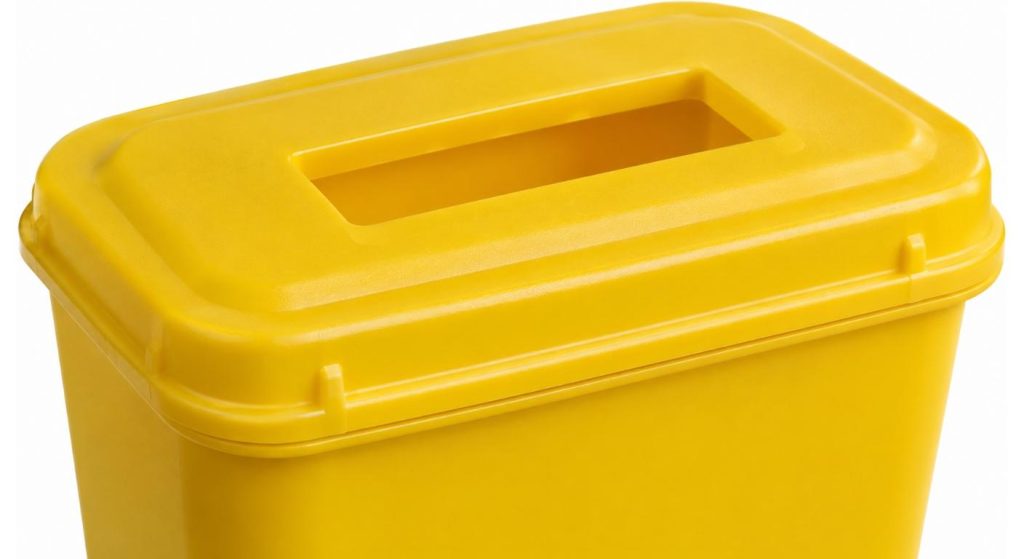
Select the one that says Capacity Around the Replacement Workflow.
The biggest size doesn't necessarily mean the most practical. Think about the volume of the device, space available, intended use and how staff will know and replace a container when it is full.
Know the difference between the nominal capacity and the allowable fill level. Do not use remaining space above the marked fill line, or manufacturer instructions, as additional disposal space.
A smaller size might be appropriate for a specific work space, but might need to be replaced more often. A larger unit can be too big or difficult to operate when shut. Discuss these considerations with the appropriate clinical and waste teams and make sure the replacement program considers peak usage periods, not just average waste.
| Catalogue Model | Listed Capacity |
| GT163-108 | 0.8 L |
| GT163-109 | 1.0 L |
| GT163-107 | 1.5 L |
| GT163-104 | 2.0 L |
| GT163-102 | 3.0 L |
| GT163-101 | 4.0 L |
Put the Container in the DDD Place
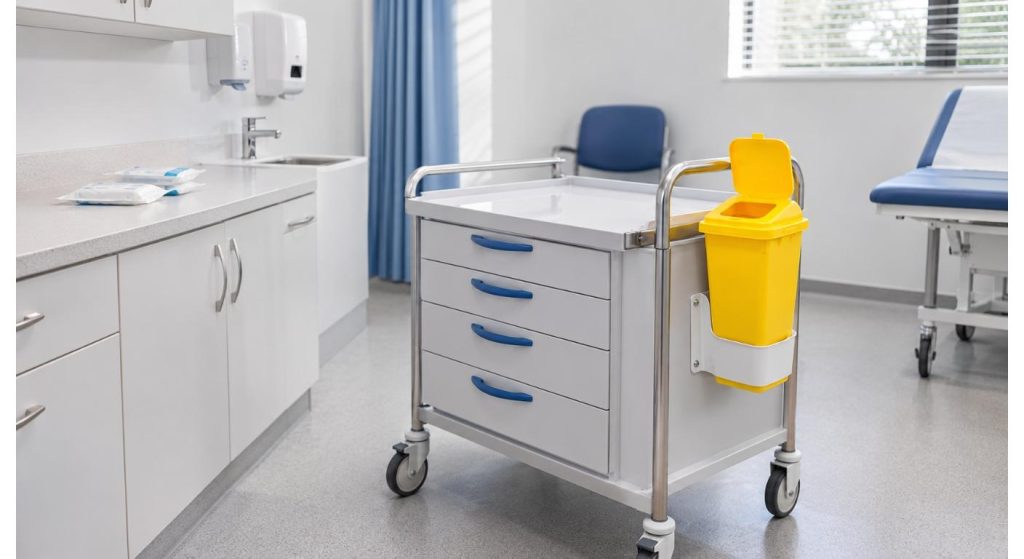
Appropriate positioning eliminates the need to carry away a used sharp or temporarily place it on a surface. The container should be near the point of use, upright, stable, and visible to staff to see the container opening and filling level.
Talk with the workers about the work site review. It can be altered when furniture, doors, equipment and workstation layout change, and can be blocked by furniture, doors, equipment and changes in workstation layout.
Never put containers on the ground. If a bracket, trolley or holder is necessary, ensure it is appropriate for the chosen model and setting. Access to the information must also be secured, but not made difficult for staff to access normally. Placement is not just a decision made after product delivery, but also a factor of product assessment.
Perform a simple and controlled Disposal Action
A suitable opening should enable disposal of the facility in such a way as to not involve hands with the contents of the facility. Staff should not go inside a used container, push down the contents of a container and should not try to get something that has already been thrown away.
Do not routinely recap, bend, break or separate needles and syringes before disposing with contamination. Observe device instructions and the approved procedures of the facility. The container should be sized to support the disposal plan, and not be made to support additional handling.
Evaluate a new model using clean demonstration materials and trained reviewers. Ensure staff are aware of how it is opened, assembled, indicated and closed. Never test the convenience of a sample by using contaminated sharps or by assuming that the operating procedure is the same as the one used previously with a familiar-looking lid.
This will be finalized when the school closes or the waste is handed over.
Recognize that there are differences between any temporary closure position and the final closure to be removed. Request that the supplier describe the mechanism they have chosen and the restrictions on reopening.
Close and store container at indicated fill level. Do not empty a single use container for reuse or move the contents to a different container to combine waste once the container has been placed in the disposal process.
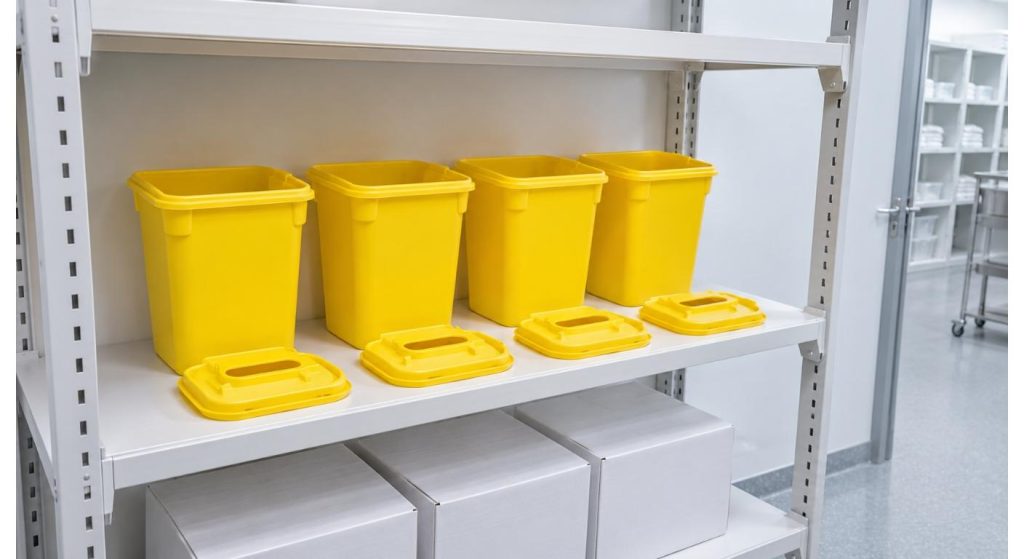
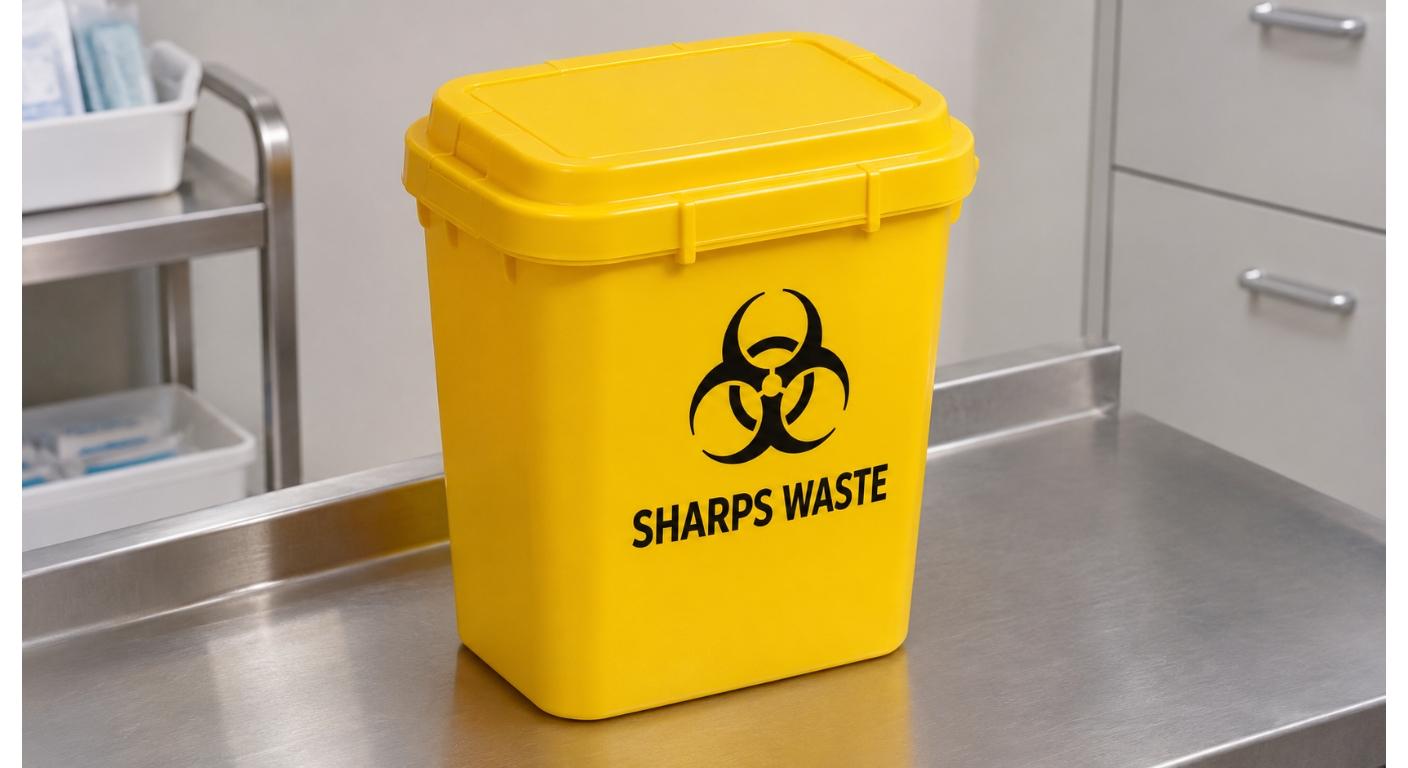
Co-ordinate collection, transport and receipt of waste from closed units by responsible waste service. Labeling, colour coding, secondary containment and transport arrangements will vary according to the destination and waste stream. A container that is yellow or red should NOT be described as universally compliant because it is in a catalogue photo.
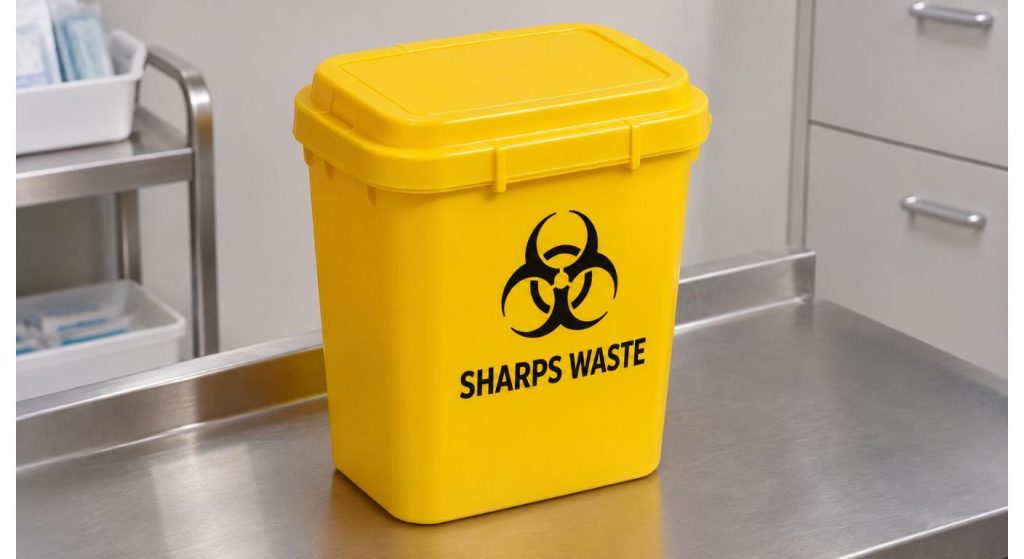
Establish linkage between Purchasing and Replacement Stock and Acceptance.
Reliable disposal systems need to have replacement containers when and wherever they are needed. Verify order quantities, carton layouts, storage areas and models placed by each area.
Start the configuration review with a resource from Greetmed's product catalogue and request current documents for the units that are proposed. Before copying historical catalogue details into a tender or recurring order, it is important to review the details.
Talk to Greetmed sales about the devices you plan to install, the layout, capacity requirements, the audience you are targeting, and the labelling requirements. Keep the accepted sample and verify how the changes in the specification will be communicated. Ensure that clinical users and waste handlers are involved in the review to ensure that the product chosen is not going to make disposal more difficult.
Conclusion
There is a need to link immediate disposal with controlled closure and handover when selecting sharps containers. The opening, body, capacity, location and replacement supply all impact whether the system is really working in practice.
Test the entire model in the target environment and validate the relevant documentation. This provides a better benchmark for procurement and helps ensure that waste disposal routes are in place for staff to follow without needless handling contaminated sharps.
FAQs
Q1. Do larger sharps containers necessarily mean better?
No. Coordinate size of the device, available space, replacement procedure. What counts is the practical suitability, not the nominal capacity.
Q2. When to replace a container?
Follow the marked fill line and instructions. Avoid overfilling or pushing items down to accommodate more items.
Q3. Is there any possibility of using one container only once and then reusing it?
No. Never discard a used single use container or pour its contents into a re-useable container. Adhere to approved waste process.
Q4. Is compliance indicated by the color of the container?
No. Establish confirmation, performance and acceptance standards for destination and waste stream. There are no standard colors.
Q5. Is the selected container able to be supported by any wall bracket?
Do not assume so. Verify the combination of the holder and container, installation requirements, stability and access before deployment.
Submit Your Request
Recent Posts

Tags
- Adult Diapers
- Are custom medical devices safe
- Baby Diapers
- Can respiratory anesthesia be used
- Digital Healthcare
- Do you offer customized consumables
- European Market
- How do you take care of a skin wound
- Industry Trends
- Lady Sanitary Napkins
- Medical Devices
- OEM Medical Devices
- Product Introductions
- Protective Equipment
- Under Pads
- What are custom-made medical devices
- What are diagnostic products
- What are hospital dressing products
- What are medical tube catheters
- What are some common protective equipment
- What are the appropriate applications for hospital dressing products
- What are the appropriate uses for protective equipment
- What is a gynecological examination
- What is a medical consumable
- What is an anesthesia kit
- What is an OEM in medical devices
- what is an wound skin care
- what is can disposable ultrasonic diagnostic
- What is good manufacturing medical devices
- What is hospital-grade protective equipment
- what is medical equipments hospital furniture
- What is medical sterilization wrapping
- What is rehabilitation equipment device
- What medical consumables do you supply
- Where can I find laboratory consumables wholesale
- where can I find medical protection device
- where to buy hypodermic accessories
- where to buy medical apparel
- where to buy medical consumable accessories
- where to find OEM medical device supplier
- where to find rehabilitation equipment supplier
