



Single-use Medical Products Material Selection: PVC, TPU, Silicone, and PP


Designing Single-use Medical Products (SuMPs) requires thoughtful consideration of the appropriate material. Factors such as flexibility, transparency, sealing ability, biocompatibility, and how the material behaves during and after sterilization, as well as the shelf life, comfort for the user, and how efficiently the material is able to be processed during manufacture all can be influenced by the material selection.
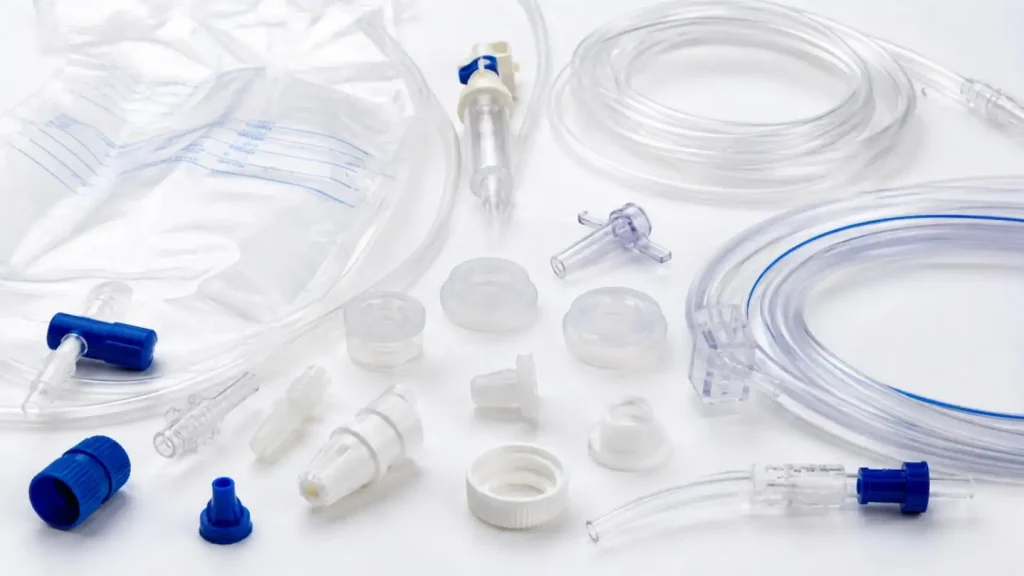
There are many materials that are used to create disposables for the medical field such as PVC, TPU, silicone, and polypropylene. There is no "one-size-fits-all" approach when it comes to selecting materials for medical devices. When selecting a material for medical devices or disposables, the intended use of the device, how the device will be used (the type of contact), the structure of the device, the way the device is to be manufactured, how the device will be sterilized, and the needs of the market where the device will be sold will all need to be considered.
What Materials Are Commonly Used in Single-use Medical Products?
PVC
Flexible Single-use Medical Products (SuMPs) that need to be clear for easy observation of their contents can be manufactured using medical-grade polyvinyl chloride (PVC). PVC is an excellent choice for manufacturing flexible SuMPs due to its:
•Good transparency for liquid observation
•Adjustable flexibility through formulation
•Mature extrusion and heat-sealing processes
•Efficient high-volume manufacturing
•Competitive material and processing costs
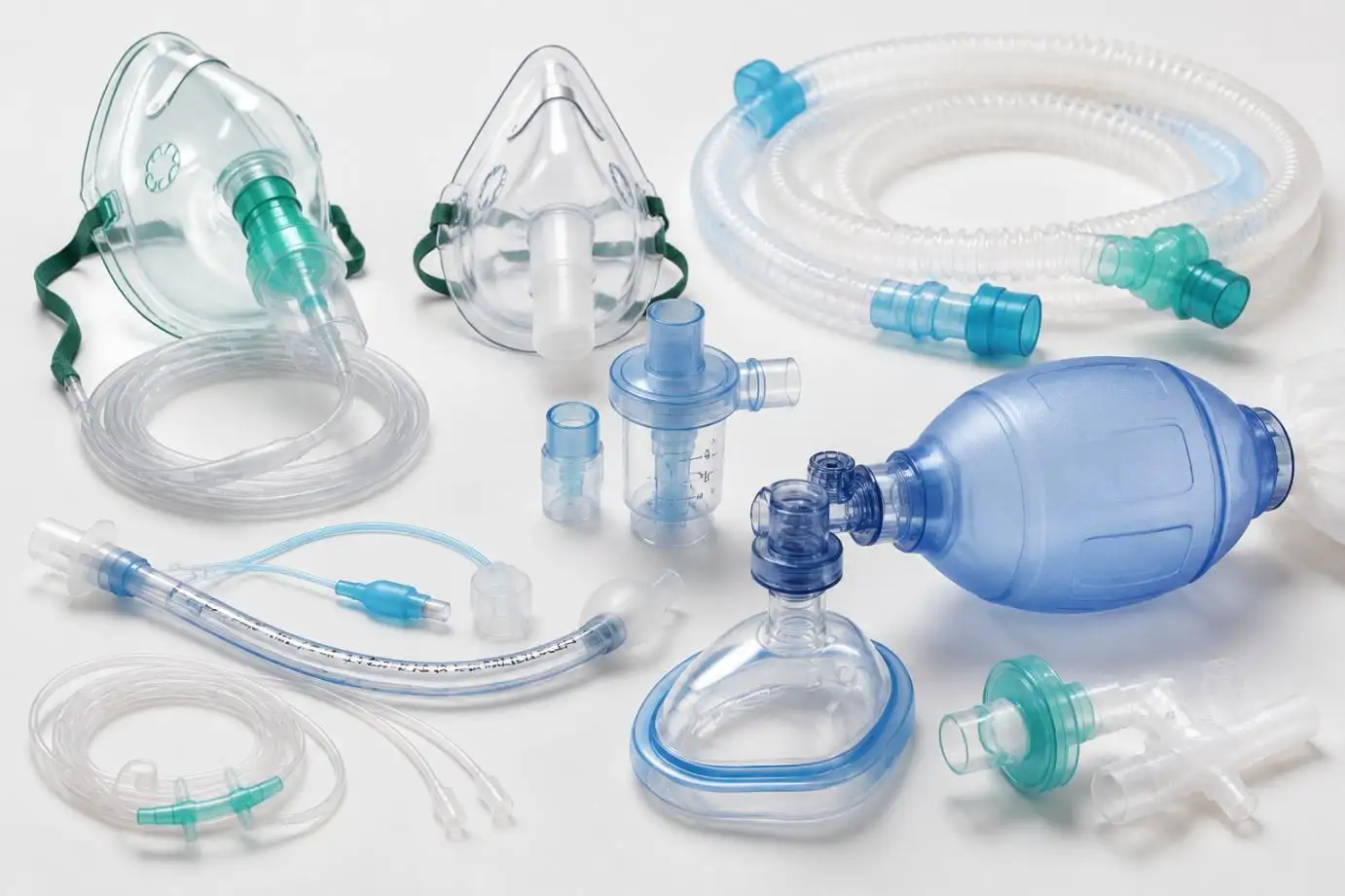
Examples of flexible, PVC-based SuMPs can include, but are not limited to, urine bags, drainage bags, flexible tubing and respiratory circuit components. Flexible PVC contains plasticizers, therefore, buyers should confirm which formulation is required (conventional, DEHP-free or other).
TPU
For applications that require flexibility and have a need for design safety against abrasion and kinking, thermoplastic polyurethane (TPU) can be an excellent choice of material due to its good bendability and ability to return to its original dimensions (membrane effect).
TPU is easy to shape through extrusion, injection molding and other thermoplastic processes, yet its performance is highly dependent on the chemistry and hardness, and on the specific medical-grade TPU. Because of this, it must also be subjected to application-specific
Silicone
Silicone provides elasticity, flexibility, and a large range of functional temperatures. Softness and comfort are optimal for many disposable silicones used for components and products for medical applications.
Silicone can typically be found in:
•Flexible components of catheters
•Connectors for respiratory therapy
•Valves, membranes, seals, and gaskets
•Tubing
Silicone is more expensive than other polymers for raw materials and processing. The use of silicone should be confined to its range of applications and not be chosen because of an assumption of superior material quality.
Polypropylene
Unlike silicone, polypropylene requires less processing time and energy while still being lightweight and stable. It is highly suitable for molding and non-woven applications. Polypropylene is often used in disposable medical products. Usual applications include connectors, caps, containers, non-woven products, and valve bodies and housings.
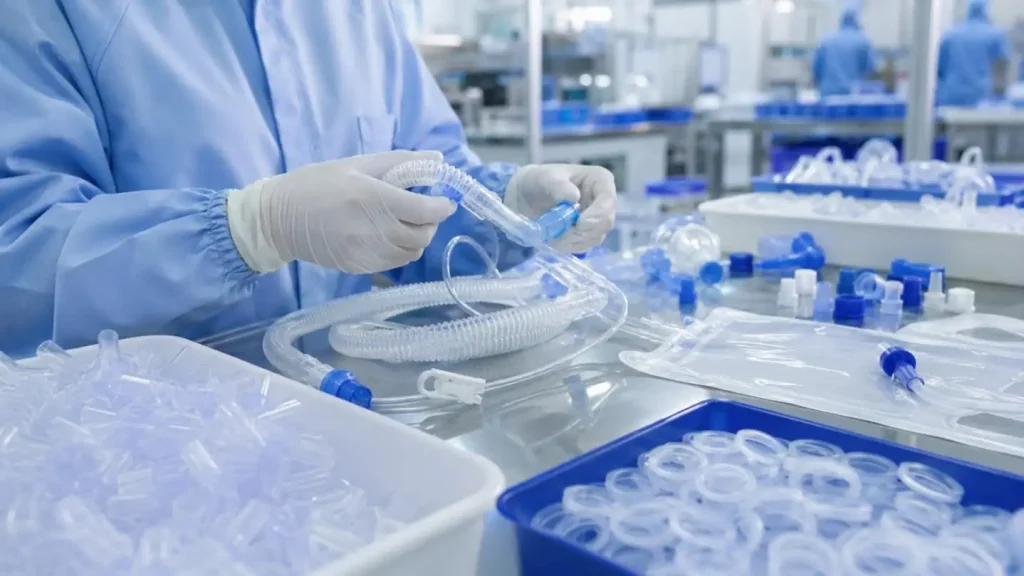
PVC vs. TPU vs. Silicone vs. PP
| Evaluation Factor | PVC | TPU | Silicone | PP |
| Typical structure | Flexible tubing and bags | Flexible tubing and connectors | Soft tubing and seals | Rigid connectors, containers, non-wovens |
| Flexibility | High | High | Very high | Low to medium |
| Transparency | Usually good | Available in clear grades | Clear or translucent | Usually translucent |
| Kink resistance | Depends on formulation | Generally good | Good | Not intended for soft tubing |
| Abrasion resistance | Moderate | Good | Moderate | Good |
| Processing efficiency | High | Moderate | More complex | High |
| Relative cost | Low to medium | Medium to high | High | Low |
| Common applications | Urine bags, drainage tubes, respiratory tubing | High-performance tubes and catheters | Valves, seals, soft connectors | Molded parts, containers, non-wovens |
The correct material for Single-use Medical Products depends on the complete device design rather than one isolated property.
Selecting Materials for Single-use Medical Products
1. Consider Intended Use
Begin by determining the intended use of the medical product. Intended uses may include collection of fluids, drainage, delivery of gases, respiratory support, contact with skin, connection to the patient, or participation in a sterile procedure.
Each of these different applications may require different:
•Rigid Versus Flexible Construction
•Sealing Systems
•Transparency
•Comfort of the patient
•Compatible chemically
•Compatible biologically
2. Determine Contact Type and Duration
How the medical product is ultimately going to be used needs to be considered. Will the medical product ultimately contact skin? Will it contact mucosal tissues? Will it contact a fluid pathway, medication, or body fluid? How long will the contact last?
The requirements for testing will be defined by the single-use medical product, its intended use, and the regulations that will be applicable.
3. Consider the Impact of Sterilization on the Material
The most common sterilization methods are EO, gamma, electron beam, and steam. Each of these methods and others may cause the following to occur in the materials:
•Change color
•Become brittle
•Lose strength
•Refine dimension
•Residual odor
Although early material selection may be aided by the raw material data, the manufacturer must validate the complete product and the packaging system after sterilization.
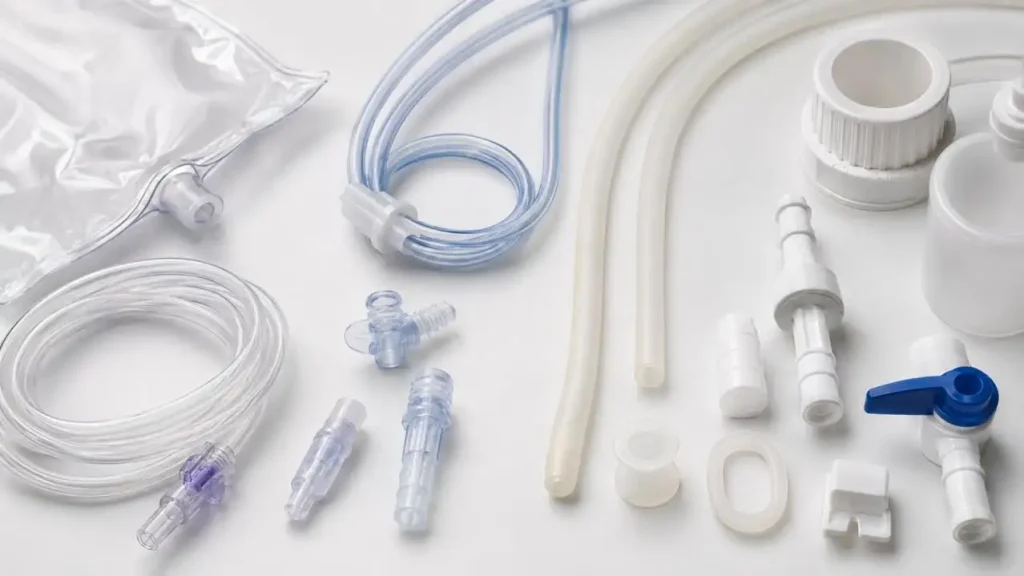
4. Review the Mechanical Properties
Depending on the application, a medical product may need to be tested for the following:
•The strength required to pull the materials apart and the strength required to tear the medical product
•Resistance to kinking and collapsing
•Recovery of the material to its original form after it's been stretched
•Retention of the connection
•Strength of the joint
•Leakage when pressure is applied
In multi-component single-use medical products, the compatibility of the materials used to make tubing and the components, connectors, valves, adhesives, and seals is critical.
5. Ensure Compatibility With Intended Manufacturing Process
The selection of materials should be compatible with the intended manufacturing process. Examples of manufacturing processes include extrusion, injection molding, heat sealing, high-frequency welding, adhesive bonding, ultrasonic welding, and automated assembly.
A theoretically appropriate polymer may not hold practical application due to inability to accomplish stable sealing, dimensions that are not repeatable and inefficient production.
Material Selection by Product Application
| Product Type | Common Material Options | Main Considerations |
| Respiratory circuits | PVC, TPU, PP, silicone components | Flexibility, airtightness, connector stability |
| Urine and drainage bags | PVC, PP components | Transparency, sealing strength, liquid compatibility |
| Medical catheters | PVC, TPU, silicone | Softness, kink resistance, biocompatibility |
| Molded connectors | PP, TPU | Dimensional stability and assembly strength |
| Medical non-wovens | PP | Barrier properties, weight, processing efficiency |
| Valves and seals | Silicone, TPU, PP | Recovery, sealing, fatigue resistance |
How Greetmed Supports Single-use Medical Products Manufacturing
Greetmed began its journey in 2003 and supplies non-woven products, respiratory products, urine bags, and other disposable medical consumables. Practical knowledge of flexible tubing, bag structures, molded connectors, seals, and polypropylene non-wovens has developed from experience in relevant product categories.
Greetmed operates in an ISO 13485 quality management system and supports products for FDA- and CE-marked regulated products. For each product and market, certification, registration, and compliance status must be verified.
While assessing a product, the Greetmed team can examine the following:
•Hardness and flexibility of materials
•Tubing configurations and bag structures
•Requirements for transparency
•Compatibility of connectors
•Methods of sealing
•Package configurations
•Requirements of the product to be sterilized
Greetmed integrates social responsibility, integrity, and compassion into its business; these values help to form responsible partnerships and provide quality service, as well as address practical needs in the healthcare and supply chain. It also helps to form responsible partnerships and provide quality service.
Last Words
When selecting materials for Single-use Medical Products, competing interests of clinical needs, mechanical performance, sterilization, manufacturing, and regulatory demands should be considered.
Communicate with Greetmed your intended use, the materials you prefer, dimensions and weight, and how you wish to package and sterilize the product, and the product's target market. Greetmed's team can provide a feasible design and focus on ease of use and quality with responsible and sustainable business practices.
FAQs
Q1. What are the Single-use Medical Products that Greetmed manufactures?
Greetmed provides a variety of products,such as: non-woven products; a range of respiratory products; drainage products; urine bags; and various other disposable medical consumable products to the healthcare and distribution services markets.
Q2. What are the materials used in Greetmed's Single-use Medical Product range?
Depending on the application, Greetmed's products may use medical grade PVC, TPU, silicone, polypropylene, non-woven fabrics, as well as compatible molded parts.
Q3. Does Greetmed provide DEHP-free PVC?
DEHP-free materials may be available for certain products. During the evaluation of the product, the buyer must communicate the material and must also communicate the specific regulatory and target market requirements.
Q4. What is the process for Greetmed in terms of selection of materials for respiratory products?
The selection process involves evaluation of the material's flexibility, airtightness, stability of the connector, resistance to kinking, suitability for patient contact, sterilization, and the specific use of the product in the medical field.
Q5. What materials are used in Greetmed's urine bags?
Urine bags may use the flexible PVC film for the main bag body and polypropylene or other medical grade polymers for the connectors, outlets, clamps and valve components.
Submit Your Request
Recent Posts

Tags
- Adult Diapers
- Are custom medical devices safe
- Baby Diapers
- Can respiratory anesthesia be used
- Digital Healthcare
- Do you offer customized consumables
- European Market
- How do you take care of a skin wound
- Industry Trends
- Lady Sanitary Napkins
- Medical Devices
- OEM Medical Devices
- Product Introductions
- Protective Equipment
- Under Pads
- What are custom-made medical devices
- What are diagnostic products
- What are hospital dressing products
- What are medical tube catheters
- What are some common protective equipment
- What are the appropriate applications for hospital dressing products
- What are the appropriate uses for protective equipment
- What is a gynecological examination
- What is a medical consumable
- What is an anesthesia kit
- What is an OEM in medical devices
- what is an wound skin care
- what is can disposable ultrasonic diagnostic
- What is good manufacturing medical devices
- What is hospital-grade protective equipment
- what is medical equipments hospital furniture
- What is medical sterilization wrapping
- What is rehabilitation equipment device
- What medical consumables do you supply
- Where can I find laboratory consumables wholesale
- where can I find medical protection device
- where to buy hypodermic accessories
- where to buy medical apparel
- where to buy medical consumable accessories
- where to find OEM medical device supplier
- where to find rehabilitation equipment supplier
