



Hydrophilic Coating for Catheters | Guide to Lubricious Medical Devices


Choosing the right hydrophilic coating for catheters is a deciding factor in reducing friction and improving patient comfort during medical procedures. These specialized coatings transform the catheter surface into a lubricious layer when they contact water or saline. This change allows the device to glide through narrow vessels or the urinary tract with minimal resistance. By lowering friction, medical professionals can prevent tissue trauma and lower the risk of infection for patients.
What is a Hydrophilic Coating for Catheters?
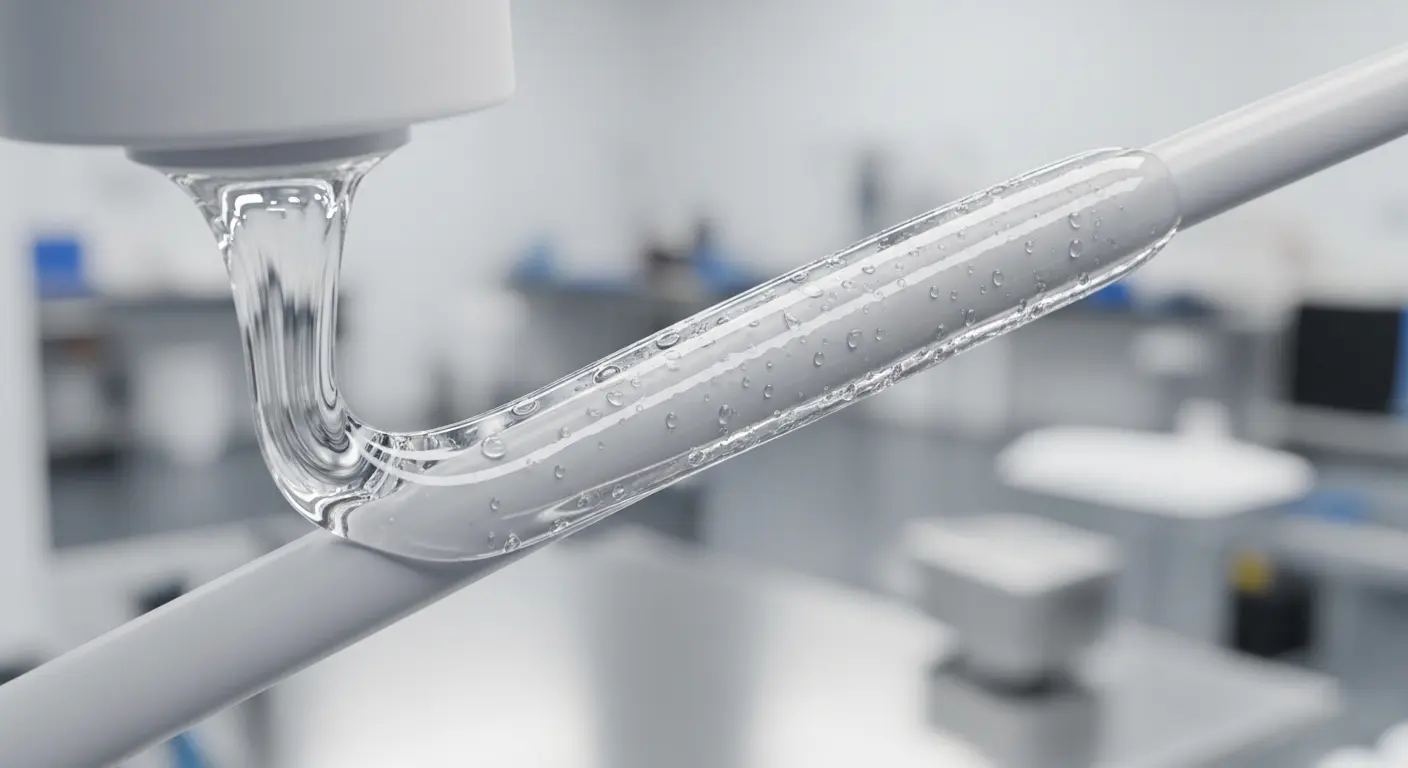
A hydrophilic coating for catheters is a water-loving polymer layer applied to the device's surface to create a slippery, lubricious interface. When exposed to fluids like blood or sterile water, the coating absorbs moisture and swells. This reaction creates a smooth "water cushion" that significantly reduces the coefficient of friction. This makes insertion and removal much easier for both the clinician and the patient.
In my time working with medical device manufacturing, I have seen how these coatings revolutionize patient care. Before hydrophilic options became standard, clinicians relied heavily on manual gels. Those gels can be messy and often wipe off during insertion. A chemically bonded hydrophilic layer stays on the device. This provides consistent lubrication from the beginning of the procedure to the very end.
Key Benefits of Hydrophilic Surfaces
| Benefit | Description | Clinical Impact |
| Low Friction | Reduces drag by up to 90% compared to uncoated plastic. | Prevents urethral or vascular scarring. |
| Biocompatibility | Formulated to be non-toxic and non-thrombogenic. | Reduces the body's inflammatory response. |
| Durability | The coating remains bonded to the catheter shaft. | Ensures smooth removal after long procedures. |
| Infection Control | Smoother surfaces are harder for bacteria to colonize. | Lowers the rate of Catheter-Associated UTIs (CAUTIs). |
How Does a Hydrophilic Coating Work During Insertion?
A hydrophilic coating works by attracting and holding water molecules through hydrogen bonding, creating a hydrated polymer matrix. Once activated by a liquid, the surface becomes extremely slippery. This allows the catheter to navigate tortuous anatomy without sticking to the vessel walls or mucous membranes. The lubricity remains active as long as the coating stays hydrated.
Physicians often describe the feeling as the catheter "floating" into place. This is vital in emergency settings where speed and precision are required. If a patient needs a device "PRN" or as circumstances require, having a pre-coated option saves valuable time. Understanding what PRN means in medical terms helps in selecting the right tools for fast-paced clinical environments.
What are the Different Types of Hydrophilic Coatings?
The main types of hydrophilic coatings include UV-cured polymers, thermal-cured coatings, and solvent-based systems. UV-cured coatings are popular for their fast processing times and strong bonding. Thermal-cured options are often used for complex geometries. Some advanced coatings also include antimicrobial agents or heparin to further prevent blood clots and infections during long-term use.
Selecting the right type depends on the catheter material. For example, a malecot catheter made of silicone might require a different primer than one made of polyurethane.
Common Coating Categories
- Standard Hydrophilic: Focuses purely on lubricity for short-term access.
- Antimicrobial: Infused with silver ions or antibiotics to kill bacteria on contact.
- Thrombogenic Resistant: Designed for vascular use to prevent blood from sticking to the device.
- Photo-Polymerized: Uses UV light to create a very durable, cross-linked bond.
Why is Coating Durability Important for Patient Safety?
Coating durability is important because a "flaking" or "peeling" coating can lead to serious complications like embolisms or inflammatory reactions. If the coating breaks down during a procedure, the catheter can become "tacky" and stick to the tissue. This makes removal painful and potentially damaging. High-quality manufacturers use rigorous "rub tests" to ensure the coating stays intact.
I once reviewed a case where a sub-par coating led to "particulate matter" entering a patient's bloodstream. It was a wake-up call for the industry. Now, testing standards are much stricter. Every hydrophilic coating for catheters must pass cycles of friction testing to prove it can withstand the mechanical stress of a difficult insertion.
How Do You Apply Hydrophilic Coatings to Medical Devices?
Applying a hydrophilic coating involves a multi-step process: surface preparation, priming, base coating, and curing. First, the catheter surface is cleaned or treated with plasma to improve adhesion. A primer layer is often applied to act as "glue." Then, the device is dipped into the hydrophilic solution and cured using UV light or heat to lock the molecules in place.
Consistency is the biggest challenge in this process. If the dipping speed varies even slightly, the coating thickness will be uneven. This can cause the catheter to jam in a medical hypodermic syringe hub or other access ports. Precision machinery ensures that every millimeter of the catheter has the exact same level of lubricity.
What is the Difference Between Hydrophilic and Hydrophobic Coatings?
The difference is how they interact with water; hydrophilic coatings attract water to create a slippery surface, while hydrophobic coatings repel water. Hydrophobic coatings, like PTFE (Teflon), are used when you want a dry, low-friction surface that prevents fluids from soaking in. Hydrophilic coatings are generally more lubricious but require activation with a liquid before they become slippery.
Quick Comparison
- Hydrophilic: Needs water to work. Best for mucosal surfaces (urology, vascular).
- Hydrophobic: Always "dry" lubricious. Best for guide wires and inner lumens.
When managing a surgical site, clinicians might use medical cotton swabs to clean the area before inserting a hydrophilic device. Knowing what hospital dressing products are available to secure these catheters after insertion is also part of a complete care plan.
Frequently Asked Questions About Catheter Coatings
Do hydrophilic catheters require extra lubricant?
No. One of the main advantages is that they are "self-lubricating." Adding petroleum-based gels can actually damage the hydrophilic coating and reduce its performance.
How long does the slipperiness last?
Most high-quality coatings stay lubricious for the duration of a standard procedure, typically several hours. For long-term indwelling catheters, special formulations are used to maintain the surface for days.
Are these coatings safe for people with allergies?
Most are made from biocompatible polymers like PVP (polyvinylpyrrolidone). However, you should always check the manufacturer's data sheet if a patient has extreme chemical sensitivities.
Can I coat a catheter at home?
No. The coating process requires controlled industrial environments, chemical primers, and specialized curing equipment to ensure the bond is permanent and sterile.
Submit Your Request
Recent Posts
Tags
- Adult Diapers
- Are custom medical devices safe
- Baby Diapers
- Can respiratory anesthesia be used
- Digital Healthcare
- Do you offer customized consumables
- European Market
- How do you take care of a skin wound
- Industry Trends
- Lady Sanitary Napkins
- Medical Devices
- OEM Medical Devices
- Product Introductions
- Protective Equipment
- Under Pads
- What are custom-made medical devices
- What are diagnostic products
- What are hospital dressing products
- What are medical tube catheters
- What are some common protective equipment
- What are the appropriate applications for hospital dressing products
- What are the appropriate uses for protective equipment
- What is a gynecological examination
- What is a medical consumable
- What is an anesthesia kit
- What is an OEM in medical devices
- what is an wound skin care
- what is can disposable ultrasonic diagnostic
- What is good manufacturing medical devices
- What is hospital-grade protective equipment
- what is medical equipments hospital furniture
- What is medical sterilization wrapping
- What is rehabilitation equipment device
- What medical consumables do you supply
- Where can I find laboratory consumables wholesale
- where can I find medical protection device
- where to buy hypodermic accessories
- where to buy medical apparel
- where to buy medical consumable accessories
- where to find OEM medical device supplier
- where to find rehabilitation equipment supplier
