



Tensile Strength & Fit: Central Line Protective Cover Explained


Central Line Protective Cover selection matters because catheter protection is not only about covering the site. It is about helping preserve dryness, reduce external contamination risk, improve wearing comfort, and support more stable daily management for patients with central venous access. From Greetmed's perspective as a manufacturer, the real value of this product lies in how material strength, fit, and surface protection work together in practical use.
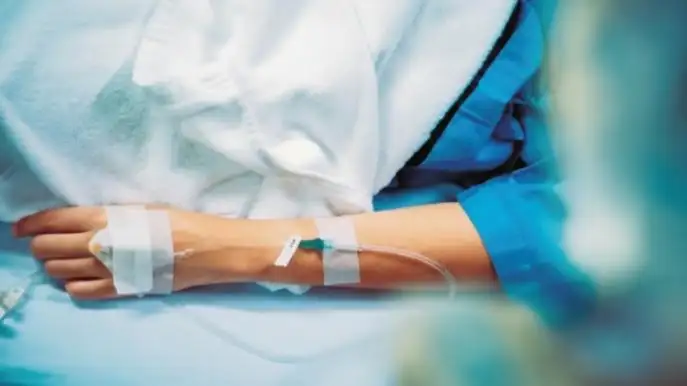
This topic deserves attention because central lines require disciplined site care. The CDC states that catheter insertion sites should be evaluated daily, and it also notes that sterile transparent semipermeable dressings allow continuous visual inspection of the site. AHRQ further highlights that central line-associated bloodstream infections remain an important patient-safety concern.
Why a Central Line Protective Cover Matters in Daily Care
A Central Line Protective Cover is designed to support the catheter site during routine inpatient use, perioperative handling, and other care settings where line stability and cleanliness matter. In many cases, the cover is not the most expensive item in the catheter pathway, but it can still influence comfort, maintenance efficiency, and dressing integrity.
For buyers and clinical users, that practical value can be understood clearly:
• It helps create a barrier against external moisture
• It supports a cleaner catheter environment
• It may reduce friction against the skin
• It can help lower the chance of accidental disturbance
• It supports a more orderly protection routine for long-term use
These benefits are especially relevant for patients who need long-term catheterization or repeated catheter replacement. In such cases, the protective product should not only cover the site. It should also remain comfortable enough for ongoing wear and simple enough for regular replacement.
The Two Product Qualities Buyers Should Understand First
When clients review a Central Line Protective Cover, two product qualities deserve early attention: tensile performance and fit.
Tensile strength matters because a protective cover must hold its structure during application, wear, and replacement. A weak material may wrinkle, shift, or lose handling stability too easily. A stronger structure can help the product remain more manageable during placement and may better support consistent coverage around the catheter area.
Fit matters for a different reason. Even a high-grade material has limited value if the cover does not sit properly over the protected area. A product that fits more smoothly can help maintain contact, reduce unnecessary edge lift, and improve user confidence during care. In practical terms, fit is closely linked to coverage quality, patient comfort, and replacement convenience.
At Greetmed, we explain these factors together because product performance is rarely determined by one feature alone. Material strength supports reliability, while fit supports usability.
How Material Structure Supports Protection and Comfort
The design of Greetmed's Central Line Protective Cover is built around layered medical materials chosen for practical performance.
The main materials include:
• Medical-grade oral membrane with peel-off cap
• 105g nonwoven composite material
• 48g SMMS nonwoven fabric
These materials support the product's four main feature directions.
First, antibacterial and waterproof protection. The medical membrane is designed to help isolate bacteria and moisture, which supports a cleaner and drier catheter site. This is important because moisture control is closely related to dressing performance and surface cleanliness. CDC guidance on catheter care also emphasizes dressing choice and daily site assessment, which supports the value of protective materials that do not interfere with site management.
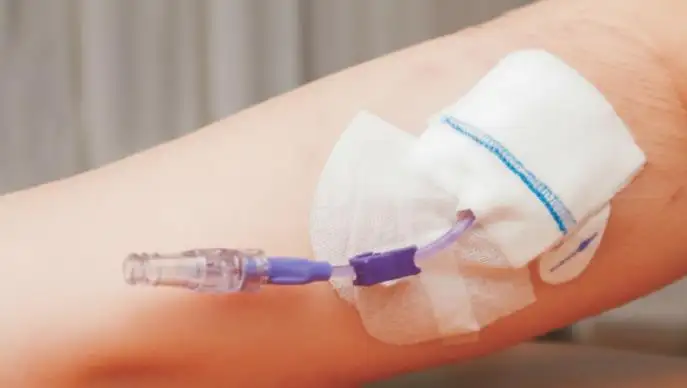
Second, comfort and breathability. The nonwoven fabric layer helps reduce friction and can improve the wearing experience over time. This is especially useful for patients who need longer periods of catheter protection and may become more sensitive to repeated contact at the site.
Third, medical-grade material confidence. For procurement teams, material grade is not a decorative claim. It supports product credibility, safety expectations, and alignment with healthcare purchasing standards.
Fourth, ease of use. A cover that is easy to put on and take off can help save nursing time and make sure that the product is used more consistently. That kind of ease is especially important in busy wards and operating rooms.
When a Central Line Protective Cover Is Most Helpful
There are a lot of ways to use a Central Line Protective Cover, but some are more important than others.
- Long-Term Catheter Protection and Care for Patients
When someone is in the hospital, the protective cover can help keep intravenous catheters safe, lower the risk of infection, and keep the catheters from moving around too much. This doesn't replace good aseptic practice or dressing protocol, but it can help you take care of the site every day by adding a useful layer of protection.
Changing dressings often can be a pain for patients who need to use a catheter for a long time. In that setting, a product that combines waterproof performance, comfort, and easy replacement becomes more valuable. The aim is not only to protect the line, but also to make that protection easier to maintain over time.
- Operating Room Preparation And Recovery Support
The operating room is another important setting. Before surgery, catheter protection helps support line stability and sterility preparation. After surgery, the same protection logic can support recovery-stage management by helping maintain a cleaner and more controlled site condition.
This aligns with broader infection prevention logic. According to WHO, many bloodstream and catheter-related infections are preventable when recommended care protocols are followed. At the same time, AHRQ offers practical tools to help healthcare providers reduce the risk of CLABSI in clinical settings.
Product Sizes and What They Mean for Buyers
Greetmed supplies two product specifications:
• GT214-20-01: 8 cm × 7.5 cm
• GT214-20-02: 16 cm × 5 cm
These options make it easier for buyers to match product size with different catheter coverage needs. Size selection should not be treated as a simple catalog detail. It affects coverage area, edge positioning, and practical matching with line placement conditions.
A more compact format may be suitable where a smaller protected zone is preferred. A longer format may better support catheter paths that require extended directional coverage. For distributors and hospital buyers, this kind of size choice can make the product line more adaptable across departments and care scenarios.
From a purchasing perspective, this translates into usable value:
• Better matching to catheter placement conditions
• More practical selection across patient needs
• Easier product positioning for different care units
• Improved catalog clarity for end users
How Greetmed Turns Product Features Into Practical Value
At Greetmed, we do not present the Central Line Protective Cover as only a surface accessory. We present it as a practical support product for catheter protection, comfort, and site management. Each product feature should mean something concrete to the client.
Antibacterial and waterproof performance means better support for dryness and site cleanliness. Breathable nonwoven structure means improved comfort during extended wear. Medical-grade materials mean stronger confidence in product suitability. Easy application means simpler replacement and smoother daily handling.
For clients, the practical question is straightforward: does the product only describe protection, or does it make catheter care easier in real settings?
That is where fit and tensile quality become important. A better protective cover should be easier to apply, more stable in use, and more comfortable for patients who depend on continued catheter management.
If your team is evaluating catheter protection products for hospital use, distribution, or OEM cooperation, contact Greetmed to discuss the right Central Line Protective Cover specification for your market and application needs. A well-designed protective cover can support more dependable care, better user comfort, and a clearer product value story for your customers.
Submit Your Request
Recent Posts
Tags
- Adult Diapers
- Are custom medical devices safe
- Baby Diapers
- Can respiratory anesthesia be used
- Digital Healthcare
- Do you offer customized consumables
- European Market
- How do you take care of a skin wound
- Industry Trends
- Lady Sanitary Napkins
- Medical Devices
- OEM Medical Devices
- Product Introductions
- Protective Equipment
- Under Pads
- What are custom-made medical devices
- What are diagnostic products
- What are hospital dressing products
- What are medical tube catheters
- What are some common protective equipment
- What are the appropriate applications for hospital dressing products
- What are the appropriate uses for protective equipment
- What is a gynecological examination
- What is a medical consumable
- What is an anesthesia kit
- What is an OEM in medical devices
- what is an wound skin care
- what is can disposable ultrasonic diagnostic
- What is good manufacturing medical devices
- What is hospital-grade protective equipment
- what is medical equipments hospital furniture
- What is medical sterilization wrapping
- What is rehabilitation equipment device
- What medical consumables do you supply
- Where can I find laboratory consumables wholesale
- where can I find medical protection device
- where to buy hypodermic accessories
- where to buy medical apparel
- where to buy medical consumable accessories
- where to find OEM medical device supplier
- where to find rehabilitation equipment supplier
