



What to Expect from Hemodialysis Bloodline Innovation: The 2026 Outlook


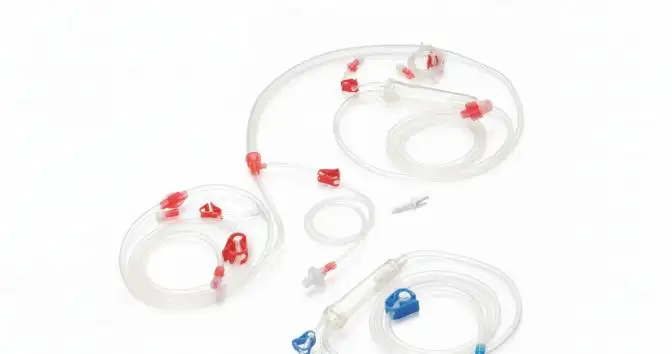
Hemodialysis Bloodline design is gaining more attention in 2026 because blood tubing is not only a connection path inside dialysis therapy. It also affects circulation stability, priming safety, operator convenience, and machine compatibility. At Greetmed, we see this clearly in customer demand. Buyers no longer ask only whether a bloodline can connect to a dialyzer. They also want to know whether it can support longer pump use, safer setup, easier operation, and better fit across different dialysis systems. Hemodialysis itself depends on blood moving through soft plastic tubing to the dialyzer and back to the patient, so bloodline quality has direct practical value in every treatment.
Why Hemodialysis Bloodline Matters More in 2026
A bloodline set may look simple, but its role is central. It helps establish the extracorporeal circulation channel used during blood dialysis therapy. That means the product must support stable blood flow while also helping staff manage setup, priming, and drainage in a controlled way. Regulatory guidance reflects this importance. The FDA treats hemodialysis blood tubing sets as devices used as the extracorporeal blood circuit during hemodialysis treatment, which shows that bloodline quality is not a minor accessory issue.
In 2026, buyers are also more alert to safety and consistency. CDC surveillance materials continue to focus on adverse-event monitoring and prevention efforts in hemodialysis settings, while recent FDA device updates and recalls involving blood tubing sets show why compatibility, instructions, and quality control remain important in the market. For clients, this means a stronger Hemodialysis Bloodline offering should combine reliable structure with clear application matching.
At Greetmed, we therefore approach product design from the user's point of view. A better bloodline should reduce preventable handling issues, support precise installation, and make product selection easier for procurement teams.
What Buyers Should Expect From Modern Hemodialysis Bloodline Design
The first expectation is material stability. Greetmed's pump tube uses medical-grade PVC with high elasticity, and the tube is designed to keep its shape after continuous pressing for 10 hours. For buyers, this is a practical feature, not only a technical statement. A pump segment that resists deformation more effectively can help clinics pursue steadier routine use and support confidence during longer treatment sessions.
The second expectation is easier operation. Greetmed uses an extra-large dialysis connector to improve handling during installation and connection. This matters because connection points are where small design improvements often create real workflow benefits.
The third expectation is safer and more organized priming. Our infusion set is easy to put on and take off, which helps with accurate infusion and safe priming. The drainage bag comes in both one-way and two-way styles, and the closed priming design is meant to meet quality-control needs.
In real life, a modern Hemodialysis Bloodline should help buyers reach a number of goals:
• More reliable pump-segment performance during treatment
• Easier connection and disconnection during setup
• Better support for controlled priming workflow
• Greater confidence in daily handling by clinical staff
In 2026, these are the kinds of things that will have a bigger and bigger impact on buying decisions.
How Product Information Turns Into Real Clinical Value
A strong bloodline set is valuable when all of its parts help the workflow. Greetmed's drip chamber is available in different diameter sizes, which helps the product fit different machine and treatment requirements. The clamp is made of hard plastic and designed larger and thicker to provide sufficient stopping performance. These details matter because operators do not judge a bloodline on tubing alone. They judge it on whether the full set is easy to manage under routine clinical pressure.
This is where product design becomes practical value for buyers:
• A stable pump tube can help reduce concern about shape change under repeated compression
• A larger connector can make operation easier for nursing and technical staff
• A stronger clamp design can support clearer stop control
• Closed priming options can help facilities pursue more standardized setup practice
The National Kidney Foundation explains that during hemodialysis, blood travels through plastic tubing to the dialyzer and then returns to the body. Because this circulation pathway is repeated treatment after treatment, even modest improvements in tubing design and handling can have meaningful operational value over time.
Why Compatibility and Customization Are Becoming More Important
One clear 2026 trend is that buyers expect better compatibility coverage. A bloodline is more useful when it aligns well with the machine systems already used in the market. Greetmed offers multiple product codes designed for compatibility with systems associated with brands such as B. Braun, Gambro, Fresenius, Nikkiso, Baxter, Nipro, Toray, and JMS. The listed pump-segment specifications include options such as 6.4 × 9.75 × 350 mm and 7.9 × 12.1 × 350 mm, with chamber outer diameters including 20 mm, 22 mm, and 30 mm across different models.
For clients, these figures are valuable because they help answer a practical question: will the bloodline fit the machine base already in use? A broader compatibility range can support easier procurement planning and reduce mismatch risk.
Customization is becoming important for the same reason. Greetmed can customize bloodline design for orders, which helps distributors and medical buyers adapt product configuration to local demand. In practical buying decisions, customization can help clients achieve several goals:
• Better matching with installed machine platforms
• Stronger adaptation to local tender or distributor conditions
• Clearer differentiation across competing product offerings
• More efficient stock planning and control
This is why a well-positioned Hemodialysis Bloodline supplier in 2026 should offer both specification range and customization support, instead of depending solely on standard catalog products.
Bloodline innovation is about more than operational ease. It is also tied to safer process management. CDC dialysis materials continue to emphasize aseptic handling, the prevention of blood exposure, and careful connection practices around extracorporeal circuits and vascular access. That context matters for bloodline selection because priming, drainage, and line handling all take place within a broader safety framework.
This is why Greetmed highlights closed priming and drainage bag options. Buyers increasingly prefer products that can support cleaner and more organized workflow. They also prefer sets that are easier to install and uninstall because these features can improve training consistency and day-to-day handling quality.
From the customer side, the value is practical:
• More controlled priming may support quality-management goals
• Easier installation can improve staff efficiency
• Better line handling can support more standardized operation
• Clear component design can make training easier across teams
In 2026, this kind of operational clarity is becoming part of product competitiveness, not an optional extra.
What the 2026 Outlook Means for Buyers
The 2026 outlook for Hemodialysis Bloodline innovation is clear. Buyers want more than basic tubing. What clients need today is clear: durable materials, user-friendly operation, safer priming logic, broad machine compatibility, and customization that supports more precise purchasing. At Greetmed, our bloodline products are designed to respond to those practical demands.
Our view is simple: innovation should be useful. A pump tube that maintains its shape after 10 hours of pressing, a larger dialyzer connector, a thicker clamp, drip chamber size options, and customizable configurations all translate into real benefits when they help clinics work more smoothly and help distributors serve their markets more accurately.
Teams evaluating Hemodialysis Bloodline products for 2026 are welcome to contact Greetmed for support on compatibility, customization, and selecting the right specification for dialysis or distribution requirements. A stronger extracorporeal circuit begins with product details that support performance, safety, and easier daily use.
Submit Your Request
Recent Posts
Tags
- Adult Diapers
- Are custom medical devices safe
- Baby Diapers
- Can respiratory anesthesia be used
- Digital Healthcare
- Do you offer customized consumables
- European Market
- How do you take care of a skin wound
- Industry Trends
- Lady Sanitary Napkins
- Medical Devices
- OEM Medical Devices
- Product Introductions
- Protective Equipment
- Under Pads
- What are custom-made medical devices
- What are diagnostic products
- What are hospital dressing products
- What are medical tube catheters
- What are some common protective equipment
- What are the appropriate applications for hospital dressing products
- What are the appropriate uses for protective equipment
- What is a gynecological examination
- What is a medical consumable
- What is an anesthesia kit
- What is an OEM in medical devices
- what is an wound skin care
- what is can disposable ultrasonic diagnostic
- What is good manufacturing medical devices
- What is hospital-grade protective equipment
- what is medical equipments hospital furniture
- What is medical sterilization wrapping
- What is rehabilitation equipment device
- What medical consumables do you supply
- Where can I find laboratory consumables wholesale
- where can I find medical protection device
- where to buy hypodermic accessories
- where to buy medical apparel
- where to buy medical consumable accessories
- where to find OEM medical device supplier
- where to find rehabilitation equipment supplier
