



Guide Wire vs Catheter Difference: The Definitive Clinical Comparison


Understanding the guide wire vs catheter difference is essential for any medical professional or student entering the field of interventional medicine. While both are used in vascular and non-vascular procedures, they serve entirely distinct purposes. A guide wire is a thin, flexible wire used to navigate through the body's anatomy, whereas a catheter is a hollow tube used to deliver fluids, medications, or other medical devices to a specific site.
In my experience working with clinical specialists, I have seen how the synergy between these two tools defines the success of a procedure. Using a high-quality guide wire allows for the navigation of tortuous vessels that a catheter alone could never traverse. Conversely, the guide wire is merely a "railroad track"; the catheter is the "train" that carries the life-saving treatment. This guide provides a comprehensive breakdown of their differences, materials, and collaborative roles.
| Feature | Guide Wire | Catheter |
| Primary Function | Navigation and structural support. | Fluid delivery, drainage, or device transport. |
| Structure | Solid or coiled wire (not hollow). | Hollow tube (lumen). |
| Material | Stainless steel, Nitinol, or hybrid cores. | Polyurethane, PVC, Silicone, or PEBAX. |
| Placement | Inserted first to create a path. | Slid over or through the guide wire. |
| Visibility | Highly radiopaque (visible under X-ray). | Varies; often features radiopaque markers. |
| Measurement | Measured in inches (e.g., 0.035"). | Measured in French scale (e.g., 5 Fr). |
What is the main guide wire vs catheter difference?
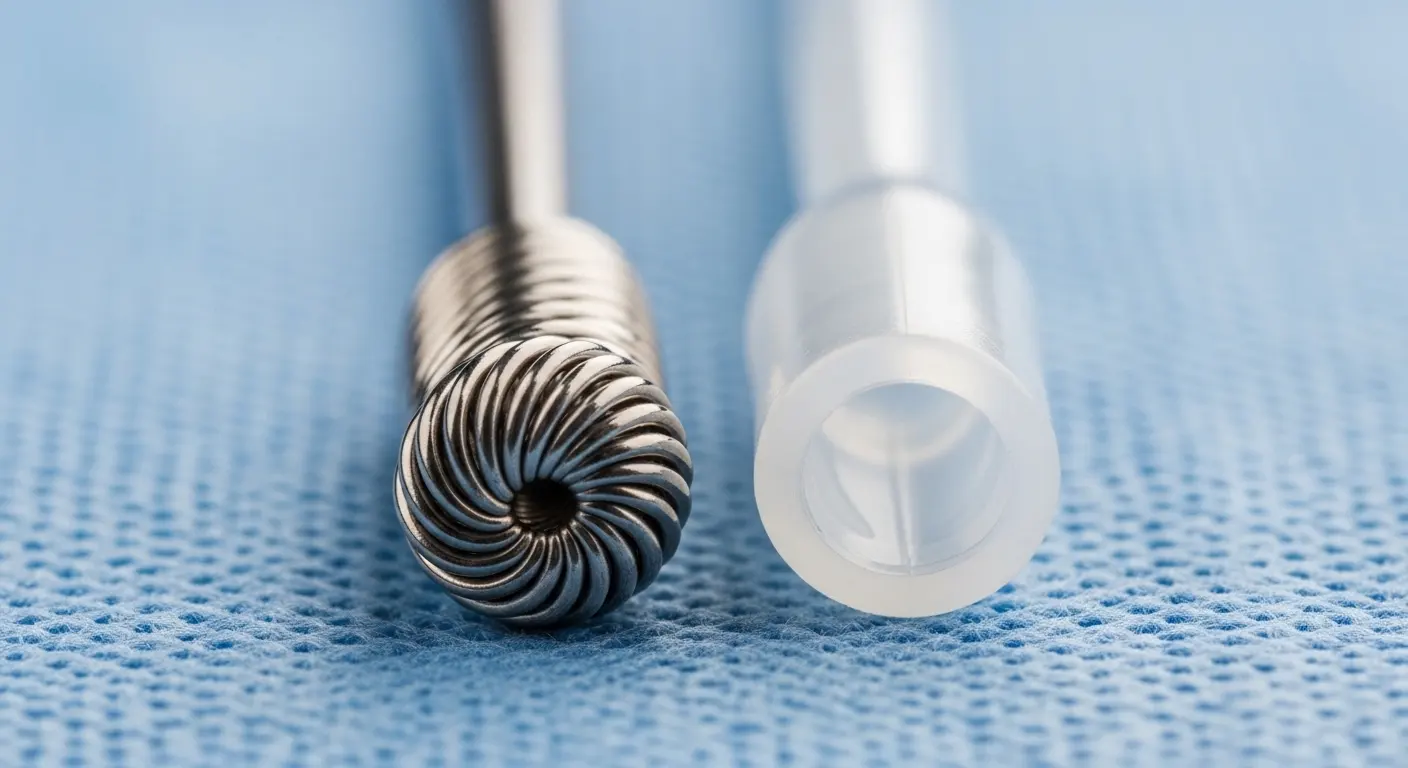
The main guide wire vs catheter difference is that a guide wire is a solid navigating tool, while a catheter is a hollow delivery conduit. A guide wire acts as a stable path or "rail" through the anatomy. A catheter slides over this wire to reach the target site for fluid exchange or intervention.
Think of the guide wire as a scout. It is designed with a specialized tip to find the right path through a complex vascular "maze." Once the scout reaches the destination, the catheter—which is the "workhorse"—follows the path to perform the actual task. Whether it is a routine IV or a complex cardiac procedure involving a medical hypodermic syringe to inject contrast, the wire always leads the way.
How do guide wires and catheters work together?
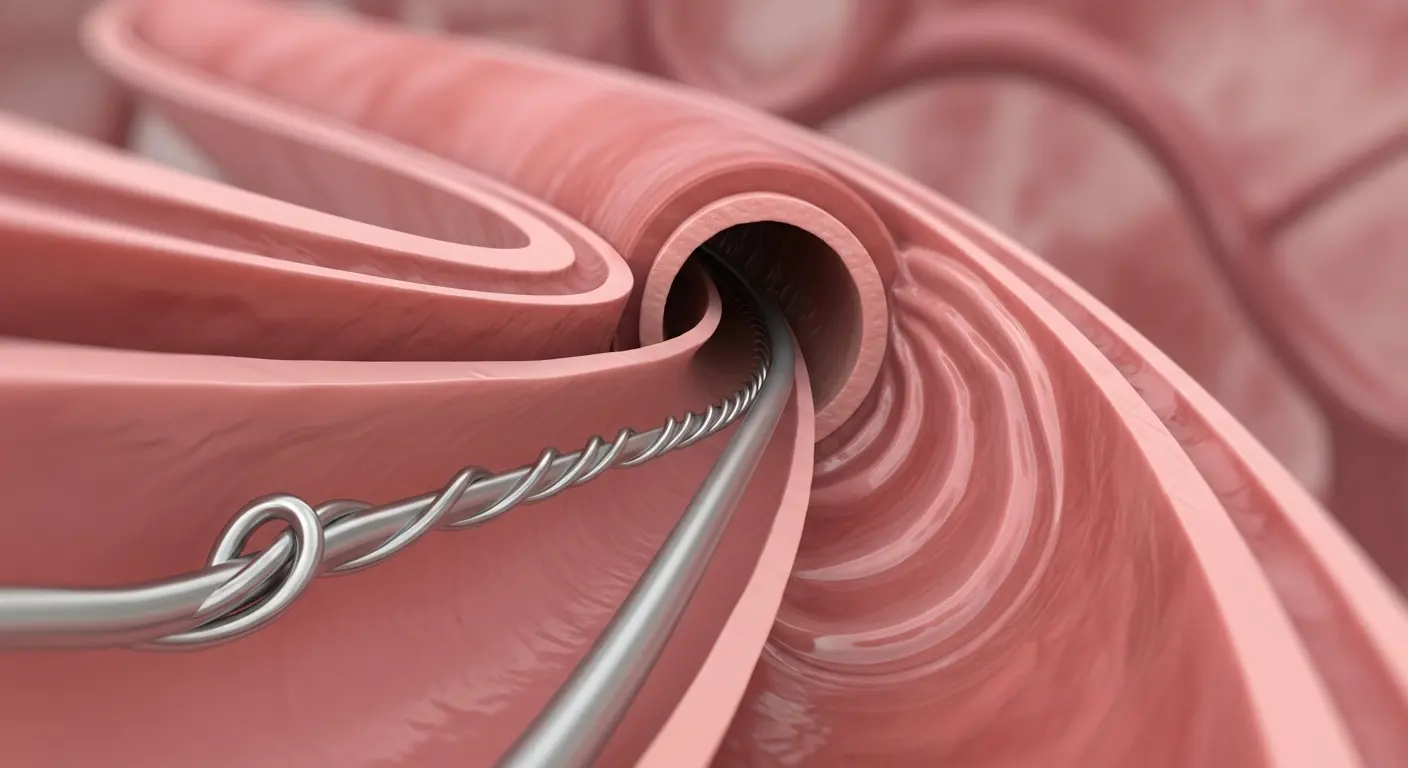
Guide wires and catheters work together through a technique called the Seldinger technique, where the wire is placed first to establish a track. The catheter is then advanced over the wire until it reaches the desired location. This partnership allows for minimally invasive access to deep organs without the need for large surgical incisions.
During a procedure, the clinician must manage these two tools simultaneously. While one hand controls the wire's torque, the other hand advances the catheter. If a patient requires an emergency intervention "PRN"—or as needed—this coordination must be flawless. Understanding what PRN means in medical terms is vital, as emergency scenarios often require the most complex guide wire maneuvers to save a patient's life.
What are the key design features of a medical guide wire?
Medical guide wires are designed with a flexible tip, a supportive core, and a lubricious coating. The core, often made of Nitinol or stainless steel, provides "pushability." The coating, usually PTFE or a hydrophilic polymer, reduces friction inside the vessel. These features allow the wire to navigate tight turns without kinking or causing trauma.
Expert Insight: The "tip load" of a guide wire is a critical metric. A wire with a soft, floppy tip is used for standard navigation, while a stiffer tip might be used to cross a calcified blockage. In the manufacturing phase, technicians often use amedical cotton swabto meticulously clean the fine wire tips before applying specialized coatings. This ensure the wire is free of particulates that could cause a reaction in the bloodstream.
Common Guide Wire Types
- Hydrophilic Wires: Become very slippery when wet; ideal for tortuous paths.
- PTFE-Coated Wires: Provide consistent, low-friction performance for general access.
- Extra-Stiff Wires: Used to provide maximum support for delivering heavy devices like heart valves.
How do catheter materials differ from guide wire materials?
Catheter materials focus on biocompatibility and flexibility, whereas guide wire materials focus on tensile strength and torque. Catheters are typically made of high-performance polymers like Polyurethane or PEBAX. These materials are designed to soften at body temperature, which reduces the risk of vessel wall irritation during long-term placement.
The choice of material depends on the clinical application. For example, a Malecot catheter used for drainage requires a material that is durable and resistant to encrustation. In contrast, the guide wire used to place that catheter must be resilient enough to hold its shape while being pushed through dense tissue or narrow ducts.
What is the difference in how they are measured?
Guide wires are measured by their outer diameter in fractions of an inch, while catheters use the French scale (Fr). Common guide wire sizes include 0.014", 0.018", and 0.035". The French scale for catheters measures the outer diameter, where 1 French equals 1/3 of a millimeter (0.33mm).
Understanding these measurements is critical for compatibility. A 5 French catheter will have a specific internal lumen size that can only accommodate wires up to a certain diameter. If you try to use a 0.038" wire in a catheter designed for 0.035" wires, you will face high resistance or a complete "lock-up," which can be dangerous for the patient.
Why is visibility (Radiopacity) important for both?
Visibility is important because it allows the clinician to track the position of the tools in real-time using fluoroscopy (X-ray). Guide wires are usually entirely radiopaque or have a radiopaque gold/platinum tip. Catheters often have "marker bands" at the tip and along the body so the doctor can see exactly where the device ends and where the side holes are located.
Precision in placement prevents complications. If a catheter is placed too deep, it could perforate an organ. If it is too shallow, the medication might not reach the target. After a successful placement, medical teams use various hospital dressing products to secure the external portion of the catheter, ensuring it does not shift while the patient is in recovery.
How are these medical devices manufactured for safety?

These devices are manufactured in ISO-certified cleanrooms using high-precision extrusion and wire-forming technologies. Every millimeter of a guide wire or catheter must be inspected for surface defects, as any burr or nick could damage a blood vessel. Manufacturers must follow strict ISO 13485 standards to ensure that every device is sterile and safe for human use.
The manufacturing process involves sophisticated "compounding" of plastics and precision grinding of metal cores. Data shows that even a 0.001" deviation in diameter can change the performance of a high-end coronary wire. Maintaining a pristine environment is non-negotiable; even the smallest airborne contaminant can ruin a batch of hydrophilic-coated wires.
Submit Your Request
Recent Posts

Tags
- Adult Diapers
- Are custom medical devices safe
- Baby Diapers
- Can respiratory anesthesia be used
- Digital Healthcare
- Do you offer customized consumables
- European Market
- How do you take care of a skin wound
- Industry Trends
- Lady Sanitary Napkins
- Medical Devices
- OEM Medical Devices
- Product Introductions
- Protective Equipment
- Under Pads
- What are custom-made medical devices
- What are diagnostic products
- What are hospital dressing products
- What are medical tube catheters
- What are some common protective equipment
- What are the appropriate applications for hospital dressing products
- What are the appropriate uses for protective equipment
- What is a gynecological examination
- What is a medical consumable
- What is an anesthesia kit
- What is an OEM in medical devices
- what is an wound skin care
- what is can disposable ultrasonic diagnostic
- What is good manufacturing medical devices
- What is hospital-grade protective equipment
- what is medical equipments hospital furniture
- What is medical sterilization wrapping
- What is rehabilitation equipment device
- What medical consumables do you supply
- Where can I find laboratory consumables wholesale
- where can I find medical protection device
- where to buy hypodermic accessories
- where to buy medical apparel
- where to buy medical consumable accessories
- where to find OEM medical device supplier
- where to find rehabilitation equipment supplier
