



Disposable Medical Tape Adhesive Technology for Secure and Gentle Fixation


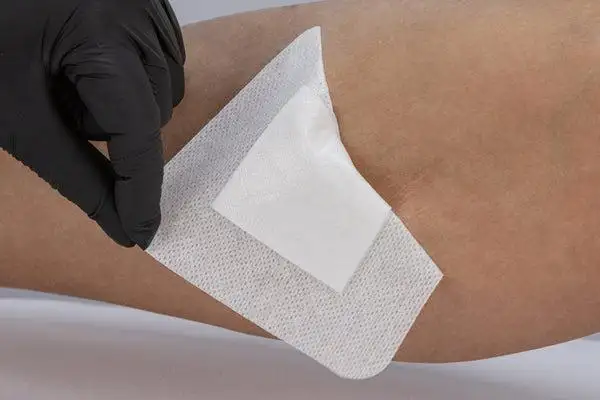
Disposable Medical Tape offers secure fixation with its unique pressure-sensitive adhesive. Its gentle removal is aided by controlled peel strength, a flexible, breathable, and soft layer back with a uniform construction to minimize residue and stress on the skin.
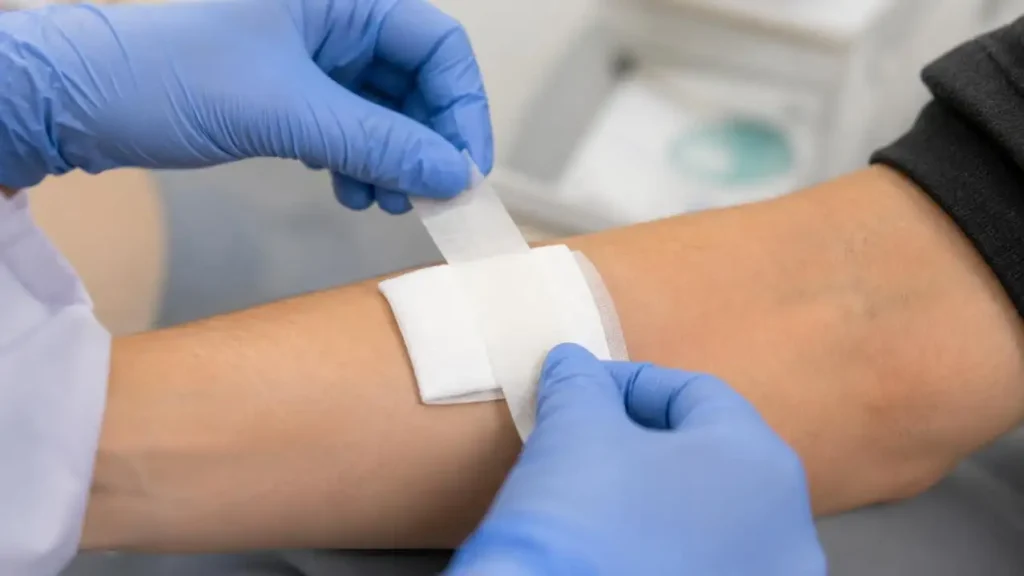
This type of tape is especially useful in securing medical dressings, medical tubes, catheters, and a variety of medical products. However, the tar must do more than providing a firm bond.
Too little adhesion causes unintentional lifting/movement of a dressing, and displacement of a medical device. Adhesion that is too great causes discomfort in removal, skin trauma and residue. The true success of Disposable Medical Tape is the balance of adhesion, flexible backing, breathability and the method of application.
How Does Disposable Medical Tape Adhesive Technology Work?
Most Disposable Medical Tape uses a medical pressure-sensitive adhesive. It bonds when light pressure brings the adhesive into close contact with the microscopic surface of the skin. No heat, water, or chemical activation is normally required.
Several properties of an adhesive influence performance:
•Tack: An indication of how fast adhesive bonds to a substrate.
•Peel adhesion: An indication of how easily bonded edges can be separated.
•Holding power: An indication of how well a bonding agent protects a structure for the intended duration of use.
•Adhesive uniformity: An indication of how well an adhesive is distributed throughout the entire surface of the tape.
An effective adhesive for Disposable Medical Tape should secure a dressing without providing excessive force to remove it. Adhesive should also be assessed with respect to the non-woven backing, the condition of the skin, the site of application, and the duration of use.
What Makes a Dressing Securely Fixed?
Secure fixation cannot be achieved by adhesives alone. The overall system of the Disposable Medical Tape structure must be integrated.
Some of the key elements are:
•Initial tack enabling fast and controlled placement
•Peel strength preventing edges from curling and lifting
•Holding power providing long term fixation
•Backing strength limiting stretch and tear
•Conformability for body joints and tapered structures.
•Surface preparation should be considered as moisture and oils as well as skin and hair care products can adversely affect adhesion.
•For small dressings, a narrow tape can be very effective. However, for larger dressings or medical devices, the use of wider Disposable Medical Tape may be effective and may provide fixation in a more even way.
Why Stronger Adhesion Often Creates Problems in Removal?
Stronger adhesion does not equate to better tape. High peel strength may lead to skin being dragged and damaged during tape removal after long term use.
•Inequitable stiffness or lack of backing conformity.
•Removal at a steep angle with increased removal velocity.
•Cumulative loading from mechanical wear.
•Application on patients with fragile skin (e.g. elderly, pediatric).
•Trapped moisture.
Gentle removal of adhesive tape is supported by a backing material with softness and an adhesive layer with a controlled amount of adhesive. The removal of Disposable Medical Tape should generally be performed at a low angle and be supported by the surrounding skin.
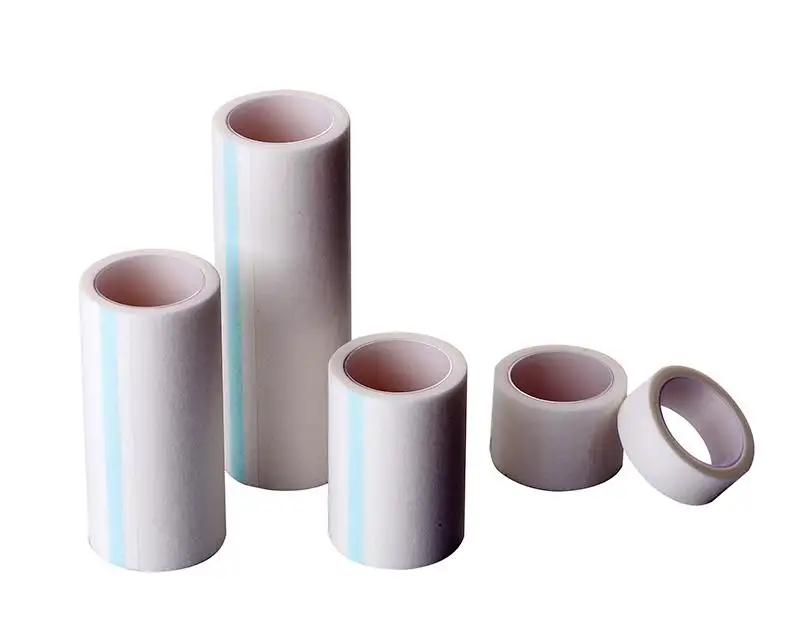
Key Features aiding Gentle Removal of Tape
Controlled Peel Strength
The adhesive should have sufficient strength to perform its intended function but should not be overly aggressive.
Flexible Non-Woven Backing
A flexible non-woven backing conforms to the natural movement of the skin. This flexibility reduces stress concentrating along tape edges and enhances comfort at joints and along the tape's edge.
Breathable Construction
Breathable Medical Tape allows for the movement of air and moisture vapor through the tape. This lessens the build-up of heat and moisture underneath the tape.
Low-Residue Adhesive
A layer of medical adhesive minimizes residue, thus aiding in the removal of the tape and cleansing of the skin for reapplication.
The Effect of Non-Woven Backing on Disposable Medical Tape
Non-woven surgical tape has a much higher degree of softness and flexibility over traditional rigid fabric tape. A backing of 30-32 g/m² achieves a good balance of softness, breathability, and adequate handling strength.
The porous structure helps with the passage of air and moisture vapor, and the flexible structure conforms to the body around the tape. Adequate tear resistance and flexibility help the tape to be conveniently torn by the user in the case of emergency first aid or repeated dressing changes.
For a variety of clinical needs, non-woven Disposable Medical Tape presents a good combination of breathability, flexibility, and fixation.
Comparison of the Characteristics of Disposable Medical Tapes
| Factor of Interest | Too Low | Too High | Preference |
| Initial tack | Constant readjustment difficulties | A tendency to over control the placement of tape | Fast and controlled placement of tape |
| Peel adhesion | Separation at the edges | Difficult and painful removal of tape | Secure and easily released fixation |
| Holding power | Tendency of the tape to slide | Separation becomes difficult and is painful | Flexibility of the tape to remain stable |
| Backing stiffness | Lack of support from the tape | A tendency to bend | Poor stiffness |
| Breathability | A feeling of dampness on the tape surface | Tape becomes weak with loss of structural integrity | Transport moisture with integrity |
| Adhesive coating | A tendency to remove the tape with fixation loss | Remains on the surface of the tape | Poor and consistent coating |
The selection of Disposable Medical Tape should be based on the fixation application, duration of use, condition of the skin, the anatomic area, and the environment of care.
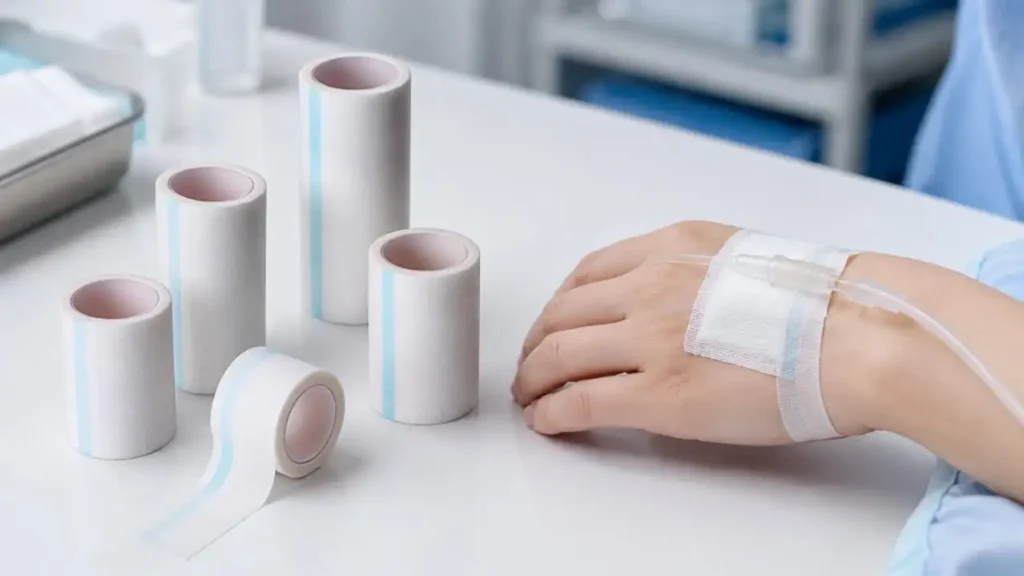
Selecting Disposable Medical Tape for Various Purposes
Choose tape that balances breathability, conformability, and adhesion for fixation of medical dressings.
When securing medical tubing and other devices, assess the tape's holding power, width, tensile strength, and the ability to withstand movement.
When working with sensitive or easily damaged skin, select tape with a soft backing, controlled peel strength, low residual adhesive, and a soft removal technique.
During taping over joints and other areas of the body that will move, edge lifting can be minimized with the use of flexible, breathable surgical tape.
When the situation requires a dressing to be changed frequently during the day, tape that is quick and easy to tear, apply, and remove can enhance the workflow.
Sterile vs Non-Sterile Disposable Medical Tape
| Tape Type | Typical Use |
| Sterile Disposable Medical Tape | Used when medical tape is required to be sterile by the procedure or care protocol |
| Non-Sterile Disposable Medical Tape | Used for standard fixation where a sterile tape is not required |
The choice of a tape's sterility should be based on the purpose of the tape and should comply with applicable laws and clinical policies. The integrity of the tape's packaging, along with its labeling and documentation of the sterilization process, should be assessed. Sterility and the gentleness of the tape to skin are two separate product characteristics.
Greetmed Disposable Medical Tape Specifications
Greetmed Non-woven Surgical Tape is designed for securing medical dressings, medical tubing, and other medical products. It is designed to be flexible, breathable, and gentle to skin with easy removal after fixation.
| Specification | Available Options |
| Material | Non-woven backing with adhesive |
| Color | White or flesh |
| Width | 1.25, 2.5, 5, 7.5, and 10 cm |
| Length | 5 m, 5 yd, 10 yd, and other options |
| Sterility | Sterile or non-sterile |
| Detectability | With or without X-ray detectable element |
| OEM service | Available |
| Minimum order | 10,000 pieces |
Certification and regulatory documentation should be confirmed according to the destination market and current product configuration.
OEM Considerations for Disposable Medical Tape Consumers
Buyers should delineate intended use, skin type, duration of use, dimensions, adhesive type, sterility, packaging, and target market documentation before product comparison.
Greetmed offers a range of custom options for Disposable Medical Tape. We manufacture and package Medical Tape in a variety of sizes, colors, and formats and in sterile and non-sterile options. We also invite customers to provide us with their use case and specific requirements for adhesive performance and branding in order to recommend the most suitable specification and non-woven surgical tape OEM option.
FAQs
Q1. What are the available dimensions ?
Widths are either 1.25 cm, 2.5 cm, 5 cm, 7.5 cm, or 10 cm. Lengths usually come in 5 m, 5 yd and 10 yd. Other lengths are available for OEM orders.
Q2. What does Greetmed Non-woven Surgical Tape consist of?
The tape consists of a soft, flexible, and breathable non-woven backing that is coated with a soft and comfortable medical adhesive.
Q3. Is Greetmed Disposable Medical Tape breathable?
Yes. The non-woven porous structure allows the passage of air and moisture vapor which helps prevent the accumulation of heat and moisture beneath the tape.
Q4. Is Greetmed Disposable Medical Tape safe for sensitive skin?
The tape is made from soft and non-irritating materials with controlled adhesion to enable easier and less traumatic removal. However, it is the buyer's responsibility to choose the tape that best fits the needs of the skin condition, required duration of wear, and clinical needs.
Q5. Is Greetmed tape available in both sterile and non-sterile versions?
Yes. Greetmed offers both sterile and non-sterile versions of the Disposable Medical Tape. The choice depends on the specific use, care guidelines, and the needs of the market where the tape will be used.
Submit Your Request
Recent Posts
Tags
- Adult Diapers
- Are custom medical devices safe
- Baby Diapers
- Can respiratory anesthesia be used
- Digital Healthcare
- Do you offer customized consumables
- European Market
- How do you take care of a skin wound
- Industry Trends
- Lady Sanitary Napkins
- Medical Devices
- OEM Medical Devices
- Product Introductions
- Protective Equipment
- Under Pads
- What are custom-made medical devices
- What are diagnostic products
- What are hospital dressing products
- What are medical tube catheters
- What are some common protective equipment
- What are the appropriate applications for hospital dressing products
- What are the appropriate uses for protective equipment
- What is a gynecological examination
- What is a medical consumable
- What is an anesthesia kit
- What is an OEM in medical devices
- what is an wound skin care
- what is can disposable ultrasonic diagnostic
- What is good manufacturing medical devices
- What is hospital-grade protective equipment
- what is medical equipments hospital furniture
- What is medical sterilization wrapping
- What is rehabilitation equipment device
- What medical consumables do you supply
- Where can I find laboratory consumables wholesale
- where can I find medical protection device
- where to buy hypodermic accessories
- where to buy medical apparel
- where to buy medical consumable accessories
- where to find OEM medical device supplier
- where to find rehabilitation equipment supplier
