



Sterile Band-Aids Breathability: How Backing Materials Affect Skin Comfort


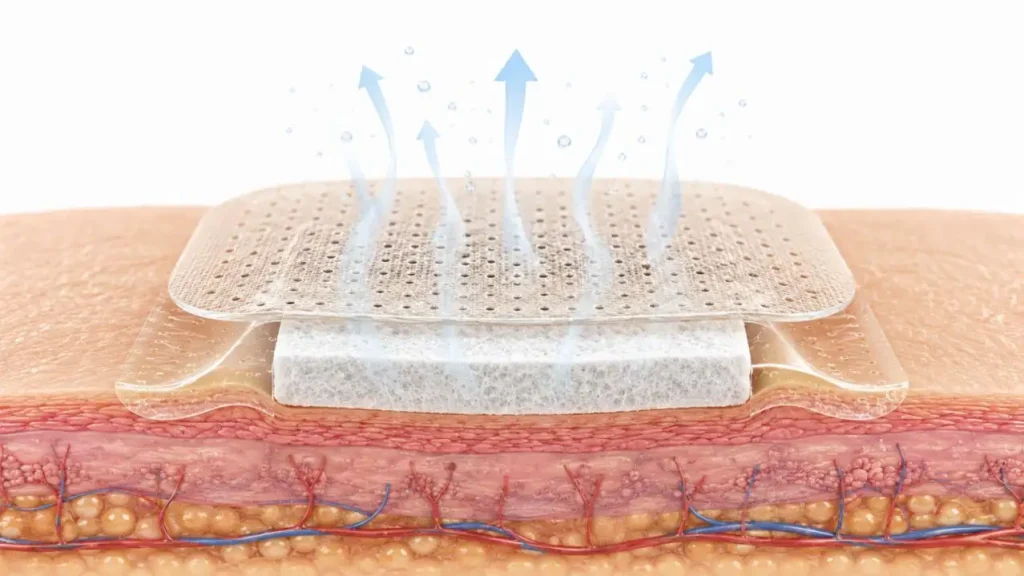
Breathability in Sterile Band-Aids is a consideration of back material, hole pattern, adhesive application, and overall product thickness. Breathable backs carry heat and moisture away from the skin. This alleviates the annoying stuffiness feeling, and reduces the whitening and softening that occurs in the covered area.
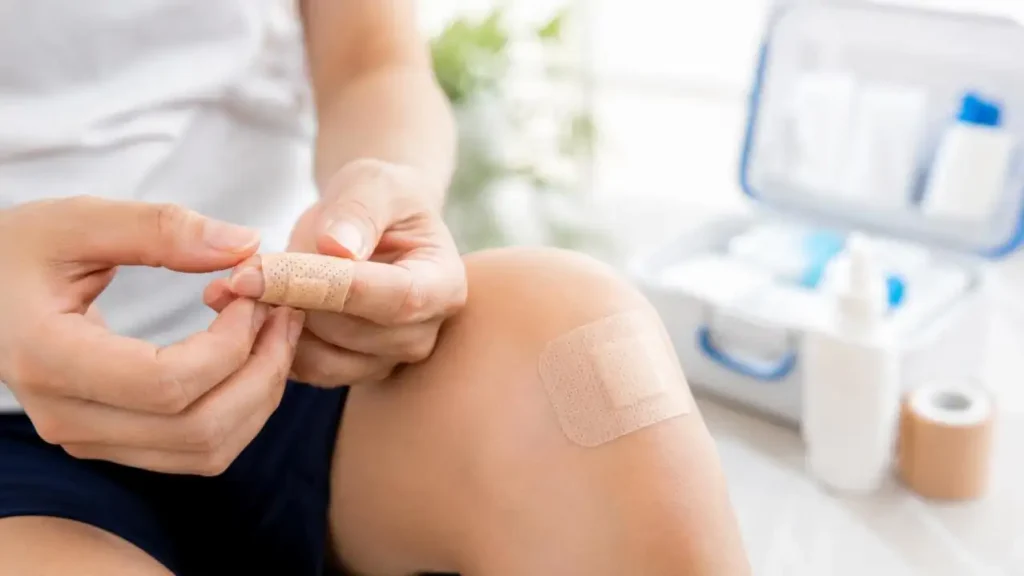
Increased breathability is not always the goal. Sterile Band-Aids also need to strike a balance with flexibility, adhesion, protection from dirt and friction, and a suitable coating of water resistance. Knowledge of the strengths and weaknesses of backing materials like PVC, PE, PU, cotton, elastic fabric, and non-woven fabrics is important in selecting the appropriate sterile adhesive bandage for the job.
Why is Breathability Important for Sterile Band-Aids?
Skin is always in the process of losing moisture vapor and heat. If a dressing has an overly sealed environment, moisture will start to collect under the adhesive border. This will begin to cause the skin in the border area to become soft, pale, and uncomfortable.
Breathable Sterile Band-Aids allow moisture vapor to be released while still covering minor cuts, scrapes and abrasions. This helps:
•Control moisture in the area of the wound
•Reduce the incidence of skin maceration at the dressing border
•Increase the comfort of wearing the dressing
•Improve the dressing's ability to conform to areas of the body that are active
•Increase the likelihood that the dressing will stay in place
What Factors Affect the Breathability of Sterile Band-Aids?
Backing Material
Breathability is affected by moisture-vapor transmission characteristics (MVTC) which are influenced by the type of polymers, fibers, the thickness and the elastic properties of the backing. Films and fabrics will have different characteristics in response to temperature, sweating, and movement.
Perforated vs. Non-Perforated Structures
Perforated (or drilled) backings have small holes that enhance the exchange of air and moisture. Backings that are non-perforated form a more consistent barrier against contaminants and moisture.
The breathability of Sterile Band-Aids is affected by the hole diameter, the spacing and distribution of the holes, and the thickness of the backing.
Adhesive Coating
Adhesive formulation and coating coverage can partially block the breathable surface. Commercial wound adhesive plasters may use an adhesive weight of approximately 32–40 g/m², depending on the material and required fixation.
A heavier coating can improve holding strength but may reduce moisture-vapor transmission. A lighter coating may increase breathability but must still prevent edge lifting.
Overall Construction
Backing, adhesive, absorbent pad, non-stick contact layer, and liner work as one system. Therefore, the breathability of Sterile Band-Aids should be evaluated as a finished product rather than by backing material alone.
How Different Backing Materials Alter Skin Comfort?
| Backing Material | Breathability | H2O Resistance | Flexibility | Other Notes |
| PVC | Low to moderate | Good | Moderate | Economic for general short-term protection |
| PE | Moderate if perforated | Good | Moderate | Lightweight and usually available in perforated designs |
| PU film | High moisture-vapor permeability | Very good | High | Combines waterproof and flexible protection |
| Cotton fabric | High | Low to moderate | High | Comfortable for joints and active areas |
| Elastic fabric | High | Moderate | Very high | Conforms well to fingers, elbows and knees |
| Non-woven | Moderate to high | Moderate | Soft | Lightweight, suitable for comfort-oriented products |
PU breathable adhesive bandages are frequently chosen when performance with respect to waterproof and moisture-vapor transmission is important. Within this context, thin PU film can adapt to the skin with an outer surface.
Perforated PE fabric provides superior breathability, moderate protection, and good value for money. Elastic material and cotton fabric provide good flexibility and are therefore suitable for use on body areas in motion.
While PVC and non-woven backings are suitable for general use and for applications where some softness is desired, non-woven backings are less suitable for comfort and may inhibit final performance along with thickness, adhesive coverage, and test results.
Waterproof vs. Breathable vs. Sterile Band-aids: Which is Better?
Without context, one does not have a definitive advantage over the other. Compare the conditions under which they will be used and the duration expected for each wear.
Use of Waterproof Sterile Band-Aids may be appropriate for:
•Situations subject to brief light contact with water
•Handwashing and travel
•Use in kitchens, occupations, and outdoor first-aid kits
•Short-term use when a continuous barrier is required
Highly breathable Sterile Band-Aids may be appropriate for:
•Areas of the skin that are likely to sweat
•Fingers, elbows, knees, and other joints
•Use for longer periods of time
•Applications that should be soft and flexible
The optimal design integrates comfort, fixation, moisture management, water resistance, and protection of the wound.
What is the Role of the Pad and the Adhesive in Comfort?
The absorbent central pad minimizes the contact of the wound with dirt and helps limit friction. A non-adherent contact pad can ease the pain of removal.
The pad should cover the wound and the adhesive border should stick to clean, dry skin.
A hypoallergenic plaster should adhere well but should be painless to remove. If the adhesive is too strong, the patient may be uncomfortable. If the adhesive is too weak, the plaster may curl or fall off.
Greetmed offers hypoallergenic, skin-friendly, adhesive, and non-adherent pLasters.
Greetmed Wound Adhesive Plaster Material and Design Options
Greetmed Wound Adhesive Plaster is a sterile, ready-to-use dressing for minor cuts, abrasions, and superficial wounds. Each product combines a backing material, adhesive border, and central absorbent pad.
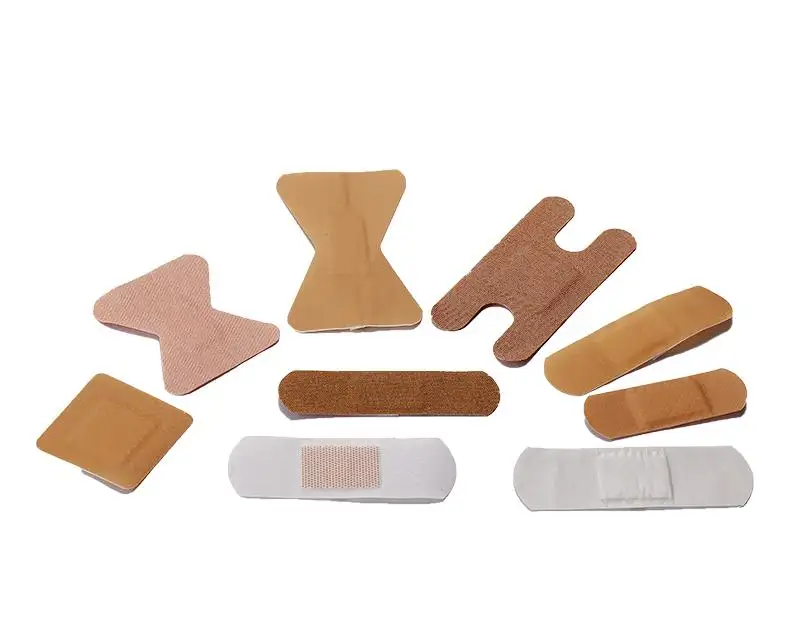
Available configurations include:
•PVC, PE, PU, cotton, elastic, and non-woven backings
•Drilled or non-drilled structures
•Breathable, flexible, or waterproof designs
•Adhesive coating weights of approximately 32–40 g/m²
•X-ray detectable or standard versions
•White, flesh-colored, and customized colors
•Round, square, rectangular, and butterfly shapes
•Standard sizes and OEM dimensions
•CE, ISO 13485, and relevant market documentation support
These options allow buyers to match Sterile Band-Aids with different skin areas, user groups, packaging formats, and distribution markets.
Available Sizes and Applications
| Shape | Example Sizes | Typical Application |
| Round | Ø22 mm, Ø25 mm | Small punctures and localized areas |
| Rectangle | 60 × 19 mm, 72 × 19 mm, 76 × 19 mm | General cuts and abrasions |
| Square | 38 × 38 mm, 76 × 38 mm | Wider wound coverage |
| Large rectangle | 114 × 50 mm | Larger superficial areas |
| Butterfly | Custom sizes | Small linear cuts |
The correct size should provide full pad coverage without placing adhesive directly over the open wound.
Quality and OEM Considerations
Greetmed provides customization for material, shape, color, size, and packaging for OEM projects. Minimum order quantities start as low as 5,000 units for some specifications.
The choice of packing options of either 50 or 100 units per box is available, and export arrangements can be done through Shanghai or Ningbo. Prior to mass production, buyers must confirm the samples of materials and the adhesion, the integrity of packaging, and product dimensions and breathability.
Final Words
The backing materials used for the production of Sterile Band-Aids form the basis of their breathability, flexibility, water resistance and comfort. These requirements are best met with a choice of backing materials which include PU, PE, cotton, elastic fabric, PVC and various non-woven materials.
Greetmed offers a wide range of Sterile Band-Aids for varying needs in different materials, shapes, sizes, and packaging. Greetmed can assist in the selection of materials and samples and can customize and plan OEM production for the needed solution in market-specific and application-specific wound care.
FAQs
Q1. What are the materials used in Greetmed Sterile Band-Aids?
Based on different requirements related to breathability, flexibility, waterproofing, and the type of application, Greetmed Sterile Band-Aids can be made using a range of materials, including PVC, PE, PU film, cotton and elastic fabrics, and non-woven materials, among others.
Q2. Are Greetmed Sterile Band-Aids breathable?
Greetmed Sterile Band-Aids are breathable as they are made using perforated films, PU, cotton, elastic fabrics, and non-woven materials. Breathability of the Sterile Band-Aids will be dependent on design, thickness, and the type of adhesive used.
Q3. Does Greetmed provide waterproof Sterile Band-Aids?
Greetmed Sterile Band-Aids can be supplied for applications where they would come into light contact with moisture, like washing hands, on trips, or used as a first aid supply in the workplace. Water resistance and flexibility can be provided in the range of applications by the use of PU film and certain polymers.
Q4. What is the difference between drilled and non-drilled Sterile Band-Aids?
The main difference between the two is that drilled Sterile Band-Aids will have small holes that allow the passage of air and moisture, whereas non-drilled Sterile Band-Aids will provide a continuous surface and therefore, will be more effective as a moisture barrier.
Q5. Does Greetmed use hypoallergenic adhesive?
Greetmed's adhesive options are all skin-friendly and hypoallergenic to allow for a gentle application and a secure hold. The adhesive is typically coated in a light layer with a coverage of 32–40 g/m², varying with the product and material used.
Submit Your Request
Recent Posts
Tags
- Adult Diapers
- Are custom medical devices safe
- Baby Diapers
- Can respiratory anesthesia be used
- Digital Healthcare
- Do you offer customized consumables
- European Market
- How do you take care of a skin wound
- Industry Trends
- Lady Sanitary Napkins
- Medical Devices
- OEM Medical Devices
- Product Introductions
- Protective Equipment
- Under Pads
- What are custom-made medical devices
- What are diagnostic products
- What are hospital dressing products
- What are medical tube catheters
- What are some common protective equipment
- What are the appropriate applications for hospital dressing products
- What are the appropriate uses for protective equipment
- What is a gynecological examination
- What is a medical consumable
- What is an anesthesia kit
- What is an OEM in medical devices
- what is an wound skin care
- what is can disposable ultrasonic diagnostic
- What is good manufacturing medical devices
- What is hospital-grade protective equipment
- what is medical equipments hospital furniture
- What is medical sterilization wrapping
- What is rehabilitation equipment device
- What medical consumables do you supply
- Where can I find laboratory consumables wholesale
- where can I find medical protection device
- where to buy hypodermic accessories
- where to buy medical apparel
- where to buy medical consumable accessories
- where to find OEM medical device supplier
- where to find rehabilitation equipment supplier
