



Medical Insulin Needles Silicone Coating and Low-Friction Performance


Using silicone to coat Medical Insulin Needles allows for a decrease in friction during insertion to the skin. Coated needles leave a lubricant layer that can reduce the resistance to not only the insertion but also the removal of the needle. A coated needle, however, is only one of the many aspects that contributes to the comfort of an injection. Sharpness, bevel, thickness of the needle, choice of technique, and the consistency in manufacturing all also contribute to the comfort and efficiency of an injection.
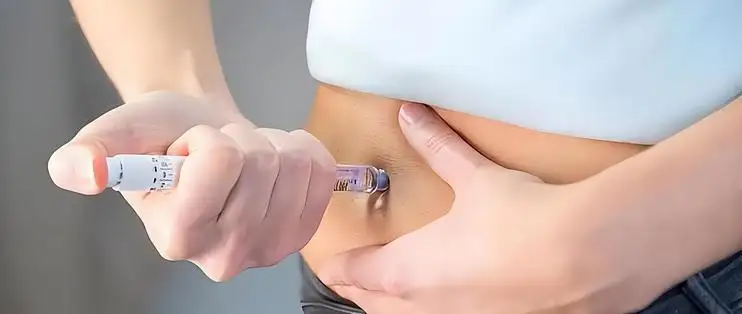
Frequent users of insulin would prefer the easiest option when measuring the overall experience of an injection. Though coating is a crucial aspect of a needle, it is only one part of the equation. Length, internal and external needle flow characteristics, needle tip design, and coating consistency, in addition to the coating, all must be considered together for effective insulin delivery.
What is the Coating of Medical Insulin Needles in Silicone?
When looking at a coated Medical Insulin Needle, one can see that a thin layer of lubricant is deposited on the outside of the pen needle. The purpose of the coating is to allow for a more frictionless entry and exit of the needle from the skin.
The coating does not change the insulin dose. Instead, it improves the sliding characteristics of the needle surface. Proper medical needle siliconization requires control of:
•Coating quantity
•Surface coverage
•Coating uniformity
•Adhesion and stability
•Performance during storage
•Interaction with sterile packaging
A needle that only has silicon on it is different than a needle that has been completely covered and then coated multiple times for consistent coverage. Stable coverage is important because uneven siliconization can create inconsistent penetration resistance within many individual needles.
A coating of silicone on Medical Insulin needles serves as a lubricant and reduces resistance to the insertion and removal of the needle.
How Does Silicone Coating Reduce Needle Friction?
The process of injection involves multiple components as outlined below:
Contact with skin → Tip penetration → Movement of needle shaft → Delivery of insulin → Withdrawal of needle
The coating of silicone reduces friction primarily in the movement of the needle shaft during the process of injection.
First Contact with Skin
When the tip of a needle makes contact with the skin, it must overcome a surface resistance. A sharp, accurately formed bevel creates the initial opening. Silicone coating then helps the needle shaft move through the tissue with less drag.
The coating cannot compensate for a blunt or poorly formed needle tip. Needle sharpness and surface lubrication must therefore be evaluated together.
Needle Shaft Movement
When the shaft of a needle penetrates into subcutaneous tissue the shaft is in contact with the tissue. A low-friction coating may:
•Reduce the sensation of dragging and pulling
•Help the needle penetrate with less resistance
•Reduce mechanical resistance
•Improve consistency of injections
When coating is uneven or incomplete, resistance may be different along the shaft.
Needle Withdrawal
A coating of silicone may reduce resistance during withdrawal of the needle. Smoother withdrawal may highly help create the perception of a more consistent injection, although this is subjective to the stiffness of the injector and the technique used in the injection.
Silicone Coating and Injection Discomfort
Silicone-coated insulin needles may help decrease injection discomfort due to reduced surface friction. They should not be labeled as painless.
The user's experience may also be affected by:
•Injection site
•Skin condition
•Needle length and gauge
•Injection angle
•Insertion speed
•Pen operating technique
•Individual sensitivity
•Previous needle use
A coated needle may support smoother penetration, but comfort depends on the complete needle design and correct handling.
Other Design Factors Affecting Medical Insulin Needles
| Design Factor | Primary Function | Potential Effect |
| Silicone Coating | Reduces shaft friction | Aids in smoother insertion and withdrawal |
| Needle Bevel | Forms the penetration point | Affects the resistance to initial penetration |
| Needle Gauge | Determines outer diameter | Thicker needles have lower gauge numbers |
| Needle Length | Determines penetration depth | Should be appropriate for the user |
| Ultra Thin Wall | Allows for a larger diameter internally | Penetrates insulin with an almost closed needle |
| Quality of Stainless Steel | Provides strength and stability | Affects reliability and consistent dimensions |
| Pen Connection | Secures the needle to the pen | Aids against leakage or detachment |
| Sterile Packaging | Prevents damage to the needle | Provides sanitary single use and handling |
When coupled with a suitable gauge, ultra thin wall insulin needles can assist in potentially adequate flow and lessening the duration of the injection, as they provide a larger internal passage almost without an increase in external diameter.
Why Coating Uniformity Matters
For low friction Medical Insulin Needles, consistent silicones coating is of utmost importance in manufacturing.
A coating that is too thin will not provide adequate lubrication and variation in coating will result in variation in penetration force from needle to needle. As a result, manufacturers must control:
•Cleanliness of the needle tube
•Siliconization
•Coating coverage
•Tip geometry
•Needle straightness
•Assembly strength
•Connection accuracy
•Packaging integrity
Evaluation of needle quality is only complete with visual inspections, flow tests, connection tests, penetration tests, dimensional checks, and integrity checks of batch consistency. Affirming the presence of silicone is not adequate; its application must be uniform and consistent.
Selecting Appropriate Needle Length and Gauge
Pen needles come in varied lengths. The shorter the needle, the shallower the injection, which is desirable to some. The correct length is highly individualized and can depend on the injection site and should always be discussed with a healthcare professional.
All pen needles come in different gauges, and the standard is:
•29G: Larger gauge
•30G-31G: Mid-range
•32G: Smaller gauge
Although smaller gauge pen needles may be more desirable to reduce the sensation of injection, other factors need to be considered, including wall thickness, rate of flow, and the needle tip.
Insulin pen needle selection should be made based on the direction of the healthcare professional, the product label, and the instructions provided with the insulin pen.
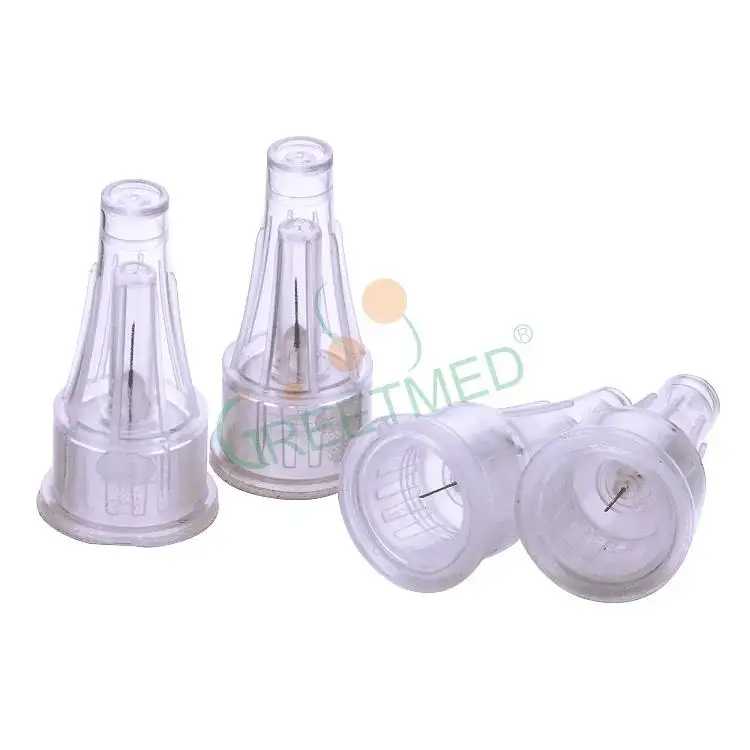
Safe Disposal and Single Use
It is designed within the specifications of the insulin pen to be used one time only. If the pen needle is used more than once, inconsistent doses may be injected, it may become dangerous due to increased risk of infection, and it may be painful to use, as it may have become damaged.
The user should:
•Have an intact sterile package
•Follow the instructions to attach the needle to the pen
•Remove it after the injection
•Never share the needle
•Dispose of it in an approved sharp container
•Follow the local medical waste regulations
Just because it has a silicone coating, does not mean that it can be used more than once.
Greetmed Disposable Medical Insulin Needles
Greetmed provides disposable needles for pen-style insulin delivery that are precise, safe, and convenient. Insulin delivery needles incorporate features such as:
•Fine tip stainless steel needles
•Silicone coating
•Ultra-thin wall construction.
•Needle lengths from 4 mm to 12 mm
•Gauge options from 29G to 32G
•Screw or push-fit connections
•Compatible with many reusable and prefilled insulin pens
•Individually sterile, easy-peel packaging
•Optional inner shields or safety seals
•Support for OEM packaging and private labels
Final Words
Buyers should check for pen style compatibility, needle dimensions, packaging, sterilization, market, quality, and records and traceability for batches when assessing suppliers.
Greetmed offers disposable medical insulin needles in a sharp, silicone coated, ultra-thin wall, stainless steel, easy-peel, sterile packaging, and offered in multiple gauges and lengths. The right standard or OEM offer for the buyer is defined by connectivity, specifications, packaging, target market, and order volume.
FAQs
Q1. Are Greetmed Medical Insulin Needles appropriate for different insulin pens?
Use of Greetmed Medical Insulin Needles can be made with different types of both reusable and prefilled insulin pens in either a screw-type or push-fit connection. It is necessary to check compatibility with the specific insulin pen model.
Q2. How does the silicone coating improve comfort?
Because silicone is a low-friction material, it reduces resistance during the insertion and withdrawal of the needle. This also helps against resistance during withdrawal.
Q3. What is Greetmed's range of needle lengths?
Greetmed insulin pen needles are generally available in lengths from 4 mm to 12 mm. Precise lengths and availability should be confirmed by the customer prior to ordering.
Q4. What gauge of needles do you offer?
The most common gauge used is from 29G (coarser) to 32G (finer). Higher gauges are appropriate if the user prefers and is able to handle a finer needle, but a coarser needle is more appropriate for faster flow.
Q5. What are the advantages of an ultra-thin wall needle?
Designing an ultra-thin wall needle helps provide faster flow of insulin, as the internal diameter is relatively large and the external diameter is very small.
Submit Your Request
Recent Posts

Tags
- Adult Diapers
- Are custom medical devices safe
- Baby Diapers
- Can respiratory anesthesia be used
- Digital Healthcare
- Do you offer customized consumables
- European Market
- How do you take care of a skin wound
- Industry Trends
- Lady Sanitary Napkins
- Medical Devices
- OEM Medical Devices
- Product Introductions
- Protective Equipment
- Under Pads
- What are custom-made medical devices
- What are diagnostic products
- What are hospital dressing products
- What are medical tube catheters
- What are some common protective equipment
- What are the appropriate applications for hospital dressing products
- What are the appropriate uses for protective equipment
- What is a gynecological examination
- What is a medical consumable
- What is an anesthesia kit
- What is an OEM in medical devices
- what is an wound skin care
- what is can disposable ultrasonic diagnostic
- What is good manufacturing medical devices
- What is hospital-grade protective equipment
- what is medical equipments hospital furniture
- What is medical sterilization wrapping
- What is rehabilitation equipment device
- What medical consumables do you supply
- Where can I find laboratory consumables wholesale
- where can I find medical protection device
- where to buy hypodermic accessories
- where to buy medical apparel
- where to buy medical consumable accessories
- where to find OEM medical device supplier
- where to find rehabilitation equipment supplier
