



Coil Reinforced Catheter Tubing: The Engineering of Kink Resistance and Flexibility


Coil reinforced catheter tubing is a specialized medical component designed to maintain a clear internal lumen while navigating the body's most tortuous anatomical pathways. By embedding a continuous spiral of wire—usually stainless steel or Nitinol—within the polymer walls, manufacturers create a tube that resists kinking and crushing. This technology is essential for neurological, cardiovascular, and urological procedures where a collapsed catheter could lead to immediate clinical complications.
In the high-stakes environment of a catheterization lab, the "trackability" of a device determines procedural success. I have observed many cases where standard tubing would have "pinched off" during a sharp turn in the neurovasculature. Coil reinforcement solves this by providing "hoop strength" without sacrificing longitudinal flexibility. At China-Greetmed, we understand that this structural integrity is the backbone of minimally invasive surgery. This guide provides a definitive look at how coil reinforcement works, why it is used, and how it differs from other reinforcement methods.
What Is Coil Reinforced Catheter Tubing?
Coil reinforced catheter tubing is a composite medical tube featuring a metal or fiber spiral embedded between layers of high-performance polymers. The spiral coil acts as a mechanical skeleton that prevents the tube from "ovaling" or kinking when bent at extreme angles. This allows the internal channel to stay open, ensuring the uninterrupted flow of fluids, medications, or surgical tools.
The mechanics rely on the coil's ability to maintain a constant cross-sectional area. As the catheter curves, the individual winds of the coil support the wall, preventing it from collapsing inward. This is particularly vital when using a medical hypodermic syringe to inject contrast at high pressure. Without coil support, the pressure or the bend could deform the tube, leading to inaccurate results or device failure.
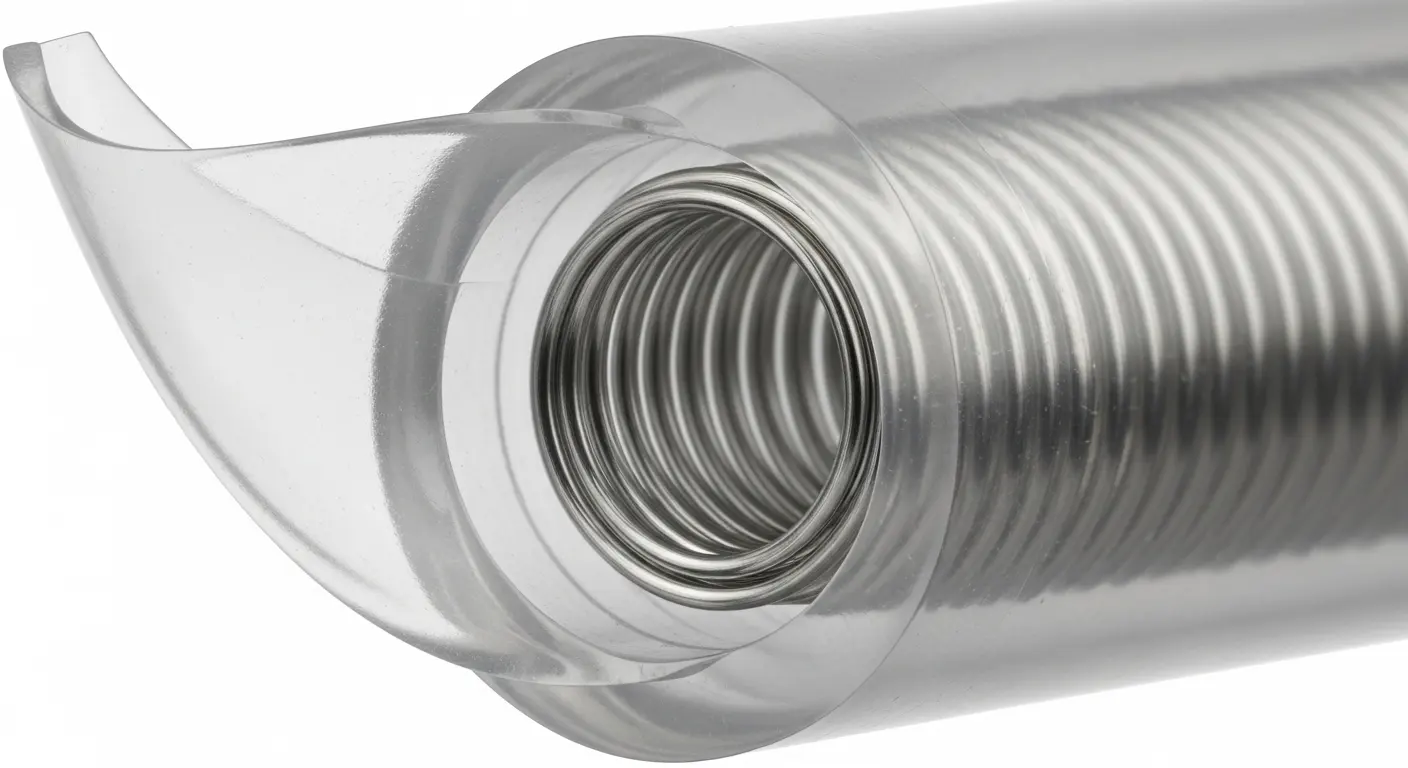
Key Components of Coil Reinforced Tubing
- Inner Liner: Typically made of PTFE for an ultra-slick surface.
- Metal Coil: A spiral of stainless steel or Nitinol wire.
- Outer Jacket: Polymers like PEBAX or Polyurethane that "reflow" over the coil.
- Tie Layer: A specialized adhesive layer that bonds the plastic to the metal.
Why Is Coil Reinforcement Used in Medical Applications?
Coil reinforcement is used because it offers the highest level of kink resistance and flexibility compared to standard or braided tubing. In delicate areas like the brain or heart, catheters must navigate 180-degree turns without closing off. The coil ensures that the lumen remains patent, allowing the physician to deliver life-saving treatments through a perfectly round channel.
In clinical practice, medical teams often work "PRN"—or as the situation requires—during emergency interventions. Understanding what PRN means in medical terms highlights why equipment must be reliable under pressure. If a catheter kinks during a "PRN" emergency, the delay can be catastrophic. Coil reinforcement provides the safety margin required for these high-pressure scenarios, ensuring that the "engine" of the procedure—the catheter—never stalls.
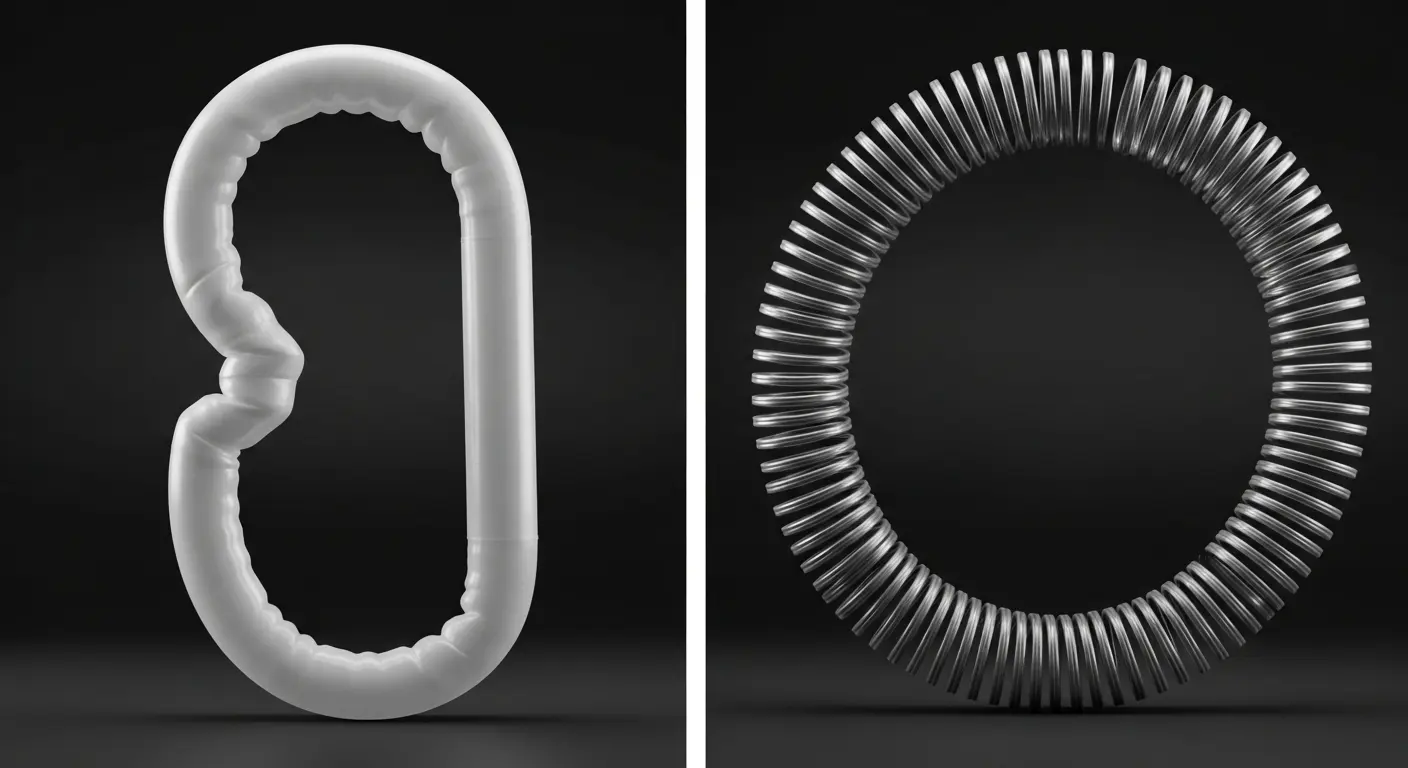
How Does Coil Reinforcement Differ from Braiding?
The primary difference is that coil reinforcement focuses on flexibility and kink resistance, while braiding focuses on torque transmission and burst pressure. Coils are a single wire wound in a spiral, allowing the tube to "snake" easily. Braids are interwoven wires that act more like a stiff cage, allowing the surgeon to twist the handle and have the tip respond instantly.
| Feature | Coil Reinforcement | Braided Reinforcement |
| Primary Goal | Flexibility & Kink Resistance. | Torque & Pushability. |
| Mechanical Action | Spiral support. | Interlocked mesh support. |
| Best Use Case | Neurovascular microcatheters. | Delivery sheaths & guiding catheters. |
| Lumen Integrity | Exceptional in tight loops. | Moderate; can "oval" under stress. |
For many specialized drainage devices, such as the Malecot catheter, coil reinforcement can be used in specific sections to ensure the tube doesn't collapse while passing through dense tissue. While braiding is great for "steering," coiling is the undisputed champion of "tracking" through winding vessels.
Which Materials Are Best for Coil Reinforced Tubing?
The best materials for coil reinforced tubing include Nitinol or 304V stainless steel for the coil, and high-performance polymers like PEBAX or TPU for the jacket. Nitinol is preferred for "shape memory" applications, where the tube must return to its original shape after being bent. Stainless steel is the industry standard for providing excellent "hoop strength" at a lower cost.
Expert Insight: The "pitch" of the coil—how close the wires are to each other—determines the final performance. A "tight pitch" offers maximum crush resistance but makes the tube stiffer. At China-Greetmed, we use precision winding machines to ensure the pitch is perfectly consistent. Even a minor gap in the coil can create a "kink point" that fails in the clinical environment.
What Are the Manufacturing Challenges of Coil Extrusion?
The main manufacturing challenges include maintaining concentricity and preventing "wire pop-out." Because the walls are so thin, the coil must be perfectly centered between the inner and outer layers. If the coil is too close to the surface, it can break through the plastic, creating a sharp edge that could harm the patient.
Cleanliness is also paramount. Any dust or fiber trapped between the coil and the polymer jacket will cause a structural weak spot. I have seen production runs discarded because a single fiber was detected under a microscope. Technicians often use a medical cotton swab to clean the winding mandrels and the extrusion dies during changeovers. This meticulous approach is what separates medical-grade tubing from industrial plastic.
How Does Coil Reinforcement Improve Patient Safety?
Coil reinforcement improves safety by virtually eliminating the risk of sudden catheter occlusion during a procedure. When a catheter stays open, the physician has constant access to the treatment site. This reduces the need for "re-accessing" the vessel, which minimizes the risk of arterial dissection, internal bleeding, and prolonged exposure to radiation.
After the device is removed, the focus shifts to wound care. Clinicians use various hospital dressing products to manage the access site. Because coil-reinforced catheters are so flexible, they can often be made with smaller outer diameters. Smaller devices mean smaller puncture holes, which lead to faster healing times and fewer post-operative complications for the patient.
What Are the Main Clinical Applications for Coiled Tubing?
The main applications include neurovascular microcatheters, epidural catheters, and distal tips for steerable delivery systems. In neurosurgery, catheters must be incredibly "floppy" to avoid damaging fragile brain vessels, yet they must remain open to deliver embolic coils or medications. Coil reinforced tubing is the only technology that can meet these conflicting requirements.
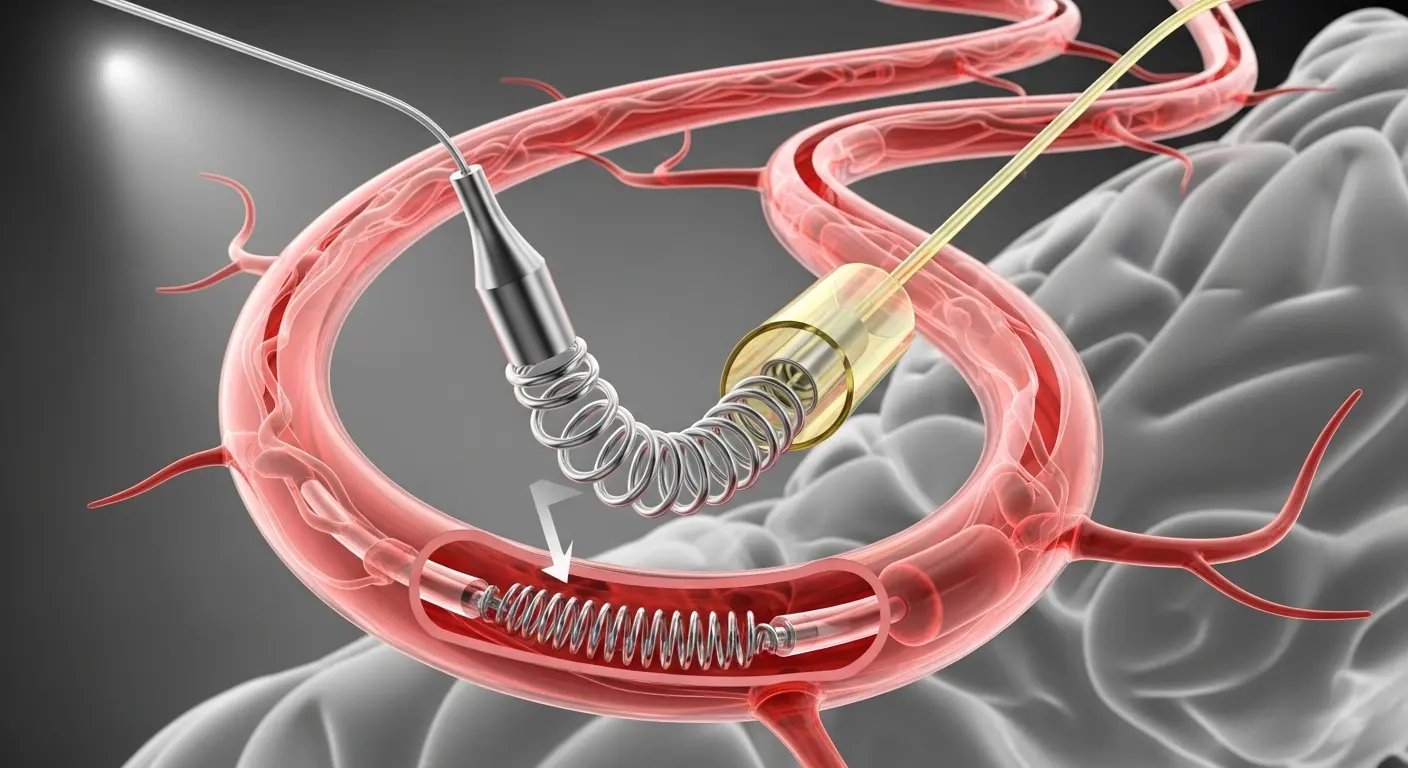
Common Clinical Uses
- Neurovascular Access: Navigating the tiny, winding vessels of the brain.
- Epidural Delivery: Ensuring pain medication flows even if the patient moves.
- Urology: Maintaining drainage in narrow or obstructed ureters.
- Electrophysiology: Protecting sensitive wires inside steerable heart catheters.
How to Select the Right Coil Reinforced Catheter Partner?
To select the right partner, you must audit their winding precision and their ability to handle "multi-durometer" designs. A high-quality manufacturer should be able to transition the stiffness of the tube along its length—stiff at the base for pushing, and soft at the tip for safety. They should also provide full ISO 13485 documentation to prove every batch has been tested for burst strength and kink radius.
Tip: Ask for a "cross-sectional analysis" report. This will show you exactly how well the coil is centered within the wall. A perfectly centered coil is the best insurance policy against device failure in the operating room.
Submit Your Request
Recent Posts


Tags
- Adult Diapers
- Are custom medical devices safe
- Baby Diapers
- Can respiratory anesthesia be used
- Digital Healthcare
- Do you offer customized consumables
- European Market
- How do you take care of a skin wound
- Industry Trends
- Lady Sanitary Napkins
- Medical Devices
- OEM Medical Devices
- Product Introductions
- Protective Equipment
- Under Pads
- What are custom-made medical devices
- What are diagnostic products
- What are hospital dressing products
- What are medical tube catheters
- What are some common protective equipment
- What are the appropriate applications for hospital dressing products
- What are the appropriate uses for protective equipment
- What is a gynecological examination
- What is a medical consumable
- What is an anesthesia kit
- What is an OEM in medical devices
- what is an wound skin care
- what is can disposable ultrasonic diagnostic
- What is good manufacturing medical devices
- What is hospital-grade protective equipment
- what is medical equipments hospital furniture
- What is medical sterilization wrapping
- What is rehabilitation equipment device
- What medical consumables do you supply
- Where can I find laboratory consumables wholesale
- where can I find medical protection device
- where to buy hypodermic accessories
- where to buy medical apparel
- where to buy medical consumable accessories
- where to find OEM medical device supplier
- where to find rehabilitation equipment supplier
