



The Ultimate Guide to Choosing a Braided Catheter Shaft Manufacturer


A top-tier braided catheter shaft manufacturer provides the engineering foundation for complex interventional procedures across cardiology, neurology, and peripheral vascular medicine. These specialized shafts use a wire-reinforced mesh to deliver high torque transmission, superior pushability, and enhanced kink resistance. In the high-stakes world of medical device production, the manufacturer’s ability to balance wall thickness with structural integrity is what determines clinical success and patient safety.
When you are deep into a cardiac procedure, the "feel" of the catheter is everything. I have spent years working with engineers who obsess over "picks per inch" (PPI) and wire tensile strength. We know that a manufacturer who cuts corners on the braiding process creates a device that "whips" or buckles in the aortic arch. This guide provides an authoritative look at what to look for in a manufacturing partner to ensure your vascular devices perform flawlessly under pressure.
| Feature | Braided Shaft Specification | Clinical Benefit |
| Torque Response | 1:1 Transmission | Precise distal tip control during navigation. |
| Reinforcement | Stainless Steel or Nitinol | Superior column strength and kink resistance. |
| Inner Liner | PTFE (Teflon) | Ultra-low friction for smooth device delivery. |
| Outer Jacket | Variable Durometer PEBAX | Soft atraumatic tips with stiff, pushable bases. |
| Kink Resistance | High (Maintains Lumen) | Uninterrupted flow of fluids and guide wires. |
What Does a Braided Catheter Shaft Manufacturer Do?
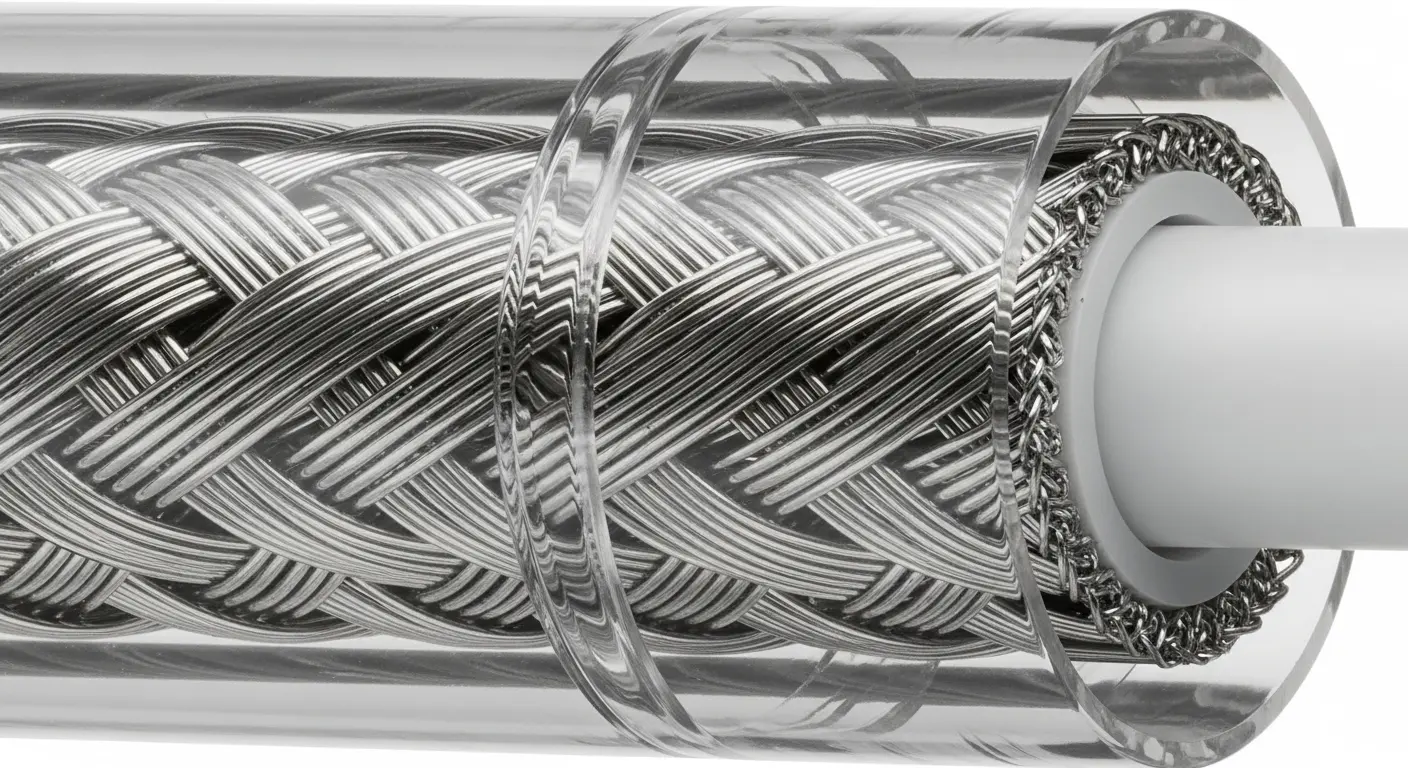
A braided catheter shaft manufacturer specializes in the complex assembly of multi-layer medical tubes reinforced with a wire mesh. They utilize high-precision braiding machines to interweave stainless steel or nitinol wires around a lubricious inner liner. This assembly is then "reflowed" with a polymer outer jacket to create a single, high-performance composite structure capable of navigating the body's vascular system.
The manufacturing process is a delicate balance of tension and temperature. If the wire tension is too high, the inner liner can collapse; if it is too low, the torque response becomes sluggish. A leading manufacturer must offer "vertical integration," handling everything from custom extrusion to final sterilization. This ensures that a specialized device like a Malecot catheter or a heart delivery sheath maintains its geometry throughout the entire production cycle.
How Do You Evaluate the Quality of a Braided Shaft?
To evaluate quality, you must look at torque transmission, burst pressure ratings, and the consistency of the wire-to-polymer bond. A high-quality braided shaft should offer a 1:1 torque response, meaning the distal tip rotates exactly as much as the proximal handle. Any "lag" or "whip" indicates a failure in the braiding density or the mechanical bond between the layers.

Cleanliness is the most visible indicator of quality. I once audited a facility where a single microscopic fiber trapped under the outer jacket caused a batch failure during biocompatibility testing. This is why our technicians use a medical cotton swab to meticulously clean the braiding mandrels and dies before the over-jacketing process. If a manufacturer’s cleanroom protocols are loose, the risk of particulate contamination in the patient's bloodstream becomes unacceptably high.
Why is Torqueability Critical for Interventional Catheters?
Torqueability is critical because it allows the interventionalist to steer the catheter through winding anatomical structures with sub-millimeter precision. A braided shaft transmits rotational force from the surgeon's hand directly to the catheter tip. This is essential for selecting specific arterial branches or correctly positioning a heart valve during TAVR procedures.
In emergency scenarios, doctors often operate "PRN"—or as the clinical situation demands. Understanding what PRN means in medical terms highlights why a responsive device is a life-saving tool. If the catheter doesn't respond instantly during a "PRN" intervention, procedure times increase, and the risk of vessel trauma rises. A braided shaft provides the "engine" that makes these high-pressure maneuvers possible, especially when injecting contrast via a medical hypodermic syringe to visualize the path.
Core Performance Metrics
- Pushability: The ability to transmit force from the handle to the tip without buckling.
- Trackability: How easily the shaft follows a guide wire through a curve.
- Kink Resistance: Maintaining a circular internal lumen even when bent 180 degrees.
- Torque Response: The degree of "lag" between the handle and the tip.
What Materials are Used by Leading Manufacturers?
Leading manufacturers use medical-grade polymers like PEBAX, Polyurethane (TPU), and Vestamid, reinforced with 304 or 316L stainless steel wires. Nitinol is increasingly used for the braid when extreme flexibility and "shape memory" are required. The inner liner is almost always PTFE (Teflon) because its ultra-low friction allows other devices to slide through the catheter with minimal resistance.
Expert Insight: The choice of "filar" (number of wires) and "picks per inch" (PPI) is the secret sauce of a braided shaft manufacturer. A higher PPI increases torque but makes the shaft stiffer. A lower PPI increases flexibility but can lead to kinking. At China-Greetmed, we work with engineers to find the "Goldilocks zone" for their specific clinical application.
How Does a Braided Shaft Improve Patient Safety?
A braided shaft improves patient safety by reducing the risk of catheter kinking, which could block blood flow or trap a delivery device inside the body. The reinforced wall also allows for thinner-walled tubes with larger internal diameters, enabling the use of smaller access sites. Smaller puncture holes lead to faster healing and fewer post-operative complications for the patient.
Once the procedure is over, the care team manages the access site with various hospital dressing products. Because braided technology allows for "low-profile" catheters, the trauma to the vessel wall is minimized. This reduces the risk of hematomas or pseudoaneurysms, which are the most common complications after large-bore vascular access.
What Quality Standards Apply to Braided Shaft Manufacturing?
Manufacturers must strictly adhere to ISO 13485 (Quality Management Systems) and ISO 10555 (Sterile, Single-use Intravascular Catheters). These standards mandate rigorous testing for "torque to failure," "leakage under pressure," and "biocompatibility." A reputable manufacturer will provide a comprehensive Device History Record (DHR) that proves the shaft passed every one of these safety checks.
| Standard | Focus Area | Requirement for Braided Shafts |
| ISO 13485 | Quality Management | Total traceability from resin lot to final sterile pouch. |
| ISO 10555 | Intravascular Safety | Verification of burst pressure and tensile strength. |
| ISO 10993 | Biocompatibility | Proof that materials do not cause toxic or immune reactions. |
| USP Class VI | Plastic Safety | Ensuring polymers meet the highest medical purity standards. |
How to Choose the Right Manufacturing Partner?
To choose the right partner, you must audit their R&D innovation, their cleanroom capacity, and their ability to handle "thin-wall" extrusion. Look for a manufacturer that acts as a consultant, not just a vendor. They should be able to suggest "hybrid" designs—combining braiding in the proximal section with coiling in the distal section—to achieve the perfect graduated stiffness for your device.
Tip: Ask for a sample of their "reflow" quality. The transition between the inner liner, the braid, and the outer jacket should be seamless. If you can see "voids" or delamination under a microscope, the shaft is prone to failure in a clinical environment. Reliability is built in the details of the bond.
What are the Future Trends in Braided Catheter Technology?
The future of braided technology lies in "micro-braiding" for neurovascular applications and the integration of non-metallic fibers for MRI-compatible devices. Manufacturers are also experimenting with "tapered braids," where the wire density changes along the length of the shaft. This allows for a device that is stiff enough to push through the leg but soft enough to navigate the delicate vessels of the brain.
As robotic surgery becomes more prevalent, the demand for high-torque braided shafts is skyrocketing. Robotic systems require incredibly predictable torque responses to navigate the anatomy autonomously. The next generation of braided shaft manufacturers will be those who can integrate digital feedback and "smart materials" into these tiny, life-saving tubes.
Submit Your Request
Recent Posts

Tags
- Adult Diapers
- Are custom medical devices safe
- Baby Diapers
- Can respiratory anesthesia be used
- Digital Healthcare
- Do you offer customized consumables
- European Market
- How do you take care of a skin wound
- Industry Trends
- Lady Sanitary Napkins
- Medical Devices
- OEM Medical Devices
- Product Introductions
- Protective Equipment
- Under Pads
- What are custom-made medical devices
- What are diagnostic products
- What are hospital dressing products
- What are medical tube catheters
- What are some common protective equipment
- What are the appropriate applications for hospital dressing products
- What are the appropriate uses for protective equipment
- What is a gynecological examination
- What is a medical consumable
- What is an anesthesia kit
- What is an OEM in medical devices
- what is an wound skin care
- what is can disposable ultrasonic diagnostic
- What is good manufacturing medical devices
- What is hospital-grade protective equipment
- what is medical equipments hospital furniture
- What is medical sterilization wrapping
- What is rehabilitation equipment device
- What medical consumables do you supply
- Where can I find laboratory consumables wholesale
- where can I find medical protection device
- where to buy hypodermic accessories
- where to buy medical apparel
- where to buy medical consumable accessories
- where to find OEM medical device supplier
- where to find rehabilitation equipment supplier
