



Braided vs Coiled Catheter Shaft: The Definitive Comparison Guide


The braided vs coiled catheter shaft debate is central to modern medical device engineering, influencing how catheters navigate complex vascular pathways. Braided shafts utilize interlaced wires to provide superior torque and burst pressure resistance. Conversely, coiled shafts employ a continuous spiral of wire to maximize flexibility and kink resistance. Choosing the right reinforcement is critical for procedural success in interventional cardiology, neurology, and peripheral vascular surgery.
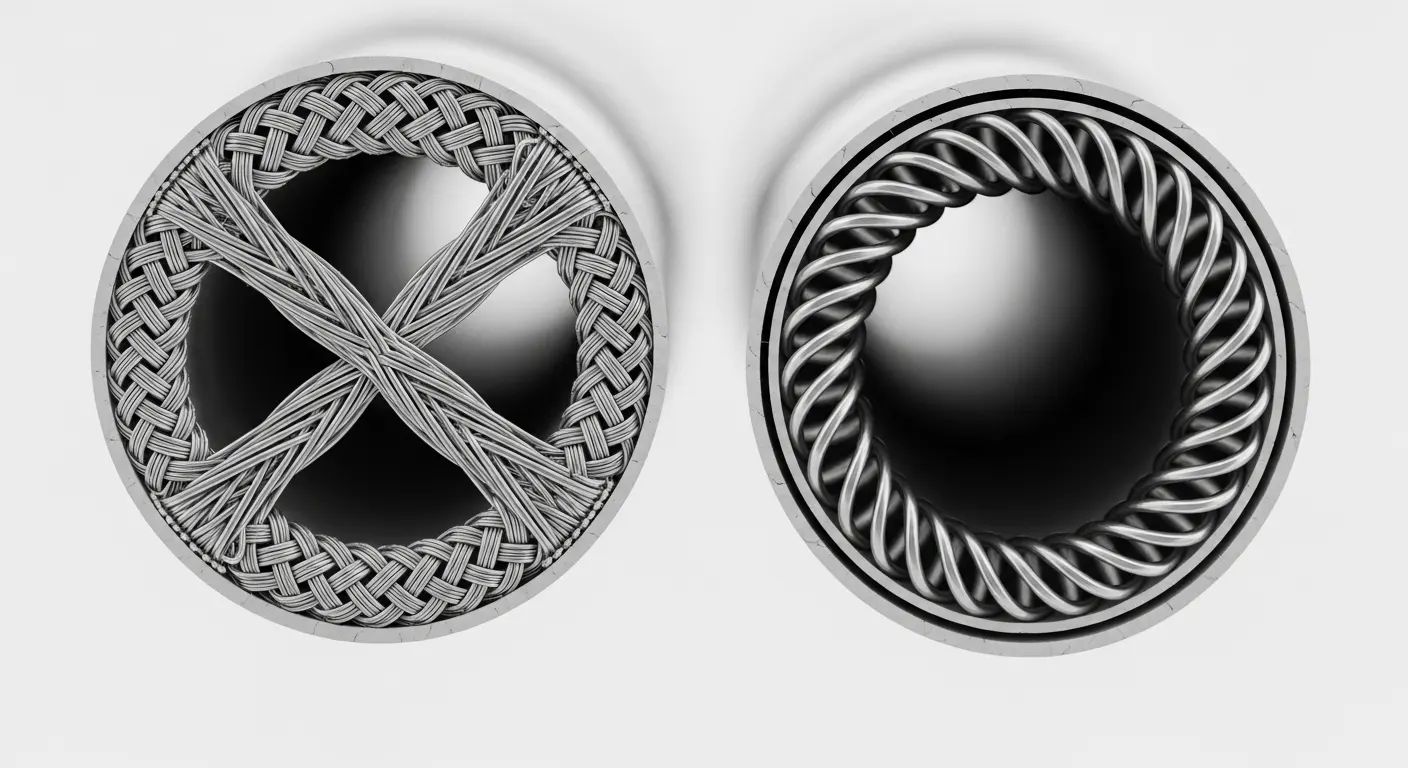
In the high-stakes environment of a catheterization lab, the "feel" of a device determines clinical confidence. I have witnessed procedures where a braided shaft provided the necessary "push" to cross a dense calcification, and others where only a coiled tip could navigate a sharp turn in the neurovasculature. Understanding these mechanical nuances allows engineers to design devices that respond intuitively to a surgeon's touch. This article provides a comprehensive technical and clinical comparison to help you select the ideal shaft reinforcement for your medical application.
| Feature | Braided Catheter Shaft | Coiled Catheter Shaft |
| Primary Strength | Torque transmission and column strength. | Flexibility and kink resistance. |
| Construction | Interwoven mesh of wires (criss-cross). | Single or multi-filar spiral wrap. |
| Kink Resistance | Moderate; can "oval" under extreme bends. | Exceptional; maintains lumen in tight turns. |
| Torque Response | High (near 1:1 rotation). | Lower (prone to "whip"). |
| Pushability | Superior; transmits force efficiently. | Moderate; focuses on tracking. |
| Common Use | Delivery sheaths, guiding catheters. | Microcatheters, distal tips. |
What is a braided catheter shaft and how does it function?
A braided catheter shaft consists of multiple wires interwoven in a criss-cross pattern around a central polymer liner. This construction acts as a mechanical skeleton that prevents the tube from collapsing while significantly enhancing its torqueability. By adjusting the "picks per inch" (PPI), manufacturers can fine-tune the balance between stiffness and flexibility.
The braid functions by converting rotational force from the handle directly to the distal tip. This 1:1 torque response is essential for navigating the aortic arch or positioning a valve. At China-Greetmed, we often integrate braided reinforcement into high-pressure delivery systems. For instance, when a medical hypodermic syringe is used to inject contrast at high psi, the braid ensures the catheter wall does not rupture or deform under the internal stress.
What is a coiled catheter shaft and why is it used?
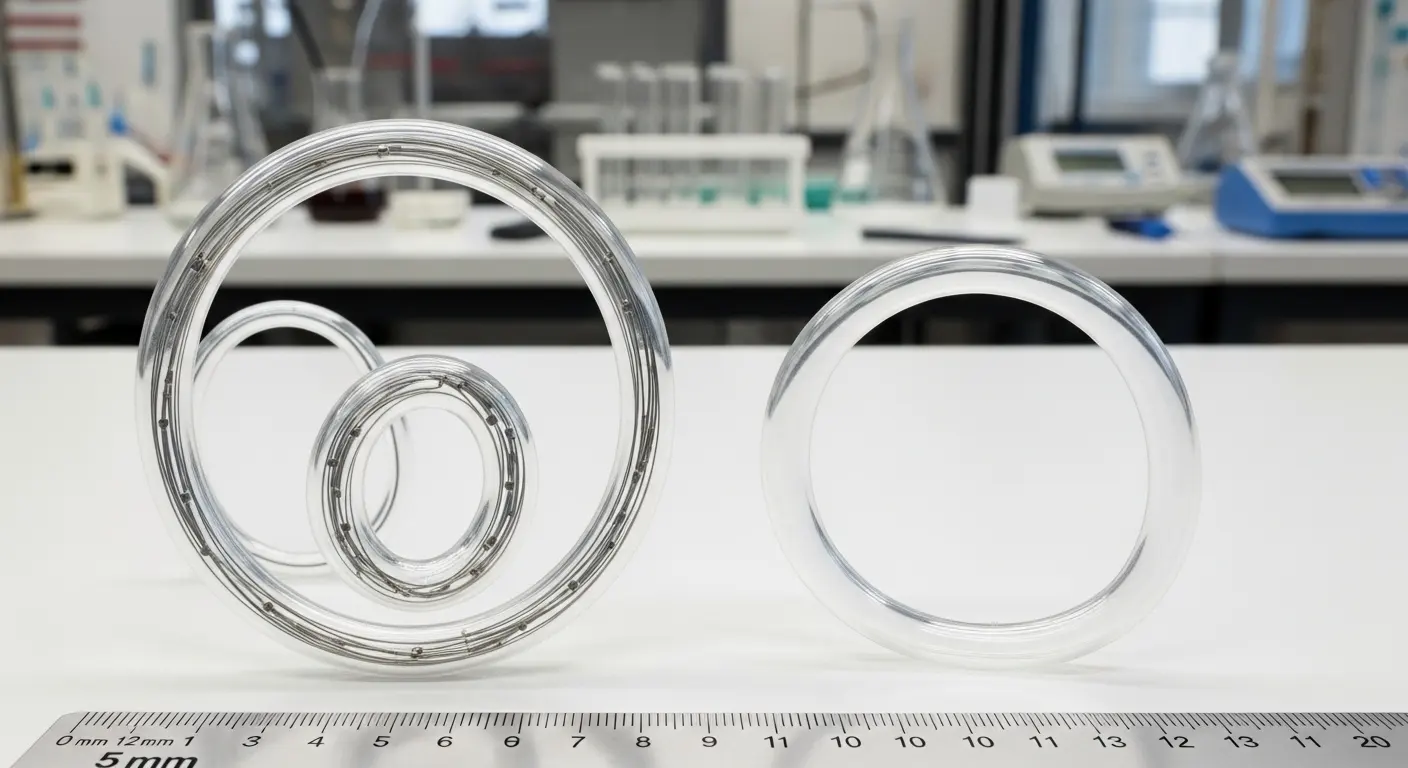
A coiled catheter shaft features a wire wound in a continuous spiral or helix along the length of the device. This design allows for maximum longitudinal flexibility because the coil can expand and compress as the catheter moves through sharp anatomical bends. It is the gold standard for maintaining a clear internal lumen in the most tortuous pathways.
Coils are preferred when "trackability" is more important than "pushability." In neurovascular procedures, where vessels are fragile and winding, a coiled microcatheter provides the "floppiness" needed to prevent vessel trauma. While it lacks the torque of a braid, its ability to stay open during extreme bends is unparalleled. This ensures that even when the catheter is looped, fluids or guide wires can pass through without resistance.
How do torque and pushability differ between the two?
Torque transmission is significantly higher in braided shafts because the interwoven wires resist twisting, whereas coiled shafts tend to store energy and "whip" when rotated. Pushability is also superior in braided designs, as the mesh structure resists compression more effectively than a spiral coil. This makes braided shafts ideal for crossing tough occlusions or lesions.
Precision is the hallmark of braided technology. If a surgeon rotates the proximal end 90 degrees, a braided tip moves almost exactly 90 degrees. A coiled shaft might lag and then suddenly "snap" into position, which can be dangerous in delicate anatomy. However, for procedures performed "PRN"—or as the clinical situation demands—having a mix of both reinforcements in the tool kit is often necessary. Understanding what PRN means in medical terms highlights the need for adaptable tools that can handle unpredictable anatomical challenges.
Key Performance Metrics
- Torque Response: Braided systems offer nearly 1:1 transmission.
- Column Strength: Braids provide the "backbone" needed to push against resistance.
- Flexibility: Coils allow the device to "snake" through 180-degree turns.
- Lumen Integrity: Coils prevent the tube from "ovaling" or flattening.
Which materials are used for braided vs coiled reinforcements?
Both braided and coiled reinforcements typically use stainless steel (304 or 316L) or Nitinol wires. Stainless steel is favored for its high tensile strength and cost-effectiveness. Nitinol is chosen for high-end applications requiring "shape memory" and extreme kink resistance. Some advanced shafts even use non-metallic fibers like PEEK or Kevlar to maintain MRI compatibility.
Manufacturing excellence starts with cleanliness. I have seen how a single microscopic fiber trapped under the outer polymer jacket can create a "bump" that causes vessel irritation. This is why technicians often use a medical cotton swab to clean the wire mandrels before the over-jacketing process. This attention to detail ensures that the final surface is ultra-smooth, reducing the risk of thrombosis or tissue trauma.
When should you choose a braided shaft over a coiled one?
You should choose a braided shaft for applications requiring high torque, such as guiding catheters, steerable sheaths, and large-bore delivery systems. Braids are the preferred choice when you need to transmit manual force from the proximal end to a distal location to deploy an implant or cross a blockage. They provide the "heft" and control required for major vascular interventions.
In urology or gastroenterology, braided components are often found in the proximal portions of drainage devices. For example, the upper portion of a Malecot catheter might be reinforced to ensure it doesn't collapse under the pressure of surrounding tissue. The braid provides the structural stability needed for long-term placement in demanding environments.
What is the "Hybrid" approach in catheter design?
The hybrid approach combines both braiding and coiling within a single catheter shaft to achieve the benefits of both. Typically, the proximal (closer to the surgeon) section is braided for torque and push, while the distal (closer to the heart or brain) section is coiled for flexibility and atraumatic tracking. This creates a "graduated stiffness" that is ideal for complex navigation.
This transition is an engineering masterpiece. The point where the braid ends and the coil begins must be seamless to avoid "kink points." By using varying polymer durometers alongside these metal reinforcements, manufacturers can create a device that is stiff at the base and soft at the tip. This is critical for patient safety, as a soft tip prevents the catheter from "poking" through a vessel wall while the stiff base allows the surgeon to drive it into position.
How do these designs impact patient safety?
Patient safety is improved by reducing the number of "passes" needed to reach a target and by minimizing vessel wall trauma. A braided shaft reduces the risk of device failure during high-pressure contrast injections, while a coiled shaft prevents the catheter from kinking and blocking blood flow or medication delivery. Together, these technologies enable the minimally invasive procedures that define modern medicine.
After a procedure, the recovery phase involves managing the access site. Medical teams use various hospital dressing products to ensure hemostasis and prevent infection. Because braided and coiled technologies allow for smaller, more flexible devices, surgeons can use smaller puncture sites, which leads to faster healing times and fewer post-operative complications for the patient.
What quality standards apply to shaft manufacturing?
Catheter shafts must adhere to ISO 13485 (Quality Management Systems) and ISO 10555 (Intravascular Catheters). Manufacturers must perform rigorous "burst pressure" tests, "torque to failure" tests, and "kink radius" evaluations. These data-driven metrics ensure that a catheter won't snap or leak when it is inside the human body.
Essential Quality Control Steps
- Tensile Strength Testing: Ensuring the braid/coil won't separate under pull force.
- Dimensional Verification: Using laser micrometers to check for uniform wall thickness.
- Visual Inspection: High-magnification cameras scan for gaps in the braid or coil.
- Biocompatibility: Following ISO 10993 to ensure materials don't cause adverse reactions.
Expert Tip: When evaluating a supplier, ask for their "picks per inch" (PPI) for braids or "wind density" for coils. These numbers are the DNA of the catheter's performance. A higher PPI usually means more torque but less flexibility. Finding the "sweet spot" is where the expertise of a manufacturer like China-Greetmed shines.
Submit Your Request
Recent Posts


Tags
- Adult Diapers
- Are custom medical devices safe
- Baby Diapers
- Can respiratory anesthesia be used
- Digital Healthcare
- Do you offer customized consumables
- European Market
- How do you take care of a skin wound
- Industry Trends
- Lady Sanitary Napkins
- Medical Devices
- OEM Medical Devices
- Product Introductions
- Protective Equipment
- Under Pads
- What are custom-made medical devices
- What are diagnostic products
- What are hospital dressing products
- What are medical tube catheters
- What are some common protective equipment
- What are the appropriate applications for hospital dressing products
- What are the appropriate uses for protective equipment
- What is a gynecological examination
- What is a medical consumable
- What is an anesthesia kit
- What is an OEM in medical devices
- what is an wound skin care
- what is can disposable ultrasonic diagnostic
- What is good manufacturing medical devices
- What is hospital-grade protective equipment
- what is medical equipments hospital furniture
- What is medical sterilization wrapping
- What is rehabilitation equipment device
- What medical consumables do you supply
- Where can I find laboratory consumables wholesale
- where can I find medical protection device
- where to buy hypodermic accessories
- where to buy medical apparel
- where to buy medical consumable accessories
- where to find OEM medical device supplier
- where to find rehabilitation equipment supplier
