



Single vs Double Check Valve in Y-Type Connector Tubing: Which Prevents Backflow Better?


Introduction
The medical tubing market is one of the fastest growing segments in the medical device market, estimated to grow to $16.04 billion by 2026, at a remarkable 13.5% CAGR. For imaging department managers and procurement professionals, as this market evolves, so does the challenge in selecting Y-Type Connector Tubing for CT and MRI contrast injection systems. One of the most important decisions is whether to use a single check valve or a double check valve configuration. In this article, we will analyze both options so that you can easily choose the configuration that offers the best backflow prevention for your facility.
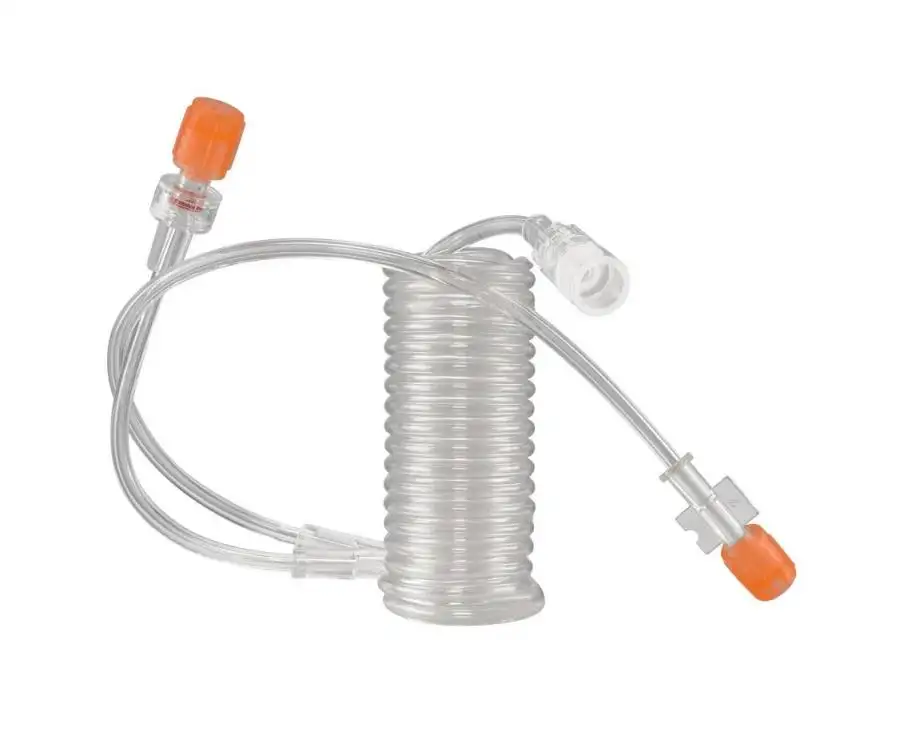
The Importance of Backflow Prevention in Contrast Injection
There are three areas of concern Backflow in dual-head contrast injectors.
1. Patient safety. Blood or contaminants can flow back and infect the injection system, and, in doing so, augment the risk of a bloodstream infection. Approximately 60% of cases of bacteremia, the presence of microbes in the bloodstream, are associated with intravascular devices.
2. Imaging problems - backflow keeps the contrast medium from being delivered and impacts the imaging diagnostics.
3. Equipment problems - backflow can cause cross-contamination of saline and contrast lines and lead to system malfunctions or downtimes.
The non-return valve of the contrast injector is primarily designed to stop blood backflow; however, both the valve and good clinical practice design the biosafety of the system.
Single Check Valve - Simple and Effective
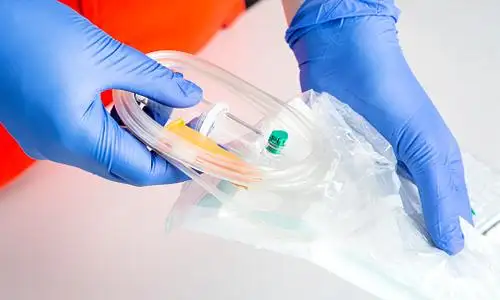
Single Check Valves are designed to allow flow in only one direction and only under positive differential pressure. Regarding CT and MRI applications with Y-Type Connector Tubing, Single Check Valves offer:
•Reliable and efficient flow control
•Simplified design that translates into lower manufacturing costs, especially in large volume purchases
•Clinically proven effective, as backflow valves have been shown to prevent fluid retraction from the patient to the injector
Y-Type Connector Tubing combined with Single Check Valves is designed for low-risk routine imaging procedures and standard injection protocols.
Double Check Valve: Redundant Safety for High Risk Situations
In a double check valve setup, two independent valves are connected in series. This design highlights the following benefits:
•Redundant protection: In the case one valve fails, the second one still prevents any backflow
•Stronger barrier to contamination: Studies indicate that multiple check valves in a paired arrangement design prevents back contamination more effectively
•Increased biosafety for higher risk patients: This is especially important for oncology patients, patients with significant immune compromise, or procedures with large volume (>50 mL, a known risk factor for moderate extravasation injury) contrast injection
For imaging departments dealing with high acuity patient populations, double check valve Y-Type Connector Tubing offers an additional level of protection.
What Does the Research Say About Performance Data
Research has shown that in terms of contrast delivery applications, > = 0 sprung valves that require a certain amount of forward pressure do the best job of maintaining valve integrity.
Research also shows that non-return valves have the potential to serve as a bacterial contamination control barrier. However, their effectiveness is highly dependent on the design of the valve as well as the clinical circumstances.
Extravasation of contrast media in CT scans has historically occurred in 0.2–0.23% of cases. Fortunately, the majority of cases resolve without complications. However, preventing the backflow of contrast media is an important first line of defense.

Devise Safety Compliance & Quality Standards
While assessing potential suppliers of Y-Type Connector Tubing, ensure you check for conformity with the following standards:
•ISO 80369-7: Aimed at avoiding misconnections in different clinical subsystems by providing dimensional and functional specifications for small-bore connectors intended for vascular applications.
•ISO 10993-1: Concerns the biocompatibility of materials used in medical devices.
•FDA 21 CFR: Pertaining to devices that come in contact with patients, regulates the safety of materials used.
It is an honor to present to you Greetmed GT211 series Y-Type Connector Tubing, which has been designed to cater to all the aforementioned standards and will allow users to utilize the most advanced dual-head injection systems.
What Configuration Suits Your Facility Best?
- Opt for single check valve Y-Type Connector Tubing when:
•Carrying out regular CT and MRI scans with patients classed as standard-risk
•Maintaining cost efficiency is a big consideration for procurement
•High workflow volume means consumables need to turn over rapidly
- Opt for double check valve Y-Type Connector Tubing when:
•Assisting patients with oncology or those who are immunocompromised
•Conducting large-volume contrast injections (in excess of 50 mL)
•Working in high-acuity environments with stringent infection control
•Want maximum protection against retrograde contamination
The Greetmed Advantage
Greetmed has both options available in the GT211 series Y-Type Connector Tubing which has been developed for CT and MRI dual-head injectors. Our tubing is reliable in various imaging environments with a pressure rating of 300PSI and available in lengths of 150cm and 255cm.
Greetmed Conclusion
The single and double check valve Y-Type Connector Tubing has been designed to prevent reverse flow; thus, the choice solely depends on the patients you are dealing with, the clinical practices in place, and the level of risk you are comfortable with. For maximum protection, double check valve configurations should be relied upon while for basic standard-risk patients imaging, single check valve tubing should adequately serve the purpose without costing too much.
Consider your clinical requirements, discuss with your procurement department, and choose a configuration that demonstrates your facility’s focus on the safety of patients.
Greetmed – Engineered For Accuracy. Built For Dependability.
Frequently Asked Questions (FAQ)
Q: Is the single check valve Y-Type Connector Tubing applicable for all CT and MRI scans?
A: With standard risk patients and for routine imaging the answer is yes. However, when imaging patients who are immunocompromised or during large volume contrast ( >50 mL) injections, double check valve tubing is recommended.
Q: Will the double check valve configuration lower the flow rate?
A: There will be a minimal decrease due to the design. Greetmed’s GT211 series is designed to allow for the maximum flow at 300PSI and has added back flow protection mechanisms to balance the flow pressure.
Q: What is the easiest way to find out if my injector system is compatible with the Greetmed Y-Type Connector Tubing?
A: Both GT211-Y-150-300 and GT211-Y-255-300 series are designed for use with standard dual-head CT/MR contrast injector systems. For other models you will need to consult with us for injector system compatibility.
Q: Is it true that these tubing systems are single-use and sterile?
A: Correct. Each Greetmed Y-Type connectors are all single-use, sterile and designed to prevent the risk of cross-contamination.
Q: What is the GT211 series shelf life?
A: Three years from the manufacturing date. Provided the unit is kept in optimal conditions and in the unopened original package.
Submit Your Request
Recent Posts

Tags
- Adult Diapers
- Are custom medical devices safe
- Baby Diapers
- Can respiratory anesthesia be used
- Digital Healthcare
- Do you offer customized consumables
- European Market
- How do you take care of a skin wound
- Industry Trends
- Lady Sanitary Napkins
- Medical Devices
- OEM Medical Devices
- Product Introductions
- Protective Equipment
- Under Pads
- What are custom-made medical devices
- What are diagnostic products
- What are hospital dressing products
- What are medical tube catheters
- What are some common protective equipment
- What are the appropriate applications for hospital dressing products
- What are the appropriate uses for protective equipment
- What is a gynecological examination
- What is a medical consumable
- What is an anesthesia kit
- What is an OEM in medical devices
- what is an wound skin care
- what is can disposable ultrasonic diagnostic
- What is good manufacturing medical devices
- What is hospital-grade protective equipment
- what is medical equipments hospital furniture
- What is medical sterilization wrapping
- What is rehabilitation equipment device
- What medical consumables do you supply
- Where can I find laboratory consumables wholesale
- where can I find medical protection device
- where to buy hypodermic accessories
- where to buy medical apparel
- where to buy medical consumable accessories
- where to find OEM medical device supplier
- where to find rehabilitation equipment supplier
