



How Sterile Nelaton Urine Bag Catheters Support Intermittent Bladder Drainage


Intermittent bladder drainage differs from continuous drainage in that the bladder is drained at specified time intervals instead of being drained at all times. Intermittent catheterization is appropriate for managing urinary drainage and retention for both the short and long term. Intermittent catheterization is also appropriate for bladder drainage in both the hospital and community settings.
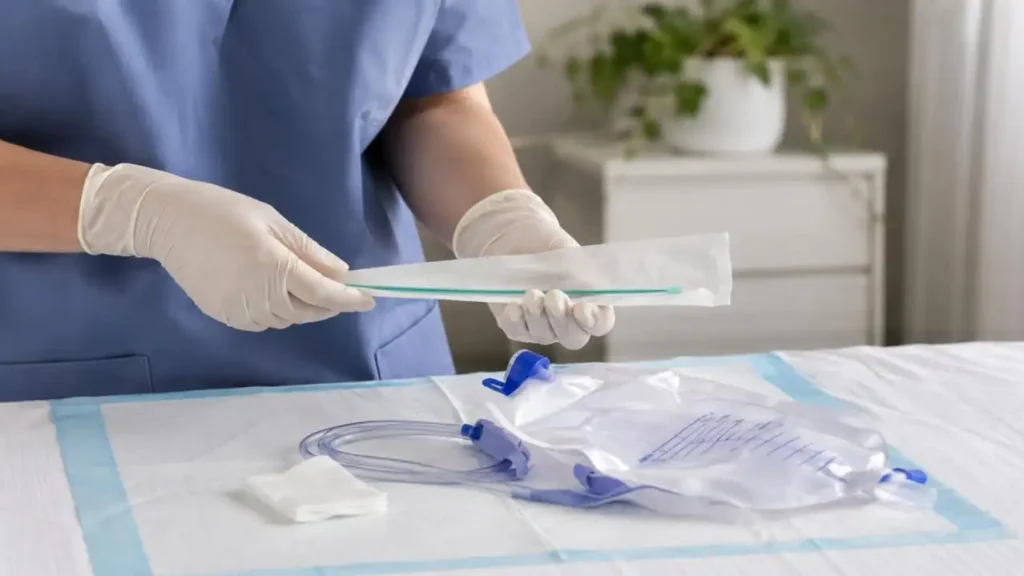
For Sterile Urine Bag Catheters and specifically for Nelaton Catheters, the features that are of concern include insertion control, functionality for drainage or collection, sterility, size, and compatibility with catheter collection systems. Nelaton Catheters are straight and non-balloon catheters that are convenient for temporary catheterization.
What are Sterile Nelaton Urine Bag Catheters?
A Nelaton catheter is a design of urinary catheter which is straight and single-lumen, and is without a retention balloon. It is inserted in the urethra to gain temporary access to the bladder, and is then removed once drainage of urine is accomplished.
Sterile Urine Bag Catheters are sterile devices for urinary drainage that are used to transfer urine from the bladder into a collection bag in the course of temporary/intermittent catheterization.
Most of the available models are:
•Sterile and individually packaged
•One-time use
•Offered in adult and pediatric sizes
•Constructed from medical-grade PVC
•Compatible with urine collection containers or standard collection bags
How Intermittent Bladder Drainage Works
Catheter Insertion
This process includes the careful insertion of the catheter through the urethra until the distal end of the catheter reaches the bladder. The straight body of the catheter should provide enough firmness for control of the catheter while inserting it, and yet be flexible enough to follow the urinary pathway.
Urine Entry Through Lateral Eyes
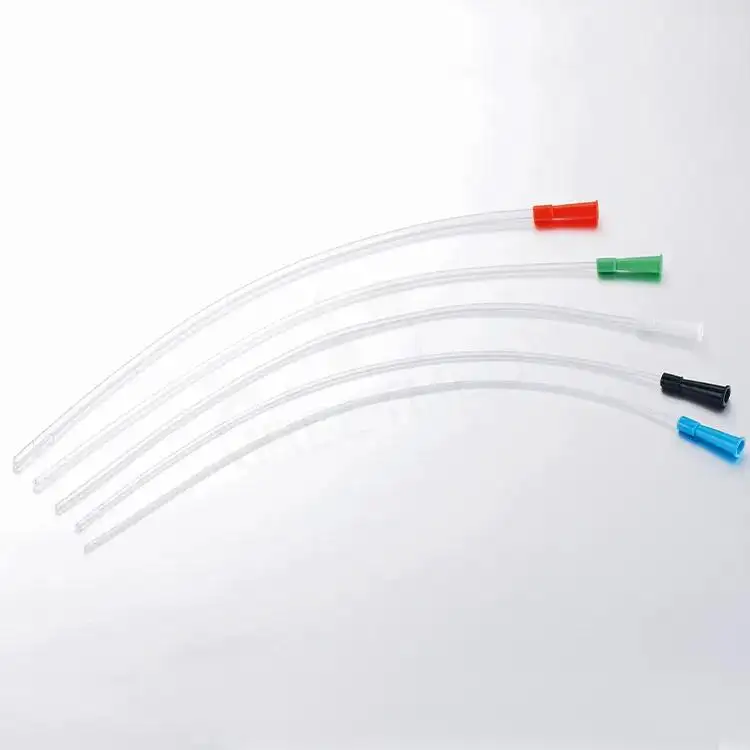
Two lateral drainage eyes are commonly positioned near the closed catheter tip. These openings allow urine to enter the internal lumen.
Drainage performance depends on:
•Lumen diameter
•Side-eye size
•Eye position
•Smoothness of the eye edges
•Resistance to kinking or collapse
If one opening rests against tissue, the second lateral eye may help maintain urine flow.
Connection to a Urine Collection Bag
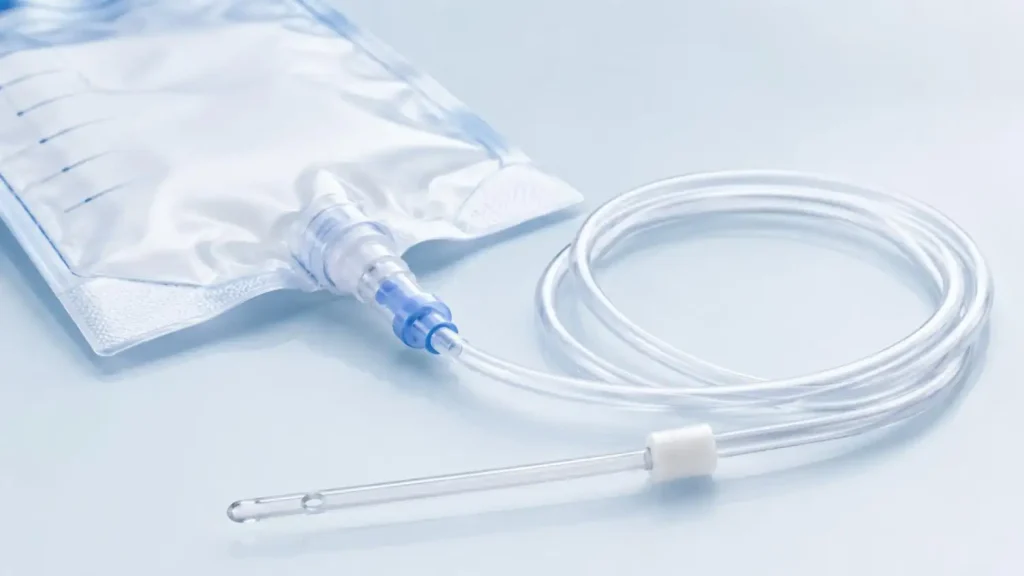
An intermittent urinary catheter with urine bag compatibility usually includes a connector designed to fit a standard drainage system. A stable connection can help reduce accidental separation, leakage, and uncontrolled urine discharge.
The system can also support visual observation and measurement of urine output.
Removal After Drainage
Unlike an indwelling catheter, a Nelaton catheter is normally removed after the bladder has been emptied. For this reason, tip shape, surface finish, flexibility, and catheter size are important during both insertion and withdrawal.
Key Features of Sterile Urine Bag Catheters
| Design feature | Main function | Purchasing consideration |
| Straight catheter body | Supports temporary insertion | Handling and resistance to bending |
| Rounded closed tip | Supports smoother advancement | Tip uniformity and absence of burrs |
| Two lateral eyes | Allow urine to enter the lumen | Eye position, size, and edge quality |
| Medical-grade PVC | Balances flexibility and firmness | Biocompatibility and consistency |
| Transparent tubing | Supports visual flow monitoring | Clarity and surface defects |
| Soft or frosted surface | May reduce friction during use | Surface uniformity |
| Color-coded connector | Identifies French size | Clear and consistent coding |
| Universal connector | Connects to collection bags | Fit, sealing, and compatibility |
| Sterile packaging | Maintains the sterile barrier | Seal integrity and shelf life |
Importance of Tip Shape and Lateral Eyes
The sterile Nelaton catheter for intermittent drainage has a rounded closed tip as one of its primary structural components. Tips that are even and smooth will assist in the insertion process. Defects in the surfaces of the molds will result in different forms of insertion malfunction, such as sharp surfaces, friction, and uneven tips, as well as defects in the molds.
Both the lateral eye formations should be the same with smooth edges and no flashing. The openings should be made the same size as the catheter lumen, so the drainage process occurs without breaking the tube.
None of the above-mentioned features eliminate all the risks, but they can be relied on for consistent drainage and ease of handling.
Medical-Grade PVC and Catheter Flexibility
The most common material for Sterile Urine Bag Catheters is Medical-Grade PVC. This is due to its controlled flexibility, the ability to see the flow, and reliable and consistent quality.
A catheter that is too soft may:
•Bend during insertion
•Twist or kink
•Become difficult to advance
•Restrict the internal lumen
A catheter that is too rigid may:
•Increase insertion friction
•Reduce anatomical adaptability
•Cause greater patient discomfort
Manufacturers should therefore control material formulation, wall thickness, surface finish, dimensions, transparency, and sterilization compatibility.
Selecting the Correct French Size and Length
French size describes the external catheter diameter. One French unit equals approximately 0.33 mm. A larger French number indicates a larger outside diameter.
The appropriate French size depends on the following:
•Selection factor Impact on specification
•Patient age Adult or pediatric
•Anatomy Length, diameter, flexibility
•Urine characteristics Lumen and side eye
•Drainage volume Expected drainage capacity
•Frequency of use Surface, comfort
•Clinical protocol Sterility, configuration
Many times, the larger size of catheter can give a larger flow capacity; however, it can also increase the friction on insertion. It is up to the health care provider to determine the appropriate French size catheter for the clinical situation.
Sterility and Single-Use Risk Control
Sterility is a large part of the risk control for a single catheter use because the process of catheterization involves accessing the urinary tract.
Before the catheter is used, the operator must evaluate the:
•Integrity of the packaging
•Expiration date of the product
•Condition of the catheter and the packaging
•Size and label
•Clear connector
A sterile, single-use Nelaton catheter must not be cleaned or reused. The storage conditions must protect the packaging from moisture, heat, compression and physical damage.
Quality control for a manufacturer can include validation of the sterilization, testing of the sealing on the packaging, monitoring of the residues, study of the shelf life, and traceability of the batches.
CE, ISO 13485, and FDA-related documentation can support quality-system management and market compliance assessment. However, their applicability should be confirmed for the specific product and target market.
Nelaton Catheter vs. Foley Catheter
| Comparison | Nelaton catheter | Foley catheter |
| Main use | Temporary or intermittent drainage | Continuous indwelling drainage |
| Balloon | No | Usually included |
| Duration | Removed after drainage | Remains in place as prescribed |
| Structure | Straight, commonly single lumen | Commonly double or triple lumen |
| Collection system | Bag or urine container | Usually continuously connected to a bag |
| Selection focus | Size, tip, surface, and side eyes | Balloon, lumen, and indwelling system |
Greetmed Nelaton Catheter for Intermittent Drainage
For distributors and medical supply buyers, product consistency, sterile packaging, size availability, and urine bag compatibility are as important as basic catheter design.
Greetmed supplies the GT021-100 Nelaton Catheter for temporary and intermittent bladder drainage. The product consists of a straight catheter body with a rounded closed tip with two lateral drainage eyes.
This product variation includes:
•Medical-grade PVC tubing
•Translucent construction to observe passage
•Many French sizes and lengths
•Adult and Pediatric
•Color-coded connectors
•Compatible with standard urine collection bags
•Sterile single use
Greetmed also provides OEM service for the customization of catheter dimensions, connector color, labeling, individual packaging, instruction leaflets, cartons, and transport packaging. The MOQ is 10,000 pieces with shipment via Shanghai or Ningbo. Payment is T/T and L/C.
Closing Words
The Sterile Urine Bag Catheters should combine an appropriate French size, a smooth tip, proper drainage eyes, a controlled flexible catheter, secure packaging, and assurance of compatible urine bags.
Greetmed offers the GT021-100 Nelaton Catheter with a range of sizes and options for OEMs and connectors. Buyers can propose their French size and lengths, specifications for a urine bag, targeted market, preference for packaging, and the quantity for their order to get a specific configuration and request samples to evaluate them.
FAQs
Q1. What is the function of the Greetmed GT021-100 Nelaton Catheter?
The GT021-100 Nelaton Catheter is appropriate for the temporary or intermittent drainage of the bladder, for the collection of urine, as well as for routine intermittent catheterization for the user, in the clinical setting, as well as in home care.
Q2. Are Greetmed Nelaton catheters supplied in a sterile state?
Greetmed Neleton catheters are supplied in sterile state, in single units, and are meant to be used once. The details of the packaging, as well as sterilization, are to be confirmed for each order.
Q3. What is the composition of Greetmed Sterile Urine Bag Catheters?
Greetmed Nelaton Catheters are typically manufactured using medical-grade PVC or other suitable biocompatible materials, providing an optimal balance of flexibility and stability during handling.
Q4. Which French sizes do you offer?
Greetmed can offer a variety of French sizes as well as catheter lengths for both Adult and Pediatric use. It is the buyers responsibility to confirm the size prior to ordering.
Q5. Do Greetmed Nelaton catheters incorporate color-coded connectors?
Greetmed Nelaton Catheters utilize color-coded connectors to facilitate easy recognition and differentiation of French catheter sizes.
Submit Your Request
Recent Posts

Tags
- Adult Diapers
- Are custom medical devices safe
- Baby Diapers
- Can respiratory anesthesia be used
- Digital Healthcare
- Do you offer customized consumables
- European Market
- How do you take care of a skin wound
- Industry Trends
- Lady Sanitary Napkins
- Medical Devices
- OEM Medical Devices
- Product Introductions
- Protective Equipment
- Under Pads
- What are custom-made medical devices
- What are diagnostic products
- What are hospital dressing products
- What are medical tube catheters
- What are some common protective equipment
- What are the appropriate applications for hospital dressing products
- What are the appropriate uses for protective equipment
- What is a gynecological examination
- What is a medical consumable
- What is an anesthesia kit
- What is an OEM in medical devices
- what is an wound skin care
- what is can disposable ultrasonic diagnostic
- What is good manufacturing medical devices
- What is hospital-grade protective equipment
- what is medical equipments hospital furniture
- What is medical sterilization wrapping
- What is rehabilitation equipment device
- What medical consumables do you supply
- Where can I find laboratory consumables wholesale
- where can I find medical protection device
- where to buy hypodermic accessories
- where to buy medical apparel
- where to buy medical consumable accessories
- where to find OEM medical device supplier
- where to find rehabilitation equipment supplier
