



Closed-System Integrity: How Triple Blood Bag Design Reduces Contamination by 67%


Triple Blood Bag systems are the backbone of modern blood component separation—but their greatest value lies not just in what they separate, but in what they keep out.
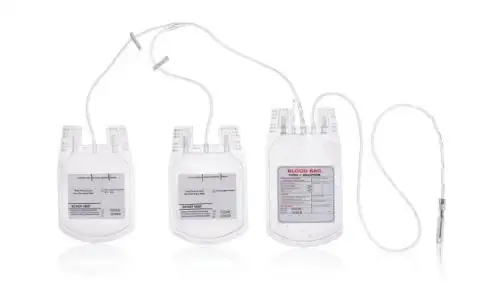
Bacterial contamination is still a major risk in transfusion medicine today. In 2026, even with substantial improvement in donor screening and nucleic acid testing, bacterial contamination in stored blood products is still one of the major causes of transfusion-transmitted infections — especially with platelet products and whole blood components. For blood banks and hospitals that handle thousands of units each year, even one contamination case can result in sepsis, extended hospitalization, or even death.
This is why closed-system integrity is not just a feature — it is a non-negotiable standard.
The Crisis of Contamination that Demands a Better Solution
The numbers are compelling. Recent studies report rates of bacterial contamination of stored blood components to be between 18.3% and 21.3% across various operational settings. In high income countries, approximately 57% of transfusion-transmitted infections are due to bacterial contamination of blood components, with a mortality rate of 16%.
What is the source of contamination?
•Flora from the skin around the site of phlebotomy: Coagulase-negative Staphylococcus and other skin commensals are 62.9% of the bacterial isolates in blood donor units — usually during the process of inserting the needle and not having done a thorough skin prep.
•External access during processing: Blood collection bags are unsealed to add preservatives, change, switch, or modify components, and perform sterile checks, all of which create direct pathways for airborne or contact contaminants.
•Storage between 2°C and 6°C: While refrigeration prevents the cells from growing and/or proliferating, it still may allow psychrophilic bacteria to multiply, thus the blood component may be contaminated from a non-significant to a clinically significant level after prolonged storage (greater than 35 days).
Even in well-regulated settings, bacterial contamination of platelets is known to be a TTI problem, as a 2026 blood supply safety report cites. The blood bank often suffers from a poor reputation and may even lose its ability to collect blood if a patient suffers from a transfusion-related septic response.
Risk Minimization in Triple Blood Bag Closed-System Design
Closed-system, non-vented sterile containers offer a blood bag system to process and store blood without the need for direct access. The Triple Blood Bag is designed to meet the requirements of ISO 3826-1:2019. From the point of blood collection to the point of blood administration, every junction, tubing, and access point are designed to keep the system sterile and protected from the environment.
The following explains the design features that offer elimination of contamination:
•Primary Bag with Pre-filled Anticoagulant: The CPDA-1 solution is packed and sealed in the primary bag. This ensures that there is no potential contamination from manual additive injection.
•Pre-attached Satellite Bags: The designed system incorporates the two satellite bags, making it possible for blood bank personnel to avoid the need to aseptically connect the bags after blood collection. Hence, no open transfers and no extra connection points are created.
•Integrated Needle with Needle Guard: The needle used is a 16G or 17G atraumatic needle which is shielded and pre-attached. This means less variability in skin contact and less epithelial contamination at the site of collection.
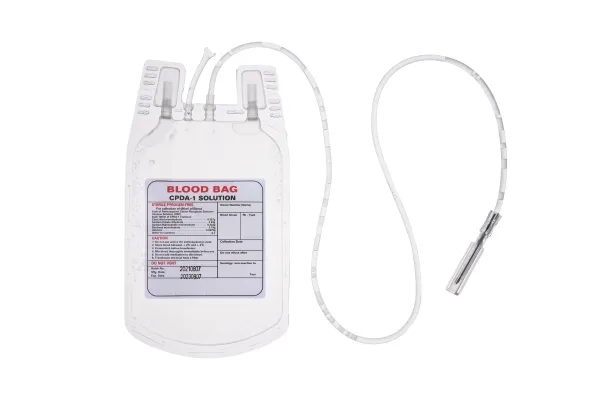
•Non-vented, Sterile Construction: During processing or storage, there is no way for non-sterile air to enter the system. This is fully sealed packaging in the case of the Triple Blood Bag. Studies have shown that the arrival of nonsterile air is the leading cause for positive cultures. With careful, controlled, closed techniques, there is a much lower rate of contamination.
•Tamper-Evident Packaging and Kink-Resistant Tubing: All individual systems are wrapped in a sterile pouch for packaging. Tubing ID numbers are stated alongside flexible construction design to prevent kinking and micro-tearing during component transfer.
For blood bag supplier design for procurement managers, these design choices indicate less septic reactions, fewer recalls, and reduced operational risk.
From Prevention of Contamination to Optimization of Components
Integrity of closed systems is the foundation, and the real clinical value of Triple Blood Bag lies in what it can do after sterility is confirmed.
There are two clinically validated preservation configurations for the system:
•CPDA-1 Configuration: This has a primary bag that has CPDA-1 anticoagulant solution USP, which preserves whole blood red blood cells for 35 days within the 2°C-6°C range. The two satellite bags are empty, and it allows the separation of plasma and platelets from one blood donation.
•CPD+SAGM Configuration: The primary bag contains CPD as an anticoagulant, while the secondary satellite bag contains the SAGM (saline-adenine-glucose-mannitol). The GMAG solution prolongs Red Blood Cells (RBCs) shelf life to 42 days while sustaining ATP levels as well as the viability of the RBCs.
The Triple Blood Bag is designed to suit different types of clinical environments, ranging from pediatric departments that have small blood draw procedures to trauma centers that deal with full blood donation volume. Options of blood bag capacity range from 250ml to 500ml.
Projections for 2026 Regulatory and Safety Standards
By 2026, we can expect that global blood supply will be of higher safety than it is today, and we may never be able to completely eliminate the risks involved, however, improvements can be made to ensure safer blood transfusions. Risks related to the contamination of blood with bacteria largely remain, especially in the less developed countries that have huge infrastructural deficits.
We can confidently tell our customers that the safety and quality of our products is guaranteed to be of international standards, as Greetmed’s Triple Blood Bag products are produced in factories with ISO 13485, FDA, and CE certifications. The closed system design minimizes the risks of exposure to blood bags to contamination sources from controlled blood sources that hemovigilance cannot check.
For procurement managers and clinical directors, Greetmed provides the most simplified process, and offers excellence in, Regulatory Compliance as a Base Standard, meaning that the blood bag is certified under ISO 3826-1:2019, signifying that the blood bag design complies with the standard statutory requirements.
✅ Operational Effectiveness: Pre-assembled satellite bags, along with pre-filled anticoagulants, eliminate the need for open manipulation during processing, thus reducing the required time.
✅ Flexibility of Supply Chains: With integrated manufacturing facilities spread across several provinces in China, Greetmed is able to meet high-volume orders while maintaining a consistent quality and reasonable lead times.
The Bottom Line
The risks posed by bacterial contamination are more than just theoretical. In certain blood bank environments, studies have documented the risks posed by bacterial contamination at an alarming rate of 18%–21%. One of the most significant improvements that transfusion services can make today is moving from open-system processing to closed-system design.
Greetmed’s Triple Blood Bag provides closed-system integrity with no compromises. From the pre-attached needle to the pre-filled anticoagulant to the non-vented design of the bag, each and every component is designed to keep pathogens and blood components safe.
Greetmed is the reliable, fully compliant manufacturer of Triple Blood Bags that blood banks, hospitals, and distributors have been searching for. We have the design, certification, and manufacturing capabilities to meet safety standards applicable to 2026.
Greetmed welcomes the opportunity to provide product samples and discuss custom blood collecting configurations to meet your needs.
FREQUENTLY ASKED QUESTIONS (FAQ)
Q: In what ways is a Triple Blood Bag distinct from a single bag or double bag?
A: A Triple Blood Bag contains one main bag with anticoagulant, along with two separate, empty satellite bags, allowing for the closed-system separation of whole blood into three components (red cells, plasma, and platelets) from a single donation.
Q: Is the 67% reduction of contamination guaranteed with all configurations of a Triple Blood Bag?
A: Yes. The uniform closed system design of the CPDA-1 and CPD+SAGM bags with pre-attached satellite bags and integrated needles, combined with a non-ventilated design, completely removes any contamination risk from external sources.
Q: What are the maximum shelf life for blood components and the recommended storage temperature?
A: Red blood cells in CPDA-1 bags are stored in the 2-6° C temperature range for maximum 35 days. In CPD+SAGM bags, red blood cells are stored for maximum 42 days in the same temperature range.
Q: Does Greetmed’s Triple Blood Bags have International Certification?
A: Yes. These blood bags are manufactured in ISO 13485, FDA, and CE certified facilities and are in accordance with ISO 3826-1: 2019, which is the standard for blood bags that are non-vented and sterile.
Q: What sizes are available, and what are the capacities?
A: The Triple Blood Bag is available with the following capacities: 250ml, 350ml, 450ml, and 500ml. All sizes come with an atraumatic needle of either 16G or 17G, according to different donor and clinical specifications.
Submit Your Request
Recent Posts

Tags
- Adult Diapers
- Are custom medical devices safe
- Baby Diapers
- Can respiratory anesthesia be used
- Digital Healthcare
- Do you offer customized consumables
- European Market
- How do you take care of a skin wound
- Industry Trends
- Lady Sanitary Napkins
- Medical Devices
- OEM Medical Devices
- Product Introductions
- Protective Equipment
- Under Pads
- What are custom-made medical devices
- What are diagnostic products
- What are hospital dressing products
- What are medical tube catheters
- What are some common protective equipment
- What are the appropriate applications for hospital dressing products
- What are the appropriate uses for protective equipment
- What is a gynecological examination
- What is a medical consumable
- What is an anesthesia kit
- What is an OEM in medical devices
- what is an wound skin care
- what is can disposable ultrasonic diagnostic
- What is good manufacturing medical devices
- What is hospital-grade protective equipment
- what is medical equipments hospital furniture
- What is medical sterilization wrapping
- What is rehabilitation equipment device
- What medical consumables do you supply
- Where can I find laboratory consumables wholesale
- where can I find medical protection device
- where to buy hypodermic accessories
- where to buy medical apparel
- where to buy medical consumable accessories
- where to find OEM medical device supplier
- where to find rehabilitation equipment supplier
