



Strong Adhesive Medical Tape: The PSA Science Behind Silk


What Is a Pressure-Sensitive Adhesive (PSA)?
Strong adhesion requires special knowledge beyond stickiness. It involves the sciences of materials, polymers, and biochemistry. Clinicians using Strong Adhesive Medical Tape on silk backing will find that understanding PSAs helps explain why some tapes adhere better than others. This article explores the PSAs and the role of silk backing (e.g. Greetmed) in optimizing adhesion, breathability and comfort.
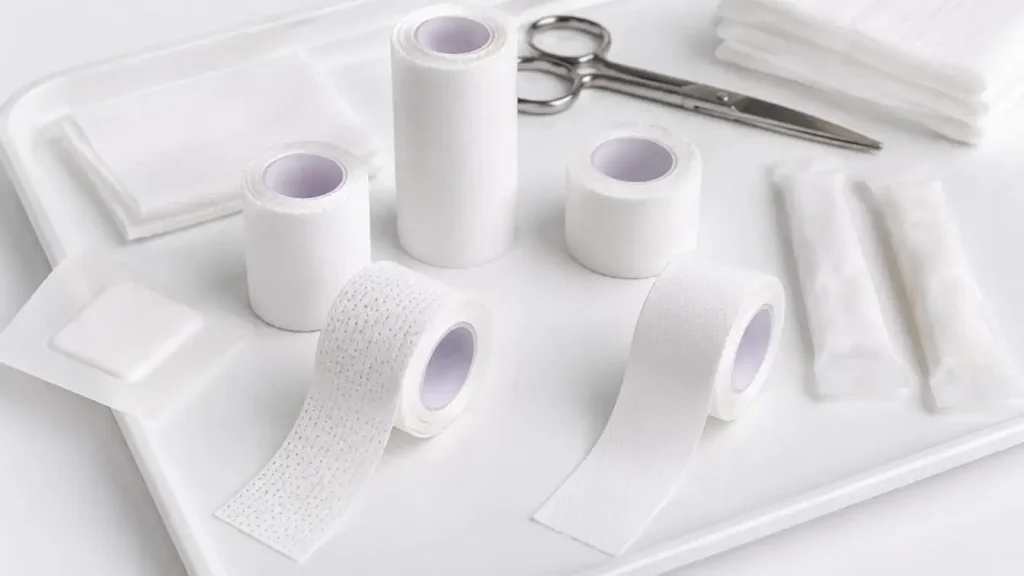
PSAs bond surfaces with light pressure—no heat, water, or curing needed. Key traits:
•Permanently tacky at room temperature
•Instant bonding with minimal force
•Repositionable or removable without damage (if well-designed)
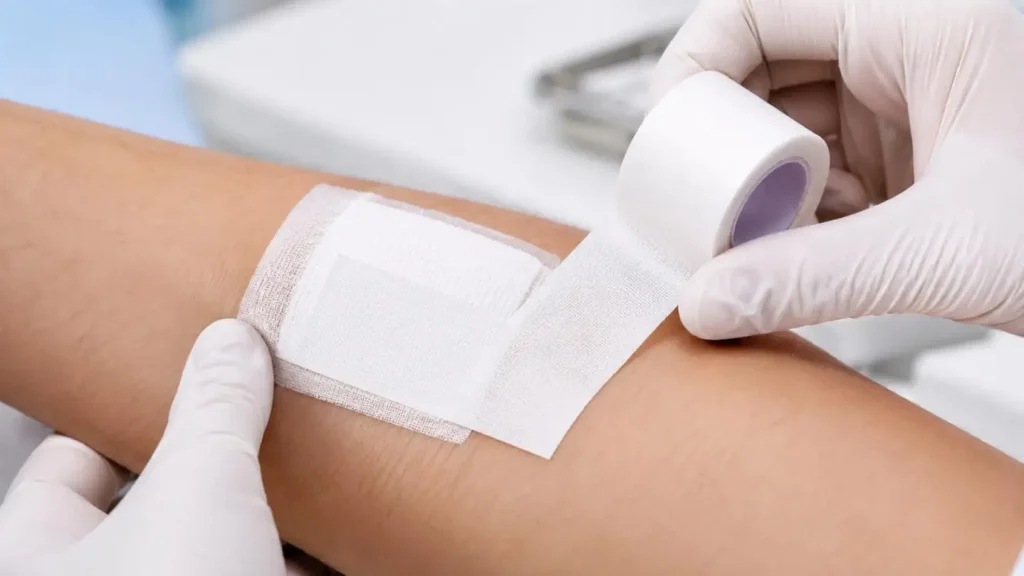
On medical tape, PSA coats a woven silk backing. The backing improves adhesion as well as flexibility and moisture management. With knowledge of PSAs, clinicians can choose the proper tape, decreasing the incidence of failure and skin trauma.
The Three Pillars of PSA Performance
Adhesive systems differ in the quality of adhesion. In order to be a reliable adhesive system in the medical field, Strong Adhesive Medical Tape must possess the optimal adhesion in three different mechanical characteristics.
1. Tack (Initial Stickiness)
•What it means: Adhesives ability to instantaneously bond when very slight pressure is applied for a very short period of time.
•Why it matters: High tack would mean that the tape immediately bonds to the skin and would not require time to stabilize. This is extremely important when positioning a dressing or securing a tube when you need to operate and manage the patient with your other hand.
•Clinical insight: Adhesives that do not possess adequate tack would need to be secured with significant pressure, and in many cases, repeated positioning that would irritate the skin and would also further decrease the quality of the adhesive bond.
2. Peel Strength (Bond Durability)
•What it means: The extent of force needed to remove or peel the tape from the skin.
•Why it matters: High peel strength would mean the bond would be stable and strong to the skin and would be very difficult to remove. This is very important when the tape is securing large and heavy dressings, medical devices, or splints that need to be sustained for a long period of time.
•Clinical insight: Excess peel strength can lead to trauma of the skin in the case of tape removal. The optimal adhesive should have adequate strength to hold the bond, but should not cause pain during removal or stripping of the outer layer of the skin.
3. Shear Resistance (Holding Power)
•What it means: the ability of the adhesive to resist the effects of sliding or creeping given that the adhesive is under constant stress.
•Why it matters: This property is important in mobile body areas, such as on the elbow, knee, and shoulder regions. Shear resistance prevents the tape from "walking," or shifting, with patient movement.
•Clinical insight: A tape that has no shear resistance may appear sticky, but will slowly start shifting, ultimately affecting the protection of a wound or the stabilization of a device.
The Ultimate Goal: An ideally balanced PSA will offer a blend of shear resistance, peel resistance and shear resistance while avoiding damage to the skin and ensuring patient comfort.
The Adhesion Mechanism: Bonding and Debonding
The adhesion of PSA can be described in two stages: the sticking phase and the un-sticking phase.
Phase 1: Bonding (Wetting and Flow)
Pressing an example of Strong Adhesive Medical Tape onto skin requires its adhesive layer to flow and ‘wet' skin contours. The surface of human skin is made up of more than just a flat surface. There are ridges and valleys and even sweat ducts and oils. To ensure a proper bond, the adhesive should conform to these irregular surfaces.
Attributes of a Good Bond:
•Viscosity of the Adhesive: Low viscosity sticky materials will flow and spread quickly.
•Pressure Applied: High pressure will cause the adhesive to flow completely.
•Coat weight: A greater amount of adhesive increases the overall bond strength and the bond duration.
Greetmed has two adhesive coat weights on their silk surgical tape:
•Drilled version: 50–54 g/m² has strong adhesion and breathability because of micro-perforations
•Non-drilled version: 32–34 g/m² high adhesion
It is up to the discretion of the clinician to provide the appropriate level of adhesion required for each of their patient's needs.
Phase 2: Debonding (Viscoelastic Response)
Because pressure sensitive adhesives (PSAs) are viscoelastic, they exhibit characteristics of both a liquid and a solid.
In tape removal:
•The tape will stretch
•The adhesive will respond differently depending on peel angle and peel rate
•A well-designed PSA is intended to release cleanly with no residue
This is significant for the patient
A quality Strong Adhesive Medical Tape will hold strong while worn, but should release easily at the time of dressing change. This will help avoid MARSI (Medical Adhesive Related Skin Injury), which is becoming a more common concern in the clinical setting.
✅ Pro Tip: When removing tape, peeling it back slowly and at a 180-degree angle to the direction of hair growth, is the least traumatic to the skin and is effective with any adhesive strength.
Why Silk? The Backing Enhancing Adhesion
The backing is more than a carrier. It influences the nature of the adhesive. Silk surgical tape, like that of Greetmed's, has advantages in the structure of the tape and adhesive.
1. Conformability and Contour Following
Woven silk fabric is flexible. Thus, tape can easily follow body surfaces like the cheeks and joints.
Why this matters for adhesion:
•The tape will remain flat and will follow the movement of the body
•The bonding surface with the skin is maximized
•Lifting of the tape edges is minimized
•Clinical application: For dressings placed on the face or on joints, conformability is usually more important than high adhesive strength.
2. Breathability and Moisture Control
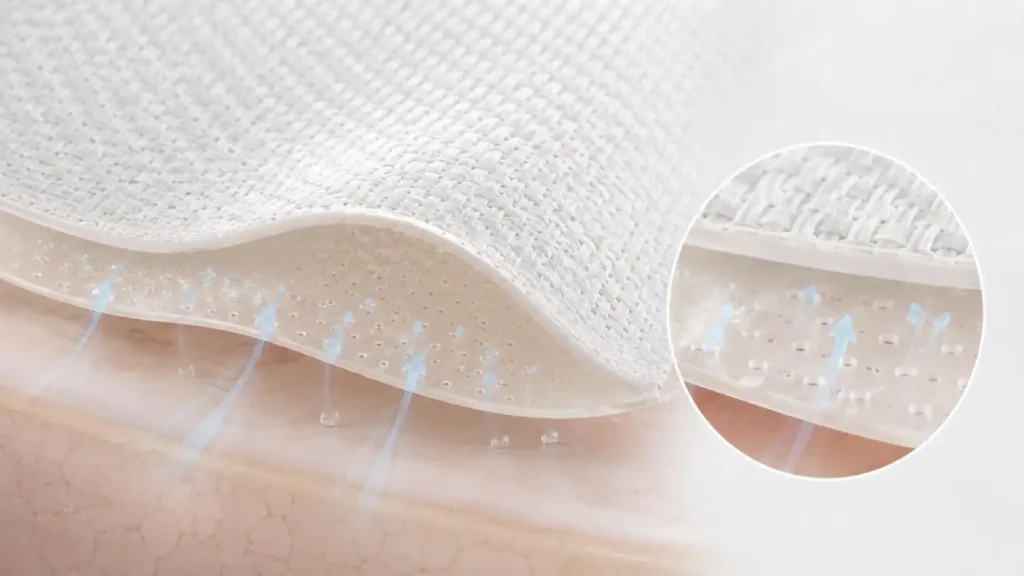
Silk's fabric structure is porous and allows rapid moisture exchange. It also helps keep the dressing in a favorable environment.
Why this matters for adhesion:
•Adhesives soften and lose their bond and slip from the dressing with moisture
•Adhesives and dressings provide a favorable environment for bacteria and fungi
•Dry skin helps adhesion even if the dressing is in place for a long time.
✅ Greetmed's solution: The option with the adhesive layer with perforations has a strong airflow, and is very useful with delicate skin, which needs greater protection.
3. Strength and Durability
The woven silk-like fabric is stronger and does not stretch.
Why this matters for adhesion:
•Tape will not lose its bond even under stress
•Tape can withstand moisture and abrasion
•Clinical application: When heavy dressings or splints are used, the strength of the tape is very important.
4. Bidirectional Tearability
Silk surgical tape can be torn by hand along both its length and width.
Significance for adhesion:
•Controlled propagation of tearing helps to keep uniformity of edges
•Alignment of edges reduces the likelihood of early peeling
•The speed of sealing edges is essential, as it prevents the compromise of adhesion due to the natural oils of the skin.
•Clinical situation: In the presence of an emergency, the lack of scissors may result in loss of time while achieving a neat and precise application.
Greetmed's Approach: The Optimal Fusion
Greetmed is at the forefront of innovation and design, considering PSA functionality in the range of clinical applicability. Their silk surgical tape strikes the following three forces:
Core Force]Why It Matters
Strong Hold]Stops micro-movement that irritates and prolongs the healing of wounds.
Breathability]Allows moisture build-up to dissipate, providing a healthy environment for the skin.
Gentleness]Allows protection of the skin barrier during prolonged wear and removal of the tape.
Product Features That Make a Difference
•Medical Grade, Hypoallergenic Adhesive
The tape incorporates a PSA that adheres not only to dry, but also to slightly moist skin, all without irritation. It is safe for use on sensitive skin and children.
•X-Ray Detection
This is of utmost importance in surgical environments where materials that are retained must be rapidly identified and located.
•Sterile or Non-Sterile Versions
To meet the varying needs of clinical practice, from surgical care to routine care and follow-up, both versions are offered.
•Variety of Dimensions
With options from 1.25 cm to 10 cm in width and 5 m, 5 yards, and 10 yards in length, these rolls can be selected for an almost infinite number of applications from small injuries to large ones.
•CE / ISO13485 / FDA Certified
With a commitment to safety and quality, Greetmed has achieved some of the highest standards and therefore has some of the highest certifications in the world.
What This Means for Clinical Practice
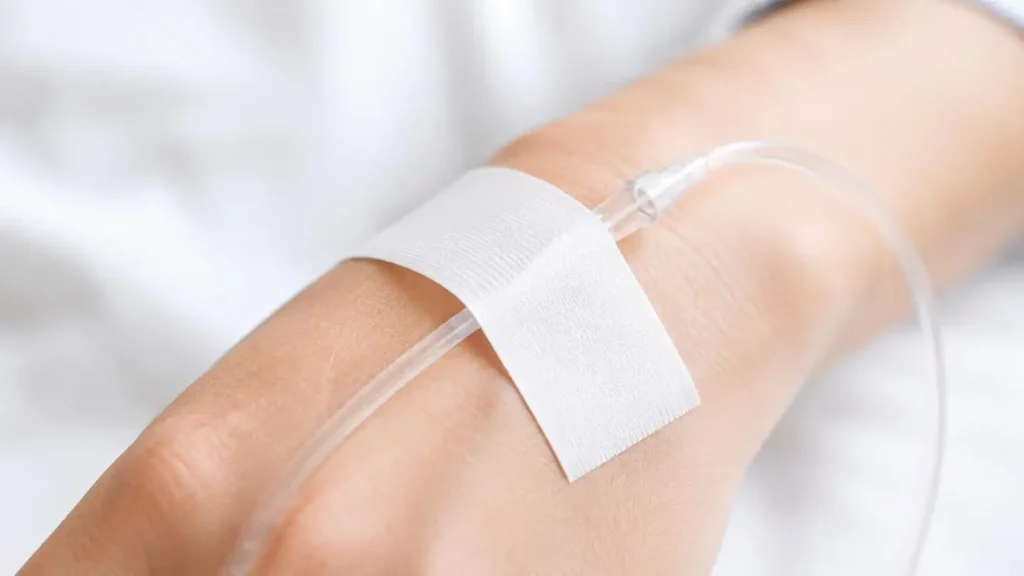
The Strong Adhesive Medical Tape is grounded in the reality of the modern healthcare system and demonstrates an understanding of the needs of practitioners, patients, and those responsible for procurement.
For Healthcare Providers
•Better informed choices lead to less tape failures
•Less skin damage means better patient outcomes
•High quality fixation means less time spent on dressing changes
For Patients
•Less tape-related skin damage and irritation
•Better skin and tape comfort for the longer duration
•Less painful removal
For Procurement Teams
•Knowing about adhesive properties gives a better chance to make smart purchases
•Drilled versus non-drilled products means better supply management
•Certifications of products mean regulatory processes are cleared
Closing Statement
Silk Surgical Tape has a strong system of adhesion with designed structures; the silk backing is strong and flexible, while the adhesive has a pressure-sensitive, instant bond, and a bit of stretch. Greetmed, a CE/ISO/FDA certified company, has products that can perform well in an ICU and even in fragile Pediatrics. The best Strong Adhesive Medical Tape is the one that sticks well, and is easy to pull off.
FAQs
Q: How strong is the adhesion?
A: It is designed to hold tough dressings, tubing, and devices, and provides high peel strength and shear resistance, and holds well even on mobile body areas.
Q: Is it safe for sensitive skin?
A: Yes. The PSA is hypoallergenic, non-toxic, and non-irritating, and can be used on fragile skin, the elderly, and in pediatric care.
Q: What is the difference between drilled and non-drilled?
A: Drilled (50–54 g/m²) has micro-holes for added breathability, and non-drilled (32–34 g/m²) has the strongest adhesive.
Q: Does it stick to moist or sweaty skin?
A: It has a strong bond to both dry and fairly moist skin, however, for the best bonding, the skin should be clean and dry.
Q: Is the tape sterile or non-sterile?
A: There is a choice between the two. Sterile is for surgical/ICU use and non-sterile is for regular outpatient wound care.
Submit Your Request
Recent Posts
Tags
- Adult Diapers
- Are custom medical devices safe
- Baby Diapers
- Can respiratory anesthesia be used
- Digital Healthcare
- Do you offer customized consumables
- European Market
- How do you take care of a skin wound
- Industry Trends
- Lady Sanitary Napkins
- Medical Devices
- OEM Medical Devices
- Product Introductions
- Protective Equipment
- Under Pads
- What are custom-made medical devices
- What are diagnostic products
- What are hospital dressing products
- What are medical tube catheters
- What are some common protective equipment
- What are the appropriate applications for hospital dressing products
- What are the appropriate uses for protective equipment
- What is a gynecological examination
- What is a medical consumable
- What is an anesthesia kit
- What is an OEM in medical devices
- what is an wound skin care
- what is can disposable ultrasonic diagnostic
- What is good manufacturing medical devices
- What is hospital-grade protective equipment
- what is medical equipments hospital furniture
- What is medical sterilization wrapping
- What is rehabilitation equipment device
- What medical consumables do you supply
- Where can I find laboratory consumables wholesale
- where can I find medical protection device
- where to buy hypodermic accessories
- where to buy medical apparel
- where to buy medical consumable accessories
- where to find OEM medical device supplier
- where to find rehabilitation equipment supplier
