



What Procurement Professionals Look For in an Insulin Injection Needle Supplier


Introduction: The Importance of Choosing the Correct Supplier
Pharmaceutical companies are reacting to the increasing global demand for diabetes services. For purchasing managers, the selection of a supplier of insulin injection needles involves more than just a comparison of the unit costs. The supplier’s capability to meet and manage regulations, manufacture product with sustained quality, incorporate innovation, and manage the supply chain are all factors. The best supplier will offer benefits to patient safety, clinical outcomes, and the company’s supply chain.
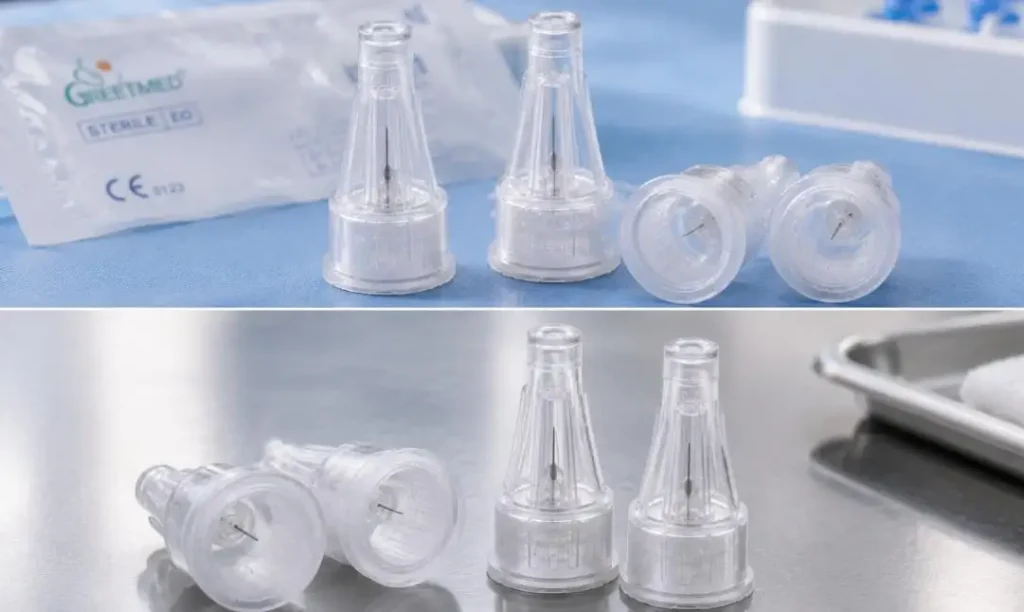
Regulatory Compliance: The First Step in Supplier Evaluation
The identification and attainment of the relevant regulatory approvals will be the first step in the evaluation of a supplier. For purchasing managers, stating a prospective insulin injection needle supplier has the required approvals means that the supplier has done at least the following:
•ISO 13485 Certification: The supplier has a quality management system for medical devices.
•FDA Registration: The supplier will be allowed to sell medical devices in the U.S. and will be registered with the FDA.
•CE Mark: A supplier selling in the European Union has to have their products certified under the EU MDR, which involves an audit by a Notified Body.
•Approval from the PMDA in Japan, Health Canada, and the TGA in Australia are all examples of further demonstrated commitment to quality.
In addition to the above, a supplier must also demonstrate a sterile product by having an assessment in compliance with ISO 7864, and also ISO 10993 in regards to biocompatibility, and in regards to pen needles, compliance with ISO 11608-2.
Manufacturing Facilities: An Essential Aspect of a Supplier
Purchasing managers also have the ability to evaluate the manufacturing environment of an insulin injection needle supplier.
Manufacturing facilities must have at least:
•ISO 7 Clean Rooms – These allow for sterile environments.
•In-House Sterilization – This can be done via either Ethylene Oxide or Gamma Ray sterilization and reduces the need for third parties, as well as decreasing lead time.
•Automated vision inspection – Confirms correctness in dimensions and consistency in tip cutting sharpness and bevels for millions of units.
•On-site testing labs – ISO states that the labs improve testing speed and lead to quick verification and root-cause analysis.
•Vertical Integration – The company controls molding, sterilization, and packaging. This is a way to decrease the reliance and distance of the supply chain.
Material Quality and Product Performance
Needle characteristics affect comfort for the patient as well as the effectiveness of the therapy. These traits are of interest to procurement teams.
•Medical-grade stainless steel – Certified biocompatible alloys per ISO 10993 are non-negotiable.
•Ultra-thin wall technology – Increases inner diameter for faster insulin flow and shorter injection time.
•Silicone coating - A double layer creates less friction.
•Needles in 29G to 32G and 4mm to 12mm available – Offers a variety of options ; the 4mm needles are the safest for adults and children.
•Universal compatibility – ISO 11608 connections, either screw-on or push-fit, integrate with leading brands of injection pens, such as Novo Nordisk, Sanofi, and Eli Lilly, and simplify stock holdings.
Quality Management and Traceability
To ensure patient safety and for audits, needle traceability and sustained quality are requisite.
•Traceability of materials – Records trace the source of insuline needles from the steel to the last assembly.
•Proof of sterility – require validation to either ISO 11135 or ISO 11137
•Consistency - Dimensional and other characteristics and lubrication are consistent from batch to batch.
•Controlled processes – Each and every step such as grinding, and beveling are recorded and validated.
Supply Chain Reliability
Even the best products lose their value without the right supply. The offering of each insuline needle supplier is assessed by the buyer for the quality of their logistics.
•Needles delivered on time ( > 95 % of orders) – Logistics and coordination must be flawless.
•Within 4–6 hours – Routine orders and changes that are time sensitive are handled by specially assigned personnel.
•Needles in frequent, repeat order – A frequent order indicates reliable and valued supply.
•Ability to meet increasing demand - Quality should not be sacrificed in order to meet the demand with scalable automation.
•Suppliers within close proximity to Shanghai and Ningbo – result in a balance of lower freight costs and better times.
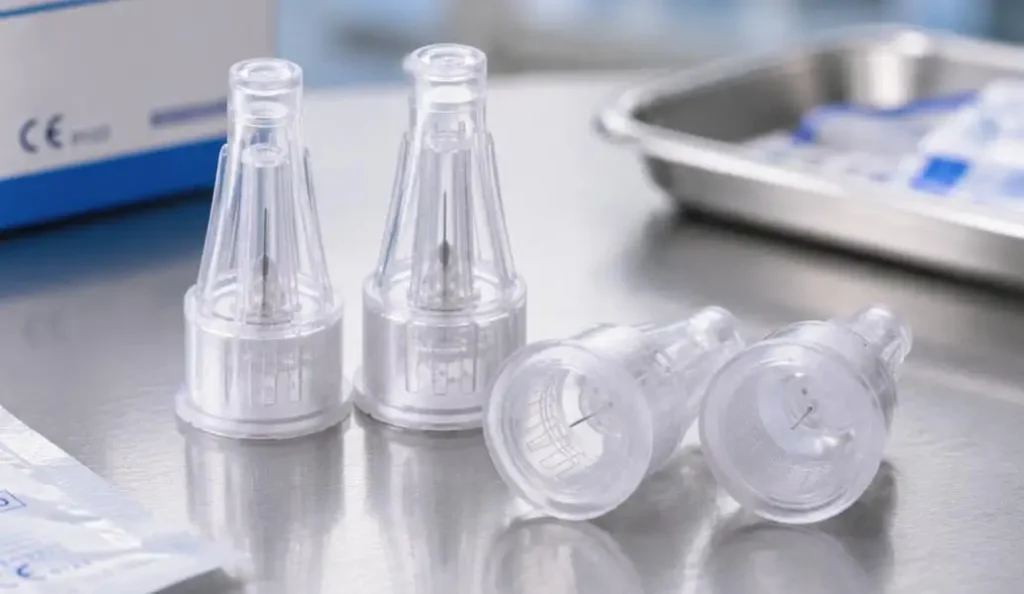
Cost Structure and Total Cost of Ownership
Price is not the sole factor; total cost of ownership matters when selecting an insulin injection needle supplier.
•Competitive per-unit pricing – High-volume automation yields $0.02–$0.04 per needle, but quality is weighed against cost.
•Flexible MOQs – Some suppliers allow smaller trial orders, but most orders must fall in the range of 10,000 to 100,000 pieces.
•OEM/ODM capabilities – Custom branding programs can add values through integrated programs.
•Vertical integration reduces total cost – Elimination of third-party vendors minimizes cost and also lead time.
Safety Features and User Centered Design
More and more suppliers of insulin injection needles are taking safety and ease of use features into account, and they are more important than price in the purchasing decision.
•Safety shield mechanisms – Shields, which can be deployed either automatically or manually, can help prevent needlestick injuries for those who are unable to use the shield due to dexterity or vision issues.
•Easy-peel sterile packaging – A design for ease of daily use which features hygienic, single-use packaging.
•Visual indicators or windows – Help in the accurate placement of the needle.
•Color-coding of length – Eases selection and boosts confidence in the patient.
The Greetmed Advantage: Experience and Compliance
As a supplier of insulin injection needles, Greetmed Medical Instruments is a good example of the kind of supplier a buyer would want to have. With a foundation in 2003, Greetmed is a company built on social responsibility, integrity, and compassion.
•Comprehensive credentials – The triad of the ISO 13485, FDA, and CE certifications.
•Two decades of experience – Institutional knowledge of the industry of medical devices of a significant length.
•End-to-End Quality Commitment – The quality systems in place are an assurance of quality from the raw material to the post-market surveillance of the product.
•Diverse product portfolio – Gloves, masks, syringes, and urine bags. Beyond pen needles, Greetmed's product offerings diversify the supply chain.
•Full traceability – Assured with the documented processes and audits conducted regularly.
Conclusion—Making the Best Possible Choice
Choosing the right supplier for insulin injection needles has far reaching effects. It will impact patients, the compliance of the provider, and assurance of supply. Professionals who assess suppliers for their processes for regulation, manufacture, quality, materials, logistics, pricing, and safety will help their organizations succeed. A partner like Greetmed will help a company find a reliable supplier of insulin injection needles as a result of Greetmed's long-standing presence in the industry and their certifications. If these needs are taken into consideration, savings for procurement teams and improved patient care will result.
Frequently Asked Questions (FAQs)
Q1: What are the basic qualifications to be an insulin injection needle supplier?
A: At a minimum, an insulin supplier must be certified to ISO 13485, FDA registered with CE Mark certification. Other certifications such as PMDA or TGA would indicate the supplier’s readiness to other markets.
Q2: What is the relationship between needle gauge and length and patient comfort?
A: The larger the gauge (higher number of G, e.g., 32G = thinner needle) the less painful the injection, and shorter needle lengths (e.g., 4mm) decrease the probability of an intramuscular injection, especially in children and those with lower body mass.
Q3: Can insulin pen needles be used with any pen device?
A: Our devices offer a universal ISO 11608 screw-on or push-fit connection. This is compliant with the most insulin pen devices, including Novo Nordisk, Sanofi, and Eli Lilly.
Q4: Why is there a silicone coating on insulin needles?
A: It lowers the coefficient of friction so less force is needed to slide the needle into the skin, decreasing pain and trauma to the tissue and improving the experience for the patient.
Q5: What are the standard methods of sterilization for these needles?
A: The two most common methods of sterilization are Ethylene oxide (EO) and gamma irradiation. Both are validated for sterilization by ISO 11135 and ISO 11137 standards.
Submit Your Request
Recent Posts

Tags
- Adult Diapers
- Are custom medical devices safe
- Baby Diapers
- Can respiratory anesthesia be used
- Digital Healthcare
- Do you offer customized consumables
- European Market
- How do you take care of a skin wound
- Industry Trends
- Lady Sanitary Napkins
- Medical Devices
- OEM Medical Devices
- Product Introductions
- Protective Equipment
- Under Pads
- What are custom-made medical devices
- What are diagnostic products
- What are hospital dressing products
- What are medical tube catheters
- What are some common protective equipment
- What are the appropriate applications for hospital dressing products
- What are the appropriate uses for protective equipment
- What is a gynecological examination
- What is a medical consumable
- What is an anesthesia kit
- What is an OEM in medical devices
- what is an wound skin care
- what is can disposable ultrasonic diagnostic
- What is good manufacturing medical devices
- What is hospital-grade protective equipment
- what is medical equipments hospital furniture
- What is medical sterilization wrapping
- What is rehabilitation equipment device
- What medical consumables do you supply
- Where can I find laboratory consumables wholesale
- where can I find medical protection device
- where to buy hypodermic accessories
- where to buy medical apparel
- where to buy medical consumable accessories
- where to find OEM medical device supplier
- where to find rehabilitation equipment supplier
