



The Ultimate Guide to Radiopaque Tubing in Medical Applications


Radiopaque tubing medical components are essential for ensuring precision and safety during minimally invasive clinical procedures. These specialized tubes contain materials that block X-rays, making them visible under fluoroscopy or radiography. This visibility allows surgeons to track the exact location of devices inside the human body in real-time. Without this technology, navigating the complex vascular or urinary systems would be significantly more dangerous for patients.
In modern healthcare, the "see-through" nature of the human body is only possible through high-contrast materials. Whether it is a life-saving cardiovascular stent delivery or a simple drainage procedure, the reliability of your tubing determines the success of the intervention. At China-Greetmed, we understand that medical professionals require absolute clarity when monitoring internal devices.
What is Radiopaque Tubing and Why is it Used?
Radiopaque tubing is a medical-grade conduit designed to be visible under imaging technologies like X-rays and CT scans. Manufacturers achieve this by blending base polymers with radiopaque fillers such as Barium Sulfate or Bismuth Subcarbonate. This allows clinicians to confirm the correct placement of catheters, stents, and feeding tubes without invasive exploratory surgery.
Precision is the hallmark of modern medicine. When a doctor inserts a device, they cannot rely on guesswork. Radiopaque properties provide a "roadmap" within the body. This visibility prevents accidental perforation of organs and ensures that fluids or medications reach the intended site. For instance, when using a medical hypodermic syringe to inject contrast media, radiopaque lines in the delivery tubing ensure the path is clear and correctly positioned.
How Does Radiopacity Differ from Translucency?
While translucent tubing allows you to see the fluid inside the tube, radiopaque tubing allows the imaging machine to see the tube inside the patient. Translucent materials are great for monitoring air bubbles or flow rates at the bedside. However, once the tube enters the body, translucency offers zero visibility on an X-ray screen. Radiopaque fillers create a distinct white silhouette against the darker background of biological tissues.
How Does Radiopaque Tubing Work Under X-ray?
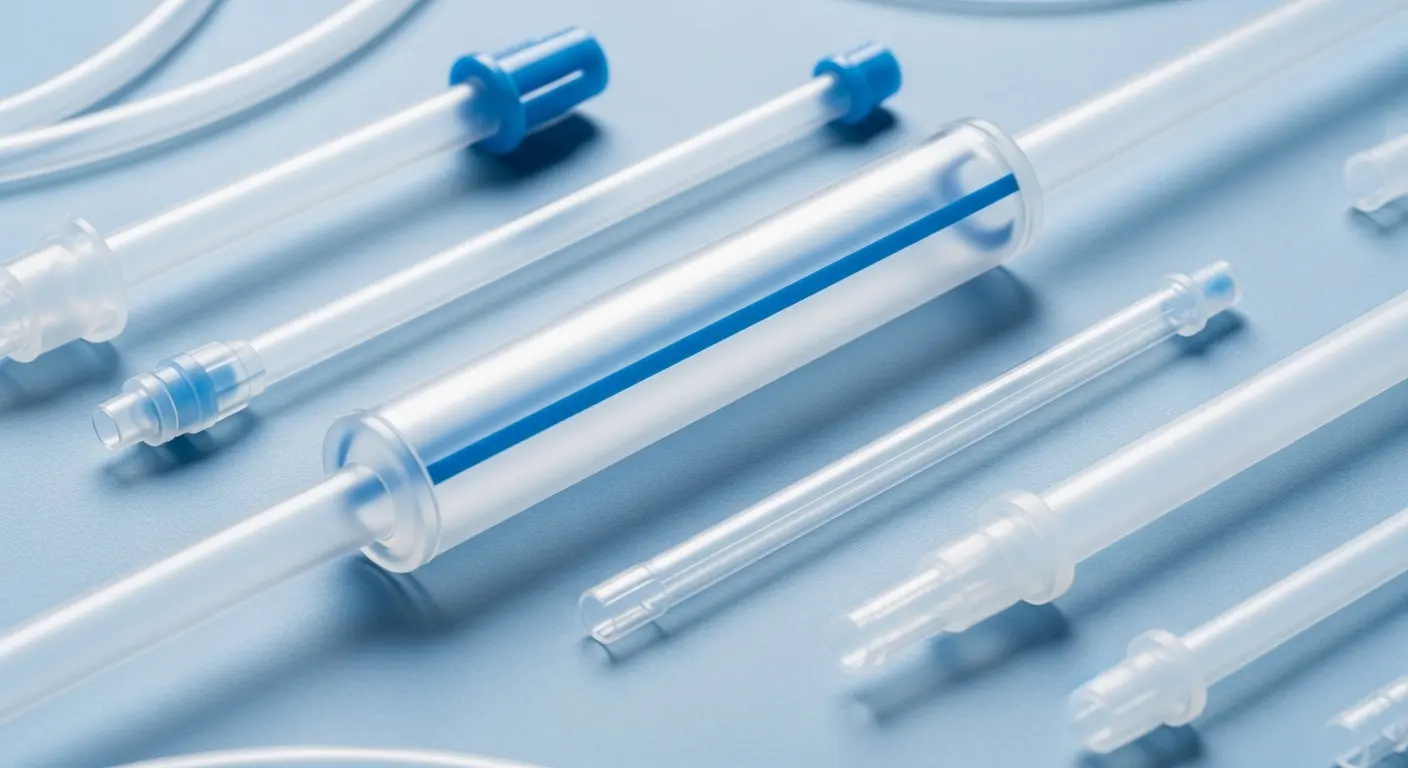
Radiopaque tubing works by using high-atomic-number elements to absorb X-ray photons, preventing them from passing through the material. This absorption creates a high-contrast shadow on the imaging detector, appearing as a bright white line or marker. The density of the filler material directly influences how "bright" the tubing appears during live fluoroscopy.
The science relies on the "Photoelectric Effect." When X-rays hit the dense particles of Barium or Bismuth embedded in the plastic, the energy is absorbed rather than transmitted. In clinical settings, this is vital for procedures performed "PRN" or as needed. Understanding what PRN means in medical terms is crucial for staff who must quickly deploy these visible tools during emergency interventions.
Common Radiopaque Fillers Used in Manufacturing
| Filler Material | Common Loading % | Best Use Case |
| Barium Sulfate ($BaSO_4$) | 10% - 40% | General purpose catheters and feeding tubes. |
| Bismuth Subcarbonate | 10% - 30% | Thin-walled tubes requiring high visibility. |
| Tungsten | 60% - 80% | Extremely thin vascular markers or tips. |
| Bismuth Oxychloride | 10% - 20% | Smooth surface finish for sensitive tissue contact. |
What are the Main Types of Radiopaque Tubing?
The main types of radiopaque tubing include fully encapsulated tubes, striped tubing, and tipped tubing. Fully encapsulated tubes are visible along their entire length. Striped versions feature one or more "radiopaque lines" to balance visibility with the ability to see fluids. Tipped tubing only features a visible marker at the distal end to indicate the leading edge.

1. Fully Encapsulated Tubing
This type is saturated with radiopaque agents. It provides the highest level of visibility. It is frequently used in complex drainage systems where the entire path of the tube must be monitored. For example, a Malecot catheter often utilizes these properties to ensure the "wings" of the catheter are properly deployed within the bladder or kidney.
2. Radiopaque Striped Tubing (Barium Stripes)
Engineers often co-extrude a thin line of Barium Sulfate into a clear polyurethane or PVC tube. This "best of both worlds" approach allows the clinician to see the fluid (like blood or bile) inside the tube while still tracking the tube's position on a monitor.
3. Distal Marker Bands
In some delicate vascular procedures, the entire tube does not need to be visible. Instead, a highly concentrated ring of radiopaque material is placed at the very tip. This allows for extreme precision in positioning without cluttering the X-ray image with a long, bright line.
Which Materials are Best for Radiopaque Tubing?
The best materials for radiopaque tubing are medical-grade polymers like Polyurethane (PU), Polyethylene (PE), and Silicone. Polyurethane is favored for its biocompatibility and ability to hold high concentrations of fillers without becoming brittle. Silicone is preferred for long-term implants due to its flexibility, though it requires specific processing to maintain its structural integrity.
Expert Insight: When choosing a material, consider the "stiffness" factor. Adding radiopaque fillers like Barium can make a soft plastic harder. Leading manufacturers like China-Greetmed use advanced compounding techniques to ensure the tubing remains flexible enough to navigate curvy veins while remaining visible.
Performance Comparison of Base Polymers
- Polyurethane (TPU): Excellent tensile strength. It softens slightly at body temperature, making it more comfortable for the patient.
- Silicone: Highly flexible and chemically inert. It is ideal for long-term drainage but usually requires a larger diameter for the same level of radiopacity.
- Fluoropolymers (PTFE/FEP): These have incredibly low friction. They are used as liners in catheters to allow other devices to slide through them easily.
Why is Radiopacity Critical for Patient Safety?
Radiopacity is critical because it prevents "lost" medical devices and accidental trauma to internal structures. If a tube migrates or breaks, a radiopaque marker allows the medical team to locate the fragment instantly via X-ray. It also ensures that life-sustaining treatments, such as parenteral nutrition, are delivered to the correct organ rather than into the pleural cavity.
During post-operative care, clinicians often use various hospital dressing products to secure these tubes. If a tube is accidentally pulled, a quick X-ray can confirm if the internal tip has moved. This eliminates the need for repeated, painful re-insertions based on guesswork.
Reducing Surgical Complications
- Placement Verification: Immediate confirmation that a tube has reached the target site.
- Migration Monitoring: Detecting if a tube has shifted due to patient movement.
- Kink Detection: Identifying bends in the tubing that might block fluid flow.
- Fragment Retrieval: Locating pieces of equipment in the rare event of a mechanical failure.
How is Radiopaque Tubing Manufactured?
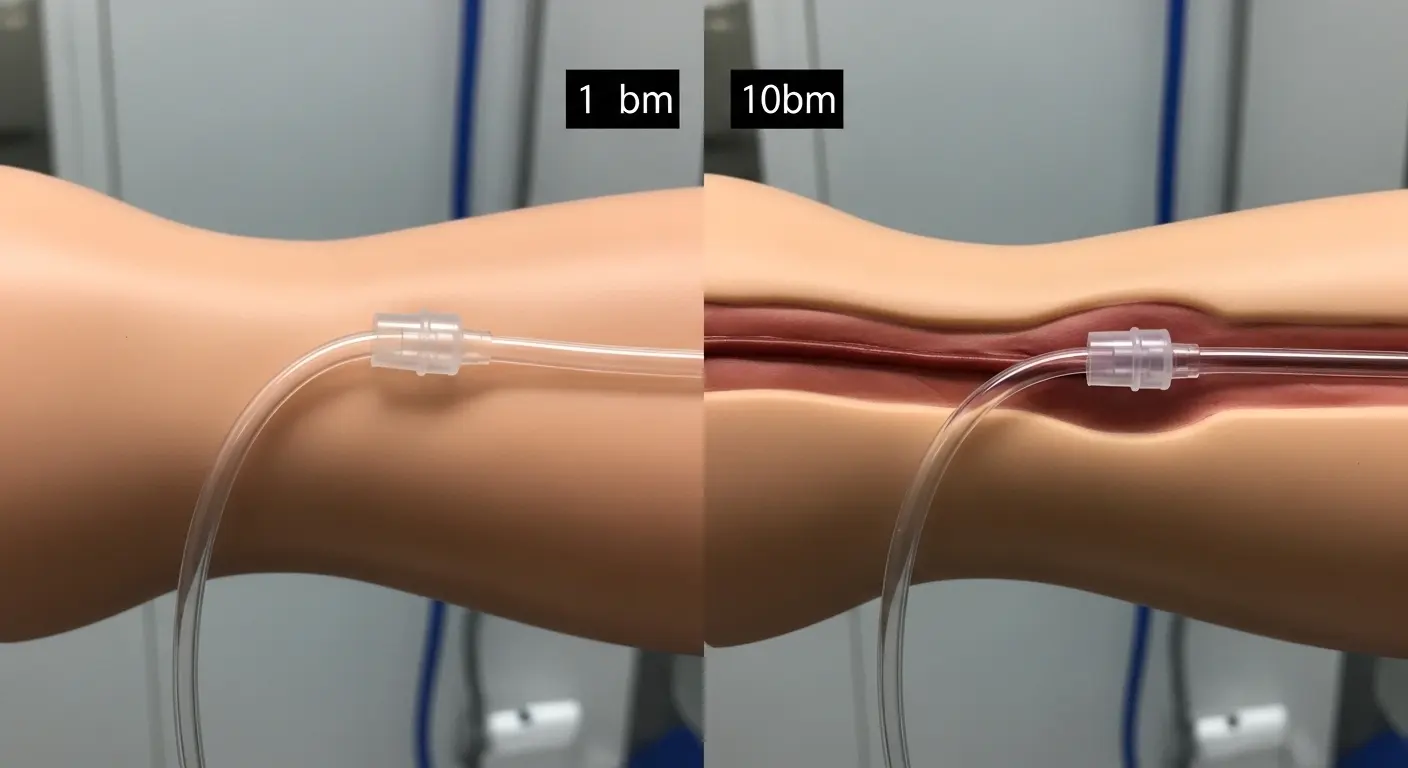
The manufacturing process involves a method called "compounding," where the plastic resin is melted and mixed with radiopaque powders. This mixture is then extruded through a precision die to create the tube shape. For striped tubing, a secondary extruder feeds the radiopaque material into the main stream of clear plastic during the "co-extrusion" process.
Quality control is paramount. Even a small clump of filler material can cause a weak spot in the tube or a "hot spot" on the X-ray. We ensure that the dispersion of Barium or Bismuth is perfectly uniform. Before the final product is sterilized and packaged, samples undergo rigorous testing to ensure they meet ISO 13485 standards.
The Role of Cleanliness in Production
Before the extrusion process even begins, the environment must be pristine. Using a medical cotton swab to clean sensitive equipment components is a standard part of maintaining a Class 100,000 cleanroom. Any contaminant in the plastic could compromise the tubing's integrity or cause an adverse reaction in the patient.
What are the Common Applications of Radiopaque Tubing?
Radiopaque tubing is used across almost every medical specialty, including cardiology, urology, gastroenterology, and anesthesiology. Common applications include central venous catheters (CVCs), epidural catheters, hemodialysis tubes, and urinary drainage systems. In each case, the ability to "see" the device's path is the primary requirement for a successful outcome.
Cardiology: Navigating the Heart
In cardiac catheterization, physicians thread long, thin radiopaque tubes through the femoral artery to reach the heart. The high visibility allows them to navigate around valves and through narrow vessels to deliver stents or clear blockages.
Urology: Ensuring Proper Drainage
For patients with kidney stones or bladder issues, tubes like the Malecot catheter provide essential drainage. Because these are often placed internally for extended periods, being able to check their position via X-ray during a follow-up visit is vital for patient comfort.
Anesthesiology: Precise Nerve Blocks
When delivering regional anesthesia, the catheter tip must be placed within millimeters of a specific nerve. Radiopaque markers allow anesthesiologists to use ultrasound or X-ray guidance to ensure the medication is delivered exactly where it is needed.
How to Evaluate the Quality of Radiopaque Tubing?
To evaluate quality, you must look for "radiopurity," surface smoothness, and consistent dimensions. High-quality tubing will show a sharp, crisp image on an X-ray screen without "ghosting" or blurring. The surface should be free of pits or bumps, which could harbor bacteria or cause friction during insertion into the patient's body.
Tip: Always request a "spec sheet" from your manufacturer that details the percentage of radiopaque filler. Too little filler makes the tube invisible; too much can make the tube brittle.
| Quality Metric | What to Look For | Why it Matters |
| Visual Clarity | Uniform brightness on X-ray. | Prevents misinterpretation of the image. |
| Kink Resistance | Ability to bend without collapsing. | Ensures uninterrupted fluid/air flow. |
| Biocompatibility | ISO 10993 certification. | Prevents inflammatory reactions in the patient. |
| Dimensional Tolerance | Exact wall thickness and ID/OD. | Ensures compatibility with other medical connectors. |
What are the Future Trends in Radiopaque Technology?
The future of radiopaque tubing lies in "smart" materials and "low-loading" high-visibility fillers. Researchers are developing new compounds that provide better visibility with less filler material, allowing for even thinner and more flexible tubes. Additionally, some experimental tubes are being designed to change color or visibility based on the pH or temperature of the surrounding tissue.
As robotic surgery becomes more common, the demand for highly visible markers is increasing. These markers allow the robotic software to "track" the movement of the tube automatically, providing an extra layer of safety during complex procedures.
Submit Your Request
Recent Posts

Tags
- Adult Diapers
- Are custom medical devices safe
- Baby Diapers
- Can respiratory anesthesia be used
- Digital Healthcare
- Do you offer customized consumables
- European Market
- How do you take care of a skin wound
- Industry Trends
- Lady Sanitary Napkins
- Medical Devices
- OEM Medical Devices
- Product Introductions
- Protective Equipment
- Under Pads
- What are custom-made medical devices
- What are diagnostic products
- What are hospital dressing products
- What are medical tube catheters
- What are some common protective equipment
- What are the appropriate applications for hospital dressing products
- What are the appropriate uses for protective equipment
- What is a gynecological examination
- What is a medical consumable
- What is an anesthesia kit
- What is an OEM in medical devices
- what is an wound skin care
- what is can disposable ultrasonic diagnostic
- What is good manufacturing medical devices
- What is hospital-grade protective equipment
- what is medical equipments hospital furniture
- What is medical sterilization wrapping
- What is rehabilitation equipment device
- What medical consumables do you supply
- Where can I find laboratory consumables wholesale
- where can I find medical protection device
- where to buy hypodermic accessories
- where to buy medical apparel
- where to buy medical consumable accessories
- where to find OEM medical device supplier
- where to find rehabilitation equipment supplier
