



Introducer Catheter Types and Uses | Complete Vascular Guide


Understanding introducer catheter types and uses is vital for healthcare professionals managing vascular access and interventional procedures. These devices serve as the gateway for more complex tools, providing a stable channel into the venous or arterial system. Selecting the correct introducer ensures procedural speed, minimizes blood loss, and protects the vessel walls from trauma during catheter exchanges.
What Are the Main Introducer Catheter Types and Their Uses?
The primary introducer catheter types and uses include standard sheaths for vascular access, peel-away sheaths for permanent lead placement, and steerable sheaths for complex cardiac navigation. Standard sheaths provide a port for fluid delivery or catheter insertion. Peel-away types allow removal without disturbing the indwelling device. Steerable versions offer active deflection to reach specific anatomical targets.
In a clinical setting, choosing between these types depends on the goal. For a routine procedure, a standard valved sheath prevents backflow. However, if you are placing a pacing lead, a peel-away version is required so the sheath can be discarded while the lead stays put. I have seen cases where the wrong choice led to unnecessary vessel stress. Matching the tool to the specific anatomy is a hallmark of an expert clinician.
Comparison of Core Introducer Types
| Type | Primary Use Case | Key Feature |
| Standard Sheath | General vascular access | Hemostatic valve to prevent blood loss. |
| Peel-Away Sheath | Pacing leads and PICC lines | Scored body for easy splitting and removal. |
| Steerable Introducer | Structural heart and EP studies | Handle-controlled tip deflection for navigation. |
| Long Sheath | Distal vascular interventions | Extended length for crossing the aortic arch. |
Why Is the Seldinger Technique Central to Introducer Use?
The Seldinger technique is the gold standard for using an introducer catheter, involving a needle, guide wire, and dilator to gain vessel access. This method allows for a smaller initial puncture while enabling the insertion of larger diameter devices. It reduces the risk of hemorrhage and makes the process of switching between different introducer catheter types and uses much safer.
Using this technique requires a steady hand. You first enter the vessel with a needle, often checked with a medical hypodermic syringe to confirm blood return. Then, a guide wire passes through the needle. Once the needle is out, the introducer and dilator slide over the wire. This sequence is practiced thousands of times by specialists to ensure it becomes second nature.
What Are the Key Components of an Introducer System?
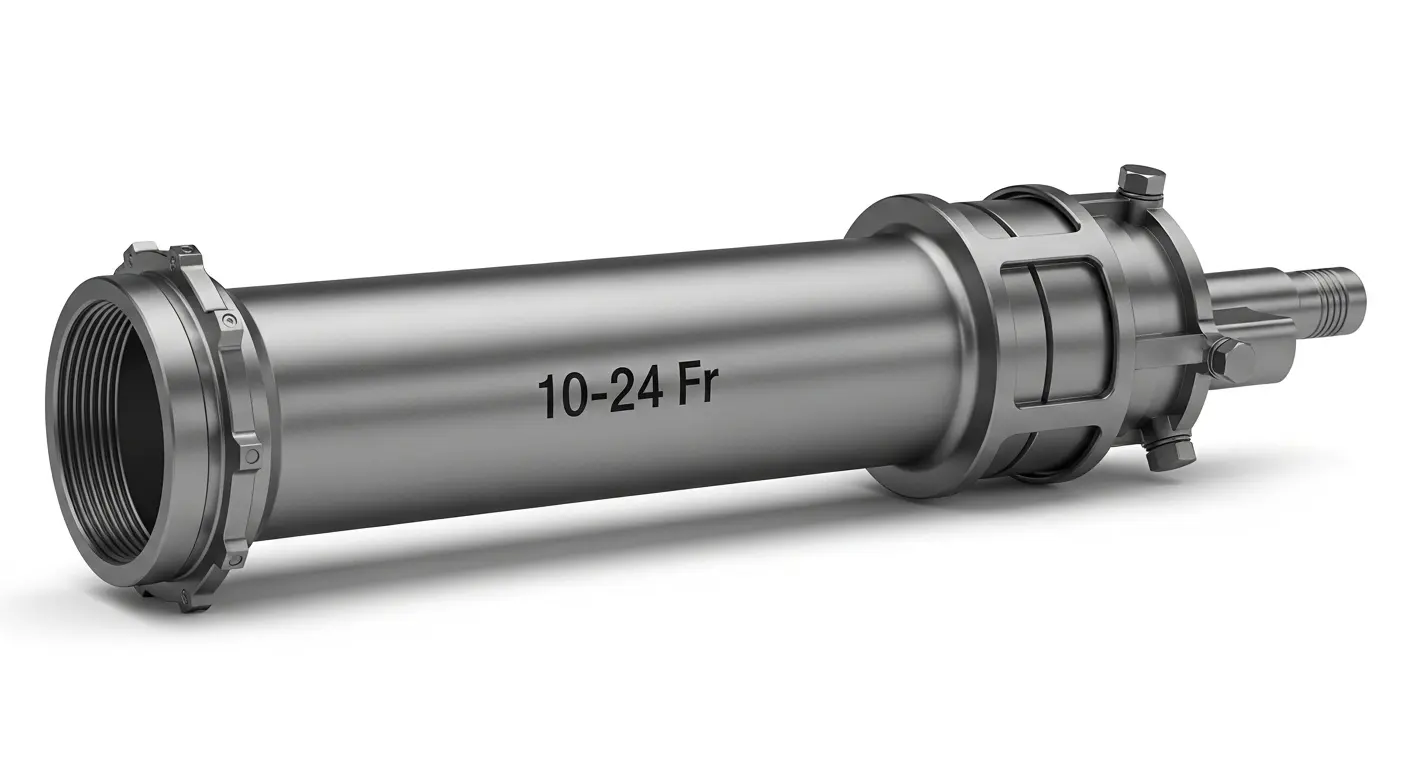
An introducer system consists of the outer sheath, an inner vessel dilator, a hemostatic valve, and a side port for flushing. The dilator tapers the path for the sheath. The valve prevents air from entering and blood from escaping. The side port allows for the injection of contrast or saline "PRN" to keep the system clear of clots.
Quality matters in these components. A stiff dilator can cause vessel trauma, while a valve that is too tight might strip the coating off a catheter. Understanding what PRN means in medical terms is helpful here; clinicians use the side port as needed to maintain patency. Every part must work together to create a smooth entry point.
How Do You Select the Right French Size for an Introducer?
Selecting the right French size involves matching the internal diameter of the introducer to the external diameter of the catheter or lead being used. Most introducers are sized by their internal diameter. For example, a 6F sheath will accept a 6F catheter. Using an oversized sheath increases the risk of site bleeding and vessel damage.
| Procedure Type | Typical Sheath Size (French) | Consideration |
| Diagnostic Radiology | 4F - 5F | Minimizes arterial puncture size. |
| Coronary Intervention | 6F - 7F | Balances support and puncture size. |
| Dialysis Access | 10F - 14F | Requires high flow rates. |
| Pediatric Access | 2F - 4F | Extremely delicate vessel handling. |
I always recommend checking the outer diameter of your interventional device first. If you are placing a malecot catheter or a specific stent, the manufacturer's specs will tell you the minimum sheath size required. Never guess, as a tight fit can cause the device to get stuck.
What Role Do Valved Sheaths Play in Preventing Complications?
Valved sheaths are essential for preventing air embolism and uncontrolled bleeding during a procedure. The hemostatic valve acts as a one-way gate. It opens when a catheter is pushed through and seals tightly when the catheter is removed. This protection is critical when working in the venous system, where negative pressure can pull air into the heart.
Without a reliable valve, the risk of a "whoosh" of air entering the vein is high. High-quality manufacturers test these valves for "leak pressure" to ensure they hold up even under high-stress conditions. After the procedure, knowing what hospital dressing products are used to secure the site is just as important as the valve itself for long-term patient safety.
When Should a Clinician Use a Peel-Away Introducer?
A clinician should use a peel-away introducer when the device being placed has a hub or handle that is larger than the sheath's diameter. This is common in the placement of permanent pacemakers or dialysis catheters. The sheath is snapped at the hub and peeled apart into two halves, allowing it to be removed while the indwelling catheter remains in the heart or vessel.
The "peel" must be clean. If the plastic tears unevenly, it can tug on the lead. I have participated in many lead placements where a smooth-peeling sheath made the difference between a five-minute finish and a thirty-minute struggle. It is a specialized tool for a specialized job. Even simple items like medical cotton swabs are used at the site to keep the "peel" area clean and dry.
How Do Long Introducer Sheaths Differ from Short Ones?
Long introducer sheaths (45cm to 90cm) are used to provide support deep within the vascular system, while short sheaths (11cm to 25cm) are for initial entry. Long sheaths help cross difficult anatomy, such as the aortic arch, to reach the carotid or renal arteries. They provide a stable "highway" for the delivery of stents or coils in distal locations.
Choosing between them is a matter of geography. If the target is just a few centimeters from the puncture site, a short sheath is faster and easier to manage. If you are working in the brain from a femoral access point, a long sheath is a necessity. The increased surface area of a long sheath means it often needs specialized coatings to reduce friction against the vessel wall.
What Are the Risks Associated with Introducer Catheters?
The risks associated with introducer catheters include hematoma at the puncture site, vessel dissection, air embolism, and infection. Most of these risks are mitigated by proper technique and high-quality equipment. Using ultrasound guidance for the initial puncture has been shown to reduce hematoma rates by over 40% in some clinical studies.
- Hematoma: Caused by multiple puncture attempts or improper sheath sizing.
- Dissection: Occurs when the dilator or sheath tip catches on the vessel lining.
- Infection: Related to sterile technique during the initial insertion.
- Thrombosis: Blood clots forming on the sheath surface during long procedures.
Frequently Asked Questions
Can an introducer sheath be reused?
No. All introducer catheters are single-use devices. Reuse compromises the hemostatic valve and increases the risk of cross-contamination and material fatigue.
How do I know if the sheath is in the vein or artery?
Clinicians use blood color, pulsatility, and pressure monitoring to confirm the location. Ultrasound is now the preferred method for real-time visualization of the vessel.
What is a "radial" introducer?
A radial introducer is specifically designed for access through the wrist. These are typically shorter and feature specialized coatings to prevent "radial artery spasm," a common issue in this smaller vessel.
Does the sheath stay in after the procedure?
In most diagnostic cases, the sheath is removed immediately. For some intensive care patients, it may stay in for a short period to allow for rapid access, though this increases the risk of clots.
Next Steps for Improving Vascular Access Skills
Understanding the various introducer catheter types and uses is just the start. To excel, you should practice with different sheath brands to feel the difference in valve tension and dilator transitions. Would you like me to create a checklist for preparing a sterile vascular access tray?
Submit Your Request
Recent Posts

Tags
- Adult Diapers
- Are custom medical devices safe
- Baby Diapers
- Can respiratory anesthesia be used
- Digital Healthcare
- Do you offer customized consumables
- European Market
- How do you take care of a skin wound
- Industry Trends
- Lady Sanitary Napkins
- Medical Devices
- OEM Medical Devices
- Product Introductions
- Protective Equipment
- Under Pads
- What are custom-made medical devices
- What are diagnostic products
- What are hospital dressing products
- What are medical tube catheters
- What are some common protective equipment
- What are the appropriate applications for hospital dressing products
- What are the appropriate uses for protective equipment
- What is a gynecological examination
- What is a medical consumable
- What is an anesthesia kit
- What is an OEM in medical devices
- what is an wound skin care
- what is can disposable ultrasonic diagnostic
- What is good manufacturing medical devices
- What is hospital-grade protective equipment
- what is medical equipments hospital furniture
- What is medical sterilization wrapping
- What is rehabilitation equipment device
- What medical consumables do you supply
- Where can I find laboratory consumables wholesale
- where can I find medical protection device
- where to buy hypodermic accessories
- where to buy medical apparel
- where to buy medical consumable accessories
- where to find OEM medical device supplier
- where to find rehabilitation equipment supplier
