



Advanced Wound Care: CHG Transparent Dressings That Redefine Catheter Protection


If you work in a hospital, clinic, or procurement team, you already know one tough truth: catheter infections are dangerous and expensive. In the US alone, nearly 28,000 preventable deaths happen every year because of these infections, and the total treatment cost goes above $2 billion. That is why the world of Advanced Wound Care keeps looking for better solutions—products that actually stop infections, fit tight budgets, and make life easier for nurses and patients.
Here comes CHG technology. CHG stands for chlorhexidine gluconate, a powerful germ-fighting ingredient. Greetmed's CHG transparent dressings combine this proven protection with full visibility and strong but gentle adhesion. They are designed to meet the real needs of 2026 head-on. Let's break down why they are a smart choice for any healthcare buyer.
Hard Proof: CHG Dressings Cut Infection Risk by Up to 69%
Old-style transparent dressings simply cover the catheter site. CHG dressings do more—they actively kill bacteria for days. Studies back this up in a big way:
69% fewer bloodstream infections: A major study across 12 ICUs in six countries (over 6,600 patients) found that CHG dressings lowered CLABSI (central line infections) from 4.78 per 1,000 catheter-days to just 1.48.
From 18.4% down to 2.4%: In a children's ICU, infection rates dropped dramatically after switching to CHG dressings.
CDC says “use them”: Current CDC guidelines give CHG dressings a Category IB recommendation for adults with central lines. That means they are a proven standard of care, not just an extra.
These dressings turn a risky catheter site into a protected one. They are no longer a “nice to have”—they are a must-have for modern infection control.
Why 2026 Is the Year to Switch
The year 2026 brings updated clinical guidelines from major organizations like the Chinese Society of Critical Care Medicine and APSIC. Both now place CHG-based dressings at the center of infection prevention bundles. In plain language: if you want to follow the latest best practices, you need CHG dressings.
The market agrees. The global antimicrobial dressing market is expected to reach $1.85 billion in 2026, growing at 5.1% per year through 2033. Every hospital is trying to limit the airborne infections. For procurement teams, cost-effective CHG dressings meet all compliance requirements and support evidence-based practice.
CHG Dressings Save $3,576 Per Hospital Visit
Protecting the patient is only part of the picture; infection prevention also protects the bottom line. A study of over 53,000 patients and two CHG dressings (gel and sponge) provided the following results:
A 41% reduction of infections was noted with the use of a gel CHG dressing (0.35%) compared to a sponge dressing (0.60%).
Shorter hospital stays: Patients with CHG gel dressings stayed 0.4 days less on average.
$3,576 saved per patient—just from the shorter stay and fewer complications.
Now think bigger: the estimated cost to prevent one CLABSI infection is about $42,609. Every single infection you avoid saves that much in treatment, extra days in the hospital, and follow-up care. So when a purchasing manager looks at CHG dressings, they are not just buying a better clinical product—they are making a financially smart investment.
What Makes Greetmed's CHG Dressing Practical for Daily Use
Greetmed designed its CHG transparent dressing to solve three everyday headaches for nurses and patients. Let's look at each one:
1)Continuous germ protection for up to 7 days
The CHG layer keeps killing bacteria at the insertion site for the whole recommended dressing change interval (5–7 days). This stops bacteria from crawling under the dressing and reaching the catheter—the main way infections start.
2)Fully transparent for easy checking
You can see the insertion site at any time without removing the dressing. Detect redness swelling or leakage and respond rapidly. No need to peel it off and risk contaminating the area.
3)Sticks well but comes off gently
The dressing stays securely attached even when patients move or nurses turn them. Yet it is gentle enough for fragile or sensitive skin—a real concern in ICUs and long-term care.
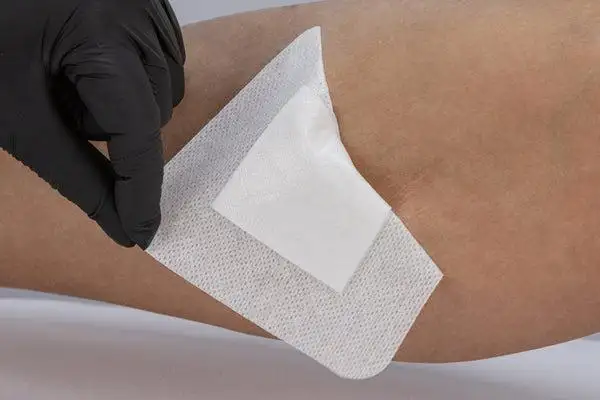
This dressing works with many types of catheters: arteriovenous catheters, intravascular lines, percutaneous devices, and also for securing tubes and pipelines to the skin. Two sizes are available: GT214-08-0811 (8.5 x 11.5 cm) and GT214-08-1012 (10 x 12 cm).
Why Buyers Trust Greetmed
Greetmed aims for high quality and reasonable pricing of advanced wound care products. As a dedicated manufacturer, Greetmed takes a high priority for product quality, reliability, and reasonable pricing. Greetmed sells ISO compliant products. Unique to our CHG dressing portfolio, Greetmed offers a reliable alternative to high premium brands.
Here is what Greetmed delivers for hospitals, clinics, and distributors:
• Consistent quality with strict sterility checks
• Cost-effective pricing that works for large-volume orders
• Multiple sizes and codes to fit different clinical needs
• Global shipping with responsive customer support
Ready to Upgrade Your Catheter Protection?
The antimicrobial dressing market is growing fast, and 2026 guidelines already point toward CHG as the new standard. Whether you run a hospital ICU, a dialysis center, or a distribution business, Greetmed's CHG transparent dressings offer proven infection control, better visibility, and measurable cost savings—all from a manufacturer that truly understands your daily challenges.
There are free sample requests, and personalized quote requests so if you need technical documents, or you want to talk about protecting catheters, give us a call. One dressing at a time, we'll reimagine catheter protection.
FAQs
Q: How frequently do I change the CHG transparent dressing?
A: Change the CHG transparent dressing once every 5-7 days.
Q: What if my patient has sensitive skin?
A: Greetmed's CHG dressing has less adhesion and isn't as traumatic to the skin. However, you should assess for a CHG allergy.
Q: What types of CHG dressing'S from Greetmed can manage different Catheters?
A: These CHG dressings help with Arteriovenous catheters, intravascular catheters, percutaneous devices, and in securing tubing or pipelines to the skin.
Q: Do CHG transparent dressings cause prices to go up because they are more expensive?
A: Not really. The unit price is a bit up, but they are cost-effective because the associated costs from CHG dressings are a lot lower. The average savings per avoided CLABSI are in the thousands due to decreased infections.
Q: Where are samples and quotes requested?
A: Greetmed can be contacted through the website or through email. We are happy to provide requests for samples, bulk orders, and technical datasheets.
Submit Your Request
Recent Posts

Tags
- Adult Diapers
- Are custom medical devices safe
- Baby Diapers
- Can respiratory anesthesia be used
- Digital Healthcare
- Do you offer customized consumables
- European Market
- How do you take care of a skin wound
- Industry Trends
- Lady Sanitary Napkins
- Medical Devices
- OEM Medical Devices
- Product Introductions
- Protective Equipment
- Under Pads
- What are custom-made medical devices
- What are diagnostic products
- What are hospital dressing products
- What are medical tube catheters
- What are some common protective equipment
- What are the appropriate applications for hospital dressing products
- What are the appropriate uses for protective equipment
- What is a gynecological examination
- What is a medical consumable
- What is an anesthesia kit
- What is an OEM in medical devices
- what is an wound skin care
- what is can disposable ultrasonic diagnostic
- What is good manufacturing medical devices
- What is hospital-grade protective equipment
- what is medical equipments hospital furniture
- What is medical sterilization wrapping
- What is rehabilitation equipment device
- What medical consumables do you supply
- Where can I find laboratory consumables wholesale
- where can I find medical protection device
- where to buy hypodermic accessories
- where to buy medical apparel
- where to buy medical consumable accessories
- where to find OEM medical device supplier
- where to find rehabilitation equipment supplier
