



Hemodialysis Catheter Kit Supplier: Flow-Resistance Design Insights


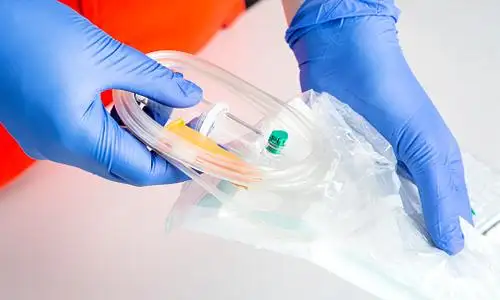
Hemodialysis Catheter Kit Supplier selection is not only about price or lead time. In real dialysis access work, flow resistance and stability decide whether a catheter performs smoothly, especially during short-term use. From Greetmed's manufacturing perspective, "flow-resistance design" is not a slogan. It is a set of structural choices that reduce turbulence, protect target flow, and help clinicians work with more predictable pressure behavior.

Why Flow Resistance Matters in a Hemodialysis Catheter Kit
When resistance is high, the system may need more negative pressure to pull blood. That can increase the chance of unstable flow, alarms, or more frequent troubleshooting. When resistance is controlled, the catheter can support smoother circulation and more consistent performance in daily sessions.
For buyers, this becomes a practical procurement question: does your Hemodialysis Catheter Kit Supplier understand how geometry influences flow, not just how to "make a tube"? A well-designed catheter balances three needs at once—adequate inner passage for flow, enough rigidity to resist kinking, and a surface/material behavior that stays comfortable and stable in the body.
Flow-Resistance Design Starts With Hole Cavity Geometry
In the GT212-01 kit, the catheter uses a scientific hole cavity design. In plain terms, the lumen structure and hole layout are designed to guide fluid with less unnecessary disturbance. A smoother path means less energy is lost to friction, and the flow can stay more stable.
This is where manufacturing discipline matters. The internal geometry must be repeatable at scale. If the hole cavity or lumen shape varies too much lot-to-lot, resistance and rigidity can also vary. That is why a capable Hemodialysis Catheter Kit Supplier focuses on both design intent and production control.
Practical takeaways that help you evaluate a supplier:
✓ Ask how internal geometry is controlled during production (not only final appearance)
✓ Confirm whether the design aims to reduce flow resistance while maintaining rigidity
✓ Request functional thinking, not just a generic "meets spec" statement
Material Choice: Polyurethane That Softens at Body Temperature
GT212-01 uses medical polyurethane with high elasticity and excellent biocompatibility. For clinical teams and procurement, this translates into a simple benefit: the catheter can be supportive during placement, then become more compliant after exposure to body temperature.
That "automatic softening" behavior is meaningful because it helps balance two conflicting needs:
• You want enough firmness for handling and placement.
• You also want the catheter to be gentle and conforming once in the body.
From the manufacturer's perspective, polyurethane selection is not a single checkbox. Material consistency, processing conditions, and surface quality all influence how the catheter feels and performs. When you are comparing options, a reliable Hemodialysis Catheter Kit Supplier should be able to explain why the polymer is chosen and how they keep performance consistent across batches.
Rigidity Without Excess Resistance: The Real Engineering Trade-Off
A common misconception is that "more rigid" automatically means "worse flow." In reality, the best outcome is balanced: enough rigidity to maintain shape, plus an inner structure that limits resistance. GT212-01 is designed to provide good rigidity while keeping fluid flow resistance smaller through its cavity design.
This balance matters most when your use case includes movement, dressing changes, or routine handling where kink risk exists. A catheter that collapses or kinks easily can disrupt flow even if the lumen size looks adequate on paper.
When you evaluate a Hemodialysis Catheter Kit Supplier, look for how they describe this trade-off. If they only talk about hardness or only talk about "high flow," that is usually incomplete. The stronger suppliers explain how they control both mechanical stability and flow behavior in the same design.
Short-Term Indwelling Use: What "< 30 Days" Means for Procurement
GT212-01 is recommended for short-term indwelling use, typically less than 30 days. That single line helps buyers align the product with the right clinical scenario and compliance pathway.
Short-term use commonly means you should prioritize:
• Predictable flow behavior and low resistance for repeated sessions,
• Smooth handling and placement features,
• A complete kit configuration that supports standardized procedure steps.
Greetmed provides multiple catheter size configurations such as 11.5Fr options with lengths including 15cm and 20cm, which helps match patient anatomy and access strategy without forcing a "one size fits all" choice. For supply teams, offering practical size choices reduces last-minute substitutions and supports cleaner inventory planning—especially when different departments or sites follow slightly different protocols.
What's Inside the Kit and Why It Supports Procedure Consistency
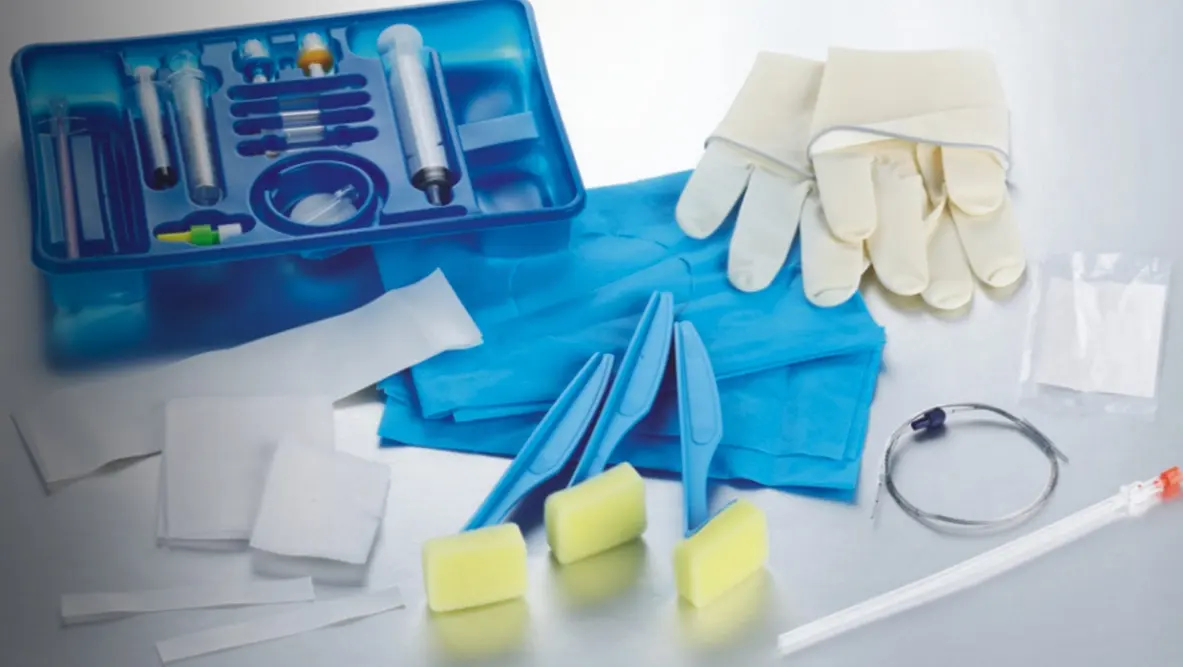
A catheter design can only perform well if the procedure workflow is supported by the kit contents. GT212-01 is built as a kit, not a single component, so hospitals and distributors can standardize preparation and reduce missing-item risk.
Instead of listing every item, here are a few components that matter to workflow stability:
✓ A disposable hemodialysis catheter (with common 11.5Fr configurations)
✓ Guide wire, dilator, and a Y-type needle to support access and tract preparation
✓ Luer-lock syringes (e.g., 5ml) and heparin caps for controlled handling steps
✓ Dressing pads, drape film, and gloves to support sterile field discipline
This "procedure-ready" approach is one reason many clients prefer working with a single Hemodialysis Catheter Kit Supplier rather than sourcing parts separately. It reduces procurement complexity and supports more repeatable clinical preparation.
CTA (Call-to-Action)
If you are sourcing a Hemodialysis Catheter Kit Supplier for short-term use cases and want clearer control over flow resistance and rigidity, contact Greetmed with your target Fr size, preferred length (for example, 15cm or 20cm), and expected indwelling timeline (e.g., <30 days). We will recommend a practical GT212-01 configuration, explain how the hole cavity design supports smaller flow resistance, and provide a stable quotation and supply path for your purchasing plan.
Submit Your Request
Recent Posts

Tags
- Adult Diapers
- Are custom medical devices safe
- Baby Diapers
- Can respiratory anesthesia be used
- Digital Healthcare
- Do you offer customized consumables
- European Market
- How do you take care of a skin wound
- Industry Trends
- Lady Sanitary Napkins
- Medical Devices
- OEM Medical Devices
- Product Introductions
- Protective Equipment
- Under Pads
- What are custom-made medical devices
- What are diagnostic products
- What are hospital dressing products
- What are medical tube catheters
- What are some common protective equipment
- What are the appropriate applications for hospital dressing products
- What are the appropriate uses for protective equipment
- What is a gynecological examination
- What is a medical consumable
- What is an anesthesia kit
- What is an OEM in medical devices
- what is an wound skin care
- what is can disposable ultrasonic diagnostic
- What is good manufacturing medical devices
- What is hospital-grade protective equipment
- what is medical equipments hospital furniture
- What is medical sterilization wrapping
- What is rehabilitation equipment device
- What medical consumables do you supply
- Where can I find laboratory consumables wholesale
- where can I find medical protection device
- where to buy hypodermic accessories
- where to buy medical apparel
- where to buy medical consumable accessories
- where to find OEM medical device supplier
- where to find rehabilitation equipment supplier
