



Antimicrobial Dressings with Absorbent Technology: Managing Wound Exudate Effectively


Why Exudate Management Defines the Performance of Antimicrobial Dressings
There are factors to consider beyond simply creating a barrier over a wounded area for effective wound care. To create a controlled and consistent environment for proper wound healing, dressing materials must manage the following three factors:
• Bacterial contamination
• Excessive wound exudate
• Balance of moisture around the wound
Addressing the above-mentioned issues is the role of antimicrobial protection and absorbent wound management technologies integrated in antimicrobial dressings. In comparison to gauze dressings, which primarily offer physical barriers and basic absorption, Antimicrobial Dressings are designed to inhibit bacteria growth within the wound, and retain and capture exudate.
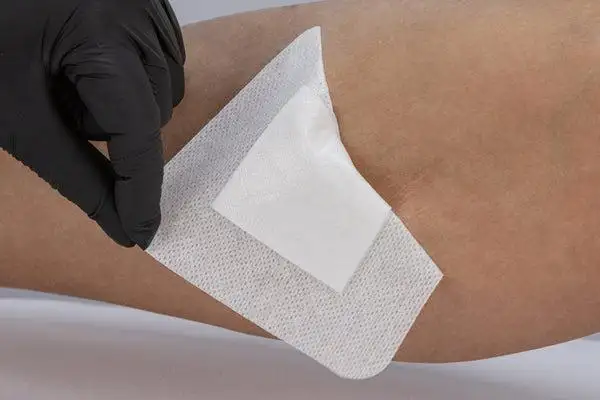
Wound exudate is vital to wound healing. However, there are numerous adverse effects of excessive exudate:
• Macceration of the surrounding skin
• Uncontrolled bacterial growth
• Prolonged time for wound closure
• Increased frequency of dressing changes
• Painful dressing changes for the patient
For this reason, when choosing an antimicrobial dressing, both the balance of antimicrobial activity and exudate management should be taken into consideration.
How Antimicrobial Dressings Control Bacteria while Managing Fluid
The main technical challenge of Antimicrobial Dressings is achieving bacterial control and moisture balance.
Typically, dressings designed for high performance require construction with multiple layers.
| Layer | Function |
| Contact Layer | Gently interacts with the surface of the tissues and reduces tissue disruption. |
| Antimicrobial Layer | Helps control bacterial proliferation and decreases the chance for contamination. |
| Absorbent Core | Rapidly captures and retains wound exudate. |
| Protective Backing | Allows for external barrier protection while maintaining an adequate level of breathability. |
The Absorbent Core is the most important of the layers as it manages the removal of fluid from the surface of the wound, avoiding the creation of dryness at the site.
Some of the newer absorbent technologies include the use of:
• Absorption through fibers
• Formation of gels through liquid contact
• Polymer technology for retention of fluids
• Structures for the controlled, multi-layer transfer of fluids
The advantage of these technologies is that they manage the desired level of moisture in the wound environment, avoiding both excessive moisture and dryness of the wound.
Absorptive Technology: Matching Materials to Exudate Amounts
The exudate level helps in the selection of most antimicrobial dressings. The Materials Selection also influences the absorption rate, the capacity to retain the absorbed material, and the frequency of dressing replacement.
| Absorptive Technology | Principle | Application |
| Foams | Three dimensional porous structure absorbs and distributes fluid | Moderate to heavy exuding wounds |
| Alginates | Forms a gel upon absorbing wound fluid | High exuding and irregular wounds |
| Hydrofibers | Converts absorbed fluid to a stable gel | Controlled moisture absorbing wound dressing |
| Super absorbent polymers | Swells to absorb large volume of fluid within the polymer networks | Management of heavy exuding wounds |
Super absorbent materials retain absorbed fluid in their polymer networks and thus, inhibit leakage or movement of fluid under pressure.
However, the aim for maximum absorption is usually not the case. Effective antimicrobial dressings balance the following factors:
• Absorption
• Fluid retention
• Transpiration of fluids
• Antimicrobial activity
• Patient comfort
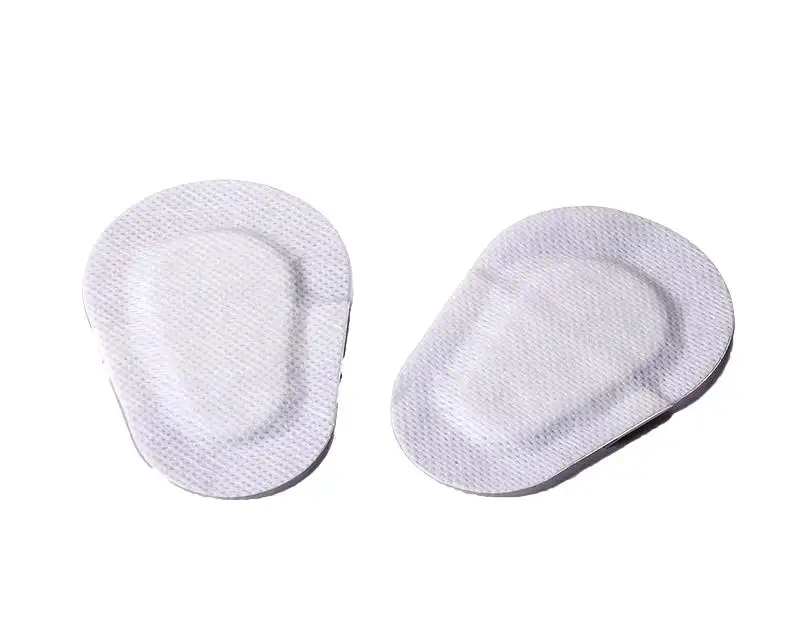
Key Technical Factors to Consider When Evaluating Antimicrobial Dressings
Healthcare buyers and wound care professionals evaluate product performance beyond a single specification.
1. Absorption Performance
Absorption metrics may include:
• Absorption capacity: The total amount of fluid absorbed
• Absorption rate: Speed of fluid removal
• Fluid retention: The ability of the dressing to hold absorbed fluid
A dressing may have a high absorption capacity, but if it loses absorbed fluid, then it still continues leakage and causes skin irritation.
2. Antimicrobial Performance
The performance of antimicrobial dressings is dependent on the:
• Technology
• Release mechanism
• Efficiency of contact with bacteria
• Wound environment
The most common antimicrobial approaches employ:
| Technology | Technical Consideration |
| Silver-based antimicrobial system | Requires controlled release and material compatibility |
| Iodine-based technology | Evaluation of antimicrobial efficacy |
| PHMB-based technology | Focus on bacterial management and biocompatibility |
The antimicrobial component should work in conjunction with the absorbent structure. A dressing that controls bacteria but cannot manage exudate will not provide total management of the wound.
Antimicrobial Dressings Comparison: Different Solutions for Different Needs
Traditional Dressings vs. Antimicrobial Dressings
| Comparison Area | Traditional Dressing | Antimicrobial Dressings |
| Main function | Physical coverage and basic absorption | Antimicrobial protection with fluid management |
| Exudate control | Limited depending on material | Designed for controlled absorption and retention |
| Infection risk management | Mainly barrier protection | Active bacterial control approach |
| Application range | Simple wound protection | Higher-risk wound care applications |
Different Wound Conditions Require Different Antimicrobial Dressings
| Wound Condition | Key Performance Requirement |
| Surgical wound | Sterile protection, gentle adhesion, bacterial control |
| Chronic wound | Long-term moisture balance and exudate management |
| Diabetic foot ulcer | Infection risk control and fluid retention |
| High-exudate wound | Maximum absorption and leakage prevention |
Selecting Antimicrobial Dressings should always begin with wound condition analysis rather than selecting the strongest antimicrobial function.
Manufacturing Quality Behind Reliable Antimicrobial Dressings
For medical distributors and healthcare brands, consistent manufacturing quality is as important as dressing design.
A quality Antimicrobial Dressings producer must manage:
• Selection of medical-grade raw materials
• Consistency of nonwoven materials
• Adhesive uniform coating
• Absorbent layer performance
• Packaging maintain sterility
• Guaranteeing quality consistency across multiple production runs
Greetmed leverages the medical consumables production experience to develop advanced wound care products, including adhesive wound care solutions. With Greetmed, attention to the control of manufacturing materials is further combined with production processes for stable performance of medical consumables aimed for the international healthcare sector.
For adhesive wound care solutions, with Greetmed's production, the following can be offered:
• Medical nonwovens are selected for their softness and breathability.
• Adhesive consistency can be improved for enhanced fixation.
• Absorbent pads can be offered with control over position.
• Packaging solutions that satisfy the requirements of the medical supply chain can be offered.
• Quality checks can be done throughout the production process.
Controls on the manufacturing process ensure performance of Antimicrobial Dressings and other related wound care solutions is consistent across different stages such as storage and shipping as well as when the products are used clinically.
Requirements and Verification of Quality for Antimicrobial Dressings
Before engaging Antimicrobial Dressings suppliers, healthcare institutions must do a review of the supplier's quality systems and technical verification.
| Requirements | Purpose |
| ISO 13485 | Quality management for medical devices |
| ISO 10993 | Biocompatibility of medical devices |
| Sterilization validation | Guarantees the reliability of a sterile product |
| Absorption testing | Determines performance of exudate control |
| Antimicrobial testing | Evaluates the capability of controlling bacteria |
While settling for a reliable producer, quality checks that have been documented are a more important consideration than a product description.
Factors to Consider When Choosing an Antimicrobial Dressings Supplier
The best suppliers offer more than just a finished product. Healthcare companies must review a prospective supplier's offerings on:
• Consistency in manufacturing
• Supply chain management
• Traceability of components
• Ability to manufacture OEM (Original Equipment Manufacturer) or custom products
• Quality assurance
Greetmed, an experienced manufacturer of medical disposables and wound care products, offers dependable solutions for healthcare partners across the world.
Greetmed offers highly sophisticated wound care solutions by combining in-depth knowledge of antimicrobial and absorbent technologies with process automation and manufacturing expertise. For healthcare brands and Antimicrobial Dressings suppliers, Greetmed offers end-to-end manufacturing services.
FAQs
Q1. What wound care products does Greetmed offer?
Greetmed manufactures disposable adhesive wound care products. They value control of the process and raw materials involved in order to maintain quality consistency.
Q2. Does Greetmed manufacture Antimicrobial Dressings for OEM and/ or private label?
Yes. According to customer needs, Greetmed engages in the manufacturing service of medical products. This includes material selection, product design and configuration, meeting the customer's packaging needs, and supporting the manufacturing process.
Q3. What kinds of materials do Greetmed's wound care products use?
Greetmed uses medical-grade materials for products and selects nonwoven fabrics, absorbent pads, adhesives, and protective backing.
Q4. How does Greetmed check the quality of the production of Antimicrobial Dressings?
In order to support the goal of production quality consistency for each lot, Greetmed has established a strict manufacturing control process and has control of incoming materials, process, and finished product.
Q5. Does Greetmed manufacture sterile wound care products?
Greetmed manufactures products that can be used in the medical field and, based on customer specifications, supports the production of sterile products by maintaining a controlled manufacturing process and strategically designed packaging.
Submit Your Request
Recent Posts
Tags
- Adult Diapers
- Are custom medical devices safe
- Baby Diapers
- Can respiratory anesthesia be used
- Digital Healthcare
- Do you offer customized consumables
- European Market
- How do you take care of a skin wound
- Industry Trends
- Lady Sanitary Napkins
- Medical Devices
- OEM Medical Devices
- Product Introductions
- Protective Equipment
- Under Pads
- What are custom-made medical devices
- What are diagnostic products
- What are hospital dressing products
- What are medical tube catheters
- What are some common protective equipment
- What are the appropriate applications for hospital dressing products
- What are the appropriate uses for protective equipment
- What is a gynecological examination
- What is a medical consumable
- What is an anesthesia kit
- What is an OEM in medical devices
- what is an wound skin care
- what is can disposable ultrasonic diagnostic
- What is good manufacturing medical devices
- What is hospital-grade protective equipment
- what is medical equipments hospital furniture
- What is medical sterilization wrapping
- What is rehabilitation equipment device
- What medical consumables do you supply
- Where can I find laboratory consumables wholesale
- where can I find medical protection device
- where to buy hypodermic accessories
- where to buy medical apparel
- where to buy medical consumable accessories
- where to find OEM medical device supplier
- where to find rehabilitation equipment supplier
