



Haemodialyser Explained: How Biocompatibility Cuts Inflammation


Haemodialyser selection is not only about "clearing toxins"—it is also about how gently the device treats blood so inflammation stays low and sessions remain stable. From Greetmed's manufacturing perspective, the best outcomes come from a clear logic: choose a membrane that is biocompatible, control flow and pressure behavior, and match flux to the patient's clinical targets. When these pieces align, you reduce avoidable reactions, protect the dialyser's real-world efficiency, and make daily handling easier for clinical teams.
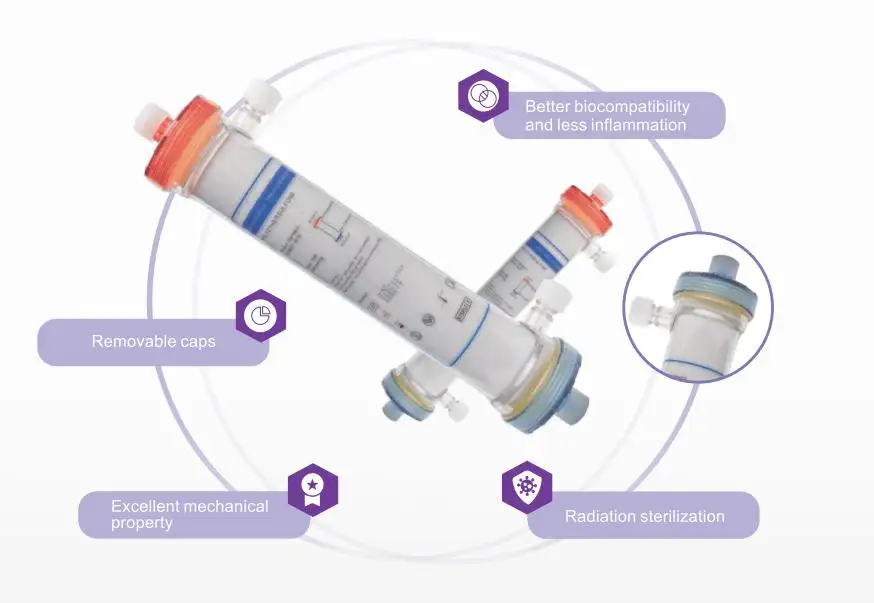
What "Biocompatibility" Really Means in a Haemodialyser
When blood contacts a foreign surface, the body can react. That reaction may show up as inflammation, clotting tendency changes, or discomfort during treatment. In simple terms, a more biocompatible Haemodialyser membrane is designed to reduce unwanted activation at the blood–membrane interface.
For many dialysis centers, "less inflammation" is not an abstract claim. It connects to practical goals that teams track every day: smoother treatments, fewer interruptions, and more predictable performance from first minute to last minute of the session. With polyethersulfone (PES) membranes, a key expectation is stable filtration behavior and a surface chemistry that supports better compatibility in routine clinical use.
At Greetmed, we treat biocompatibility as a manufacturing outcome, not a marketing word. It depends on consistent membrane production, controlled assembly, and stable sterilization—because even a good material can underperform if the process is not repeatable.
Low Flux Vs High Flux: The Practical Difference (And Why It Matters)
Flux is about how easily water passes through the membrane under pressure. In real use, it influences fluid removal control and the ability to clear different solute sizes. A low flux Haemodialyser is typically selected when the goal is steady diffusion-focused clearance with conservative ultrafiltration behavior. A high flux Haemodialyser is often chosen when clinicians want stronger middle-molecule performance and higher permeability under controlled conditions.
Here is a simple way to think about it:
• Low flux: stable baseline clearance, controlled ultrafiltration response
• High flux: higher permeability, broader clearance range under appropriate prescriptions
This is why the same "membrane material" name is not enough. You still need to look at performance data and design parameters that affect handling and safety.
Low Flux (PES) Performance: What the Numbers Teach You
Greetmed's Low Flux PES Haemodialyser series (GT212-A40 / A60 / A80 / A200) is designed for clinical teams that value predictable, repeatable performance. Instead of reading every parameter, focus on a few that translate into real decisions.
1) Ultrafiltration Coefficient (UFR / KUF)
The ultrafiltration coefficient indicates how responsive the dialyser is to pressure-driven water removal. In the GT212-A low flux range, KUF is listed from 18 to 25 ml/(mmHg·h) across models. This helps teams estimate how "aggressive" the dialyser may feel under ultrafiltration targets.
2) Effective Surface Area
Surface area influences exchange capacity. The GT212-A series covers 1.4, 1.6, 1.8, and 2.0 m², giving clinicians a practical sizing ladder for patient needs and prescription styles.
3) Priming Volume
Priming volume matters for blood management and setup. In this series, priming volume is 78–108 mL depending on model size. This is not just a spec; it affects preparation steps and can matter for smaller or sensitive patients.
4) Clearance Under Common Flow Conditions
In vitro clearance data is a reference point for understanding how the design behaves. At higher blood flow conditions (for example, QB=400 mL/min with typical dialysate flow settings listed in the data), urea clearance values in the low flux set reach the high 200s (e.g., up to 295) depending on the model. The "takeaway" is not one number—it is that the model ladder supports step-up capacity as surface area increases.
✅ Practical buyer note: If you are comparing low flux models, start with surface area + priming volume, then confirm the KUF range fits your ultrafiltration plan.
High Flux (PES) Performance: Where Extra Permeability Helps
Greetmed's High Flux PES Haemodialyser series (GT212-H40 / H60 / H80 / H200) is positioned for protocols that benefit from higher permeability and broader solute removal. The performance tables highlight several points that matter in practice.
• Higher clearance capacity at elevated QB
Under the listed in vitro condition set (for example, QB=400 mL/min; QD=500 mL/min; QF=10 mL/min), urea clearance in the high flux models reaches roughly 306–330 across the series. This reinforces the main reason high flux is selected: higher transport capacity when the prescription supports it.
• Middle-molecule signals
High flux data often includes markers beyond urea and creatinine. In the provided tables, β2-microglobulin is included as a reference indicator for middle-molecule performance. This is important because inflammation-related burden is not only about "small toxins." Many clinical teams evaluate high flux options when they want better coverage across molecule sizes.
• Pressure behavior and workflow
Pressure drop affects how the treatment "feels" to the circuit and can impact stability. In the data, pressure drop at QB=300 mL/min is shown below defined limits (e.g., <105 down to <75 depending on model). For teams, that translates into easier operation at planned flows, especially when the full circuit setup is considered.
✅ Practical buyer note: For high flux selection, do not look only at "higher is better." Confirm your center's prescriptions, anticoagulation approach, and monitoring routines match high flux permeability.
Design Details That Improve Handling: Caps, Housing, and Mechanical Strength
Clinical teams do not experience a Haemodialyser as a spreadsheet. They experience it as a device that must be handled safely, primed quickly, and connected without surprises.
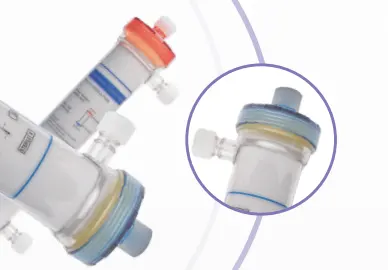
Removable caps are a simple feature with real workflow value. They support cleaner preparation steps, reduce accidental contamination risk during setup, and make pre-connection handling more controlled.
Excellent mechanical property matters because dialysis is repetitive work. Devices are transported, unpacked, installed, and disposed of every day. A strong housing and stable assembly reduce crack risk, leakage risk, and handling stress for nurses and technicians. In our product configuration, PES membrane is paired with polycarbonate housing, and key components are chosen for stable mechanical behavior in routine clinical workflows.
✅ In daily use, these details help teams:
✔ Reduce handling incidents during priming and connection
✔ Maintain stable seals and fit during treatment
✔ Improve consistency across high-volume operations
Sterilization and Safety: Why Gamma Radiation Supports Consistency
Sterilization is not only a regulatory checkbox. It can influence how consistently a device performs lot to lot. Greetmed uses gamma (radiation) sterilization for these Haemodialyser products as part of a controlled manufacturing path.
In procurement discussions, buyers often ask whether sterilization affects membrane performance or material stability. The practical answer is that what matters most is validated process control and clear product labeling. A stable sterilization method supports predictable readiness for clinical use and reduces friction in international supply workflows.
CTA (Call-to-Action)
If you are evaluating a Haemodialyser for a 2026 tender, new clinic setup, or a product line upgrade, contact Greetmed with your target flux (low or high), preferred surface area range (e.g., 1.4–2.0 m²), typical blood flow window (200–400 mL/min), and your priorities (lower inflammation focus, handling convenience, or high flux performance goals). We will suggest an appropriate GT212-A/GT212-H model path, validate protocol-fit KPIs, and provide a straightforward quotation plan built for consistent, scalable supply.
Submit Your Request
Recent Posts

Tags
- Adult Diapers
- Are custom medical devices safe
- Baby Diapers
- Can respiratory anesthesia be used
- Digital Healthcare
- Do you offer customized consumables
- European Market
- How do you take care of a skin wound
- Industry Trends
- Lady Sanitary Napkins
- Medical Devices
- OEM Medical Devices
- Product Introductions
- Protective Equipment
- Under Pads
- What are custom-made medical devices
- What are diagnostic products
- What are hospital dressing products
- What are medical tube catheters
- What are some common protective equipment
- What are the appropriate applications for hospital dressing products
- What are the appropriate uses for protective equipment
- What is a gynecological examination
- What is a medical consumable
- What is an anesthesia kit
- What is an OEM in medical devices
- what is an wound skin care
- what is can disposable ultrasonic diagnostic
- What is good manufacturing medical devices
- What is hospital-grade protective equipment
- what is medical equipments hospital furniture
- What is medical sterilization wrapping
- What is rehabilitation equipment device
- What medical consumables do you supply
- Where can I find laboratory consumables wholesale
- where can I find medical protection device
- where to buy hypodermic accessories
- where to buy medical apparel
- where to buy medical consumable accessories
- where to find OEM medical device supplier
- where to find rehabilitation equipment supplier
