



The Definitive Guide to Choosing a GI Stent Delivery System Manufacturer


Choosing a reliable GI stent delivery system manufacturer is critical for ensuring successful endoscopic procedures and positive patient outcomes in gastroenterology. A Gastrointestinal (GI) stent delivery system is a high-precision instrument used to deploy self-expanding metal stents (SEMS) into obstructed areas of the esophagus, duodenum, or colon. In the high-stakes environment of an endoscopy suite, the performance of the delivery system—its trackability, repositionability, and deployment control—is just as vital as the stent itself.
In my experience working with medical device procurement, the "delivery" part of the equation is often where procedures succeed or fail. I have seen gifted endoscopists struggle with inferior systems that "jump" during deployment or fail to navigate a tight duodenal curve. A top-tier manufacturer doesn't just sell a product; they provide a system engineered for the nuances of human anatomy. This guide will walk you through the essential factors to consider when selecting a manufacturing partner for GI delivery systems.
What is a GI Stent Delivery System and Why Does it Matter?
A GI stent delivery system is a specialized catheter-based device used to transport and deploy a compressed stent into a narrowed gastrointestinal lumen. It consists of an inner core, an outer sheath that holds the stent, and a handle mechanism that allows the clinician to release the stent precisely. The system must be flexible enough to navigate through the working channel of an endoscope while remaining rigid enough to push through a stricture.
The delivery system's reliability prevents complications like stent migration or incomplete expansion. When a doctor is operating "PRN"—or as the situation requires during an emergency—they need a tool that responds instantly. Understanding what PRN means in medical terms reminds us that these devices are often used in life-or-death situations where there is no room for mechanical failure. A high-quality system ensures the stent lands exactly where intended, restoring the patient's ability to eat and function.
How Do You Evaluate the Quality of a GI Stent Delivery System?
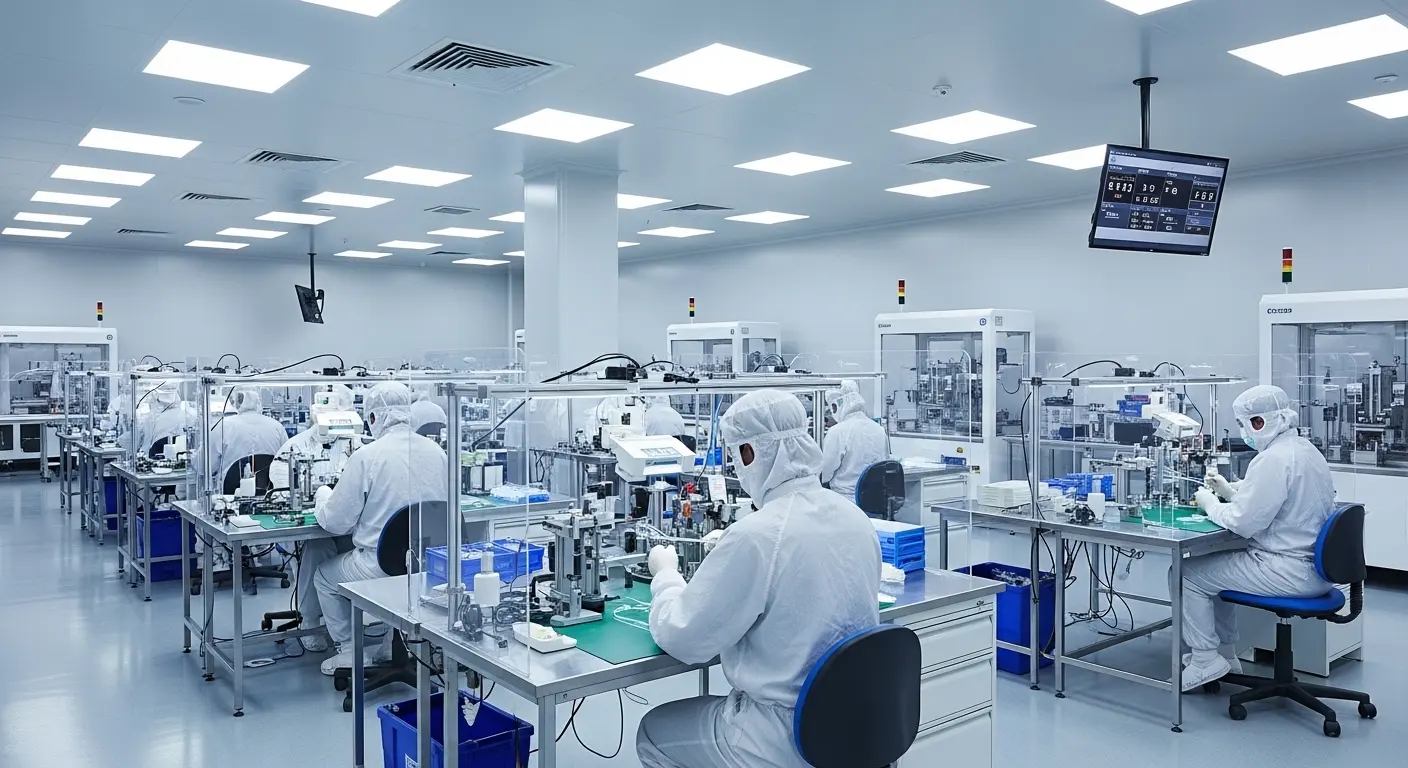
Evaluating quality involves assessing the system’s trackability (how well it follows a guidewire), its radiopacity (visibility under X-ray), and its deployment precision. A high-end manufacturer utilizes multi-lumen extrusion and braided sheath technology to ensure the catheter doesn't kink in the esophagus or colon. The handle should offer tactile feedback, allowing the physician to feel the stent release.
When we evaluate manufacturing facilities, we look for extreme cleanliness. Any microscopic debris inside the delivery sheath can cause the stent to snag during deployment. We often see technicians using a medical cotton swab to clean sensitive components of the assembly die to maintain these standards. A manufacturer that invests in high-level cleanroom environments is more likely to produce a system that operates smoothly in the clinical setting.
Key Performance Metrics for GI Delivery Systems
| Metric | Why it Matters | Clinical Impact |
| Trackability | Navigation through tight turns. | Reduces procedure time. |
| Deployment Control | Prevention of stent "jumping." | Ensures accurate placement. |
| Repositionability | Ability to recapture the stent. | Allows for correction of errors. |
| Kink Resistance | Maintains lumen integrity. | Prevents device failure in the body. |
What are the Main Types of GI Stent Delivery Mechanisms?
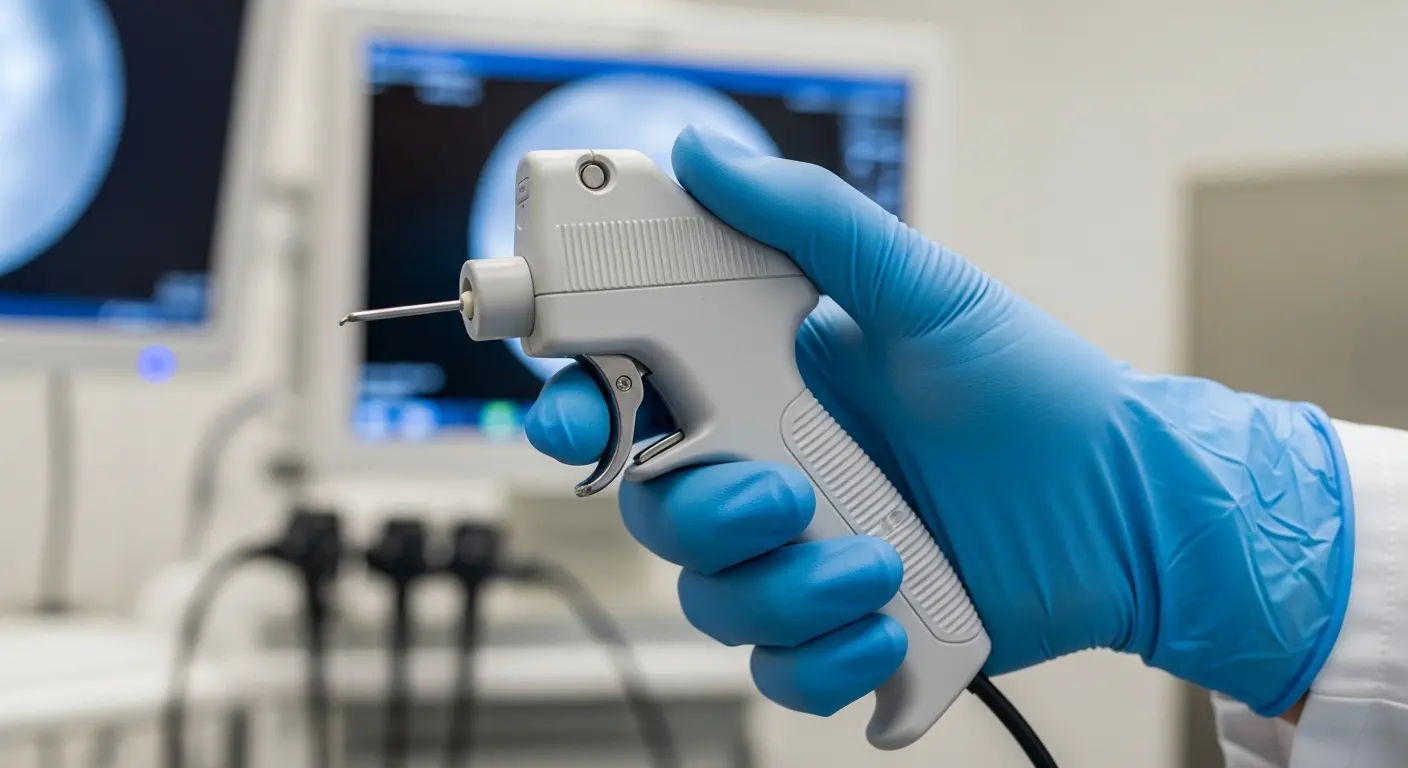
The main types of delivery mechanisms include "Pull-back" systems and "Thumb-slide" or "Trigger-style" handles. Pull-back systems are traditional and rely on the manual retraction of the outer sheath. Thumb-slide and trigger mechanisms offer one-handed operation and more incremental control, which is particularly useful for long esophageal or colonic stents where precise positioning is difficult.
Each mechanism has its learning curve. In my years of clinical education, I've found that one-handed systems are becoming the gold standard for complex biliary or duodenal strictures. If the delivery system is coupled with a medical hypodermic syringe for contrast injection through the side port, the doctor can visualize the stricture in real-time as they deploy. This "integrated" approach is a hallmark of an advanced GI stent delivery system manufacturer.
Why is ISO 13485 Certification Essential for Manufacturers?
ISO 13485 certification is essential because it guarantees that the manufacturer follows a strict quality management system (QMS) specifically for medical devices. This standard ensures every GI stent delivery system is traceable, from the raw polymer used in the sheath to the final sterilization batch. It provides proof that the device has undergone rigorous risk management and validation before reaching the hospital.
For specialized tools like a Malecot catheter or a GI delivery system, consistency is safety. Hospitals and clinics should never partner with a manufacturer that lacks this certification. It is the minimum threshold for ensuring that the devices won't fail due to material impurities or manufacturing shortcuts. The data provided by a certified manufacturer allows procurement teams to verify the "shelf life" and "sterility assurance" of their inventory.
How Does Braided Sheath Technology Improve Stent Delivery?
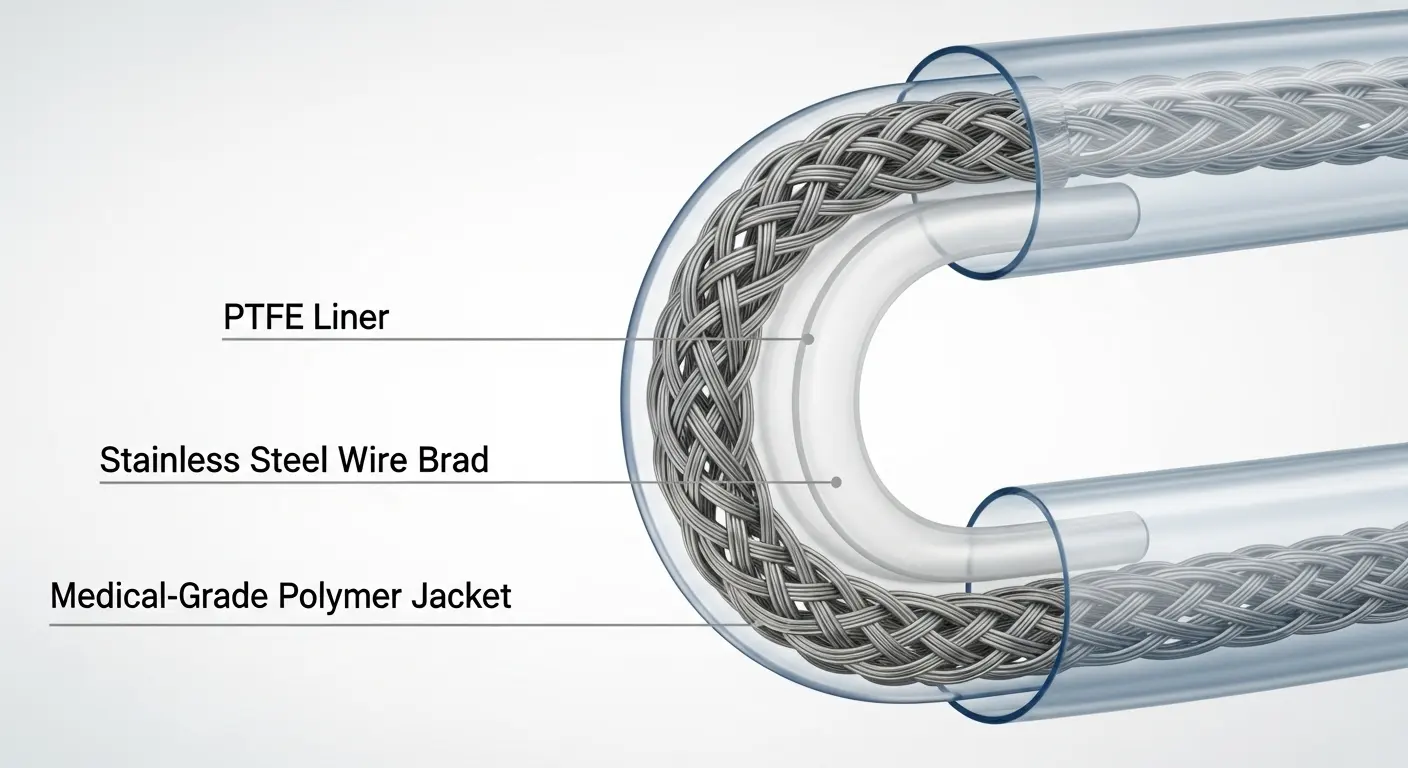
Braided sheath technology improves stent delivery by adding a stainless steel mesh within the catheter wall, providing superior kink resistance and "pushability." In the tortuous anatomy of the colon or the curved path of the duodenum, a standard plastic tube can collapse or "oval." A braided sheath maintains a perfectly circular lumen, ensuring the stent slides out smoothly without catching.
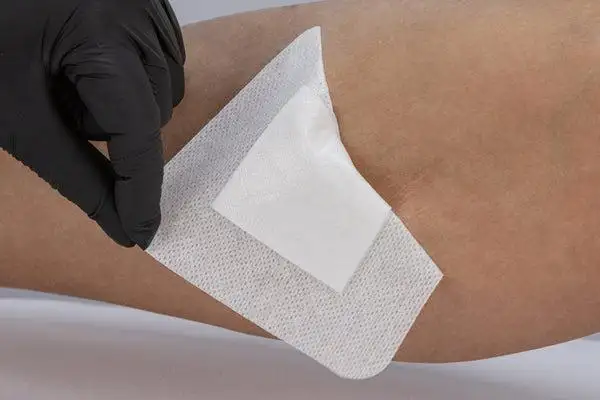
This technology is a differentiator for high-end manufacturers. By reinforcing the delivery catheter, the device can have a thinner wall while maintaining higher strength. This allows for a smaller overall profile (French size), which is easier to pass through the working channel of the endoscope. When surgeons are prepping the site, they use various hospital dressing products to maintain a sterile field, and having a delivery system that works the first time reduces the risk of field contamination during repeated attempts.
What is the Role of Biocompatibility in Stent Delivery Systems?
Biocompatibility ensures that the materials in the delivery system do not cause an inflammatory or toxic reaction when they contact the mucosal lining of the GI tract. Manufacturers must follow ISO 10993 standards to test every component for cytotoxicity, sensitization, and irritation. Even though the delivery system is only inside the body for minutes, any leaching of chemicals could harm the patient.
Expert Insight: Many manufacturers are now moving toward "Phthalate-free" and "Latex-free" materials to accommodate sensitive patients. When you are sourcing, ask for the biocompatibility data sheet for the outer sheath and the lubricant coating. A transparent manufacturer will have these tests on file and ready for audit.
How to Choose the Right GI Stent Delivery System Manufacturer?
Choosing the right manufacturer requires auditing their manufacturing capacity, R&D innovation, and global regulatory compliance (CE/FDA). Look for a partner that offers a "full-system" approach, meaning they design the stent and the delivery system together. This integrated engineering ensures that the two components work in perfect harmony, reducing the risk of stent damage during the compression or deployment phase.
Tip: Always request "validation data" for their deployment force. A reliable manufacturer will have data showing exactly how many Newtons of force are required to release the stent. If the force is too high, the clinician loses control; if it's too low, the stent might deploy prematurely.
What are the Future Trends in GI Stent Delivery?
The future of GI stent delivery includes robotic-assisted deployment and "smart" catheters with integrated sensors. Manufacturers are researching ways to integrate ultrasound or fiber-optic feedback into the delivery system handle. This would allow physicians to "see" through the walls of the GI tract during the procedure, further increasing the accuracy of stent placement in malignant obstructions.
As the industry moves toward more personalized medicine, we may see 3D-printed delivery components that are customized for a specific patient's anatomy. However, the core requirement will always remain the same: a delivery system that is sterile, reliable, and incredibly precise.
Submit Your Request
Recent Posts

Tags
- Adult Diapers
- Are custom medical devices safe
- Baby Diapers
- Can respiratory anesthesia be used
- Digital Healthcare
- Do you offer customized consumables
- European Market
- How do you take care of a skin wound
- Industry Trends
- Lady Sanitary Napkins
- Medical Devices
- OEM Medical Devices
- Product Introductions
- Protective Equipment
- Under Pads
- What are custom-made medical devices
- What are diagnostic products
- What are hospital dressing products
- What are medical tube catheters
- What are some common protective equipment
- What are the appropriate applications for hospital dressing products
- What are the appropriate uses for protective equipment
- What is a gynecological examination
- What is a medical consumable
- What is an anesthesia kit
- What is an OEM in medical devices
- what is an wound skin care
- what is can disposable ultrasonic diagnostic
- What is good manufacturing medical devices
- What is hospital-grade protective equipment
- what is medical equipments hospital furniture
- What is medical sterilization wrapping
- What is rehabilitation equipment device
- What medical consumables do you supply
- Where can I find laboratory consumables wholesale
- where can I find medical protection device
- where to buy hypodermic accessories
- where to buy medical apparel
- where to buy medical consumable accessories
- where to find OEM medical device supplier
- where to find rehabilitation equipment supplier
