



Disposable A.V. Fistula Needle: Rotatable Wing Vs Fixed Wing


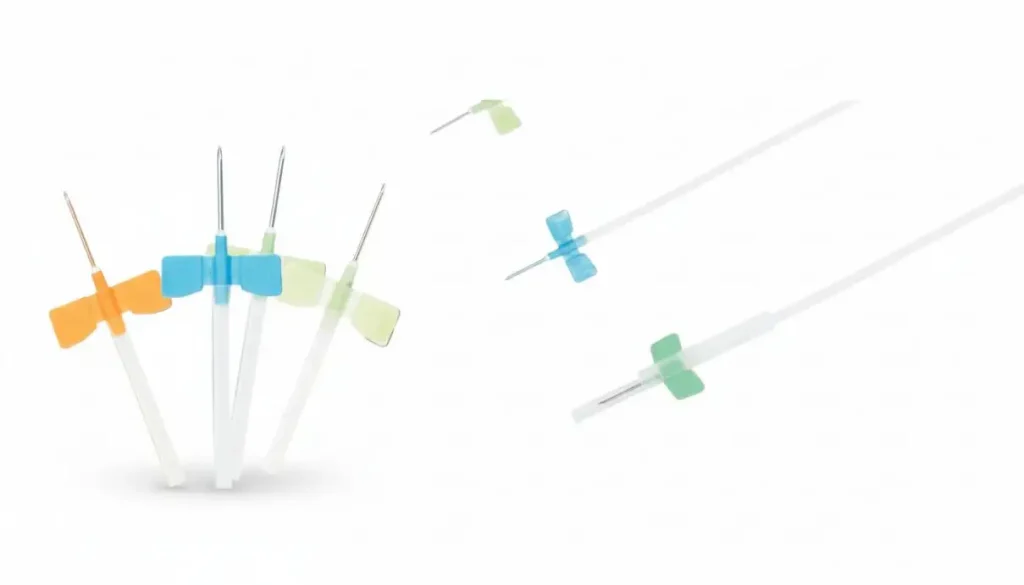
Disposable A.V. Fistula Needle selection is not only about gauge—wing design can quietly decide comfort, handling stability, and whether the puncture angle stays consistent from start to finish. From Greetmed's perspective, rotatable wing vs fixed wing is one of the most practical comparisons a dialysis team or purchaser can learn first, because it connects product structure to daily workflow outcomes.
1) Why Wing Design Matters More Than Many Buyers Expect
A fistula needle is a small device, but the use scenario is demanding. The operator needs a stable grip, a controlled entry angle, and smooth advancement with minimal resistance. The patient needs a predictable experience that reduces sudden pulling or micro-movement during connection and treatment. This is why "wing design" is not just a style choice.
At Greetmed, we treat the wing as a functional interface between the clinician's fingers and the needle tip. The wing influences how the hand positions the needle, how the tubing aligns, and how easily the setup stays stable after puncture. For a procurement team, understanding these differences helps you reduce trial-and-error, shorten evaluation cycles, and standardize the right Disposable A.V. Fistula Needle for your unit.
2) Fixed Wing Disposable A.V. Fistula Needle: Where It Fits Best
A fixed wing Disposable A.V. Fistula Needle keeps the wing orientation constant relative to the needle bevel. That sounds simple, but it creates a strong "repeatability advantage." When clinicians are trained on one consistent hand position, the learning curve can be smoother, and the feel becomes familiar.
Fixed wing types are commonly chosen when the workflow prioritizes stable hand placement and consistent technique. In environments where the tubing is routed the same way most of the time, fixed wing needles are often preferred because the alignment stays dependable. In practical terms, fixed wing offers:
✓ Repeatable hand positioning for stable technique.
✓ Predictable routing during connection.
✓ Simpler standardization across staff.
In our product range, fixed-wing options include common gauges such as 15G, 16G, and 17G, with typical needle lengths like 25±2.0 mm and selectable tube lengths such as 150±2.0 mm or 300±2.0 mm depending on the configuration and packaging format. These are practical sizes many facilities use when balancing handling comfort and setup reach.
3) Rotatable Wing Disposable A.V. Fistula Needle: What It Solves
A rotatable wing Disposable A.V. Fistula Needle is designed so the wing orientation can be adjusted. In real use, this can help when the operator wants a specific hand position while still guiding the tube in a different direction. It also supports cases where patient access positioning is not always identical, and minor adjustments make the setup more comfortable.
Rotatable wing is often selected for flexibility. It gives the clinician more freedom to manage angles and line routing without forcing an awkward wrist position. For some users, that flexibility translates into calmer handling and less "fighting the tubing" during connection.
Practical benefits of rotatable wing types include:
✓ More adaptable hand positioning during puncture and securing.
✓ Flexible tubing direction when space or access angle is constrained.
✓ Better fit for variable patient positioning across different chairs or stations.
Within Greetmed's lineup, rotatable wing options also cover 15G/16G/17G, and you will see configurations such as 32±2.0 mm needle length on certain models, plus common tube lengths like 150±2.0 mm and 300±2.0 mm. In procurement terms, the key message is simple: fixed wing supports standardization, while rotatable wing supports adaptation.
4) The "Smooth Puncture" Foundation: Blade Polish, Thin Wall, and Back Eye
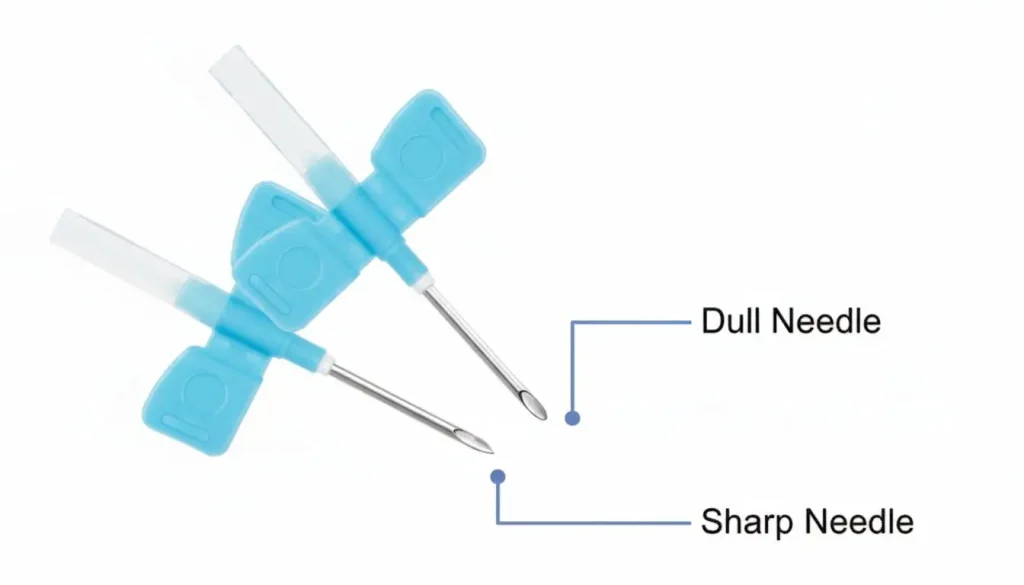
No matter which wing you choose, the needle tip and lumen design still decide whether puncture feels smooth and whether flow is stable. A Disposable A.V. Fistula Needle should reduce resistance at entry and maintain reliable performance once connected.
Greetmed uses a fine polishing process on the blade to support easier, smoother puncture. The purpose is not cosmetic. A refined surface can reduce drag and help the needle advance more predictably, especially when the clinician aims for a controlled, steady motion.
We also offer designs with extra thin wall and a back eye. This structure is commonly selected to support larger blood flow under the same outer gauge category, because internal flow path capacity can improve when wall thickness is optimized. In plain terms, the device is engineered to help achieve the clinical goal—stable flow—without forcing the operator to "push harder" to compensate for design limitations.
This is the part buyers should remember: wing design controls handling and positioning, while tip and lumen details control entry feel and flow efficiency. A good evaluation looks at both.
5) How to Choose in Procurement: A Simple, Practical Checklist
To make a confident choice between rotatable wing and fixed wing, avoid only comparing prices or "what we used before." Instead, tie the Disposable A.V. Fistula Needle structure to your real workflow.
Consider these questions:
✓ Do most patients in your unit sit in similar positions, with consistent access angles? If yes, fixed wing may standardize training.
✓ Do you often adjust tubing direction because of station layout, arm position, or staff preference? If yes, rotatable wing may reduce setup friction.
✓ Do you need a more compact feel, or do you prefer a longer needle option? Some models use 25±2.0 mm, while others use 32±2.0 mm.
✓ What tube reach is practical for your chair layout—150±2.0 mm or 300±2.0 mm?
A final note: gauge is important, but many buyers treat it as the only decision point. In practice, 15G/16G/17G can each be successful, as long as the wing style, needle length, and tube length match the routine of your clinical environment.
6) Greetmed Supply Options and CTA: Standardize Faster With the Right Samples
Greetmed provides fixed wing, rotatable wing, and safety type Disposable A.V. Fistula Needle options so facilities can match product structure to clinical preference and procurement needs. Single-pack and twin-pack formats are available across multiple codes, making trials easier and inventory planning simpler for distributors and hospitals.
CTA (Call-to-Action)
For Disposable A.V. Fistula Needle sourcing, contact Greetmed with gauge (15G/16G/17G), wing type (rotatable/fixed), needle length (25±2.0 mm or 32±2.0 mm), and tube length (150±2.0 mm or 300±2.0 mm). We will recommend the right configuration to test and scale. As the manufacturer, we will confirm the matching product codes, recommend a practical sampling set, and support your selection so the final configuration is easy to train, easy to stock, and easy to standardize.
Submit Your Request
Recent Posts

Tags
- Adult Diapers
- Are custom medical devices safe
- Baby Diapers
- Can respiratory anesthesia be used
- Digital Healthcare
- Do you offer customized consumables
- European Market
- How do you take care of a skin wound
- Industry Trends
- Lady Sanitary Napkins
- Medical Devices
- OEM Medical Devices
- Product Introductions
- Protective Equipment
- Under Pads
- What are custom-made medical devices
- What are diagnostic products
- What are hospital dressing products
- What are medical tube catheters
- What are some common protective equipment
- What are the appropriate applications for hospital dressing products
- What are the appropriate uses for protective equipment
- What is a gynecological examination
- What is a medical consumable
- What is an anesthesia kit
- What is an OEM in medical devices
- what is an wound skin care
- what is can disposable ultrasonic diagnostic
- What is good manufacturing medical devices
- What is hospital-grade protective equipment
- what is medical equipments hospital furniture
- What is medical sterilization wrapping
- What is rehabilitation equipment device
- What medical consumables do you supply
- Where can I find laboratory consumables wholesale
- where can I find medical protection device
- where to buy hypodermic accessories
- where to buy medical apparel
- where to buy medical consumable accessories
- where to find OEM medical device supplier
- where to find rehabilitation equipment supplier
