



FEP Heat Shrink Tubing Medical: The Ultimate Guide


Why do some catheters glide effortlessly through complex vascular pathways while others struggle with friction or structural integrity? The secret often lies in a thin, transparent layer of FEP heat shrink tubing medical grade material. If you’re an R&D engineer or a procurement manager, you know that the "reflow" process is where the magic happens. It’s the stage where disparate layers of a medical device become a single, high-performance tool.
FEP, or Fluorinated Ethylene Propylene, is the unsung hero of this manufacturing phase. It’s not just a plastic sleeve; it’s a precision-engineered processing aid. It allows you to bond jackets to braids and liners without damaging the sensitive components beneath. At Greetmed, we’ve seen how choosing the right shrink ratio can be the difference between a successful prototype and a costly manufacturing failure.
What Exactly is Medical-Grade FEP Heat Shrink Tubing?
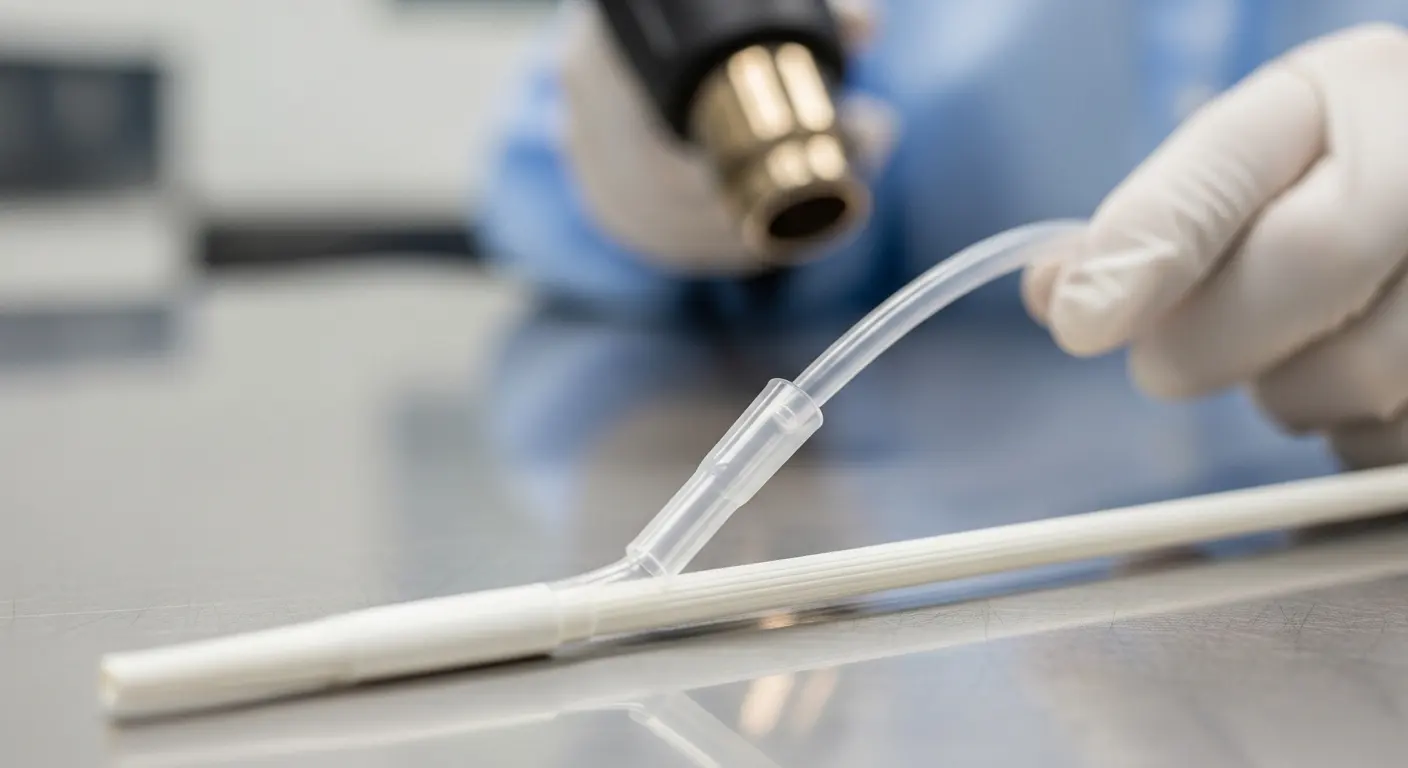
FEP heat shrink tubing is a biocompatible fluoropolymer that shrinks when you apply heat. Unlike industrial versions, the medical-grade variety must meet strict standards. We’re talking about USP Class VI compliance and ISO 13485 quality management. It’s designed to be ultra-clean, consistent, and reliable.
Because FEP has a lower melting point than other fluoropolymers like PTFE, it’s ideal for medical applications. You can shrink it at temperatures around 210°C (410°F). This temperature is high enough to bond materials but low enough to protect most catheter sub-assemblies. Furthermore, its optical clarity is a massive plus. You can see exactly what’s happening during the reflow process, which helps you catch defects early.
Many of our partners use this tubing alongside our medical tube catheters to ensure a smooth, lubricious outer surface. It’s all about creating a device that performs predictably in a clinical setting.
Why FEP is the "Gold Standard" for Medical Devices
You might wonder why FEP wins over other materials. The answer lies in its unique balance of properties. It’s not just about shrinking; it’s about how it behaves after the heat is gone.
1. Superior Biocompatibility
In the medical world, safety is everything. FEP is chemically inert. It doesn't react with body fluids or medications. This makes it perfect for long-term contact devices. It meets the rigorous requirements for surgical consumables wholesale standards, ensuring that every batch is safe for patient use.
2. Low Coefficient of Friction
FEP is incredibly "slippery." This lubricity is vital for catheters that need to navigate through tight arteries. Instead of sticking to the vessel walls, the FEP surface allows the device to move smoothly. This reduces trauma to the patient and makes the clinician’s job much easier.
3. Excellent Chemical Resistance
Medical devices undergo harsh sterilization processes. Whether you use Ethylene Oxide (EtO) or autoclaving, FEP holds up. It doesn’t degrade or become brittle when exposed to cleaning agents or bodily chemicals. This durability is why it's often used to protect delicate sensors in devices like a malecot catheter.
Understanding Shrink Ratios: 1.3:1 vs. 1.6:1
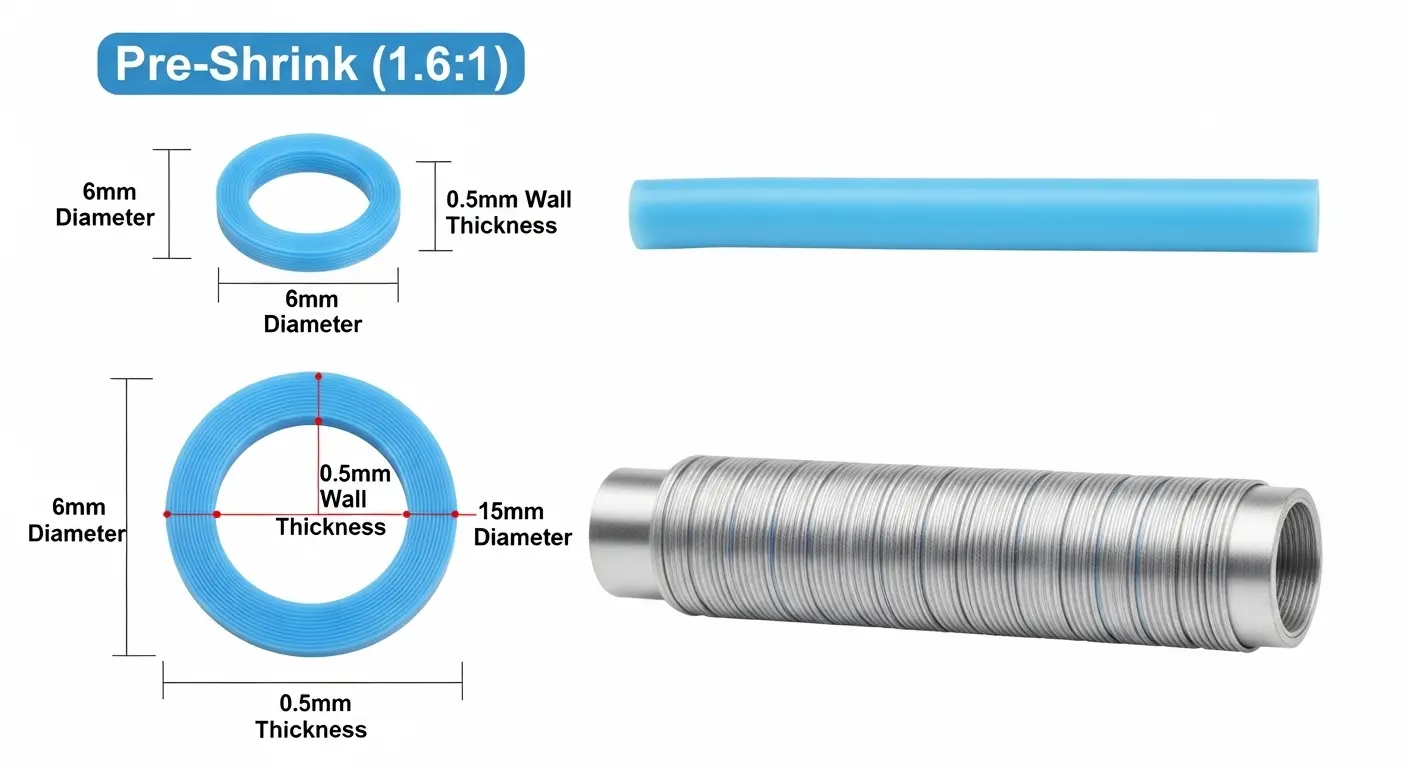
When you're sourcing FEP heat shrink tubing medical supplies, the shrink ratio is your most important metric. This ratio tells you how much the tubing will contract when heated.
- 1.3:1 Ratio: This is the standard choice. It’s great for basic encapsulation where the diameter change isn't extreme. It provides a tight, uniform fit over straight mandrels.
- 1.6:1 Ratio: This higher ratio is better for irregular shapes. If your catheter has varied diameters or transitions, the 1.6:1 ratio will "hug" those curves more effectively.
Choosing the wrong ratio can lead to "wrinkling" or longitudinal shrinkage. You don’t want your tubing to get shorter; you want it to get tighter. That’s why we focus on precision extrusion to keep longitudinal change below 5%.
The Role of FEP in Catheter Reflow Processing
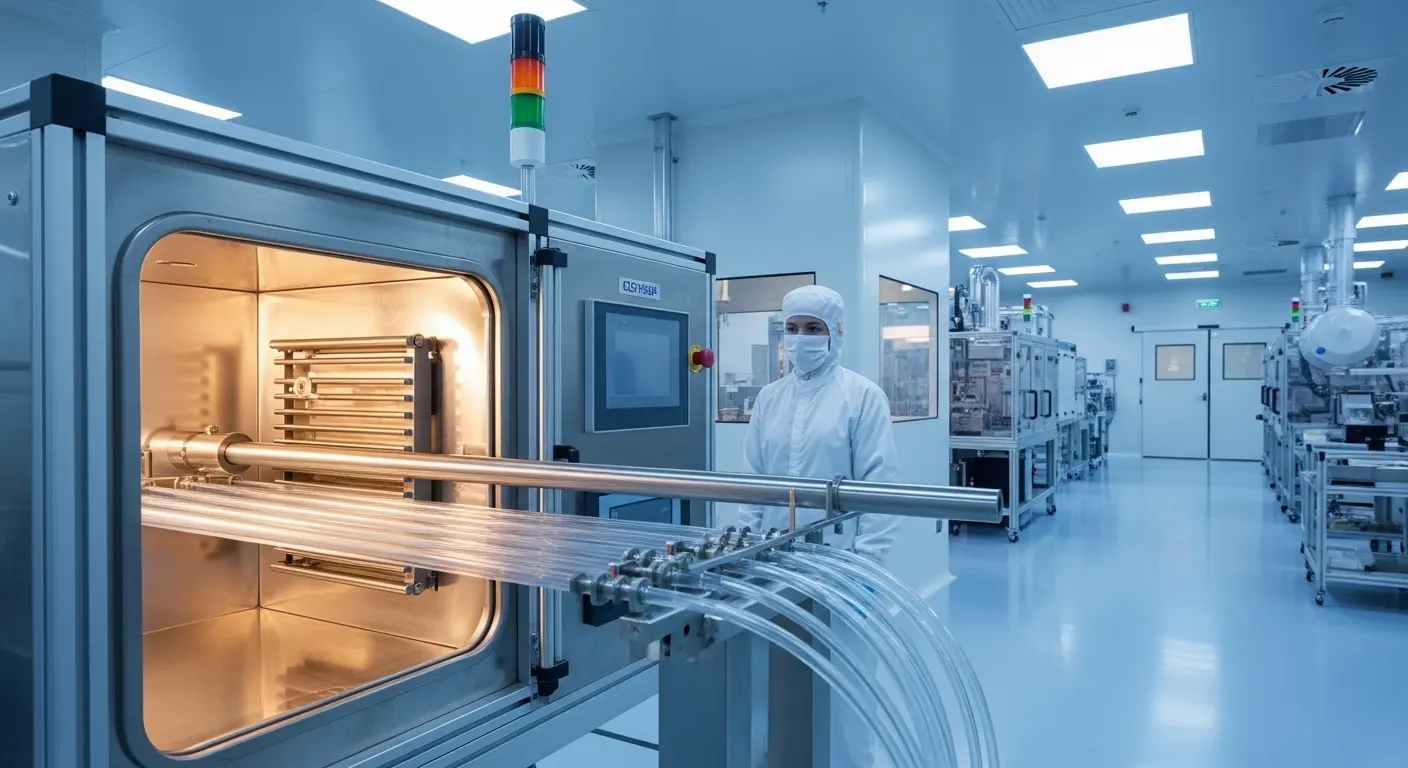
If you work in a cleanroom, you’ve seen the reflow oven in action. The FEP heat shrink acts as a temporary mold. You slide the FEP sleeve over your catheter assembly (which might include a PTFE liner, a stainless steel braid, and a polymer jacket).
As the heat rises, the FEP shrinks. It applies uniform radial pressure. This pressure forces the outer jacket material to melt and flow into the gaps of the braid, bonding it to the inner liner. Consequently, you get a multi-layered tube that is thin-walled yet incredibly strong.
After the assembly cools, you peel the FEP off. It’s a "sacrificial" layer. Because FEP is so non-stick, it peels away cleanly without leaving residue. For more complex designs, manufacturers often turn to multi-lumen tubing to manage several fluid paths within this bonded structure.
FEP vs. PTFE: Which One Do You Need?
This is a common question in our industry. Both are fluoropolymers, but they serve different roles.
FEP (Fluorinated Ethylene Propylene):
- Lower Shrink Temp: ~210°C.
- Clarity: Very transparent.
- Flexibility: More flexible than PTFE.
- Best for: Outer processing sleeves and reflow.
PTFE (Polytetrafluoroethylene):
- Higher Shrink Temp: ~325°C.
- Clarity: Milky white/opaque.
- Lubricity: Slightly higher than FEP.
- Best for: Inner liners that never get removed.
Usually, you’ll use a PTFE liner on the inside for maximum slipperiness and an FEP heat shrink on the outside to build the device. They work as a team to create the perfect medical tube.
Critical Specifications for Engineers
When you're comparing suppliers, don't just look at the price. You need to dive into the technical data sheet. Here are the "must-have" specs:
- Recovered ID (Inner Diameter): The diameter after the tube has fully shrunk. It must be slightly smaller than your catheter’s OD.
- Expanded ID: The diameter as shipped. It must be large enough to slide over your assembly easily.
- Wall Thickness: After shrinking, the wall will thicken. You need to account for this if you are using the FEP as a permanent layer.
- Dielectric Strength: If your device uses electricity (like an electrosurgical tool), high dielectric strength is non-negotiable for insulation.
Navigating the Supply Chain for Medical Tubing
Global logistics can be a headache. We know that R&D timelines are tight. If you’re waiting six weeks for a roll of tubing, your project is in trouble. That’s why we emphasize efficient manufacturing and fast shipping from our Chinese facilities.
By balancing high-quality extrusion with a streamlined supply chain, we help you move from prototype to mass production faster. It isn't just about the material; it’s about having a partner who understands the urgency of medical device manufacturing.
Tips for Successful Heat Shrinking
Even the best FEP heat shrink tubing medical grade material can fail if the process is wrong. Here’s how to avoid common pitfalls:
- Uniform Heat: Use a vertical shrinker or a controlled heat tunnel. Hot air guns are okay for prototypes but often cause uneven shrinking.
- Start from the Middle: If you’re shrinking a long section, start in the center and work your way out to the ends. This helps prevent air bubbles.
- Watch the Temperature: If you go too hot, you might melt your jacket material or cause the FEP to become brittle. Stay within the 200°C to 220°C range.
Common Questions (FAQ)
What is the shelf life of FEP heat shrink tubing?
FEP is incredibly stable. It doesn't degrade over time like some elastomers. As long as you store it in a cool, dry place away from direct UV light, it can last for many years. However, most medical companies follow a 5-year shelf life policy for regulatory peace of mind.
Can FEP heat shrink be sterilized?
Yes. It is compatible with EtO, Gamma radiation, and Steam Autoclave. This is why it’s so popular for surgical tools and reusable medical devices.
Is FEP heat shrink the same as "Teflon" shrink?
"Teflon" is a brand name owned by Chemours. While FEP is a type of Teflon, there are other types like PTFE and PFA. Always specify "FEP" to ensure you get the lower shrink temperature and transparency you need.
How do I choose the right size?
Always pick an expanded ID that is at least 20% larger than your part. Then, ensure the recovered ID is at least 10% smaller than your part. This "rule of thumb" ensures a tight, professional fit every time.
Why Quality Control Matters
At Greetmed, we don’t just ship rolls of plastic. We use laser micrometers to monitor wall thickness in real-time. We perform "shrink testing" on every batch to ensure the ratios are exact. When you are building a device that goes into a human body, "close enough" isn't an option.
We align our processes with the same rigor used for hypodermic syringes and other critical consumables. Our goal is to provide a component that is so consistent you never have to think about it.
Ready to Elevate Your Medical Device Design?
Choosing the right FEP heat shrink tubing medical supplier is a strategic decision. You need a material that performs under pressure and a partner that can scale with you. Whether you are working on a revolutionary new cardiovascular catheter or a simple protective sleeve for a surgical tool, we have the technical expertise to help.
Don’t let a sub-par sleeve ruin your reflow process. Reach out to our technical team today to request samples or a custom quote. Let’s build something that improves patient outcomes together.
Submit Your Request
Recent Posts

Tags
- Adult Diapers
- Are custom medical devices safe
- Baby Diapers
- Can respiratory anesthesia be used
- Digital Healthcare
- Do you offer customized consumables
- European Market
- How do you take care of a skin wound
- Industry Trends
- Lady Sanitary Napkins
- Medical Devices
- OEM Medical Devices
- Product Introductions
- Protective Equipment
- Under Pads
- What are custom-made medical devices
- What are diagnostic products
- What are hospital dressing products
- What are medical tube catheters
- What are some common protective equipment
- What are the appropriate applications for hospital dressing products
- What are the appropriate uses for protective equipment
- What is a gynecological examination
- What is a medical consumable
- What is an anesthesia kit
- What is an OEM in medical devices
- what is an wound skin care
- what is can disposable ultrasonic diagnostic
- What is good manufacturing medical devices
- What is hospital-grade protective equipment
- what is medical equipments hospital furniture
- What is medical sterilization wrapping
- What is rehabilitation equipment device
- What medical consumables do you supply
- Where can I find laboratory consumables wholesale
- where can I find medical protection device
- where to buy hypodermic accessories
- where to buy medical apparel
- where to buy medical consumable accessories
- where to find OEM medical device supplier
- where to find rehabilitation equipment supplier
