



How Disposable Heated Breathing Circuit Reduces Bacterial Risk? 2026 Manufacturer Guide


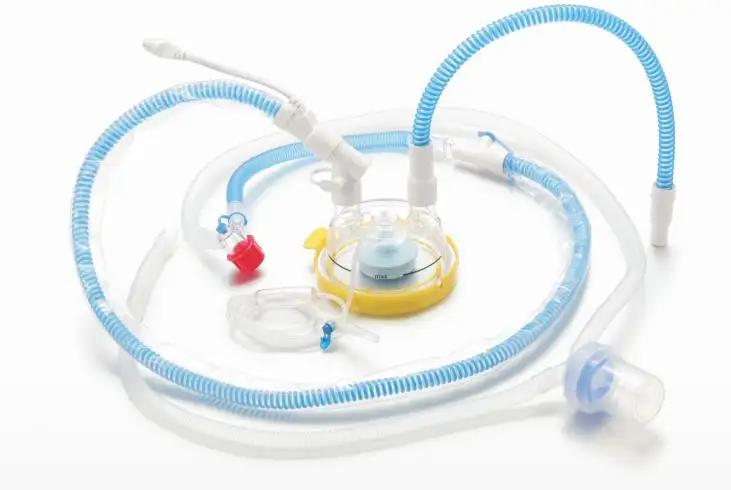
The Disposable Heated Breathing Circuit solutions from Manufacturer Greetmed are designed to keep humidity under control while maintaining stable airflow, and that is one of the most practical ways to reduce bacterial risk in ventilated breathing pathways.
Why Condensation Is the Real Risk Signal in 2026
In respiratory care, moisture is not always the enemy. Humidification is often necessary for airway comfort and secretion management. The real risk begins when warm, humid gas cools inside the circuit and turns into condensate. Once water collects in low points, it can become a place where microbes may grow, and it can also be pushed or “splashed” toward the patient during movement or suction events.
From a manufacturing perspective at Greetmed, the point of a heated circuit is not just “heat.” It is heat control that keeps the internal environment stable. In 2026, clinicians and procurement teams increasingly evaluate circuits by asking a simple question: Does this design minimize condensation without creating new flow resistance or handling problems? A Disposable Heated Breathing Circuit Manufacturer should be able to explain how the heating method, airflow path, and anti-kink structure work together as one system.
How Even Heating Helps Reduce Bacterial Growth Pathways
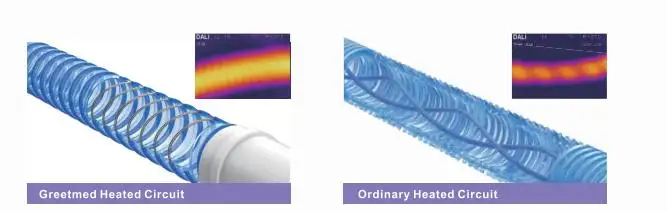
Condensation often forms when heating is uneven. A circuit can feel “warm,” but still develop cold zones where water builds up. Greetmed uses an embedded external wrapping heating wire approach so the tube can be heated evenly, which supports minimal condensation along the length of the inspiratory pathway.
When condensation is reduced, bacterial risk is reduced in a very practical way: fewer water pools means fewer stable places for microorganisms to multiply. This is not theoretical. It shows up in daily workflow as fewer water-management interruptions, fewer moments of circuit disconnection, and less handling around trapped moisture.
A simple way to teach the mechanism is to think of the circuit as a temperature corridor:
•Stable temperature along the tube → less cooling → less liquid water
•Less liquid water → less microbial-friendly habitat
•Less water movement → less chance of water reaching the patient side
A Disposable Heated Breathing Circuit Manufacturer should also consider how heating interacts with connectors and elbows. If a system includes multiple components, the goal is to reduce sharp temperature transitions that can trigger localized condensation.
Lower Air Resistance: Why It Matters for Patient Comfort and System Stability
A common mistake is to assume “heated” automatically means “higher resistance.” In practice, resistance depends on the full structure: tube profile, corrugation design, and the way heating is integrated. Compared with ordinary heated circuits, the design goal described here is lower air resistance, supporting smoother breathing for patients.
For clinicians, this matters because lower resistance can support more stable ventilation delivery, especially when settings are sensitive to pressure changes across the circuit. For buyers and distributors, the value is that performance is easier to explain and validate: a circuit that manages moisture but does not add unnecessary resistance helps reduce troubleshooting time in clinical use.
Here is what “lower resistance” can translate into at the user level:
•More predictable pressure/flow behavior across the breathing pathway
•Less “fighting the circuit” feeling in assisted breathing scenarios
•Fewer workflow disruptions caused by resistance-related alarms or adjustments (application dependent)
As a Disposable Heated Breathing Circuit Manufacturer, Greetmed focuses on making these advantages understandable for procurement teams. The best product is the one that supports patient comfort while remaining easy to integrate into existing ventilator workflows.
Anti-Kink Reinforcement: The Hidden Factor in Infection Control
Many infection-control discussions focus on microbes, but ignore handling. In real clinical environments, circuits are moved, repositioned, and stored. Twisting and kinking do not just affect airflow. They also affect where water collects and how often staff need to intervene.
Greetmed reinforces tube resistance to twisting, making the circuit flexible, resilient, and easier to store. This sounds like a “convenience” feature, but it has a safety logic behind it: fewer kinks and fewer collapses mean fewer unexpected low points where condensate can accumulate, and fewer urgent moments where staff must adjust the circuit quickly.
This is especially relevant in transport within facilities, bed turns, and patient repositioning. A circuit that holds its shape reduces avoidable handling and supports a cleaner, calmer workflow.
•Better shape retention helps maintain a smoother gas path
•Reduced kinking helps avoid sudden condensation pooling in collapsed areas
•Easier storage reduces damage risk and supports consistent setup quality
For many buyers in 2026, anti-kink performance is part of “total cost of use.” Less interruption often means less labor spent correcting preventable circuit issues.
Product Configuration Basics: Choosing Adult vs Neonatal Sets
A practical 2026 Manufacturer Guide should not overwhelm readers with every catalog detail. Instead, it should teach selection logic. The intended use is consistent across configurations: connecting the airway between a ventilator and a mask or endotracheal tube, while heating the gas inside the breathing tube to prevent condensation. What changes is the patient group, the tube set design, and accessory needs.
Greetmed provides adult and neonatal options with clear kit structures. For example, many sets are built around a 1.6 m heated inspiratory tube (with connector), combined with additional circuit components based on the scenario.
Examples of common configurations readers may see in procurement lists:
•GT210-SH21006 (Adult): includes a 1.6 m heated inspiratory tube, a 1.6 m corrugated breathing circuit with water trap, a 0.5 m limb, plus common connectors and a heating wire cable. Optional parts may include a hook, clip, and 90° elbow.
•GT210-SH00006 (Neonatal): includes a 1.6 m neonatal heated inspiratory tube, a 1.6 m neonatal corrugated circuit with water trap, a 0.5 m neonatal limb, plus connectors and heating wire cable. Optional parts may include a neonatal straight connector and a pressure measuring tube.
•GT210-DH21006 (Adult, Dual Heated): includes both a 1.6 m heated inspiratory tube and a 1.6 m heated expiratory tube, plus connectors and cable, for applications where heating is needed on both limbs.
If you are new to heated circuits, use a simple decision path:
•Adult vs neonatal first (patient group and connector ecosystem)
•Single heated vs dual heated next (application preference and workflow)
•Accessory needs last (humidification chamber option, elbows, hooks/clips, pressure line needs)
A Disposable Heated Breathing Circuit Manufacturer should be able to map each code to an easy “what's inside the kit” explanation, so purchasing teams can compare apples to apples.
CTA: How to Evaluate a Disposable Heated Breathing Circuit in Your Project
If you are sourcing from a Disposable Heated Breathing Circuit Manufacturer for a 2026 project, focus your evaluation on moisture control, airflow behavior, and handling stability—not just whether the circuit is “heated.”
At Greetmed, we recommend sharing three practical details so we can guide you to the right configuration:
•Patient group (adult or neonatal) and typical airway interface (mask or ETT)
•Whether you prefer single heated or dual heated limb design
•Your workflow priorities: minimal condensation, low resistance, anti-kink handling, storage, and accessory requirements
Contact Greetmed with your target product code range (e.g., GT210-SH series or GT210-DH series), your use scenario, and your preferred kit components. We will recommend a suitable configuration, clarify which accessories are optional, and provide a procurement-ready specification pathway that supports safer, smoother ventilation workflows in 2026.
Submit Your Request
Recent Posts

Tags
- Adult Diapers
- Are custom medical devices safe
- Baby Diapers
- Can respiratory anesthesia be used
- Digital Healthcare
- Do you offer customized consumables
- European Market
- How do you take care of a skin wound
- Industry Trends
- Lady Sanitary Napkins
- Medical Devices
- OEM Medical Devices
- Product Introductions
- Protective Equipment
- Under Pads
- What are custom-made medical devices
- What are diagnostic products
- What are hospital dressing products
- What are medical tube catheters
- What are some common protective equipment
- What are the appropriate applications for hospital dressing products
- What are the appropriate uses for protective equipment
- What is a gynecological examination
- What is a medical consumable
- What is an anesthesia kit
- What is an OEM in medical devices
- what is an wound skin care
- what is can disposable ultrasonic diagnostic
- What is good manufacturing medical devices
- What is hospital-grade protective equipment
- what is medical equipments hospital furniture
- What is medical sterilization wrapping
- What is rehabilitation equipment device
- What medical consumables do you supply
- Where can I find laboratory consumables wholesale
- where can I find medical protection device
- where to buy hypodermic accessories
- where to buy medical apparel
- where to buy medical consumable accessories
- where to find OEM medical device supplier
- where to find rehabilitation equipment supplier
