



Closed Suction Catheters: Suction Without Disconnecting The Ventilator


Closed Suction Catheters are designed to remove airway secretions without disconnecting the ventilator circuit, so clinicians can clear the airway while keeping ventilation continuous and more predictable. In ICU reality, suction is not a rare task. It is repeated, time-sensitive, and often performed when a patient is already fragile. That is why "suction without disconnecting" is not just a feature—it reshapes workflow, reduces avoidable instability, and helps teams standardize respiratory care steps.
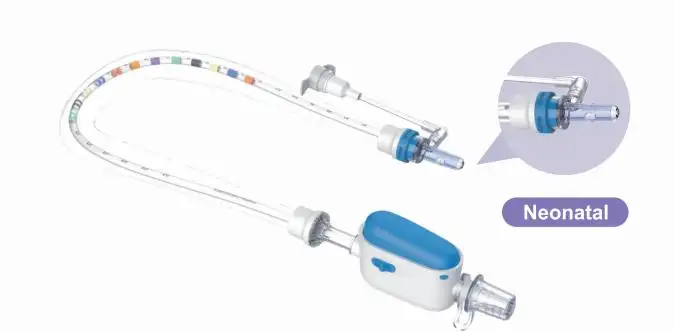
From Greetmed's manufacturer perspective, Closed Suction Catheters exist to make a high-frequency bedside procedure safer, calmer, and easier to repeat across shifts. The goal is not to claim suction has no impact. The goal is to remove secretions while reducing the unnecessary swings created by circuit breaks, sudden pressure loss, and repeated handling.
Why "Suction Without Disconnecting" Changes ICU Workflow
Secretion buildup is more than discomfort. Thick sputum, mucus plugs, or vomit-related material can narrow the airway and raise resistance. Even when the ventilator settings do not change, the patient's work of breathing can increase because airflow is no longer smooth. Clinically, the objective is straightforward: keep the airway open so ventilation stays effective and patient response stays readable.
Traditional open suction often requires breaking the ventilator circuit. That short disconnection can lead to a drop in pressure support and loss of stability, especially in patients who rely on consistent support. It can also create a moment where the system becomes less controlled—more alarms, more rushing, and more "fixing" after the suction event.
Closed Suction Catheters keep the circuit intact. That shifts suction from a ventilation interruption into a controlled procedure. It also supports a more repeatable workflow: the technique becomes easier to standardize, and the bedside team can focus on the patient rather than on reconnecting and re-stabilizing the system.
What Closed Suction Catheters Are Intended to Do
Closed Suction Catheters are mainly used to remove airway secretions, thick mucus, or vomit-related material through an endotracheal or tracheostomy tube. The target outcome is not simply "cleaning the tube." The real purpose is preventing obstruction and keeping airflow as unobstructed as possible.
When the airway is clearer:
• Airway resistance can drop
• Ventilation delivery becomes more consistent
• Clinicians can observe patient response with fewer circuit-related variables
This is also why Closed Suction Catheters are commonly used when suctioning is repeated. A closed pathway supports repeated suction with less circuit disturbance. In day-to-day ICU operations, that can streamline routines and reduce the number of open suction items consumed across multiple suction events, which may help limit waste and keep supply use more predictable.
The Practical Clinical Benefit: Protecting PEEP and Oxygen Stability
In ventilated patients, stability often matters as much as peak performance. Because suction can be performed without disconnecting the ventilator, Closed Suction Catheters can help maintain positive end-expiratory pressure (PEEP) during suction events. At the bedside, stable PEEP supports alveolar recruitment and gas exchange. If PEEP drops suddenly, some patients respond with oxygen desaturation or increased respiratory stress.
Closed suction is also used to support more stable oxygen saturation during suctioning. No suction method is "zero impact," because suction itself can temporarily change airway dynamics. But keeping the circuit closed can reduce avoidable swings that come from breaking the ventilator connection.
From a procurement point of view, this benefit is simple to translate: fewer circuit breaks can mean fewer instability episodes to manage. That can reduce workload under pressure and support more consistent outcomes in patients who are sensitive to interruption.
Key Components in a Modern Closed Suction System (Greetmed View)
Not all Closed Suction Catheters feel the same in real handling. Buyers should look beyond the label and evaluate the parts that affect safety, visibility, and routine usability. At Greetmed, several design choices are made to turn clinical intent into practical bedside control.
• Highly Transparent TPU Protective Sleeve
The protective sleeve is more than a barrier. High transparency supports observation during handling, while the sleeve itself reduces direct contact between staff and secretions. In frequent suction scenarios, that small improvement can raise confidence and reduce exposure anxiety for the bedside team.
• Softened Catheter Tip
A softened tip is used to reduce the risk of tracheal mucosa injury. This matters most when suction is repeated over long ventilator courses. The catheter should make safe suction easier—not make staff hesitate because the tip feels too aggressive.
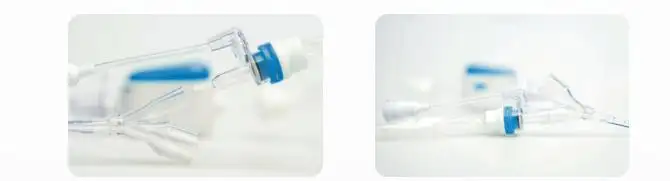
• Insertion Depth Scale Line
A visible scale line gives teams a shared reference point for insertion depth. That matters in real ICUs, where different people suction the same patient across shifts. The scale helps keep technique consistent and reduces the risk of suctioning too shallow or too deep.
• MDI Port (120) for Integrated Access
An MDI port (120) adds a practical access point that helps integrate care steps into the circuit, keeping handling simpler and more controlled. In procurement terms, integrated access points can reduce ad-hoc circuit handling and help keep respiratory care setups more organized, especially in high-acuity environments.
Design Details That Improve Handling and Reduce Failure Modes
Closed suction should be understood as a system. Minor mechanical decisions can influence whether it stays smooth during repositioning, transport, or urgent bedside interventions.
- Double Swivel Elbow for Circuit Mobility
A double swivel elbow helps facilitate rotation and reduces the chance of circuit kinking or damage. Kinks are not just inconvenient. They can affect flow delivery and trigger alarms at the worst time—during turning, transport, or when multiple procedures happen around the airway. Circuit mobility supports smoother care and fewer interruptions.
- Ergonomic Valve Geometry for Smoother Operation
Valve design affects control and resistance. An ergonomic valve with a 120° angle is used to help reduce resistance and support smoother operation. In practice, that means clinicians can activate suction with less effort and get a more predictable response.
Operational safety details also support safer use in busy units:
• Large Press Switch for comfortable operation
• Recognizable Locking Device to reduce accidental opening
These are not "marketing extras." They are features that help reduce unintended circuit events and user errors when staff are moving quickly, managing alarms, or working under high patient load.
Infection Exposure Control and Staff Protection in Daily Use
Closed Suction Catheters are often selected not only for ventilation stability, but also for exposure control. When secretions are managed inside a closed pathway, staff may face less direct contact risk during suction events. This matters in routine care, and it matters even more during outbreak periods or staffing pressure.
From a system perspective, limiting circuit breaks can also reduce environmental exposure during suctioning and support infection control goals. Infection prevention is never one product alone. But avoiding unnecessary disconnections is a practical step many teams value because it reduces one avoidable pathway of exposure and contamination.
For hospital buyers, the decision often comes down to a practical question: can this product help staff perform suction safely, repeatedly, and consistently? A well-designed closed system answers that through barrier protection, stable handling, and workflow-friendly operation.
How to Specify the Right Closed Suction Catheters for Your Hospital
Choosing Closed Suction Catheters should begin with your real bedside patterns: suction frequency, patient acuity, ventilator protocols, and infection control policy. Features matter only when they match how your team actually works.
A practical selection checklist includes:
• Whether suction must be repeated without disturbing ventilation
• Whether circuit mobility is needed to reduce kinking during repositioning
• Whether staff need clearer observation and stronger exposure protection
• Whether safety locks and ergonomic controls reduce accidental events
• Whether your protocol prefers special functions such as an isolation valve (often seen on certain 72h type configurations)
• Whether catheter size range and connection type match your current ETT/trach and ventilator setup
From Greetmed's perspective, the best procurement results happen when hospitals share the actual workflow: which ventilator circuits are most common, how frequently suction is performed, whether transport occurs often, and which safety pain points staff report. That information helps match a Closed Suction Catheters configuration to real ICU conditions, not just to a product spec sheet.
CTA (Call-to-Action)
If you are sourcing Closed Suction Catheters for ventilated patient care, contact Greetmed with your ventilator setup, target usage duration (such as 72h type), and preferred circuit configuration. We will recommend a practical model, explain the workflow advantages in clear clinical terms, and provide a reliable supply path for consistent bedside performance.
Submit Your Request
Recent Posts

Tags
- Adult Diapers
- Are custom medical devices safe
- Baby Diapers
- Can respiratory anesthesia be used
- Digital Healthcare
- Do you offer customized consumables
- European Market
- How do you take care of a skin wound
- Industry Trends
- Lady Sanitary Napkins
- Medical Devices
- OEM Medical Devices
- Product Introductions
- Protective Equipment
- Under Pads
- What are custom-made medical devices
- What are diagnostic products
- What are hospital dressing products
- What are medical tube catheters
- What are some common protective equipment
- What are the appropriate applications for hospital dressing products
- What are the appropriate uses for protective equipment
- What is a gynecological examination
- What is a medical consumable
- What is an anesthesia kit
- What is an OEM in medical devices
- what is an wound skin care
- what is can disposable ultrasonic diagnostic
- What is good manufacturing medical devices
- What is hospital-grade protective equipment
- what is medical equipments hospital furniture
- What is medical sterilization wrapping
- What is rehabilitation equipment device
- What medical consumables do you supply
- Where can I find laboratory consumables wholesale
- where can I find medical protection device
- where to buy hypodermic accessories
- where to buy medical apparel
- where to buy medical consumable accessories
- where to find OEM medical device supplier
- where to find rehabilitation equipment supplier
