



How Blood Line Works: Pump Tube, Drip Chamber, and Connectors Explained


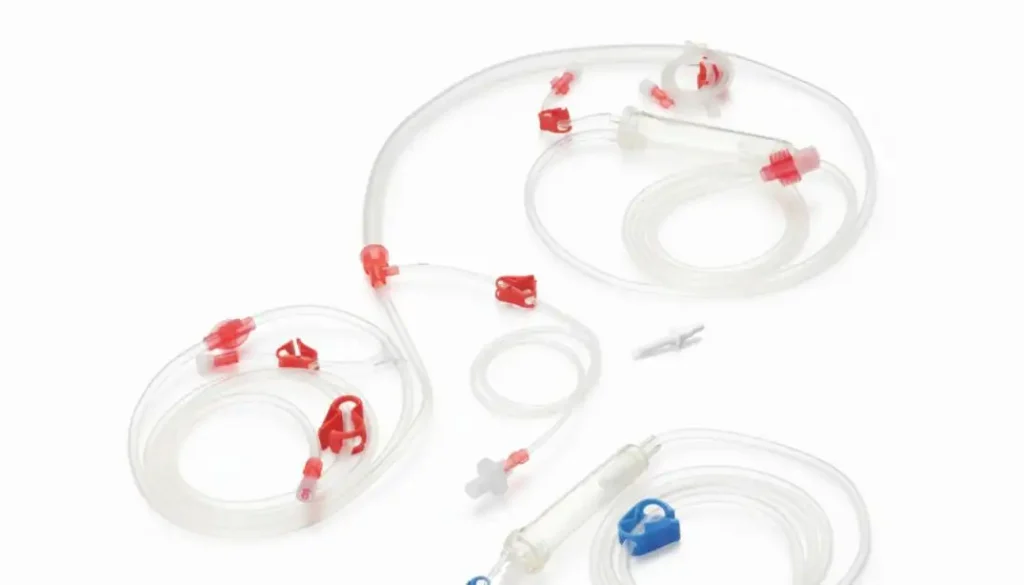
Blood Line systems are the working channel that keeps blood moving safely outside the body during hemodialysis, then returns it in a controlled, monitored way. From Greetmed's manufacturing perspective, the goal is simple: make every segment—pump tube, drip chamber, connectors, and safety parts—behave predictably in real clinical routines, not only on paper specs.
1) What a Blood Line Does in Hemodialysis
In dialysis, the machine needs an extracorporeal circulation path: blood leaves the patient, passes through the dialyzer, and returns after treatment. A Blood Line is the disposable set that forms this path. It is not "just tubing." It is a small system with flow control, air management, connection interfaces, and priming support.
For buyers and clinical users, the most practical way to understand a Blood Line is to follow the blood route and ask three questions at each step:
• Does it keep the target flow stable?
• Does it reduce handling errors during setup?
• Does it support quality control and safe priming?
When those answers are "yes," the product becomes easier to standardize across shifts and reduces small variations that can cause delays.
2) Pump Tube Explained: Why Elasticity Protects Flow Stability
The pump segment is where the dialysis machine's roller pump repeatedly compresses the tube to drive flow. If the tube deforms too easily, it may not recover its shape. If it is too stiff, it can create unstable flow or extra mechanical stress.
Greetmed uses medical-grade PVC pump tubing designed for high elasticity, with an important real-world indicator: the tube shape can remain the same after continuous pressing for 10 hours. This matters more than it may sound. Dialysis sessions, preparation, and operational cycles create long periods of repeated compression. A tube that maintains shape helps teams keep a more consistent pumping behavior and reduces the "drift" feeling that can appear when tubing fatigue becomes noticeable.
Practical takeaways for procurement and clinical teams:
✔ Stable compression recovery helps maintain predictable pump response over long cycles
✔ Reduced flow variation risk supports smoother session management
✔ Lower replacement anxiety during standard procedures, because the pump segment behaves more consistently
In short, pump tube elasticity is not a marketing word. It is a usability feature that supports repeatable therapy routines.
3) Drip Chamber: Making Flow and Air Status Easier to Read
The drip chamber improves readability in the circuit by giving staff a clear viewing section. In many setups, it also supports air management steps as part of safe operation. A frequent sourcing mistake is to treat chambers as interchangeable. In reality, chamber sizing impacts compatibility and workflow.
Greetmed Blood Line drip chambers are available in various diameter sizes, which is important because many dialysis platforms are matched to specific chamber OD requirements. For example, some Fresenius configurations reference a venous chamber OD of 30 mm, while other setups may use different sizes.
A practical compatibility snapshot from typical configurations:
✔ GT212-A001V02: pump segment 7.9 × 12.1 × 350 mm, chamber OD 30 mm (often aligned with Fresenius venous chamber 30 mm needs)
✔ GT212-A101V05: pump segment 7.9 × 12.1 × 350 mm, chamber OD 22 mm (commonly referenced for Fresenius venous chamber 22 mm requirements; also used across multiple platforms depending on configuration)
✔ GT212-A101V11: pump segment 6.4 × 9.75 × 350 mm (commonly referenced with B. Braun HD-SECURA style requirements)
These examples show how one dimension—chamber OD—can determine whether a Blood Line is "drop-in compatible" or becomes a workaround item that costs time during setup.
4) Dialyzer Connectors: Why "Extra-Large" Can Mean Fewer Handling Errors
Connectors are a high-touch point. They are handled during setup, priming, and changeover steps. If a connector is difficult to grip or align, that adds friction to the workflow and increases the chance of small mistakes—especially during busy shifts.
Greetmed uses an extra-large designed dialyzer connector intended to be easier to operate. The customer benefit is practical: it can improve handling confidence with gloved hands and help the operator complete the connection step with fewer repeated adjustments.
In purchasing terms, connector ergonomics is part of total cost of use:
✔ Faster setup can improve throughput for dialysis centers
✔ Easier operation supports training for new staff
✔ Reduced fiddling can lower the chance of leaks caused by incomplete seating
5) Safety Details That Matter: Clamp, Infusion Set, and Drainage Bag
Some Blood Line features look "minor" until you see how they protect routine operations.
• Clamp: Greetmed uses a clamp made of hard plastic, designed larger and thicker to help guarantee sufficient stop. In real use, a clamp is not only about blocking flow. It is about giving the operator a clear, confident action that holds its position.
• Infusion set: Convenience is not just comfort. An infusion set that is easy to install and uninstall supports precision infusion and safe priming because the steps become more repeatable. Less awkward handling often means fewer interruptions and cleaner setup logic.
• Drainage bag: Priming is a quality-critical phase. Greetmed's approach uses closed priming to support quality control requirements. Options include single-way and double-way drainage bags, allowing facilities to select a workflow that matches their standard operating procedures.
A simple way to explain these parts to non-specialists is this: they reduce the "small uncertainties" that slow teams down. In dialysis, small uncertainties become real time.
6) How to Specify the Right Blood Line: Codes, Compatibility, and Customization
For sourcing teams, the best results come from matching the Blood Line to the machine configuration and the center's workflow—not only to a generic description like "adult set."
Start with three specification anchors:
• Pump segment size (ID × OD × length), because it affects pump compatibility and performance behavior
• Chamber OD, because it affects the monitoring interface and platform matching
• Connector style, because ease of operation affects routine success
Then confirm with sample evaluation using real device configurations. Greetmed provides product codes to support clearer communication, such as:
• GT212-A101V11 (6.4 × 9.75 × 350 mm)
• GT212-A101V05 (7.9 × 12.1 × 350 mm, chamber OD 22 mm)
• GT212-A001V02 (7.9 × 12.1 × 350 mm, chamber OD 30 mm)
• GT212-A001V05 (7.9 × 12.1 × 350 mm, chamber OD 20 mm)
Finally, consider customization. If you want your Blood Line to match a proven workflow, customization is the fastest path. Greetmed can configure Blood Line sets per order, which helps you keep the same specs across multiple sites and align labeling and packaging with your internal QC process.
CTA (Call-to-Action)
For 2026 sourcing, send Greetmed your machine model, pump segment size, required chamber OD (22 mm/30 mm), and priming preference (single-way or double-way drainage bag). We will recommend the best-fit set code and help you move from selection to stable supply.
Submit Your Request
Recent Posts
Tags
- Adult Diapers
- Are custom medical devices safe
- Baby Diapers
- Can respiratory anesthesia be used
- Digital Healthcare
- Do you offer customized consumables
- European Market
- How do you take care of a skin wound
- Industry Trends
- Lady Sanitary Napkins
- Medical Devices
- OEM Medical Devices
- Product Introductions
- Protective Equipment
- Under Pads
- What are custom-made medical devices
- What are diagnostic products
- What are hospital dressing products
- What are medical tube catheters
- What are some common protective equipment
- What are the appropriate applications for hospital dressing products
- What are the appropriate uses for protective equipment
- What is a gynecological examination
- What is a medical consumable
- What is an anesthesia kit
- What is an OEM in medical devices
- what is an wound skin care
- what is can disposable ultrasonic diagnostic
- What is good manufacturing medical devices
- What is hospital-grade protective equipment
- what is medical equipments hospital furniture
- What is medical sterilization wrapping
- What is rehabilitation equipment device
- What medical consumables do you supply
- Where can I find laboratory consumables wholesale
- where can I find medical protection device
- where to buy hypodermic accessories
- where to buy medical apparel
- where to buy medical consumable accessories
- where to find OEM medical device supplier
- where to find rehabilitation equipment supplier
