



FEP Heat Shrink Tubing: Properties, Uses & Manufacturing Guide (2026)


When it comes to precision engineering and high performance, it is necessary to select an appropriate insulation and a form of protection that would be appropriate. The FEP heat shrink tubing is one of the numerous choices, which can be used in many areas; this is because it has good chemical resistance, thermal stability, and electrical insulation. FEP heat shrink tubing offers reliability in aerospace applications such as in the wire of aerospace assemblies, in medical devices like their assemblies, or in the heat sink of industrial automation systems where standard materials fail.
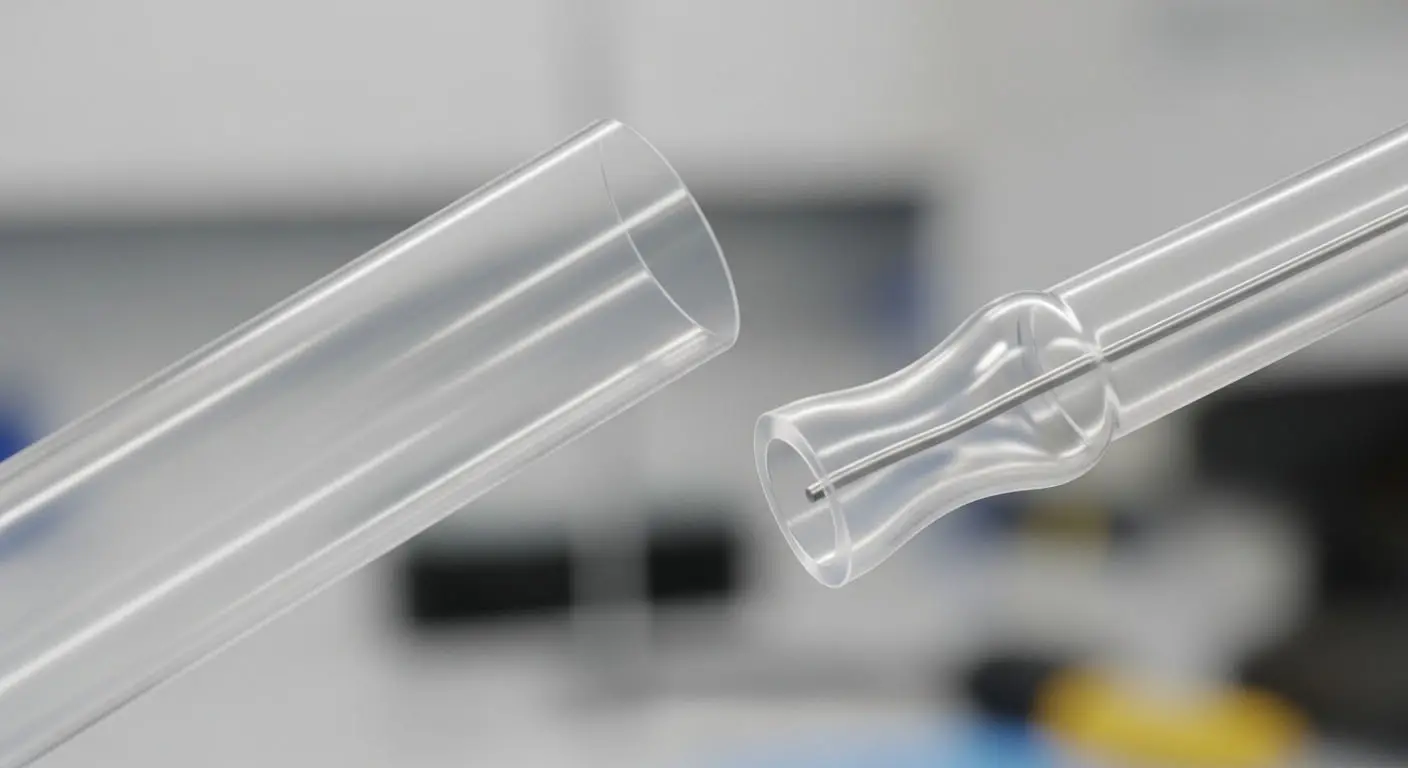
This comprehensive guide will tell you the definition of FEP heat shrink tubing, why it is useful, its most important features, some of the most common uses of FEP heat shrink tubing, and the things to consider in design and manufacture.
What Is FEP Heat Shrink Tubing?
Attached heat-shrinking tube (FEP) heat shrink - This is a kind of Polymer covering that shrinks when heated and then fits into the space around the object it is coated on. It is made of FEP resin which is composed of fluoropolymer that is classified to be outstanding in terms of thermal, chemical, and electrical conductivity. The tubing when shrunk offers a smooth protective encapsulation that maximises performance and durability.
In contrast to normal polyolefin shrink tubing, FEP is an excellent polymer that can sustain harsh conditions, it is a material of choice in industries that demand the highest standards.
Key Properties of FEP Heat Shrink Tubing
FEP heat shrink tubing possesses a unique set of characteristics that make it suitable for advanced applications:
1. Wide Temperature Range
FEP can tolerate continuous exposure to elevated temperatures, typically from -200 °C to +200 °C (-328 °F to +392 °F), without losing mechanical integrity. This makes it ideal for extreme thermal environments such as aerospace and semiconductor processing.
2. Chemical Resistance
FEP exhibits outstanding resistance to:
-
Acids and bases
-
Solvents and fuels
-
Oils and lubricants
-
Cleaning agents
This resistance ensures long-term reliability in chemical processing, medical sterilization, and harsh industrial environments.
3. Superior Electrical Insulation
FEP is a top-tier electrical insulator with low dielectric constant and loss, providing excellent protection for wires, cables, and sensitive electronic components in high-frequency and high-voltage applications.
4. Low Coefficient of Friction
Its slick surface and low friction minimize abrasion and mechanical wear, which is particularly valuable in dynamic cable routing and mechanical motion systems.
5. Moisture and Weather Resistance
FEP resists water absorption and environmental aging, maintaining performance in outdoor installations and high-humidity conditions.
How FEP Heat Shrink Tubing Is Made
FEP heat shrink tubing is manufactured through a specialized extrusion and expansion process:
-
Extrusion: Molten FEP resin is extruded into tubing with controlled dimensions.
-
Expansion: The tubing is irradiated or mechanically expanded to a larger diameter.
-
Cooling and Setting: Once cooled, this expanded form becomes “memory.”
-
Heat Shrink: When reheated during installation, the tubing shrinks back toward its original dimensions, forming a tight, conformal fit.
Achieving uniform shrink properties and consistent wall thickness requires precise process control and specialized tooling.
Typical Sizes and Ratio Ratings
FEP heat shrink tubing is available in a range of:
-
Shrink ratios: Common ratios include 2:1 and 3:1, indicating the degree of diameter reduction.
-
Wall thicknesses: Standard and heavy wall options depending on protection needs.
-
Colors: Natural clear or color-coded versions for identification and visual inspection.
Custom sizes can also be produced for specific engineering requirements.
Common Applications of FEP Heat Shrink Tubing
FEP heat shrink tubing is widely used in industries where performance is non-negotiable:
1. Aerospace & Defense
FEP tubing protects wiring harnesses, connectors, and sensor cables in aircraft, satellites, and military vehicles. Its wide temperature tolerance and chemical resistance are critical for flight safety and mission reliability.
2. Medical Devices
In medical device assemblies such as diagnostic systems, probes, catheters, and surgical tools, FEP heat shrink tubing provides:
-
Biocompatibility
-
Sterilization resistance
-
Clean electrical insulation
It serves as an essential component for reliable medical equipment performance.
3. Electronics & Semiconductors
FEP’s superior dielectric properties make it ideal for high-frequency circuits, RF connectors, and semiconductor process equipment where insulation, contamination control, and thermal stability are essential.
4. Industrial Automation
In factory automation, robotics, and motion systems, FEP heat shrink tubing protects sensor cables, power connections, and control wiring from abrasion, chemicals, and environmental exposure.
5. Oil & Gas / Chemical Processing
Chemical plants, refineries, and offshore installations expose components to corrosive fluids and extreme conditions. FEP’s chemical resistance and stability make it a reliable choice for instrumentation and control applications.
Design and Specification Considerations
When specifying FEP heat shrink tubing for a project, engineers should evaluate:
1. Operating Environment
Consider ambient temperature range, chemical exposure, UV/light exposure, and moisture conditions to ensure the selected tubing material will perform reliably.
2. Shrink Ratio & Clearance
Select a tubing diameter and shrink ratio that ensures a snug fit over connectors, junctions, or assemblies without overstressing underlying components.
3. Wall Thickness
Choose appropriate wall thickness for the level of mechanical protection required. Heavy wall tubes provide greater impact and abrasion resistance.
4. Regulatory Compliance
For medical and aerospace applications, ensure material complies with applicable standards such as:
-
ISO 10993 for biocompatibility
-
ASTM and AMS specifications for aerospace materials
-
FDA listings where required
Installation Best Practices
Proper installation ensures optimal performance:
-
Use controlled heat sources (heat guns, ovens) that deliver uniform temperature
-
Avoid open flames or excessive localized heat
-
Ensure surfaces are clean and free of lubricant contaminants before shrinking
-
Allow full cooling before mechanical handling
Good installation technique prevents deformation, insulation damage, and suboptimal shrink performance.
Comparing FEP to Other Heat Shrink Materials
| Material | Temperature Range | Chemical Resistance | Dielectric Strength | Common Uses |
|---|---|---|---|---|
| FEP | -200 °C to +200 °C | Excellent | Excellent | Aerospace, medical, semiconductor |
| PTFE | -240 °C to +260 °C | Exceptional | Very Good | Extreme chemical environments |
| Polyolefin | -55 °C to +125 °C | Good | Good | General electrical applications |
| PVC | -40 °C to +105 °C | Fair | Moderate | Consumer electronics |
FEP offers a strong balance for high-performance applications, outperforming common polyolefin and PVC tubing in harsh environments.
Future Trends in Heat Shrink Tubing Technology
As industries evolve, so do material and manufacturing technologies:
1. Enhanced Material Additives
New fluoropolymer blends improve abrasion resistance, flexibility, and processing ease without sacrificing core performance.
2. Embedded Functionality
Advanced heat shrink tubing with embedded markers, conductive layers, or printed identifiers aids in traceability and automated inspection.
3. Sustainability and Recycling
Efforts are underway to increase recyclability and reduce environmental impact for fluoropolymer materials while maintaining performance.
Conclusion
FEP heat shrink tubing is much more than an insulation housing coverage, it is a high performance component which is designed to guard, insulate, and seal in some of the most challenging applications in aerospace, medical, electrical and industrial markets.
Having a high temperature tolerance, excellent chemical resistance, and electrical properties, FEP is yet another best option where reliability is the primary factor. Regardless of the medical equipment harness, aerospace wiring system or automation control system, knowing the important features and specification requirements of FEP heat shrink tubing can guarantee high performance and life-span.
Choosing the appropriate material, measurements, and installation methods will be useful in providing stable outcomes that will lead to the industry standards and customer satisfaction.
Submit Your Request
Recent Posts

Tags
- Adult Diapers
- Are custom medical devices safe
- Baby Diapers
- Can respiratory anesthesia be used
- Digital Healthcare
- Do you offer customized consumables
- European Market
- How do you take care of a skin wound
- Industry Trends
- Lady Sanitary Napkins
- Medical Devices
- OEM Medical Devices
- Product Introductions
- Protective Equipment
- Under Pads
- What are custom-made medical devices
- What are diagnostic products
- What are hospital dressing products
- What are medical tube catheters
- What are some common protective equipment
- What are the appropriate applications for hospital dressing products
- What are the appropriate uses for protective equipment
- What is a gynecological examination
- What is a medical consumable
- What is an anesthesia kit
- What is an OEM in medical devices
- what is an wound skin care
- what is can disposable ultrasonic diagnostic
- What is good manufacturing medical devices
- What is hospital-grade protective equipment
- what is medical equipments hospital furniture
- What is medical sterilization wrapping
- What is rehabilitation equipment device
- What medical consumables do you supply
- Where can I find laboratory consumables wholesale
- where can I find medical protection device
- where to buy hypodermic accessories
- where to buy medical apparel
- where to buy medical consumable accessories
- where to find OEM medical device supplier
- where to find rehabilitation equipment supplier
