



Respiratory Therapy Consumables: Redefining Patient Comfort in the ICU


Patients in an intensive care unit who require mechanical ventilation find the system both life sustaining and uncomfortable. The system doesn't offer the natural warming and humidifying of the body's upper airways, and standard care practices can disrupt the process of ventilation and create anxiety for the patient.
Innovation in Respiratory Therapy Consumables and the introduction of Disposable Heated Breathing Circuits and Closed Suction Catheters are transforming the ICU and creating a system that focuses on patient comfort while increasing clinical safety and improving the workflow for the healthcare providers.
Why Mechanical Ventilation Feels Unnatural
Typically, the air that the upper airways are about to receive is warmed and humidified to about 37 degrees Celsius and 100% humidity. The mechanical system does not offer this, and instead offers dry gas that is continues a consistent flow to the airway.
The system does not perform without consequences:
• Drying airways: mucosa and Cilia become damaged and mucus thickens and obstructs the airway
• Condensation: Cooled air with moisture causes water to collect in the tubing
• Increased effort to breathe: air begins to flow less freely and the condensate begins to flow back into the airway
These conditions do not just create discomfort for the patient, but also cause an increase of bacterial growth and the development of Ventilator Associated Pneumonia. There is no doubt that improving the amount of condensate by even 7-10% will improve both the safety and comfort of the patient and decrease the demands on the nursing staff.
That's where smartly designed Respiratory Therapy Consumables come in.
Disposable Heated Breathing Circuits: Engineering Warmth, One Breath at a Time
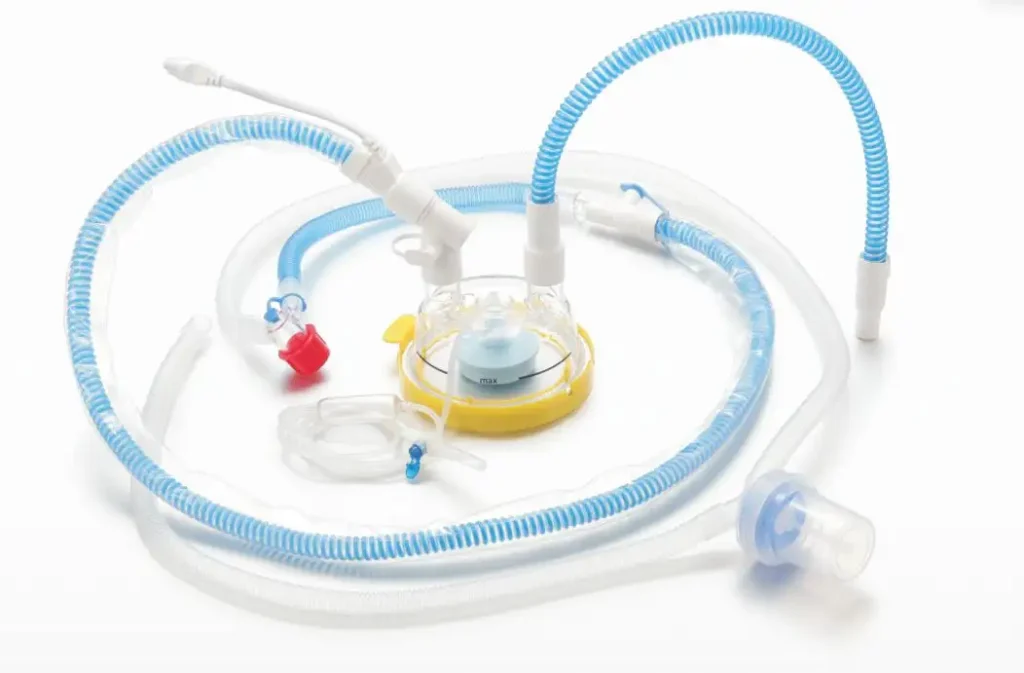
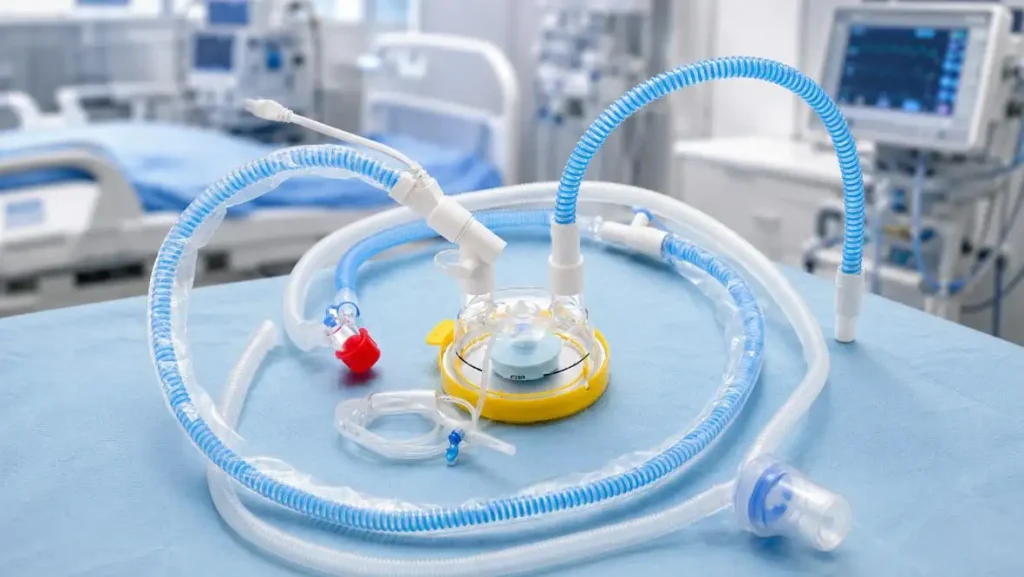
A Disposable Heated Breathing Circuit connects the ventilator to the patient's mask or endotracheal tube. Its primary job: heat the gas inside the tube to prevent condensation. But how it does that makes all the difference.
1. Even Heating – No Cold Spots, No Water Puddles
• Greetmed uses an embedded external wrapping heating wire that warms the entire tube evenly from end to end.
• Reduces visible rainout inside the inspiratory limb: Less water means fewer alarms, less manual draining, and more stable ventilation.
• Discourages bacterial growth: A dry circuit is a hostile environment for pathogens, directly lowering infection risk.
• Delivers consistent gas temperature: The patient receives air that's always warm and moist—just like the body expects.
• Result: The patient feels less throat irritation and coughs less often.
2. Lower Air Resistance – Every Breath Takes Less Effort
• Compared with ordinary heated circuits, Greetmed's design offers lower airflow resistance.
• Smoother gas passage: The patient doesn't have to "pull" against the tubing.
• Less respiratory muscle fatigue: This is critical for patients with weakened lungs or weaning from ventilation.
• Increased oxygenation: resistance drops the greater the maintenance of adequate tidal volume with lower pressure.
• The system works in conjunction with the patient.
3. Kink Resistance – Flexible and Sturdy
• Movement of the patient and the ICU bed changes the location of several tubes. To prevent twisting and kinking, the tubing structure has been reinforced.
• Designed to Prevent Unintentional Occlusions: Tubing will continue to allow airflow and will not kink to obstruct airflow.
• Designed for Flexibility and Resilience: Will not permanently deform or distort with continued use.
• Ventilator Protection: Prevents the accumulation of moisture that reaches the sensitive ventilator circuit.
These aren't just engineering specs—they're daily safeguards that let nurses focus on the patient, not on troubleshooting equipment.
Closed Suction Catheters: Suctioning Without Disconnection
Suctioning is essential—but in an open system, it means breaking the circuit. That causes loss of PEEP (positive end-expiratory pressure), a drop in oxygen saturation, and visible patient distress.
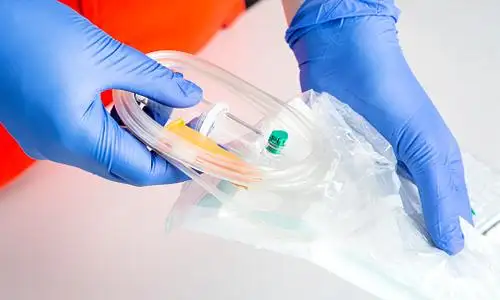
A Closed Suction Catheter solves this by allowing suctioning without disconnecting the ventilator.
1. Protecting PEEP and Oxygen Levels
The catheter sits inline, so you can clear secretions while ventilation continues.
• Maintains PEEP stability : Keeps Alveoli Open / Prevents Collapse
• Prevents hypoxemia: Continuous flow of oxygen maintains steady arterial saturation.
• Reduces hemodynamic swings: Less dramatic pressure changes mean less stress on the heart and brain.
Clinically, this translates to fewer desaturation episodes and a smoother weaning process.
2. Lowering Infection Risk – For Patient and Provider
Because the system stays closed, pathogens can't escape into the room—or enter the airway.
• Minimizes airborne contamination: No aerosolized droplets from coughing or suctioning.
• Reduces VAP incidence: Multiple studies link closed systems to lower pneumonia rates.
• Protects healthcare workers: Less direct contact with sputum means safer working conditions.
Greetmed adds a highly transparent TPU protective sleeve—you can see the secretions clearly without touching them, which further cuts contamination risk.
3. Human-Centered Design Details That Matter
Small features make a big difference in daily ICU practice:
• Softened catheter tip: Reduces trauma to the delicate tracheal mucosa during insertion.
• Clear depth markings (scale line): Helps the clinician insert to the correct depth every time.
• 120° ergonomic valve - Lowers flow resistance to make suctioning less strenuous and faster.
• Large Press Switch - Designed for ease of use with a gloved hand. Enhanced for functionality on long shifts.
• Locking device with visual indicator - Avoids unintended separations of the locking device and improve circuit integrity.
• Isolation valve (72-hour version) - Cost and waste saving as the catheter can remain in position for longer.
The limited resources ICP design draws on the principles of frequent suctioning with no catheter replacement to minimize waste in an environment with high demand for such products.
The Bigger Picture - Why These Consumables Are More Than Disposables
The respiratory disposables market was worth USD 4.4 billion in 2025 and is projected to be USD 9.4 billion in 2033 (CAGR 9.9%). This expansion shows that numbers are not the only things important to this market, as there is an increased focus on patient-centered critical care.
Manufacturers will be focusing on:
• Lightweight, biocompatible materials resulting in a reduced incidence of pressure sores, and allergic reactions.
• Ergonomic interfaces that make connections easier and safer.
• Integrated infection-control features that go beyond mere sterility.
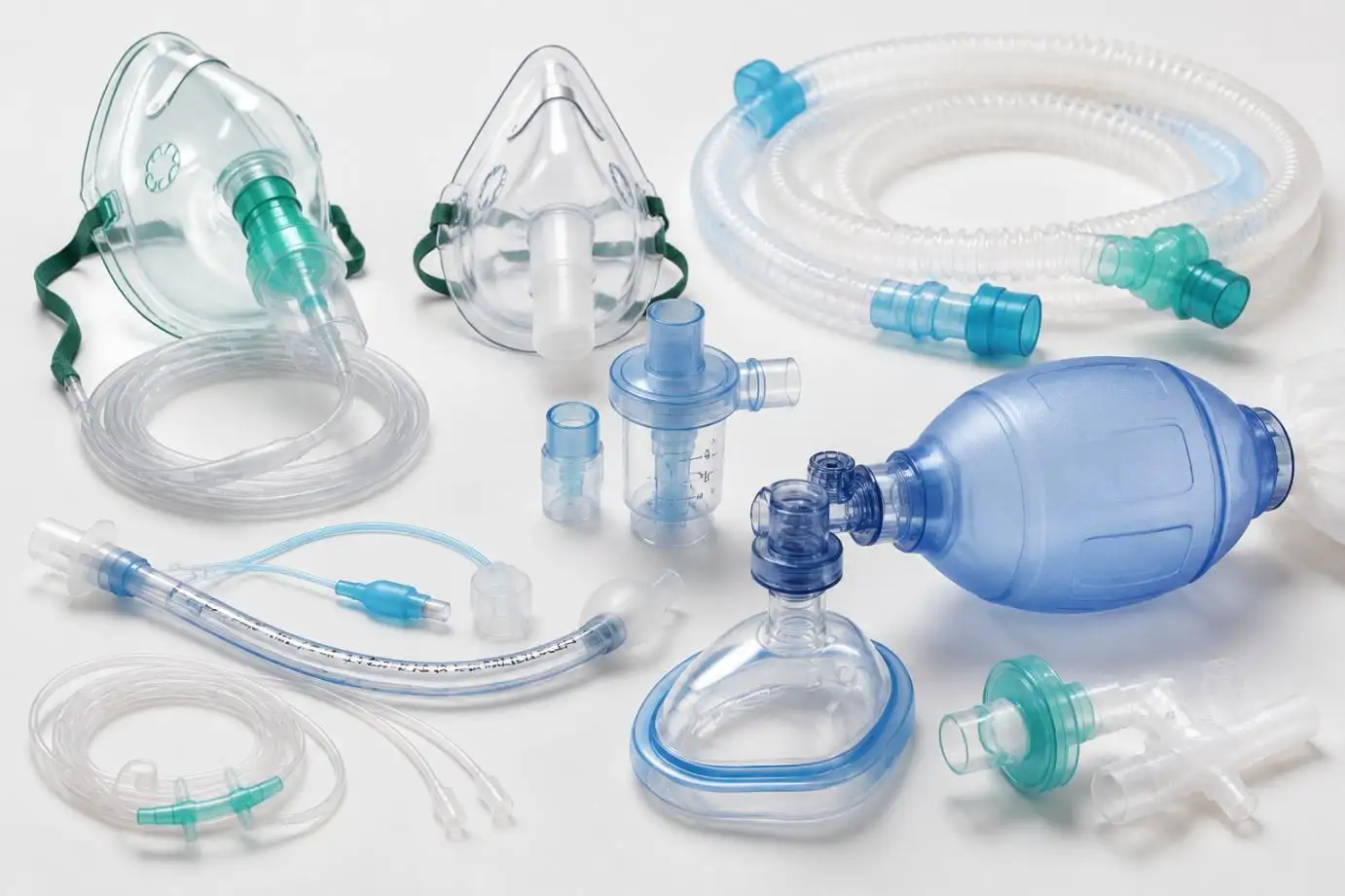
Respiratory Therapy Consumables like heated circuits and closed suction catheters are no longer just accessories—they are active participants in the healing process.
Key Takeaways
| For the Patient | For the Clinician |
| Warmer, more humidified air reduces throat irritation | Fewer circuit disconnections save time and reduce alarms |
| Less coughing and mucus plugging | Lower risk of VAP means fewer complications to manage |
| Stable oxygenation during suctioning | Continuous PEEP preserves lung mechanics |
| Lower infection risk from dry circuits and closed systems | Transparent sleeves and depth marks make procedures safer and easier |
Conclusion – A Quiet Revolution in the ICU
The ICU experience is shaped by countless small moments—the temperature of each breath, the resistance of each inhale, the sudden panic of disconnection, the nagging fear of infection. Advances in Respiratory Therapy Consumables are tackling each of these moments with precision and empathy.
Greetmed's approach—using embedded heating wires for uniform warmth, lowering airflow resistance to ease breathing, reinforcing tubes to prevent kinks, and designing closed suction systems that protect everyone in the room—shows what modern respiratory care can achieve.
These aren't just products. They are tools that restore comfort, preserve safety, and remind us that even in the most high-tech ICU, the smallest design choices can make the biggest difference to the person lying in the bed.
FAQs
Q: How is a heated breathing circuit different from a standard breathing circuit?
A: Heated breathing circuits warm the gas in the circuit tubing to prevent rainout and moist airway and to reduce the growth of bacteria. Standard breathing circuits allow moisture to collect.
Q: Why is it a safety issue if there is condensation in a ventilator circuit?
A: Condensation collects in a circuit and presents an obstruction for gas flow. In addition, moisture can collect and drain into the patient's airway, which presents a safety issue and an airflow (ventilation) issue.
Q: How does a closed suction catheter maintain PEEP when suctioning?
A: A closed suction catheter maintains PEEP by allowing the removal of secretions without disconnecting the ventilator, thereby preventing critical drops in oxygen saturation.
Q: Can closed suction catheters be reused to reduce costs?
A: Yes. Reusing the same closed suction catheter on the same patient (for example, the 72-hour type) reduces costs and decreases the environmental impact of disposing of single-use items.
Q: What makes Greetmed's heated circuit more patient friendly?
A: Greetmed's heated circuits have warming wires and provide smooth low resistance airflow, which requires less effort to breathe for patients with decreased lung capacity.
Submit Your Request
Recent Posts
Tags
- Adult Diapers
- Are custom medical devices safe
- Baby Diapers
- Can respiratory anesthesia be used
- Digital Healthcare
- Do you offer customized consumables
- European Market
- How do you take care of a skin wound
- Industry Trends
- Lady Sanitary Napkins
- Medical Devices
- OEM Medical Devices
- Product Introductions
- Protective Equipment
- Under Pads
- What are custom-made medical devices
- What are diagnostic products
- What are hospital dressing products
- What are medical tube catheters
- What are some common protective equipment
- What are the appropriate applications for hospital dressing products
- What are the appropriate uses for protective equipment
- What is a gynecological examination
- What is a medical consumable
- What is an anesthesia kit
- What is an OEM in medical devices
- what is an wound skin care
- what is can disposable ultrasonic diagnostic
- What is good manufacturing medical devices
- What is hospital-grade protective equipment
- what is medical equipments hospital furniture
- What is medical sterilization wrapping
- What is rehabilitation equipment device
- What medical consumables do you supply
- Where can I find laboratory consumables wholesale
- where can I find medical protection device
- where to buy hypodermic accessories
- where to buy medical apparel
- where to buy medical consumable accessories
- where to find OEM medical device supplier
- where to find rehabilitation equipment supplier
