



PEEK Tubing Laparoscope Supplier | High-Precision Medical Grade


Ever wondered why modern laparoscopic tools feel so much lighter and safer than they did a decade ago? It's not just better ergonomics. The secret often lies in the materials hidden beneath the surface. If you're searching for a PEEK tubing laparoscope supplier, you likely already know that Polyether ether ketone (PEEK) has revolutionized minimally invasive surgery. But finding a partner who understands the tight tolerances of a surgical port is a different challenge altogether.
At Greetmed, we've seen how the right polymer choice changes everything from patient safety to surgeon fatigue. PEEK isn't just a plastic; it’s a high-performance solution for the most demanding environments in the OR.
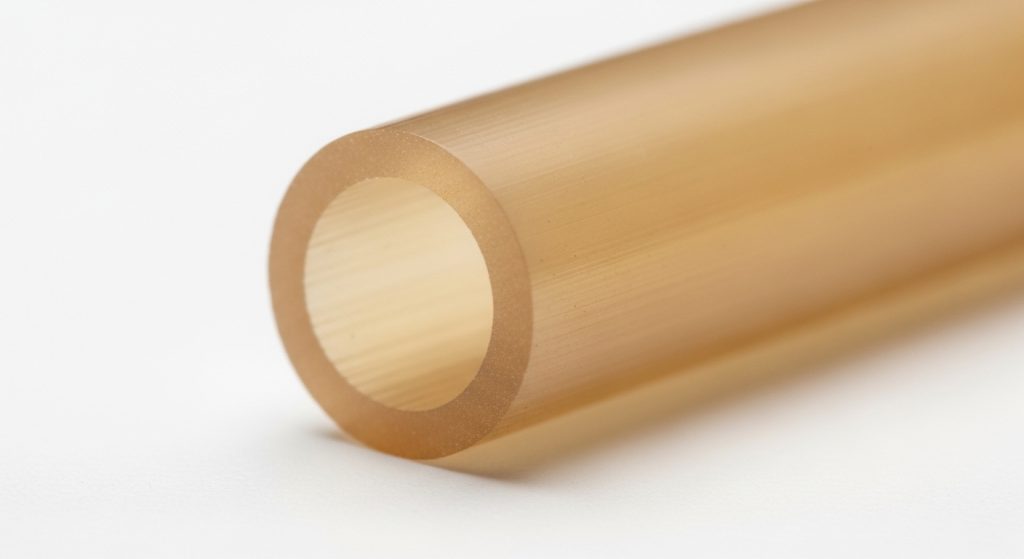
Why PEEK is the Gold Standard for Laparoscopy
Laparoscopic surgery requires tools that are incredibly thin yet stiff enough to navigate complex anatomy. Historically, stainless steel was the default. However, metal has limitations, especially when electricity is involved.
PEEK tubing offers a unique combination of mechanical strength and electrical insulation. When a surgeon uses an electrosurgical hook or shears, the shaft of the instrument must remain perfectly insulated. If the insulation fails, "stray energy" can cause internal burns that the surgeon might not even see on the monitor.
Because PEEK is a natural insulator, it provides an extra layer of safety that coatings on metal shafts simply can't match. It doesn't flake, chip, or degrade during high-energy procedures.
The Weight Advantage: Reducing Surgeon Fatigue
Long procedures take a toll on a surgeon's hands and wrists. Metal instruments, while durable, add significant weight to the "stack" of equipment a doctor holds. By switching to PEEK tubing for the main shaft or internal components, manufacturers can cut the weight of the handpiece significantly.
This weight reduction doesn't come at the cost of performance. PEEK has a high strength-to-weight ratio, meaning it stays rigid even when the wall thickness is incredibly thin. This allows for larger internal lumens for cameras or irrigation without increasing the overall size of the trocar.
PEEK vs. The Competition: A Technical Breakdown
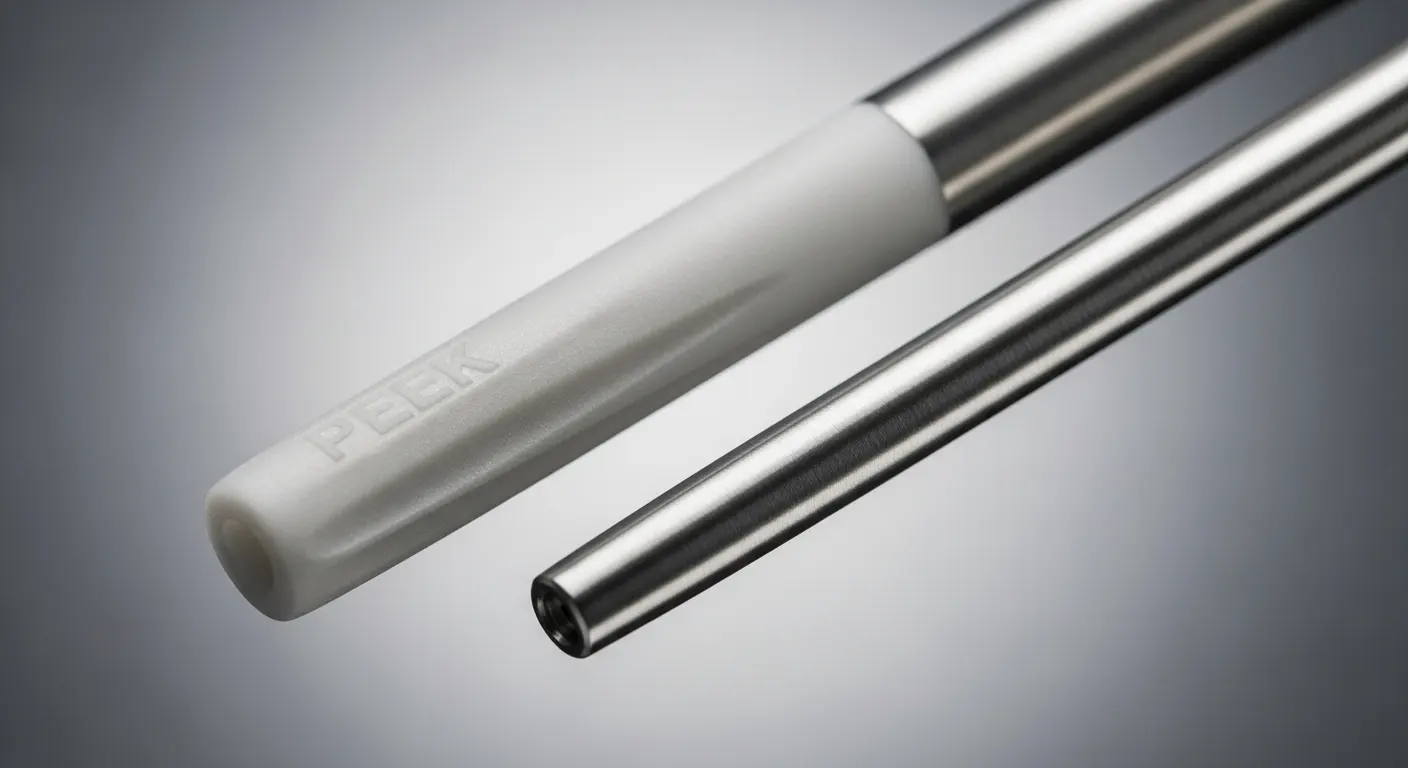
Choosing the right material means weighing trade-offs. Here’s how medical-grade PEEK stacks up against common alternatives used in surgical device manufacturing.
| Feature | Greetmed PEEK Tubing | Stainless Steel | PTFE / FEP |
| Dielectric Strength | Excellent (Insulator) | Poor (Conductive) | Good |
| Weight | Ultralight | Heavy | Moderate |
| Sterilization | 300+ Autoclave Cycles | Unlimited | Limited |
| Rigidity | High | Extreme | Low (Flexible) |
| Biocompatibility | USP Class VI / ISO 10993 | High | High |
As a specialized PEEK tubing laparoscope supplier, we focus on the "Sweet Spot" — providing the rigidity of metal with the safety and weight benefits of a polymer.
Precision Extrusion: It’s All About the Microns
When you’re designing a laparoscope, there is zero room for error. A tubing diameter that’s off by even 0.05mm can cause a tool to stick or a seal to leak. We use advanced laser micrometers to monitor every inch of tubing as it leaves the extruder.
Our standard tolerances often hit +/- 0.001” (0.025mm). This level of precision ensures that your assembly line moves fast without the frustration of parts that don't fit. Whether you need thin-walled tubing for a 5mm port or a reinforced shaft for a bariatric laparoscope, the consistency remains the same.
Overcoming the Sterilization Hurdle
One of the biggest questions we get from R&D engineers is: "How many times can we wash this?"
Most polymers fail after a few rounds in an autoclave. They become brittle, they change color, or they warp. PEEK is different. It’s one of the few plastics that can survive hundreds of cycles of pressurized steam at 134°C (273°F).
It also stands up perfectly to Ethylene Oxide (EtO) and Gamma radiation. This versatility makes it ideal for both "single-use" premium instruments and "reusable" surgical tools. If you’re looking to improve the lifecycle of your devices, PEEK is the answer.
Customizing Your Tubing for Enhanced Performance
Every surgical application is unique. Sometimes, "off-the-shelf" isn't enough. As your PEEK tubing laparoscope supplier, we offer several ways to customize the material:
Radiopaque Fillers
Surgeons often need to see the position of their tools under X-ray or fluoroscopy. We can add Barium Sulfate or Bismuth Trioxide to the PEEK resin. This makes the tubing "glow" under imaging, providing critical feedback during complex procedures.
Color Coding
In a busy OR, seconds count. Color-coding different sizes or types of laparoscopic tools helps the surgical team identify the right instrument instantly. We offer medical-grade pigments that won't leach or fade over time.
Multi-Lumen Designs
Do you need to run a fiber-optic cable and a suction line through the same tube? We can extrude PEEK with multiple internal channels (lumens) to keep your internal components organized and protected.
Quality You Can Trust: ISO 13485 and Beyond

You can't build a world-class medical device with "industrial-grade" materials. Every meter of our tubing is produced in a controlled cleanroom environment. This prevents dust, oils, or airborne particles from contaminating the polymer.
We maintain full lot traceability. From the moment the raw resin arrives at our facility to the second the finished tubing is shipped to you, we know exactly where it’s been. This makes your regulatory filings with the FDA or CE much smoother. You can learn more about our commitment to quality on our About Us page.
The Role of PEEK in Robotic Surgery
As we look toward 2026 and beyond, the rise of robotic-assisted surgery is undeniable. Robotic arms move with incredible speed and precision. They require materials that won't flex or "whip" during rapid movements.
PEEK’s high modulus of elasticity makes it the perfect fit for robotic tool shafts. It provides the "tactile feedback" (haptic) sensors need to provide accurate data to the surgeon at the console. We are currently partnering with several innovators to develop the next generation of robotic-compatible laparoscopic instruments.
Supply Chain Reliability: Why Partner with Greetmed?
In the current global market, lead times are often the biggest bottleneck for medical device startups. We’ve optimized our manufacturing process to ensure that your R&D timeline stays on track.
We offer rapid prototyping for new designs, allowing you to test samples in weeks rather than months. Once your design is locked in, we can scale to high-volume production without a dip in quality. Check out our full range of medical tubing solutions to see how we can support your entire product line.
FAQs: Everything You Need to Know About PEEK Tubing
Can PEEK tubing be used in robotic surgery?
Absolutely. Its high rigidity and low weight make it ideal for the high-speed movements required in robotic-assisted procedures.
What is the maximum operating temperature for PEEK?
Medical-grade PEEK has a continuous service temperature of about 250°C (482°F) and a melting point near 343°C. This makes it more than capable of handling any standard sterilization method.
Is PEEK tubing biocompatible?
Yes. Our PEEK is tested to USP Class VI and ISO 10993 standards, ensuring it is safe for long-term and short-term contact with human tissue.
How does PEEK improve laparoscope durability?
Unlike coated metal shafts, PEEK cannot "peel." It is a solid polymer, meaning it maintains its electrical insulation and structural integrity even if the surface gets scratched during a procedure.
Ready to Elevate Your Surgical Tool Design?
Finding the right PEEK tubing laparoscope supplier is about more than just finding a manufacturer; it’s about finding a technical partner. Whether you’re trying to shave grams off a new handle design or need an insulator that won't fail during electrosurgery, we’re here to help.
Don’t settle for "good enough" materials when patient safety is on the line. Contact Greetmed today for a custom quote or to request a technical data sheet for our medical-grade PEEK solutions. Let's build the future of surgery together.
Submit Your Request
Recent Posts

Tags
- Adult Diapers
- Are custom medical devices safe
- Baby Diapers
- Can respiratory anesthesia be used
- Digital Healthcare
- Do you offer customized consumables
- European Market
- How do you take care of a skin wound
- Industry Trends
- Lady Sanitary Napkins
- Medical Devices
- OEM Medical Devices
- Product Introductions
- Protective Equipment
- Under Pads
- What are custom-made medical devices
- What are diagnostic products
- What are hospital dressing products
- What are medical tube catheters
- What are some common protective equipment
- What are the appropriate applications for hospital dressing products
- What are the appropriate uses for protective equipment
- What is a gynecological examination
- What is a medical consumable
- What is an anesthesia kit
- What is an OEM in medical devices
- what is an wound skin care
- what is can disposable ultrasonic diagnostic
- What is good manufacturing medical devices
- What is hospital-grade protective equipment
- what is medical equipments hospital furniture
- What is medical sterilization wrapping
- What is rehabilitation equipment device
- What medical consumables do you supply
- Where can I find laboratory consumables wholesale
- where can I find medical protection device
- where to buy hypodermic accessories
- where to buy medical apparel
- where to buy medical consumable accessories
- where to find OEM medical device supplier
- where to find rehabilitation equipment supplier
