



Closed Suction Catheter: Locking Device & Large Press Switch for 2026 ICU


Introduction
A Closed Suction Catheter is no longer a nice-to-have accessory in modern intensive care—it is a clinical necessity. The global market for medical suction catheters was estimated at US$ 678 million in 2025 and is projected to reach US$ 913 million by 2032, with closed suction systems driving much of that growth as ICUs prioritize infection prevention and ventilation stability.
But here is the question procurement teams and clinicians are asking in 2026: not whether to use a Closed Suction Catheter, but which design features actually reduce bedside errors, improve workflow, and protect both patients and staff.
At Greetmed, the answer comes down to two seemingly simple—yet clinically transformative—features: a reliable locking device and a large, ergonomic press switch. The conviction shown in this design exemplifies the direction in which ICU respiratory innovation is moving for 2026: innovation focused on the positive prevention of misuse, reduction of cognitive burden, and seamless integration into high-pressure systems.
2026 ICU Design Needs for Closed Suction Catheters
Closed suction systems eliminate the need for ventilator disconnections during secretions, preserving positive end-expiratory pressure (PEEP) and minimizing pathogen exposure. Closed suction techniques are clinically proven to create less hypoxia, leading to their adoption whenever possible.
A Closed Suction Catheter is not without its hazards. Bad designs can cause unintended suction, catheter advancement, confusing and time-consuming control design, and various user errors that could open the closed circuit.
This is design in safety. The FDA and other governing bodies have, of late, begun mandating that the interface on medical devices, beyond the minimum functional envelope, incorporate elements that actively design for the prevention of misuse and error. This design of regulation is insufficient, so too are the Negative Pressure Suction Catheters that operate at a Negative Pressure and have simplistic and impractical designs.
Safe Locking Device to Prevent Unintended Suction
One of the many risks associated with closed suctioning is, believe it or not, the risk of unintentional suction being initiated. While a staff member is suctioning closed, if an unprotected, unintentional valve is operated, an inadvertent suction may occur which could lead to an inadvertent open system, loss of PEEP, or increased psychosocial risk to the patient.
A well-designed locking device takes away this risk:
• Positive mechanical lock: The valve remains in the “off” position and cannot be turned on until it is un-locked. This ensures that the device cannot create suction accidentally while being set up, moved, or while the circuit is being adjusted.
• Clear tactile feedback: Clinicians need to be able to feel the lock while it is being engaged and disengaged without having to look away from the patient. This is critical when the visual focus is already split.
• Intuitive unlock action: Unlocking the lock should not be difficult, especially when suction is required, and should not take fine motor skills or the ability to read instructions in a high-pressure situation.
Greetmed has a locking device designed to be robust and easy to use, and this reflects a wider 2026 trend. Medical devices are designed to work optimally when things go wrong, and not just when they work. A locked Closed Suction Catheter is a safer catheter.
The Large Press Switch: Ergonomics That Work Under Pressure
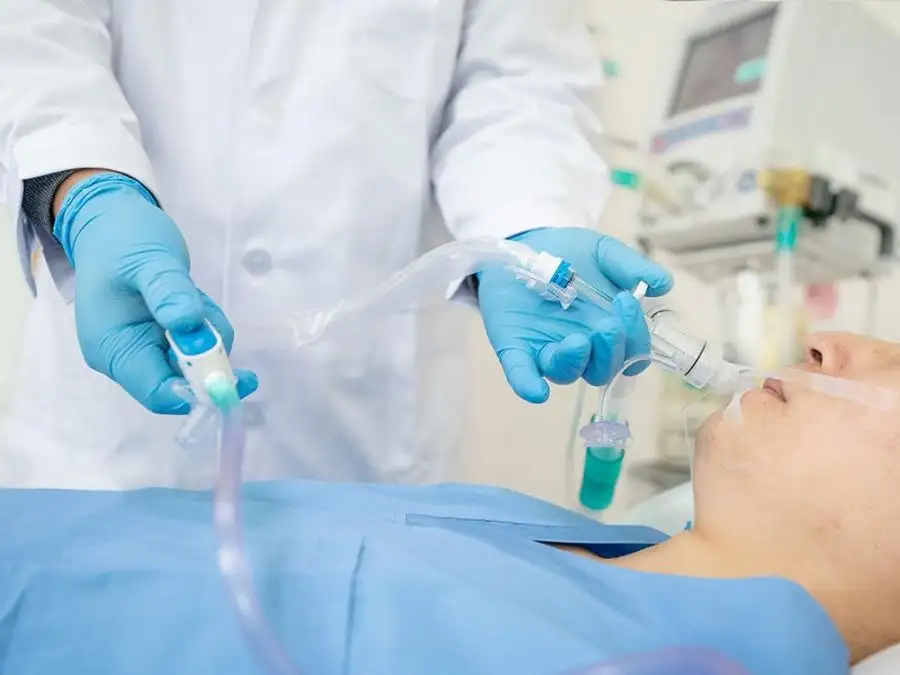
ICU clinicians perform suction procedures under intense time pressure, often while wearing gloves that reduce tactile sensitivity, dealing with patient movement, or working in dim lighting. A small, recessed, or stiff suction switch becomes a genuine usability hazard in these conditions.
Greetmed addresses this with a large-surface press switch designed for:
• One-handed operation: Clinicians can activate suction with a thumb or finger while using the same hand to guide the catheter. No awkward hand repositioning.
• Glove-friendly actuation: The design reliably works with thick, wet, or powdered gloves.
• Audible and tactile confirmation: Every press means users will not need to guess if suction is on or off.
With this level of ergonomics, we can meet the 2026 goal on human factors in critical care. The best devices are the ones that require the least amount of cognitive load, integrating into existing workflows effortlessly. For Closed Suction Catheters, a big press switch turns suctioning from a fine motor task to a gross motor task.
How These Features Integrate in ICU Real Workflows
To understand the importance of having a locking device and large press switch in combination, let’s examine an ICU suctioning scenario.
• The Preparation Stage: The clinician is about to connect the Closed Suction Catheter to the ventilator circuit. The locking device is set. So, however, the large press switch is inadvertently pressed when the clinician is working, no suction will take place.
• Catheter insertion: With the valve locked, the clinician advances the catheter through the protective sleeve and into the airway. No risk of premature suction.
• Suction activation: When the catheter tip is in position, the clinician easily locates the large press switch (without looking down), disengages the lock with a simple motion, and depresses the switch. Suction begins instantly.
• Withdrawal: Suction is released with another press. The lock can be re-engaged before the catheter fully withdraws. This prevents accidental suctioning during the catheter removal process.
• Between suction events: The locked valve keeps the system secured while the clinician does other tasks. You don’t need to worry about accidental activation while adjusting the ventilator or repositioning the patient.
The systems lacked ambiguity in control or unprotected systems. It is exactly what is needed in 2026 ICUs.
Designing for 2026 Procurement Standards
The most recent regulations and industry standards influence Greetmed’s design for closed suction catheters.
• Human factors engineering as a compliance pathway: This applies to regulatory agencies. Manufacturers are now more likely to show actionable device interface design efforts to mitigate errors. The presence of a locking mechanism and large press switch demonstrates compliance and commitment.
• Failure-state design: With this design philosophy, the device must fulfill the requirements for a safe operation in all cases of all possible failures. The device must also be safe to use under pressure, time constraints, incomplete information, and clinician fatigue. The locking mechanism is a design aimed to ensure safety in these conditions.
• Invisible innovation: The best medical devices feel calm, predictable, and unremarkable. Greetmed’s controls are intuitive enough that clinicians focus on the patient, not the catheter.
For procurement teams evaluating suppliers, these design features translate directly into fewer use-related errors, lower training requirements, and better staff satisfaction—all of which matter as much as price per unit.
Conclusion
A Closed Suction Catheter with a reliable locking device and a large, ergonomic press switch is not just a feature upgrade. It is a response to the real conditions of intensive care: high pressure, limited attention, gloved hands, and no room for error.
Greetmed designs closed suction systems that meet the demands of 2026 ICUs—where human-centered design, regulatory foresight, and clinical pragmatism converge. When clinicians can lock the valve with confidence and press the switch without looking, patient safety improves, workflow stabilizes, and everyone breathes a little easier.
Interested in learning more about Greetmed’s closed suction catheter solutions? Visit our product page or contact our team for samples and technical specifications.
Frequently Asked Questions (FAQ)
Q1: How does the locking device increase the benefits of Closed Suction Catheter?
A: It eliminates the chances of the suction being activated without the users' control while being handled, during patient transport, or while adjusting the ventilator, thereby preventing any mucosal trauma and loss of PEEP.
Q2: Why is the large press switch important in ICU?
A: The large press switch provides one-handed, glove friendly operation, and is easy to use with obvious tactile feedback, all of which allows clinicians to respond quickly and confidently in a high pressure situation.
Q3: Is the locking device a one-handed system?
A: Yes. Greetmed’s design is meant to have an instant one-hand unlock and press mechanism while the other hand is able to assist in guiding the catheter or securing the circuit.
Q4: Are all Closed Suction Catheter products ventilator compatible?
A: Yes. It includes a double swivel elbow and has a standard 15mm and 22mm connector, which allows almost all of the ventilator and circuit arrangements compatibility at the ICU.
Q5: What is the recommended change interval for the closed suction catheter?
A: Greetmed has 24 hour and 72 hour options (including an isolation valve). This follows clinical protocols with manufacturing guidelines for a change interval of 24–72 hours.
Submit Your Request
Recent Posts

Tags
- Adult Diapers
- Are custom medical devices safe
- Baby Diapers
- Can respiratory anesthesia be used
- Digital Healthcare
- Do you offer customized consumables
- European Market
- How do you take care of a skin wound
- Industry Trends
- Lady Sanitary Napkins
- Medical Devices
- OEM Medical Devices
- Product Introductions
- Protective Equipment
- Under Pads
- What are custom-made medical devices
- What are diagnostic products
- What are hospital dressing products
- What are medical tube catheters
- What are some common protective equipment
- What are the appropriate applications for hospital dressing products
- What are the appropriate uses for protective equipment
- What is a gynecological examination
- What is a medical consumable
- What is an anesthesia kit
- What is an OEM in medical devices
- what is an wound skin care
- what is can disposable ultrasonic diagnostic
- What is good manufacturing medical devices
- What is hospital-grade protective equipment
- what is medical equipments hospital furniture
- What is medical sterilization wrapping
- What is rehabilitation equipment device
- What medical consumables do you supply
- Where can I find laboratory consumables wholesale
- where can I find medical protection device
- where to buy hypodermic accessories
- where to buy medical apparel
- where to buy medical consumable accessories
- where to find OEM medical device supplier
- where to find rehabilitation equipment supplier
