



Reinforced Adult Heated Breathing Circuit: Flexibility, Kink Resistance, Easy Storage


Condensation management has long been the dominant conversation around heated circuits, but in 2026, procurement teams and clinicians are asking a harder question: What happens when a circuit is moved, repositioned, or stored?
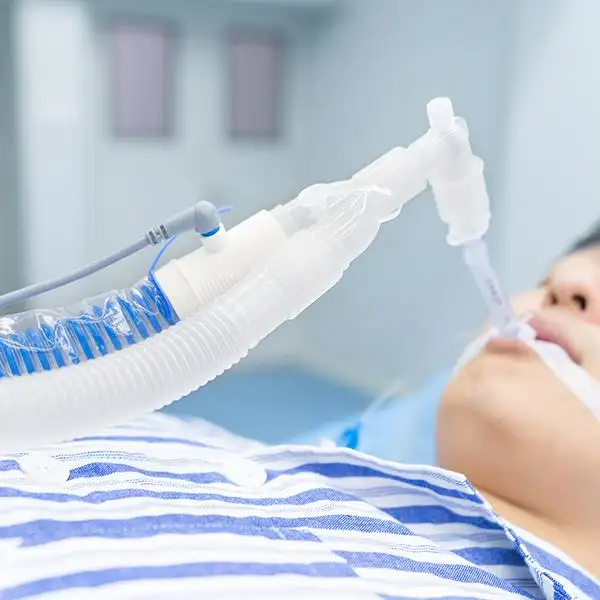
An Adult Heated Breathing Circuit that performs well on the bench but kinks under real-world handling creates workflow disruptions, airway obstruction, and hidden infection pathways. Greetmed’s reinforced design addresses exactly these gaps—delivering flexibility, kink resistance, and storage efficiency without compromising heating performance or airflow.
Why Flexibility Matters More Than You Think
A breathing circuit is not a static tube. In the ICU, it is pulled, draped, repositioned around bed rails, and connected to patients who may shift position. Circuits that are stiff or rigid increase torque on the endotracheal tube connection, risking accidental extubation or airway device displacement. Medical tubing must be ideally very light, resistant to kinking or pinching, to ensure the greatest performance and comfort for the patient.
The reinforced tubular design is engineered to enhance both flexibility and resilience: Greetmed has integrated reinforcing structures within the tube walls. This ensures that the tubing resists collapse when bent or contoured against the patient's body. This inherent design flexibility minimizes traction forces exerted on the patient interface, thereby significantly reducing the risk of accidental disconnection during patient repositioning or movement within the bed.
Unplanned ventilator alarms are reduced with flexible circuits: It is common in the industry for rigid tubing to be pinched which causes increased resistance to airflow and leads to alarm fatigue. Flexible circuits are able to better accommodate movement, preventing any sharp bends which keep the ventilation parameters and help reduce alarm fatigue with staff nursing.
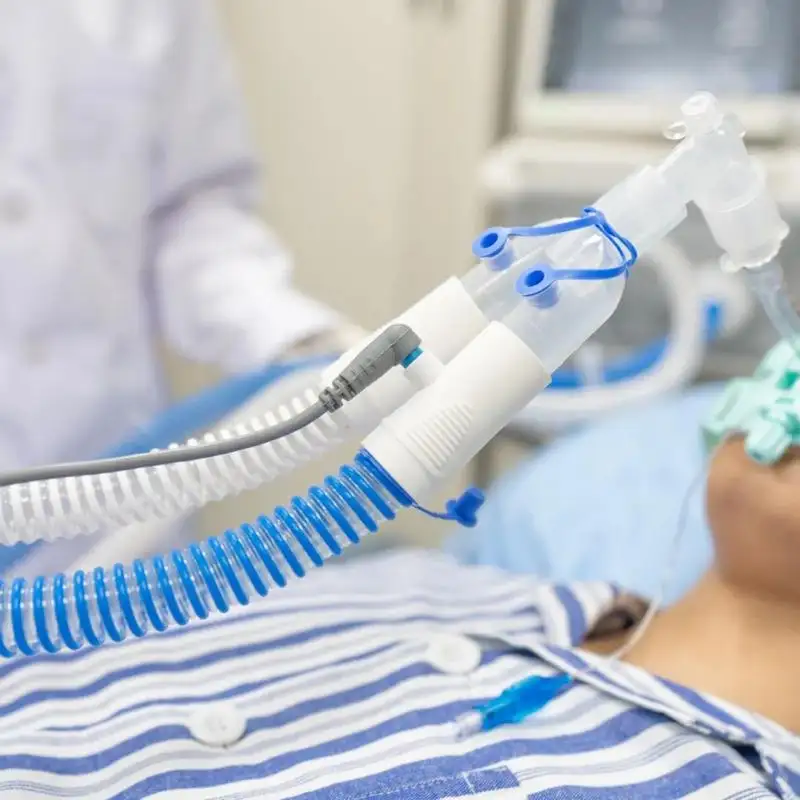
Kink Resistance: The Hidden Patient Safety Feature
Kinking an inspiratory limb can result in hypoventilation and increased work of breathing, and in severe cases, can result in patient-ventilator asynchrony going unrecognized. The convoluted design of breathing circuits and tubing serves to prevent kinking and mechanicaal occlusion so that an unobstructed flow path is maintained.
•Kink resistance is a great way to ensure gas flows uninterrupted: Greetmed's reinforced tubes maintain a patent airway even with the most extreme bending. Tube circuits tucked around a patient's arm or pressed against a bed rail can be freely positioned without concern.
•Kink resistance means fewer low-point condensate pools: A circuit kink typically creates a low-point condensate pool. Reinforced tubing maintains a kink-free shape, reducing unintended low points and helping the heated circuit operate to prevent rainout.
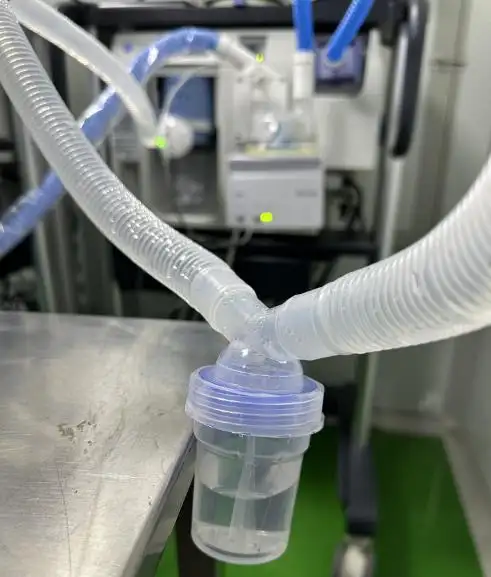
Easy Storage: A Clinical Workflow Advantage
Hospitals store breathing circuits in supply closets, crash carts, and bedside cabinets. Circuits that resist deformation during storage—whether coiled, stacked, or hung—come out of the package ready to use, without kinks or shape memory issues that disrupt setup.
•Resistance due to reinforced tubing allows for easy storage: Greetmed circuits can be coiled for storage, and when deployed, they lay flat and straight on the ventilator setup. No more wrestling with annoying curves or stubborn bends that restrict the airflow path.
•The ability to be stored efficiently allows for just-in-time inventory systems: In high-volume surgical suites and ICUs, storage space is limited. Circuits that keep their shape after being stored laterally box packed take up less usable space and are ready to use the instant they are pulled.
Beyond Flexibility: How Reinforcement Supports Infection Control
Many infection-control discussions focus on cleaning protocols and filter changes, but ignore handling. Circuits that are moved, repositioned, and stored experience physical stress that can create micro-damage or condensation traps. Manual draining of condensation is a common reason for breaking the circuit, which can expose the patient to infection risk.
•Reduced circuit breaks means reduced exposure to infections: A flexible, kink-resistant circuit can stay in place longer, resulting in fewer hands-on interventions for repositioning or water management. Fewer touches means fewer moments for cross-contamination.
•Equal heating works best with a tube geometry: For Greetmed's external wrapping heating wire to achieve a uniform temperature, the geometry of the tube must be maintained. Reinforcement helps to not create zones of localized flattening or kinking which would otherwise lead to cold and condensation.
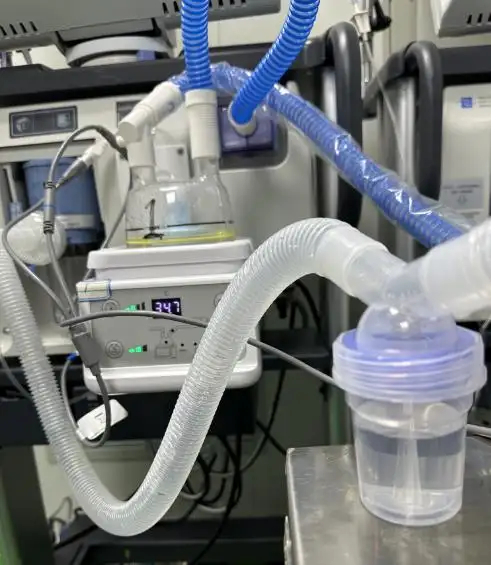
Design Trends for 2026: Move Towards Engineering Made for Handling
The market for breathing circuits is expected to hit $2.45 billion by 2026 and has key trends such as disposable infection-control circuits and lightweight circuit materials and designs that prioritize patient safety. There is a clear demand for materials that are lightweight, flexible, and kink-resistant, and that improve the clinician's handling of the circuit and the patient’s comfort.
Procurement teams in 2026 are not just comparing heating technologies. They are asking:
•Does this circuit maintain its performance after storage and handling?
•Will it kink when draped around a patient’s torso?
•Can nursing staff set it up quickly without specialized training?
Greetmed’s reinforced Adult Heated Breathing Circuit answers each question with a clear yes—because flexibility, kink resistance, and easy storage are not convenience features. They are clinical safety features.
Conclusion: Reinforcement Is Not Optional in 2026
The best heating technology in the world cannot compensate for a circuit that kinks, resists bending, or stores poorly. Greetmed has engineered its Adult Heated Breathing Circuit to solve all three handling challenges while maintaining uniform heating and low airflow resistance. For hospitals and distributors evaluating next-generation respiratory consumables, the message is simple: reinforcement is not an add-on. It is the foundation of reliable, safe, and efficient ventilation support.
FAQ
Q1: Are Adult Heated Breathing Circuits universal to brands?
Yes. Greetmed circuits are designed with 22mm connectors to maximize compatibility with nearly all ICU and transport ventilators.
Q2: Is this circuit a reusable or a single use circuit?
A: This circuit is intended to be a single use circuit to minimize as much patient to patient contamination as possible to follow the current guidelines of infection control.
Q3: How is the reinforced tube able to resist kinking, but is not too stiff?
A: The reinforcement is in the tube wall to allow for a proper combination of the internal and external structure for flexibility. So, it bends easily but is not to be expected to collapse under pressure.
Q4: Can the circuit be stored in a coiled position without permanent deformation?
A: Yes. With the reinforced construction, it is allowed for the circuit to be coiled for storage and then will return to a straight, new kink-free shape when opened.
Q5: Is there any electrical safety risk associated with the external heating wire?
A: No. The external wrapping heating wire is embedded and fully insulated, and it also complies with IEC 60601 and has no exposed parts.
Submit Your Request
Recent Posts


Tags
- Adult Diapers
- Are custom medical devices safe
- Baby Diapers
- Can respiratory anesthesia be used
- Digital Healthcare
- Do you offer customized consumables
- European Market
- How do you take care of a skin wound
- Industry Trends
- Lady Sanitary Napkins
- Medical Devices
- OEM Medical Devices
- Product Introductions
- Protective Equipment
- Under Pads
- What are custom-made medical devices
- What are diagnostic products
- What are hospital dressing products
- What are medical tube catheters
- What are some common protective equipment
- What are the appropriate applications for hospital dressing products
- What are the appropriate uses for protective equipment
- What is a gynecological examination
- What is a medical consumable
- What is an anesthesia kit
- What is an OEM in medical devices
- what is an wound skin care
- what is can disposable ultrasonic diagnostic
- What is good manufacturing medical devices
- What is hospital-grade protective equipment
- what is medical equipments hospital furniture
- What is medical sterilization wrapping
- What is rehabilitation equipment device
- What medical consumables do you supply
- Where can I find laboratory consumables wholesale
- where can I find medical protection device
- where to buy hypodermic accessories
- where to buy medical apparel
- where to buy medical consumable accessories
- where to find OEM medical device supplier
- where to find rehabilitation equipment supplier
