



Central Venous Catheter Kit: Quality Components for Clinical Support


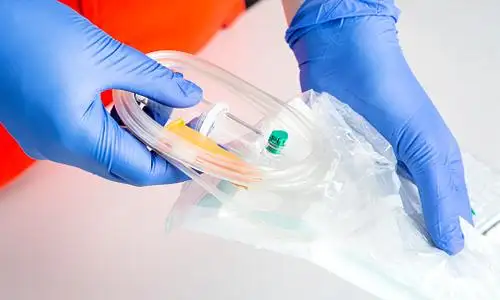
Central Venous Catheter Kit is more than a collection of sterile accessories. In clinical use, it is a coordinated insertion set that supports safer preparation, smoother workflow, and more consistent line placement. From Greetmed's perspective as a manufacturer, the value of a kit does not come from quantity alone. It comes from whether each component serves a clear purpose during insertion and early catheter management.
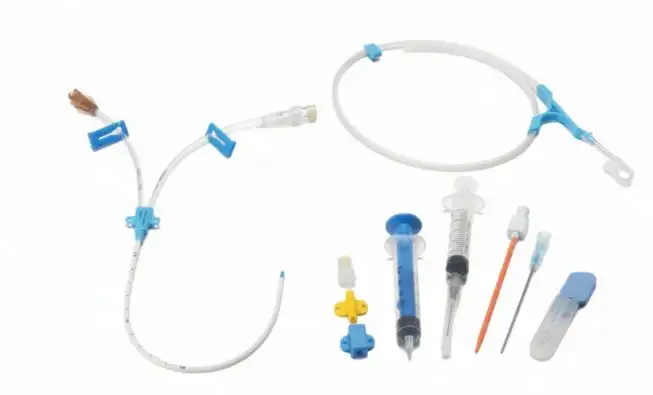
Why a Complete Central Venous Catheter Kit Matters
When clients evaluate a Central Venous Catheter Kit, they often focus first on the catheter itself. That is understandable, but it is only one part of the procedure. In practice, clinicians rely on a sequence of tools to establish access, guide placement, dilate the tract, secure the catheter, and support initial flushing or handling. If any part of that sequence is weak, the procedure becomes less efficient and less controlled.
For this reason, a complete kit can offer practical benefits to hospitals, distributors, and procurement teams:
•It helps standardize the insertion process
•It reduces the need to gather multiple items separately
•It supports cleaner procedural preparation
•It improves tray organization during use
•It can reduce delays caused by missing components
From a buyer's perspective, this is not only a packaging advantage. It is a workflow advantage. A better-organized kit can support staff consistency and make product evaluation easier across departments.
What Is Included in the Standard Package
Greetmed's standard package is designed around the core needs of catheter insertion and immediate handling. The kit includes:
•Catheter – 1 pc
•Guide Wire – 1 pc
•Dilator – 1 pc
•Catheter Clamp – 1 pc
•Rigid Fastener – 1 pc
•Heparin Cap – 1 / 2 / 3 pcs
•Syringe – 1 / 2 pcs
•Scalpel – 1 pc
•Introducer Needle or Y-Shaped Needle – 0 / 1 pc
•Blue Introducer Syringe – 0 / 1 pc
•Stanch Clip – 1 / 2 / 3 pcs
•Injection Needle – 1 pc
This combination reflects a practical packaging logic. The guide wire and dilator support access establishment. The syringe and introducer components play a practical role in procedural preparation and execution. The catheter clamp, rigid fastener, and stanch clip contribute to line handling and stabilization. The heparin cap supports controlled closure of the access point after placement.
For clients, the value of this structure is clear: the kit is easier to assess as a procedural system rather than as separate disposable items.
How Each Component Supports Clinical Use
A well-designed Central Venous Catheter Kit should help clinicians move through the insertion pathway with fewer interruptions. That is why each accessory should be understood in terms of practical use.
Guide Wire, Dilator, and Needle Components
The guide wire is central to controlled catheter advancement. It helps create an access pathway and supports positioning logic during insertion. The dilator then prepares the tract for catheter entry. When these components are matched as part of one set, users can work with better procedural continuity.
Introducer needle options also matter. In some settings, buyers prefer flexibility in configuration. Including either an introducer needle or a Y-shaped needle option can better match hospital preference, procedure habits, or department protocol.
Securement and Post-Insertion Handling Accessories
After insertion, handling quality remains important. The catheter clamp, rigid fastener, stanch clip, and heparin cap all contribute to that stage. Their value is practical rather than decorative.
•A clamp helps support line control during handling
•A rigid fastener can assist with catheter stabilization
•Stanch clips help organize line positioning
•Heparin caps support controlled access closure
For procurement teams, these items should be viewed as workflow tools. They help support orderly catheter management rather than leaving securement and accessory compatibility to chance.
What Buyers Should Look for in a Central Venous Catheter Kit
A product should not be judged only by whether it includes many parts. The more useful question is whether the kit is complete in a clinically meaningful way.
Buyers should usually review four areas.
First, component completeness. The set should include the items needed for standard insertion flow, without forcing users to source basic accessories separately.
Second, configuration flexibility. Optional counts such as 1, 2, or 3 heparin caps or stanch clips can be useful because hospitals do not always standardize around one handling preference.
Third, workflow efficiency. A well-arranged kit helps reduce procedural clutter. That can be especially helpful in busy clinical environments where preparation time and tray logic both matter.
Fourth, risk-awareness in design. Central venous catheter procedures are associated with infection and mechanical complication concerns, so any kit that supports organized insertion and maintenance carries practical value. Both the CDC and the WHO stress the importance of practicing insertion, access, and infection prevention. The AHRQ says that complications can include bleeding, pneumothorax, arterial injury, and thrombosis.
How Greetmed Makes Kit Design Useful for Clients
We at Greetmed see the Central Venous Catheter Kit as a product that should help customers make buying decisions easier and support real clinical use. A full set can help distributors choose items from a catalog, and hospitals benefit from clearer product standardization and easier planning for their inventory.
This practical value can be translated in several ways:
•Fewer separate SKUs may simplify sourcing
•A structured set can support procurement consistency
•A complete package can improve product presentation to end users
•Matching components can reduce uncertainty during product selection
For clients entering new tenders or expanding their vascular access portfolio, this kind of packaging logic can be commercially useful as well as clinically relevant.
A Better Kit Supports Better Preparation
In central venous access, quality is often measured by small details that affect the full procedure. A complete Central Venous Catheter Kit supports better preparation because it brings essential components into one coordinated system. That helps clinicians work with greater order, and it helps buyers evaluate the product with greater clarity.
For readers who are comparing catheter kits, the key question is simple: does the set only look complete, or does it support actual insertion workflow?
Greetmed focuses on the second answer. If your team is reviewing catheter kit options for distribution, hospital procurement, or OEM cooperation, now is the right time to examine how each component contributes to procedural efficiency and product value. Contact Greetmed to discuss your Central Venous Catheter Kit requirements and explore a configuration that fits your market and clinical application goals.
For further reference on central line safety and infection prevention, readers may review guidance from the CDC, WHO, and AHRQ.
Submit Your Request
Recent Posts

Tags
- Adult Diapers
- Are custom medical devices safe
- Baby Diapers
- Can respiratory anesthesia be used
- Digital Healthcare
- Do you offer customized consumables
- European Market
- How do you take care of a skin wound
- Industry Trends
- Lady Sanitary Napkins
- Medical Devices
- OEM Medical Devices
- Product Introductions
- Protective Equipment
- Under Pads
- What are custom-made medical devices
- What are diagnostic products
- What are hospital dressing products
- What are medical tube catheters
- What are some common protective equipment
- What are the appropriate applications for hospital dressing products
- What are the appropriate uses for protective equipment
- What is a gynecological examination
- What is a medical consumable
- What is an anesthesia kit
- What is an OEM in medical devices
- what is an wound skin care
- what is can disposable ultrasonic diagnostic
- What is good manufacturing medical devices
- What is hospital-grade protective equipment
- what is medical equipments hospital furniture
- What is medical sterilization wrapping
- What is rehabilitation equipment device
- What medical consumables do you supply
- Where can I find laboratory consumables wholesale
- where can I find medical protection device
- where to buy hypodermic accessories
- where to buy medical apparel
- where to buy medical consumable accessories
- where to find OEM medical device supplier
- where to find rehabilitation equipment supplier
