



Medical Device Design & Development: A Comprehensive Guide for Manufacturers and OEMs


Exploring core principles, best practices, and strategic approaches to medical device design and development for global markets
In the rapidly evolving medical technology landscape, transforming an idea into a safe, compliant, and market-ready product is a complex journey. Whether you’re a startup with a breakthrough concept or an established OEM with an ambitious product roadmap, understanding the design and development lifecycle is essential to ensure quality, regulatory compliance, and commercial success.
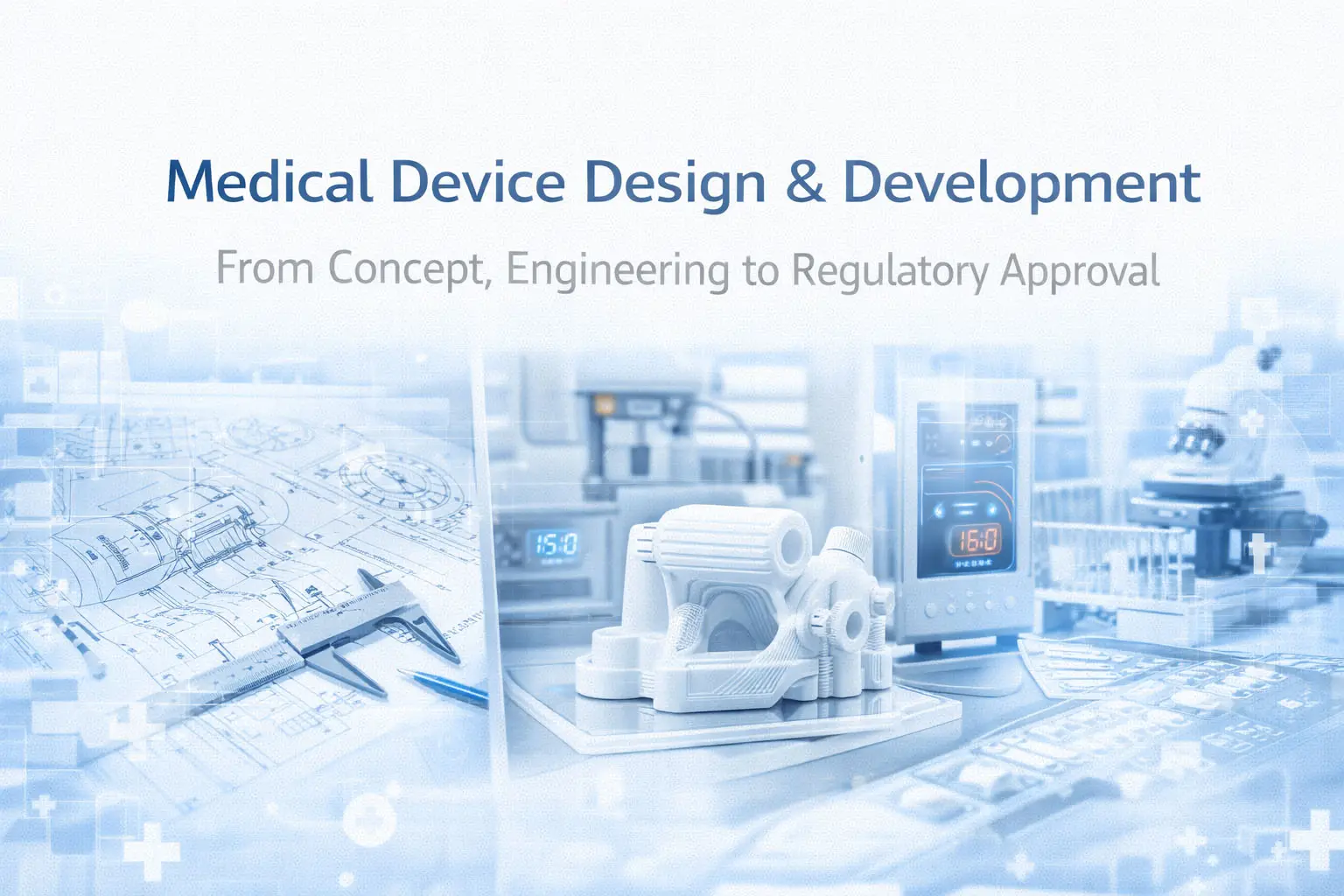
This comprehensive article breaks down what modern medical device design and development entails — from conceptualization and risk analysis to prototyping and regulatory readiness. While Paragon Medical positions itself as a design-driven partner in this space, these insights apply broadly to how forward-looking companies approach medical device innovation.
Why Design and Development Matter in Medical Devices
Medical device design goes beyond aesthetics or functionality. It directly influences patient safety, usability, manufacturability, and regulatory compliance. Unlike consumer products, medical technologies must withstand rigorous evaluation from regulatory agencies such as the U.S. FDA, EU MDR, and China NMPA.
A thoughtful design and development process ensures that:
-
Devices meet clinical and user needs
-
Risk is mitigated throughout the product lifecycle
-
Design decisions are well documented and traceable
-
Regulatory submissions are supported by robust evidence
By building strong design foundations, manufacturers can reduce costly redesigns, accelerate time-to-market, and improve product reliability.
Core Phases of Medical Device Design & Development
The journey from concept to launch can be divided into several major phases — each with specific goals, methods, and deliverables.
1. Defining Clinical Needs and Market Requirements
The design process begins with a clear understanding of clinical challenges and market demand. This phase includes:
-
Stakeholder interviews with clinicians, nurses, and biomedical engineers
-
Market research to identify gaps in existing solutions
-
Competitive product analysis
-
Defining device intended use and target user groups
Documenting these requirements is crucial. A strong “design input” set of requirements serves as the foundation for all subsequent decisions and evaluations.
2. Concept Generation and Feasibility
Once clinical needs are established, the team moves into idea generation and concept exploration. This iterative phase focuses on:
-
Sketching and brainstorming component layouts
-
Evaluating potential technologies and materials
-
Conducting feasibility and performance assessments
Design alternatives are compared based on manufacturability, safety, cost, and performance potential. Early feasibility studies often leverage simulations, digital models, and test rigs to validate core assumptions before heavy engineering work begins.
3. Risk Management & Regulatory Planning
Risk management in medical device design isn’t optional — it’s mandated. Standards such as ISO 14971 require formal processes to identify, evaluate, and mitigate hazards associated with medical devices.
Key activities during this phase include:
-
Hazard identification and severity analysis
-
Risk control planning and implementation
-
Documentation of residual risks
-
Regulatory route assessment (e.g., 510(k), PMA, CE marking)
Understanding the regulatory landscape early informs product classification, testing needs, and submission expectations for target markets.
4. Detailed Engineering & Prototype Development
With design inputs and risk plans in place, engineering teams create detailed drawings, system architectures, and functional prototypes.
Typical tasks include:
-
Mechanical engineering for enclosures, mechanisms, and structural integrity
-
Electrical and firmware design for embedded systems
-
Software development and integration where applicable
-
Materials selection based on biocompatibility, sterilization compatibility, and longevity
Prototyping technologies such as 3D printing, CNC machining, and soft tooling enable rapid iteration. These prototypes help validate design assumptions and refine performance before moving toward verification and validation.
5. Verification and Validation
Verification and validation (V&V) are essential to confirm that the design meets both specified requirements and real-world needs.
-
Verification — Confirms the product is built right, according to design inputs and engineering specifications
-
Validation — Confirms the product solves the right problem and meets user needs in actual or simulated use conditions
Testing includes functional evaluation, environmental stress tests, lifecycle durability, user usability studies, and software validation where relevant. This phase produces a robust body of evidence required for regulatory submissions.
6. Design Documentation and Traceability
Regulatory agencies expect thorough documentation of every stage of design and development. Documentation serves multiple purposes:
-
Demonstrates compliance to auditors and regulators
-
Provides traceability of decisions and changes
-
Supports quality system activities under standards like ISO 13485 or FDA Quality System Regulation (QSR)
Key documents include:
-
Design history files
-
Requirements trace matrices
-
Test plans and results
-
Risk management files
-
Verification and validation reports
Well-organized documentation reduces review times and strengthens regulatory confidence.
Design Strategies for Successful Medical Devices
While structured phases are important, leading medical device developers leverage strategic practices that increase the likelihood of success.
Integrating Regulatory Intelligence Early
Rather than treating regulatory compliance as an afterthought, advanced teams integrate regulatory planning from the concept phase. This includes:
-
Evaluating equivalent predicate devices
-
Understanding classification implications
-
Mapping required testing and documentation to regulatory standards
This strategy avoids costly redesigns and reduces time spent in regulatory cycles.
Prioritizing Human-Centered Design
Medical devices must be intuitive and safe for users, especially in high-stress clinical environments. Human factors engineering and usability testing help identify potential use errors and design flaws that could impact safety or performance.
Collaborating Across Disciplines
Effective design and development is inherently collaborative. Cross-functional teams — including engineering, clinical, quality, regulatory, and manufacturing specialists — contribute diverse perspectives that reduce blind spots and accelerate decision-making.
Iterative Prototyping and Testing
Iterative prototyping not only reduces risk but also creates tangible feedback loops. Early physical models reveal issues that simulations alone may miss — especially in ergonomic fit, assembly challenges, or interface usability.
Global Regulatory Considerations
Successful medical products are often destined for multiple regulatory jurisdictions, each with unique requirements:
U.S. FDA Pathways
-
510(k) Clearance — Demonstrating substantial equivalence
-
Premarket Approval (PMA) — For high-risk devices
-
De Novo — For novel low-to-moderate risk products without predicates
European Union MDR
The EU’s Medical Device Regulation emphasizes clinical evidence and post-market surveillance, with stringent conformity assessment procedures.
China NMPA
China’s National Medical Products Administration has evolving pathways and local clinical requirements that international manufacturers must understand for market access.
Aligning product development with diverse regulatory expectations accelerates global approval and minimizes rework.
From Development to Manufacturing Readiness
A strong design process should naturally link into manufacturing readiness, ensuring that products are not only compliant and effective but also scalable and cost-effective to produce.
Designers must collaborate with manufacturing engineers to confirm:
-
Design for Manufacturability (DFM)
-
Supplier qualification
-
Quality control plans
-
Production process validation
Careful coordination between design and production reduces defects, optimizes costs, and enables smoother scale-up.
Why Strategic Design Matters for OEMs and Brands
Medical device design and development is not just an engineering step — it’s a strategic enabler. Devices with thoughtful design have:
-
Lower risk of recalls and failures
-
Better clinician adoption and patient outcomes
-
Clearer regulatory submissions
-
Reduced time and cost to scale
For OEM partners, aligning with experienced development teams or contract design experts improves project predictability and commercial viability.
Conclusion
Medical device design and development is a multidisciplinary journey that demands rigor, foresight, and strong collaboration. From initial concept and clinical need analysis to engineering execution, regulatory planning, and manufacturing readiness, every step shapes the ultimate product’s safety, effectiveness, and market success.
As the industry continues to advance — with smarter technologies, digital tools, and more complex materials — robust design frameworks remain the cornerstone of innovation and global competitiveness.
Submit Your Request
Recent Posts

Tags
- Adult Diapers
- Are custom medical devices safe
- Baby Diapers
- Can respiratory anesthesia be used
- Digital Healthcare
- Do you offer customized consumables
- European Market
- How do you take care of a skin wound
- Industry Trends
- Lady Sanitary Napkins
- Medical Devices
- OEM Medical Devices
- Product Introductions
- Protective Equipment
- Under Pads
- What are custom-made medical devices
- What are diagnostic products
- What are hospital dressing products
- What are medical tube catheters
- What are some common protective equipment
- What are the appropriate applications for hospital dressing products
- What are the appropriate uses for protective equipment
- What is a gynecological examination
- What is a medical consumable
- What is an anesthesia kit
- What is an OEM in medical devices
- what is an wound skin care
- what is can disposable ultrasonic diagnostic
- What is good manufacturing medical devices
- What is hospital-grade protective equipment
- what is medical equipments hospital furniture
- What is medical sterilization wrapping
- What is rehabilitation equipment device
- What medical consumables do you supply
- Where can I find laboratory consumables wholesale
- where can I find medical protection device
- where to buy hypodermic accessories
- where to buy medical apparel
- where to buy medical consumable accessories
- where to find OEM medical device supplier
- where to find rehabilitation equipment supplier
