



Medical Device Cleanrooms: Standards, Design, and Best Practices for 2026


An essential guide to cleanrooms in medical device manufacturing — why they matter, how they’re classified, and how to operate them successfully
Cleanrooms are critical environments in medical device manufacturing where product contamination must be controlled at every stage — from injection molding of sterile components to assembly of surgical instruments and implantable technologies. Unlike typical factory spaces, cleanrooms follow strict engineering, airflow, and filtration guidelines to ensure airborne particles, microbes, and environmental contaminants do not compromise product safety or quality.
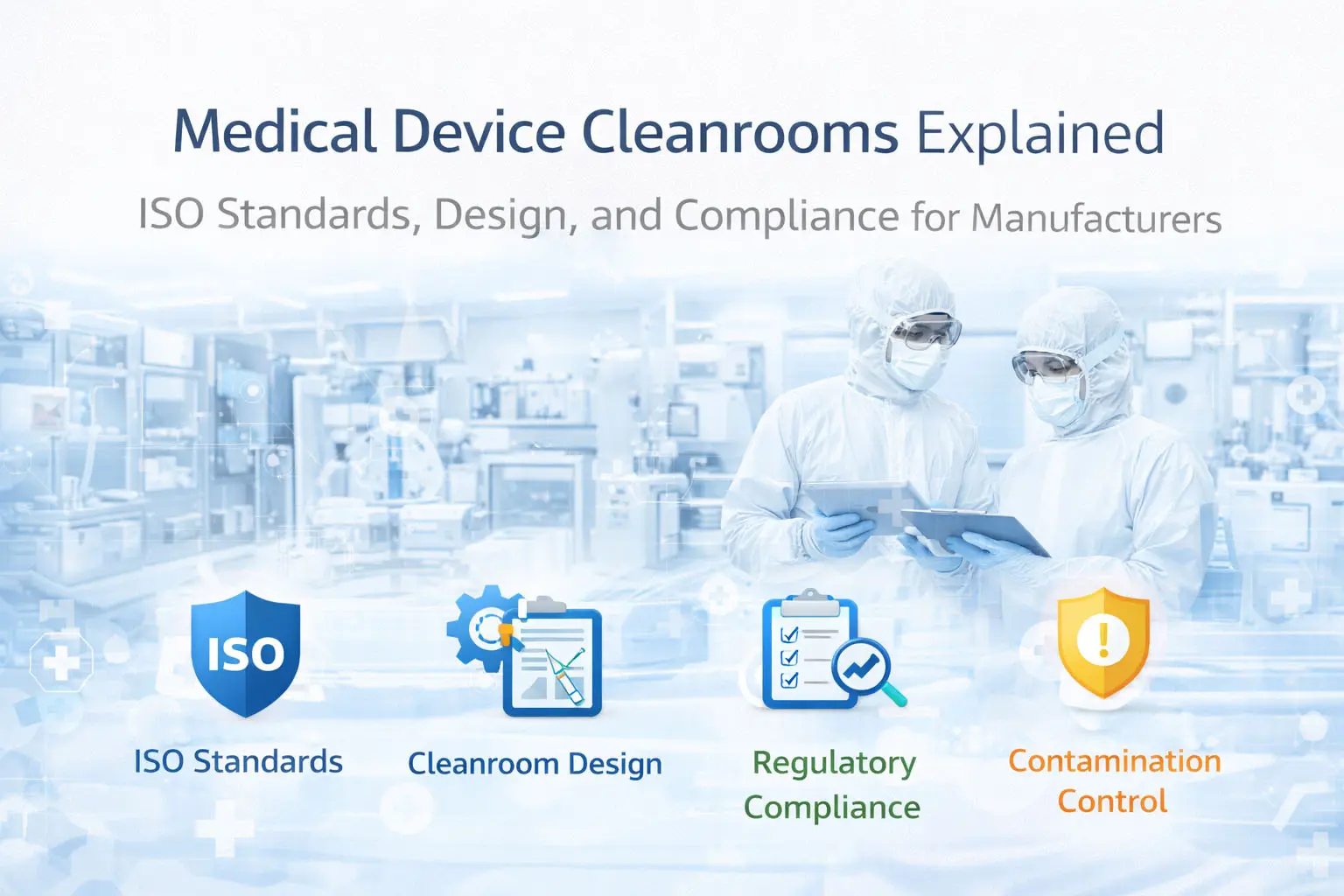
For OEMs and medical manufacturers, cleanroom compliance isn’t optional — it’s central to regulatory approvals, product integrity, and global market access. This article explains cleanroom fundamentals, ISO classifications, design considerations, and operational best practices.
What Is a Cleanroom?
A cleanroom is a controlled environment where particle counts, temperature, humidity, and airflow are regulated to minimize contamination. These spaces are engineered so that manufacturing, inspection, and packaging of sensitive medical devices occur under defined conditions that reduce risks of defects or microbial contamination that could affect patient safety.
Cleanrooms are commonly required for products such as:
• Sterile surgical instruments and implants
• In vitro diagnostics (IVD) and test kits
• Catheters, respiratory devices, and infusion assemblies
• Components requiring strict particulate control
In these applications, even microscopic particles — undetectable to the human eye — can compromise product performance or sterility.
Cleanroom Standards & Classification
Cleanrooms are classified based on the maximum allowable particles per cubic meter of air. International standards define different classes that align with the level of cleanliness required:
ISO Cleanroom Classifications (ISO 14644-1)
The globally recognized standard for cleanrooms in medical device manufacturing is ISO 14644-1. It defines classifications ranging from ISO Class 1 (most stringent) to ISO Class 9 (less stringent). Each class specifies maximum particle concentrations for different size thresholds. For example:
• ISO Class 5 — Often required for sterile product assembly and critical packaging operations
• ISO Class 7–8 — Used in areas with lower contamination risk but still requiring controlled environments
These classifications help manufacturers design spaces that are tailored to the risk profile of each process step.
Key Design Elements of Cleanrooms
Cleanroom design goes beyond walls and ceilings — it involves an integrated system that includes airflow, filtration, pressure control, surfaces, lighting, and personnel movement.
Airflow & Filtration
The heart of a cleanroom is its air handling system, including:
• HEPA/ULPA filters — Remove particles down to sub-micron levels
• Laminar airflow — Creates unidirectional air streams that sweep contaminants away from critical zones
• Air changes per hour (ACH) — Number of times room air is replaced; higher ACH supports stricter classifications
Together, these elements help maintain stable environments that meet target specification ranges for particulate control.
Environmental Controls
Control of temperature and relative humidity is essential for consistent manufacturing conditions and product integrity. Many sensitive medical materials respond poorly to environmental fluctuations, making tight control imperative.
Surface Finishes and Materials
Cleanroom construction uses smooth, non-porous, easily sterilized surfaces that resist microbial growth and particulate trapping. Floors, walls, and ceilings must be seamless to support cleaning protocols and reduce contamination risk.
Pressure Differentials
Cleanrooms often maintain positive pressure relative to adjacent spaces so that air flows outward rather than inward, helping protect critical zones from contaminants in less controlled areas.
Personnel, Workflow, and Contamination Control
People are often the largest source of contamination in cleanrooms if not properly managed. Best practice includes:
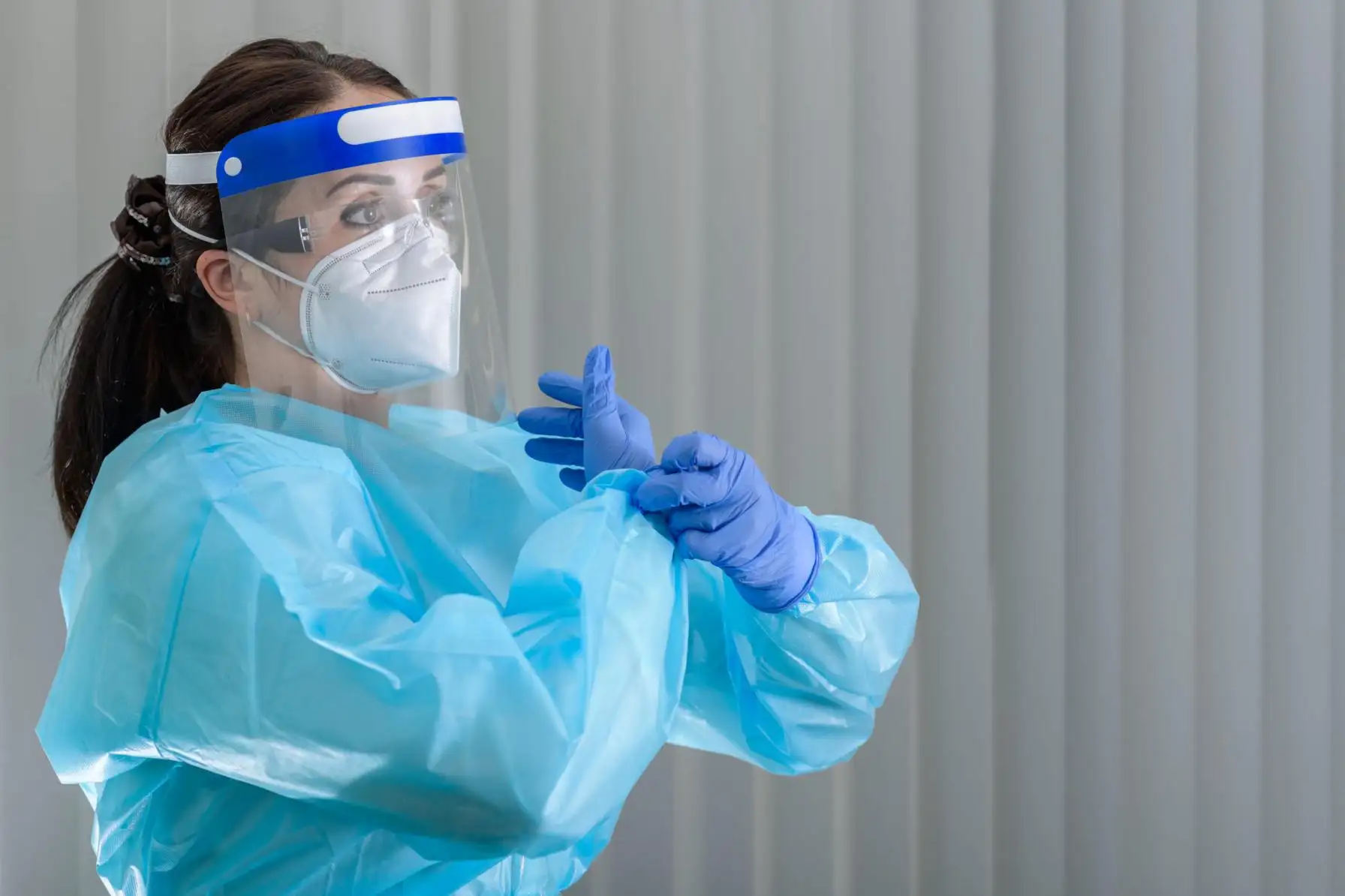
• Gowning Procedures — Specialized cleanroom garments, gloves, masks, and hair covers to minimize shedding
• Airlocks and Pass-Throughs — Transition zones that reduce particle transfer
• Strict Entry Protocols — Hand hygiene, gowning steps, and behavior guidelines
• Zonal Workflow — Logical sequencing of tasks to prevent cross-contamination
Training and discipline are crucial; even minor deviations in protocol can introduce particles that undermine cleanliness standards.
Cleanroom Testing, Monitoring & Certification
Maintaining compliance requires ongoing testing and monitoring — not just one-time installation. Key performance indicators include:
Particle Count Monitoring
Regular sampling of airborne particles ensures the cleanroom maintains its target ISO classification. Automated systems track particle levels at multiple points throughout the space.
Airflow & Pressure Testing
Positive pressure, air change rates, and filter performance must be routinely verified to confirm proper airflow patterns and contaminant control.
Environmental Monitoring
Temperature, humidity, and microbial monitoring must be logged continuously, often with automated tools that alert operators when metrics drift outside acceptable thresholds.
Certified laboratories can perform cleanroom validation and re-classification as part of regulatory compliance, especially prior to audits or new product approvals.
Cleanroom Compliance & Regulatory Expectations
Cleanrooms in medical device manufacturing are inherently linked to regulatory compliance. Authorities such as the U.S. FDA, EU MDR, China NMPA, and others expect manufacturers to demonstrate controlled environments — especially for sterile or critical supply products.
Regulatory inspectors often review:
• Cleanroom classification reports and validation data
• Environmental monitoring logs
• Gowning and personnel training records
• Cleaning, maintenance, and calibration schedules
• Standard Operating Procedures (SOPs) for cleanroom operations
Documentation is as critical as the physical environment; auditors rely on records to confirm that cleanrooms consistently perform within specification.
Risk Management and Cleanroom Integration
A robust risk management plan identifies potential contamination hazards and defines mitigation strategies across all cleanroom operations. Tying cleanroom procedures into overall Design Controls and Quality Management Systems (e.g., ISO 13485) ensures alignment with product safety and regulatory frameworks.
===
Trends in Cleanroom Technology
Cleanroom technology evolves too. Modern advancements include:
Automation & Robotics: Automated material handling and robotic assembly reduce human-introduced contaminants and improve consistency.
Advanced Filtration Materials: Next-generation HEPA/ULPA filters and filter-monitoring sensors enhance performance while reducing maintenance cycles.
Digital Monitoring & IoT: Smart sensors and cloud-enabled dashboards allow real-time tracking of environmental conditions with predictive alerts for deviations.
Conclusion: Cleanrooms as a Competitive Advantage
For medical device manufacturers — from early-stage OEMs to global contract manufacturers — cleanrooms are more than compliance requirements: they are strategic assets that protect product quality, support regulatory approval, and enhance production reliability.
Understanding cleanroom classifications, design principles, operational best practices, and monitoring expectations helps companies build environments where high-quality, safe medical devices are reliably produced. In an industry where contamination can jeopardize patient safety and market access, cleanroom excellence is fundamental to manufacturing success.
Submit Your Request
Recent Posts
Tags
- Adult Diapers
- Are custom medical devices safe
- Baby Diapers
- Can respiratory anesthesia be used
- Digital Healthcare
- Do you offer customized consumables
- European Market
- How do you take care of a skin wound
- Industry Trends
- Lady Sanitary Napkins
- Medical Devices
- OEM Medical Devices
- Product Introductions
- Protective Equipment
- Under Pads
- What are custom-made medical devices
- What are diagnostic products
- What are hospital dressing products
- What are medical tube catheters
- What are some common protective equipment
- What are the appropriate applications for hospital dressing products
- What are the appropriate uses for protective equipment
- What is a gynecological examination
- What is a medical consumable
- What is an anesthesia kit
- What is an OEM in medical devices
- what is an wound skin care
- what is can disposable ultrasonic diagnostic
- What is good manufacturing medical devices
- What is hospital-grade protective equipment
- what is medical equipments hospital furniture
- What is medical sterilization wrapping
- What is rehabilitation equipment device
- What medical consumables do you supply
- Where can I find laboratory consumables wholesale
- where can I find medical protection device
- where to buy hypodermic accessories
- where to buy medical apparel
- where to buy medical consumable accessories
- where to find OEM medical device supplier
- where to find rehabilitation equipment supplier
