



The Triple Lumen CVC Kit With Anti-Thrombotic Surface Technology


For a long time, the standard for central venous access has been the Triple Lumen CVC Kit, but there are challenges that exist in the clinical field that standard designs do not seem to address. That challenge is thrombosis—and in 2026, the market is finally demanding a solution that doesn't just treat the complication but prevents it at the surface level.
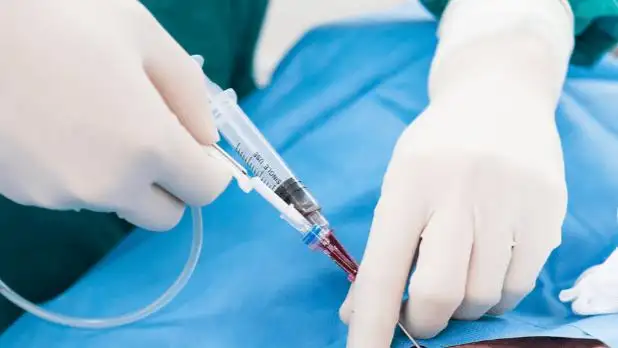
Why Thrombosis Demands a Rethink in CVC Design
Catheter-related thrombosis (CRT) is not a rare event. Studies indicate that CRT occurs in approximately 14–18% of CVC placements, typically manifesting days after insertion and often following long-term use. In certain high-risk populations, the incidence climbs dramatically: dialysis catheters carry a 64.9 times greater risk of thrombosis compared to standard CVCs, and in neonates, as many as 68% develop thrombi at the catheter site.
•The consequences are serious: thrombosis can cause catheter-related dysfunction, infection, life-threatening pulmonary embolism, and death.
•There is an enormous economic burden: catheter occlusions increase treatment costs and lengthen hospital stays.
•The guidelines for prevention are changing: various global clinical practice guidelines now focus on the prevention of thrombosis related to the CVC, however, prophylactic anticoagulation measures are inconsistent and pose risks.
The Technology That Changes the Equation: Anti-Thrombotic Surface Coating
Greetmed's Triple Lumen CVC Kit features state-of-the-art thrombus prevention surface technology and thrombus prevention CRT at the source—the catheter-blood interface. Most standard catheters rely on anticoagulation at the patient level; this technology does the exact opposite by preventing thrombus formation on the surface of the device.
•Heparin-based covalent bonding: The catheter surface has a covalent bond to heparin that is not leachable and is therefore, long lasting and anti-thrombotic. The controlled release of heparin and other non-thrombotic coatings are generally achieved through UV or thermal curing processes that result in high bonding strength that lasts even in high use scenarios.
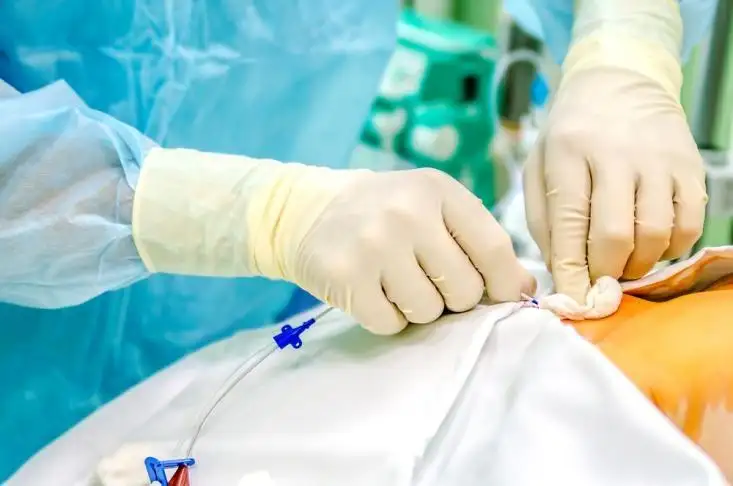
•Reduced thrombus formation: In a comparative study, catheters with heparin coatings showed a thrombus mass reduction of 84.6% in bare CVC catheters and also showed high-level antibacterial activity (greater than 97%) both in vitro and in vivo.
•Dual-action protection: The coating simultaneously addresses thrombosis and infection—two of the most costly complications in central line management. Surface-treated catheters with antimicrobial materials reduce catheter-related bacteremia by 30–50% in critical care settings, while antithrombotic coatings reduce platelet adhesion and inhibit the inflammatory response.
What This Means for 2026 Procurement Decisions
The central venous catheter market is undergoing a fundamental shift. This industry is expected to reach an estimated value of $2.80 Billion USD in 2025 and $3.07 Billion USD in 2026 at a rate of 10% CAGR. Considering the overall growth of the industry is not enough to consider the overall growth of the industry.
•Value based procurement is expected to become the new trend: Healthcare providers assess the total lifecycle cost of a product, including its infection control features, preventative maintenance, and system compatibility, rather than just the initial cost.
•Coatings that are antimicrobial and anti-thrombotic should become standard: As more and more clinical data become available, and as the regulations become more stringent, industry reports are stating that there is a rising use of catheter devices that are surface treated.
•Smart integration: Technologies such as embedded flow and pressure sensors, RFID inventory control, cloud-based management of catheter stock, and digital health technologies are changing the criteria for selection and use of central venous catheters (CVCs).
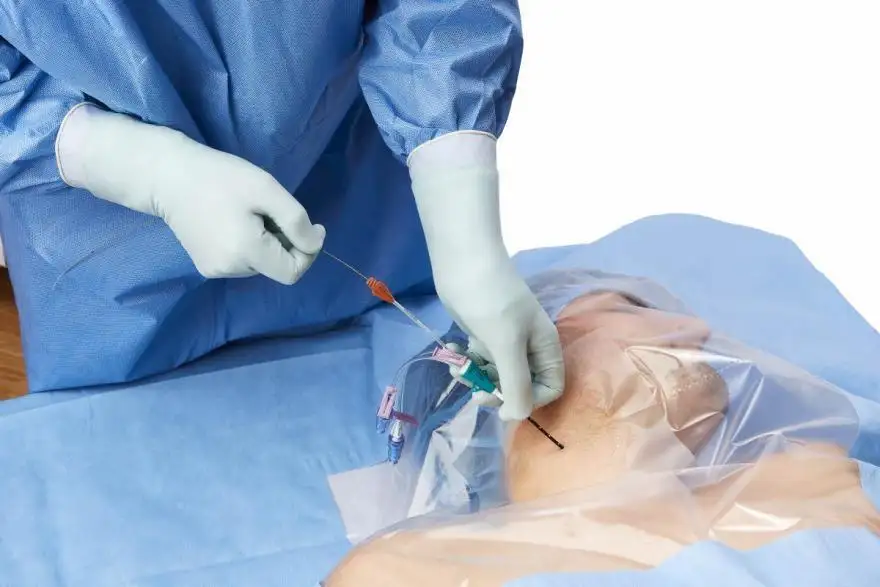
Greetmed: Manufacturing with a Purpose
Greetmed has come a long way from its humble beginnings in 2003. With certifications from ISO 13485, the FDA, and the EU, they are a trusted global manufacturer. Greetmed's vertically integrated manufacturing and quality customs control span over 10,000 square meters of manufacturing space in the three provinces of Hubei, Anhui, and Zhejiang. Each Triple Lumen CVC kit is made with integrated dedicated R&D.
•Regulatory compliance as a culture: The traceable processes and the Greetmed logo are supported by the high quality control and documented standards set by Greetmed through the manufacturing process.
•Increased manufacturing flexibility: The modular production cells used by Greetmed have the ability to change output in a matter of hours, providing reliable supply during periods of demand such as health emergencies.
•Collaboration between engineering and manufacturing: The engineering and manufacturing close proximity has made the process of taking a product from concept to a functioning prototype without affecting production schedules seamless.
The Bottom Line
The Triple Lumen CVC Kit with anti-thrombotic surface technology is not a concept that manufacturers dream about 5-10 years out. It is ready now, with published peer reviewed studies and a manufacturer with 20 years of documented proven delivery. For CVC supplier selection in 2026, procurement professionals will not be asking if they should use surface-treated catheters. They will be asking which supplier has the technology, the quality, and the supply chain reliability to provide them at scale. Greetmed is ready to answer that question.
For technical specifications, regulatory documentation, or to request samples, visit Greetmed's official website.
FAQ
Q: For how long does the anti-thrombotic coating remain effective?
A: Given the nature of the covalent bonding with the heparin, we designed the coating to have anti-thrombotic activity effective for the standard indwelling time for a central line, up to 30 days, with no significant leaching or degradation in performance.
Q: Is the coating resistant to the standard methods of sterilization?
A: Yes. Ethylene oxide (EO) gas is used to sterilize the Triple Lumen CVC Kit, and does not affect the structural or functional integrity of the anti-thrombotic surface layer.
Q: Is this kit suitable for use in patients with heparin-induced thrombocytopenia (HIT)?
A: This is a case-by-case situation. While clinically, the heparin is covalently bonded and is present in a non clinically significant elution, patients with clinically active HIT, should be consulted by their physician prior to the use of heparin-coated devices.
Q: Can we get custom packaging and/or private labeling from Greetmed?
A: Yes, Greetmed provides customized design services for OEM/ODM, including private labeling, custom designs for trays, and personalized configurations of single elements to meet the specifications of certain hospitals or distributors.
Q: What regulatory approvals does this CVC kit have?
A: The Triple Lumen CVC Kit is manufactured under ISO 13485 and has CE marking as well as FDA 510(k) clearance for the U.S. market.
Submit Your Request
Recent Posts
Tags
- Adult Diapers
- Are custom medical devices safe
- Baby Diapers
- Can respiratory anesthesia be used
- Digital Healthcare
- Do you offer customized consumables
- European Market
- How do you take care of a skin wound
- Industry Trends
- Lady Sanitary Napkins
- Medical Devices
- OEM Medical Devices
- Product Introductions
- Protective Equipment
- Under Pads
- What are custom-made medical devices
- What are diagnostic products
- What are hospital dressing products
- What are medical tube catheters
- What are some common protective equipment
- What are the appropriate applications for hospital dressing products
- What are the appropriate uses for protective equipment
- What is a gynecological examination
- What is a medical consumable
- What is an anesthesia kit
- What is an OEM in medical devices
- what is an wound skin care
- what is can disposable ultrasonic diagnostic
- What is good manufacturing medical devices
- What is hospital-grade protective equipment
- what is medical equipments hospital furniture
- What is medical sterilization wrapping
- What is rehabilitation equipment device
- What medical consumables do you supply
- Where can I find laboratory consumables wholesale
- where can I find medical protection device
- where to buy hypodermic accessories
- where to buy medical apparel
- where to buy medical consumable accessories
- where to find OEM medical device supplier
- where to find rehabilitation equipment supplier
