



Syringe and Needle Kit Engineered With Safety Clip for Needlestick Prevention


A Syringe and Needle Kit that includes a safety clip is revolutionizing the way healthcare workers perform injections. For many years, injuries from a syringe needle stick have been a grave concern in clinics and hospitals. Thanks to a new and clever design, the safety clip syringe has brought a simple, effective means to prevent these injuries from happening.
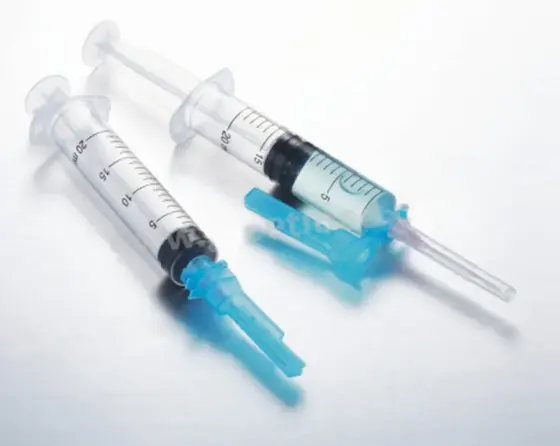
This article explains how the safety clip works, its importance in your team's safety, and why you should switch to safety clip syringes in 2026.
What is Special About the Safety Clip Syringe?
A safety clip syringe is unlike any traditional syringe, where after an injection is given, the needle is left exposed to those around it. It has to be carefully recapped or dropped into a sharps container, which is always unsafe.
A safety clip syringe is different, and here's why:
•It automatically locks after use. When the plunger is pushed all the way, an internal clip moves forward and blocks the exposed needle.
•A blocking mechanism is included in syringes to avoid the reuse of injections. Once the mechanism is triggered, the plunger is completely stuck in the deployed position, rendering the syringe permanent and inoperable. This mechanism is of great help to needy communities.
•It shields the needle tip. The internal clip completely surrounds the exposed needle. That means no exposed sharp point to accidentally poke a nurse, doctor, or waste handler.
•It works with one hand: Clinicians do not need to change their routine. The safety mechanism engages as a natural part of finishing the injection. No extra training is required.
In short: a Syringe and Needle Kit with a safety clip turns a risky procedure into a much safer one—without slowing anyone down.
Why Needlestick Prevention Matters More Than Ever
The numbers tell a clear story. Needlestick injuries are not rare. They happen every day.
•Up to 44.5% of healthcare workers suffer at least one sharps injury every year.
•Globally, there are an estimated 2 million needlestick injuries annually among healthcare staff.
•Many injuries go unreported. In some facilities, over 50% are never officially recorded.
•Among infected healthcare workers, needlestick injuries cause 39% of Hepatitis C cases, 37.6% of Hepatitis B cases, and 4.4% of HIV infections.
These are not just statistics. Each number represents a real person—a nurse, a lab technician, a doctor—whose life may be changed forever by one accidental prick.
The good news? Research shows that safety-engineered devices can prevent 62% to 88% of sharps injuries. That is a huge reduction. And it starts with choosing the right Syringe and Needle Kit.
Compliance Is Not Optional Anymore
Regulations around the world are pushing healthcare facilities to adopt safety syringes. Ignoring this trend poses a risk to an organization.
Consider the following rules:
•OSHA (US): Safety-engineered sharps are to be provided where reasonably possible. Employers should also maintain injury logs and conduct annual evaluations of safer alternatives.
•EU Sharps Directive (EU): It is the duty of the healthcare employer to avoid the use of a conventional syringe whenever there exists a safer alternative. This decision should also be justified in writing.
•ISO 13485 and ISO 23908: These are international quality standards on medical devices. Any serious manufacturer of a Syringe and Needle Kit should meet them.
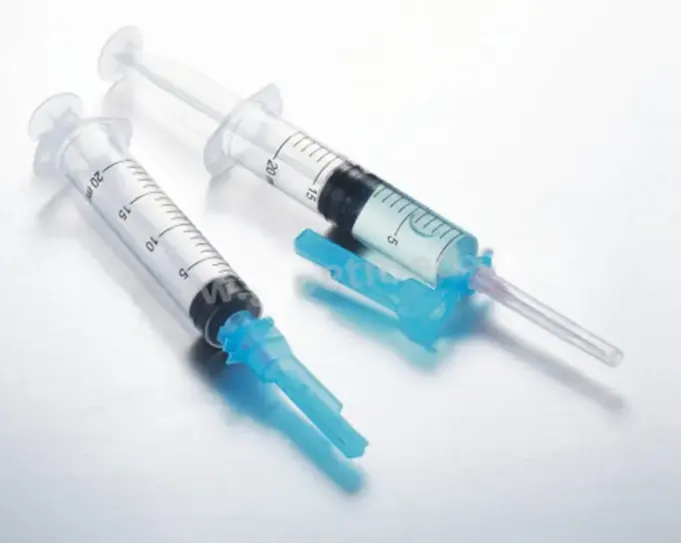
If a hospital or clinic delays switching to safety clip syringes, they face:
•Regulatory fines
•Risk of losing accreditation
•Higher worker compensation claims
•Damage to their reputation
None of that is worth saving a few cents per syringe.
The Real Cost of Sticking With Conventional Syringes
Some buyers hesitate because safety syringes cost a little more upfront. Assessing just the purchase price is short-sighted.
Consider what one needlestick injury may cost an organization:
•Direct costs: The injuries add up to over $3,000 for the organization to provide the associated medical services, such as post-exposure tests, visits, and medications.
•Indirect costs: The impact on productivity, staff replacements and hiring, legal, and workers’ compensation costs are on the rise.
•The human cost: The emotional and physical impact of living with hepatitis B or HIV is catastrophic to the affected employee.
Compare this to the cost of a Syringe and Needle Kit with a safety clip. Greetmed sells safety clip syringes for $0.01 to $0.05. The additional 1 or 2 cents is trivial compared to the cost of just one avoidable injury.
Total the costs of ownership, including safety and the welfare of employees, the clear choice is the safety clip syringe.
Why 2026 Is the Year to Make the Switch
The use of safety syringes globally is gaining momentum, and here's the evidence:
All of WHO, the CDC, and almost all national Health ministries issued recommendations for the use of safety engineered injection systems.
WHO PQS certified safety syringes are prioritized for procurement by major reliable buyers such as UNICEF and GAVI.
The use of safety design syringes is being eagerly embraced by hospitals, outpatient services, and even home based health services.
Safety syringes will very quickly progress from "nice to have" to "must have" across all health care settings.
It's a straightforward question: will you spearhead this transition, or will you remain passive until the regulators compel you to catch up?
Final Takeaway
The answer is the same for procurement, clinical, and healthcare administration management: safety clip syringes protect your employees, patients, and your profits.
Is your injection safety program ready for an update?
Greetmed has everything you need to get started. All of our safety clip syringe products are CE, ISO 13485, and FDA certified and we also offer samples and OEM pricing. Reach out today!
FAQs
Q: Are Safety Clip Syringes more expensive than regular syringes?
A: Yes, they cost about 1–5 cents more than a traditional syringe. The savings are actually seen in the long run because the average cost of a single needlestick injury is more than $3,000.
Q: Do nurses have to go through a new training program to learn how to use the Safety Clip?
A: No. The clip automatically engages and snaps shut the syringe. It is a one-handed motion for the clinician, just as it has already been.
Q: Is there FD A approval for Greetmed’s Safety Clip Syringes?
A: Yes and they have CE certifications and ISO 13485 certifications, which allows them to place their products in the US and European regulated markets.
Q: What is the range of needle and syringe sizes available in the Syringe and Needle Kit?
A: With this kit, you get 1 mL, 3 mL, 5 mL, 10 mL, and 20 mL syringes and needles. These sizes are appropriate for the administration of insulin, common vaccines, and many standard intramuscular injections.
Q: Can I buy a small quantity to see how the product is before I make a large order?
A: The minimum pricing tier is for 50,000 units, but OEM samples are offered by Greetmed. You must contact the team for a trial a sample.
Submit Your Request
Recent Posts
Tags
- Adult Diapers
- Are custom medical devices safe
- Baby Diapers
- Can respiratory anesthesia be used
- Digital Healthcare
- Do you offer customized consumables
- European Market
- How do you take care of a skin wound
- Industry Trends
- Lady Sanitary Napkins
- Medical Devices
- OEM Medical Devices
- Product Introductions
- Protective Equipment
- Under Pads
- What are custom-made medical devices
- What are diagnostic products
- What are hospital dressing products
- What are medical tube catheters
- What are some common protective equipment
- What are the appropriate applications for hospital dressing products
- What are the appropriate uses for protective equipment
- What is a gynecological examination
- What is a medical consumable
- What is an anesthesia kit
- What is an OEM in medical devices
- what is an wound skin care
- what is can disposable ultrasonic diagnostic
- What is good manufacturing medical devices
- What is hospital-grade protective equipment
- what is medical equipments hospital furniture
- What is medical sterilization wrapping
- What is rehabilitation equipment device
- What medical consumables do you supply
- Where can I find laboratory consumables wholesale
- where can I find medical protection device
- where to buy hypodermic accessories
- where to buy medical apparel
- where to buy medical consumable accessories
- where to find OEM medical device supplier
- where to find rehabilitation equipment supplier
