



Medical Device Prototyping: The Complete Guide for Global OEMs and Healthcare Innovators


How prototyping accelerates product development, ensures compliance, and minimizes risk for medical device manufacturers
In today’s competitive medical technology landscape, turning a breakthrough idea into a safe, market-ready medical device requires more than just innovation — it demands a strategic, step-by-step development process. At the heart of this process lies medical device prototyping, a fundamental phase that bridges design concepts with real-world products. From early proof-of-concept models to fully functional pre-commercial prototypes, prototyping influences product quality, regulatory readiness, and commercialization success.
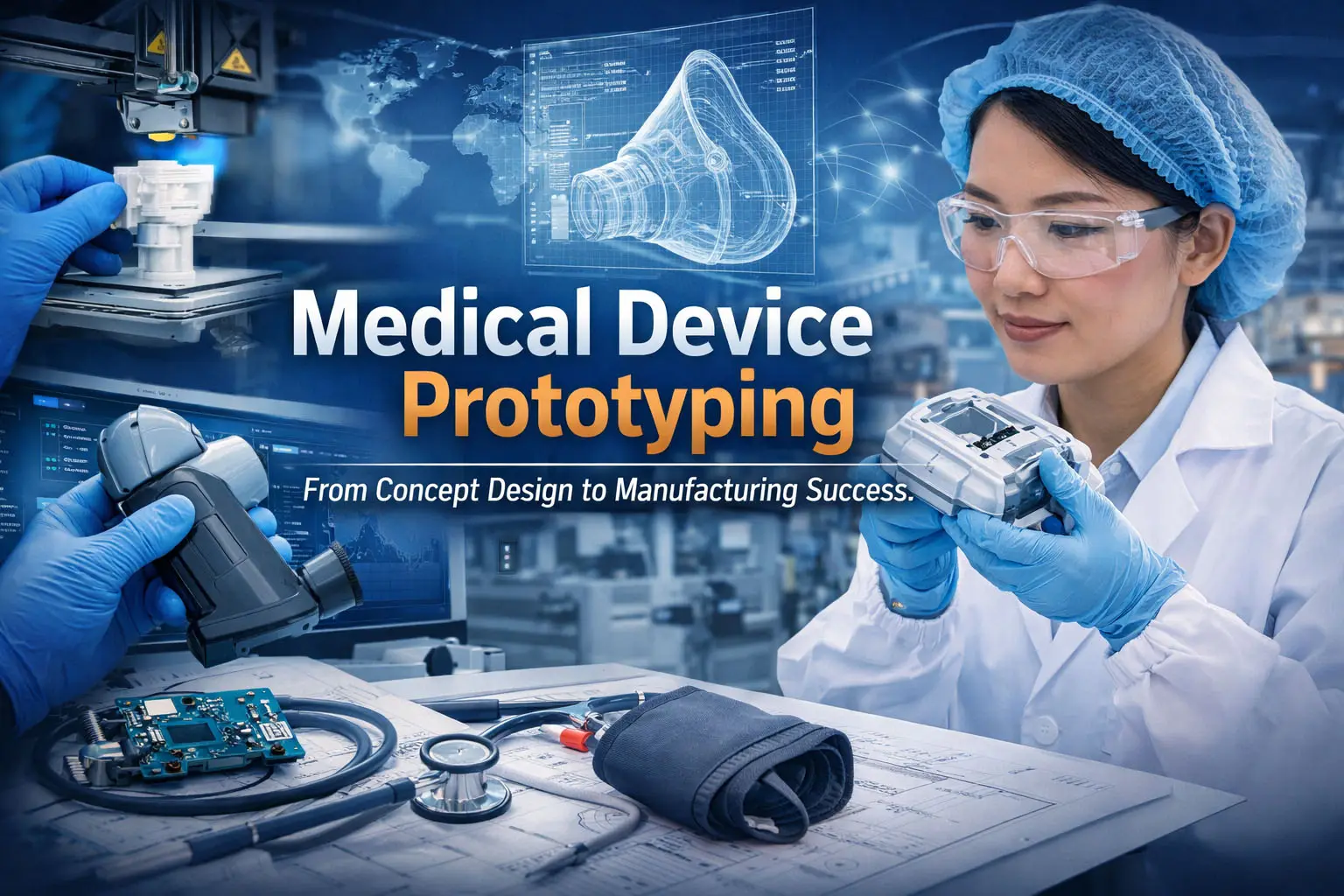
For companies like Greetmed, a leading global medical device manufacturer and OEM partner, understanding and executing effective prototyping is essential to delivering high-quality healthcare solutions worldwide.
What Is Medical Device Prototyping?
Medical device prototyping is the process of creating preliminary physical or digital models of a device in order to evaluate design, function, safety, and manufacturability before mass production. Rather than being a single task, it’s a multi-stage iterative journey that reduces uncertainties and enables improvements long before clinical use and regulatory approvals.
Prototyping plays a critical role in ensuring devices perform as intended while also adapting to clinical needs, human-centered use cases, and regulatory standards such as ISO and FDA requirements. Early prototyping helps identify design flaws, reduce costs, and compress timelines — all of which are key for medical OEMs and suppliers.
Why Prototyping Matters in Medical Device Development
1. Improves Safety and Usability
One of the core goals of medical device prototyping is to enhance safety and user experience. By enabling iterative testing, developers can observe how devices perform under realistic conditions, identify usability challenges, and make informed improvements before committing to full-scale production. This iterative feedback loop is invaluable in minimizing risks associated with device misuse or design shortcomings.
2. Reduces Development Costs and Time
A common industry insight is that addressing a flaw early is significantly cheaper than reworking it after tooling, manufacturing setup, or trial production. Prototyping helps detect manufacturability issues, material incompatibilities, or functional gaps early, thus saving both time and budget in later stages of product development.
3. Supports Regulatory and Market Readiness
Prototypes are not just design tools — they are also evidence for regulatory submissions. Medical device prototypes help demonstrate that a product meets applicable standards and performs as intended, which is especially important when pursuing approvals from authorities such as the U.S. FDA or EU CE certification. This evidence supports documentation for safety testing, performance validation, and clinical evaluations.
Stages of Medical Device Prototyping
While terminology may vary, the prototyping process generally follows a multi-step path designed to progressively refine concept into production-ready design:
1. Proof of Concept
At this initial stage, the goal is to validate the fundamental idea behind the device. Rough sketches, concept models, and simulations are used to test whether the core functionality is feasible. This step answers essential questions: Can the device work? Is there a technical foundation for further development?
2. Alpha Prototype
Next, an early functional model is built. This prototype includes basic mechanics and functionalities that allow engineers and stakeholders to test the device in simulated conditions. Feedback from clinical or ergonomic testing is incorporated to shape design improvements.
3. Beta Prototype
At this stage, prototypes become more sophisticated, incorporating materials and components closer to final production. Beta prototypes undergo rigorous usability testing, safety checks, and performance validation. Adjustments are made based on analysis and user insights.
4. Pilot Prototype
The pilot prototype is the final pre-launch model. It mirrors the final device’s design, materials, and performance as closely as possible. This version is used for formal compliance testing, regulatory submissions, and preparation for scale-up manufacturing.
Common Prototyping Techniques
Choosing the right prototyping technology is crucial and depends on the device’s complexity, materials, performance requirements, and regulatory classification. Key techniques include:
3D Printing
3D printing enables quick production of complex geometries directly from digital designs. It offers flexibility and precision, especially for customized components and rapid iteration cycles. This is particularly useful in early-stage prototyping where design changes are frequent.
CNC Machining
CNC machining uses computer-controlled tools to precisely cut materials into final shapes. It’s ideal for creating high-precision parts with tight tolerances — a common requirement for medical device hardware.
Injection Molding and Soft Tooling
For beta or pilot prototypes where surface finish and mass manufacturing resemblance are important, injection molding provides a cost-effective way to produce consistent parts in small batches.
Vacuum Casting and Other Methods
Vacuum casting and similar techniques offer cost-efficient ways to produce multiple prototypes with consistent quality. These methods are widely used in China and globally to provide high-quality prototypes with shorter lead times.
Challenges and Best Practices
Despite its benefits, prototyping can be complex, especially when integrating electronics, hardware, and software. Common challenges include cross-disciplinary coordination, managing changes across teams, and integrating regulatory requirements at every step.
Best practices for successful prototyping include:
-
Start early and iterate often — early mockups catch design issues faster.
-
Choose materials wisely — material properties affect safety and performance.
-
Involve end users — clinical feedback ensures usability and relevance.
-
Maintain documentation — thorough test plans and change logs support regulatory submissions.
Why Partner With a Skilled Manufacturer Like Greetmed
For healthcare innovators and OEM partners worldwide, working with an experienced prototyping and manufacturing partner is a strategic advantage. Greetmed combines deep expertise in medical product design, global regulatory compliance, and precision manufacturing — helping clients accelerate prototypes into approved devices and scaled production.
With capabilities ranging from design input and rapid prototyping to pilot production and quality control, partnering with a trusted supplier streamlines development and increases the likelihood of market success. By integrating prototyping best practices into every project, medical device manufacturers can confidently navigate complexity and deliver innovations that improve patient outcomes.
Conclusion
Medical device prototyping is more than just building a model — it’s a strategic framework that drives innovation, mitigates risks, shortens time-to-market, and ensures safety and regulatory readiness. Whether you’re launching a new diagnostic tool, surgical device, or healthcare wearable, effective prototyping lays the foundation for success.
By understanding each stage, choosing the right techniques, and applying best practices, developers and engineers can transform bold ideas into safe, reliable products that meet the demands of global healthcare markets — with partners like Greetmed accelerating every step of the journey
Submit Your Request
Recent Posts
Tags
- Adult Diapers
- Are custom medical devices safe
- Baby Diapers
- Can respiratory anesthesia be used
- Digital Healthcare
- Do you offer customized consumables
- European Market
- How do you take care of a skin wound
- Industry Trends
- Lady Sanitary Napkins
- Medical Devices
- OEM Medical Devices
- Product Introductions
- Protective Equipment
- Under Pads
- What are custom-made medical devices
- What are diagnostic products
- What are hospital dressing products
- What are medical tube catheters
- What are some common protective equipment
- What are the appropriate applications for hospital dressing products
- What are the appropriate uses for protective equipment
- What is a gynecological examination
- What is a medical consumable
- What is an anesthesia kit
- What is an OEM in medical devices
- what is an wound skin care
- what is can disposable ultrasonic diagnostic
- What is good manufacturing medical devices
- What is hospital-grade protective equipment
- what is medical equipments hospital furniture
- What is medical sterilization wrapping
- What is rehabilitation equipment device
- What medical consumables do you supply
- Where can I find laboratory consumables wholesale
- where can I find medical protection device
- where to buy hypodermic accessories
- where to buy medical apparel
- where to buy medical consumable accessories
- where to find OEM medical device supplier
- where to find rehabilitation equipment supplier
